- 30
- Apr
Shebag handmade Hermes Lindy 26 bag leather cutting craftmanship review(Apr 2026 updated)
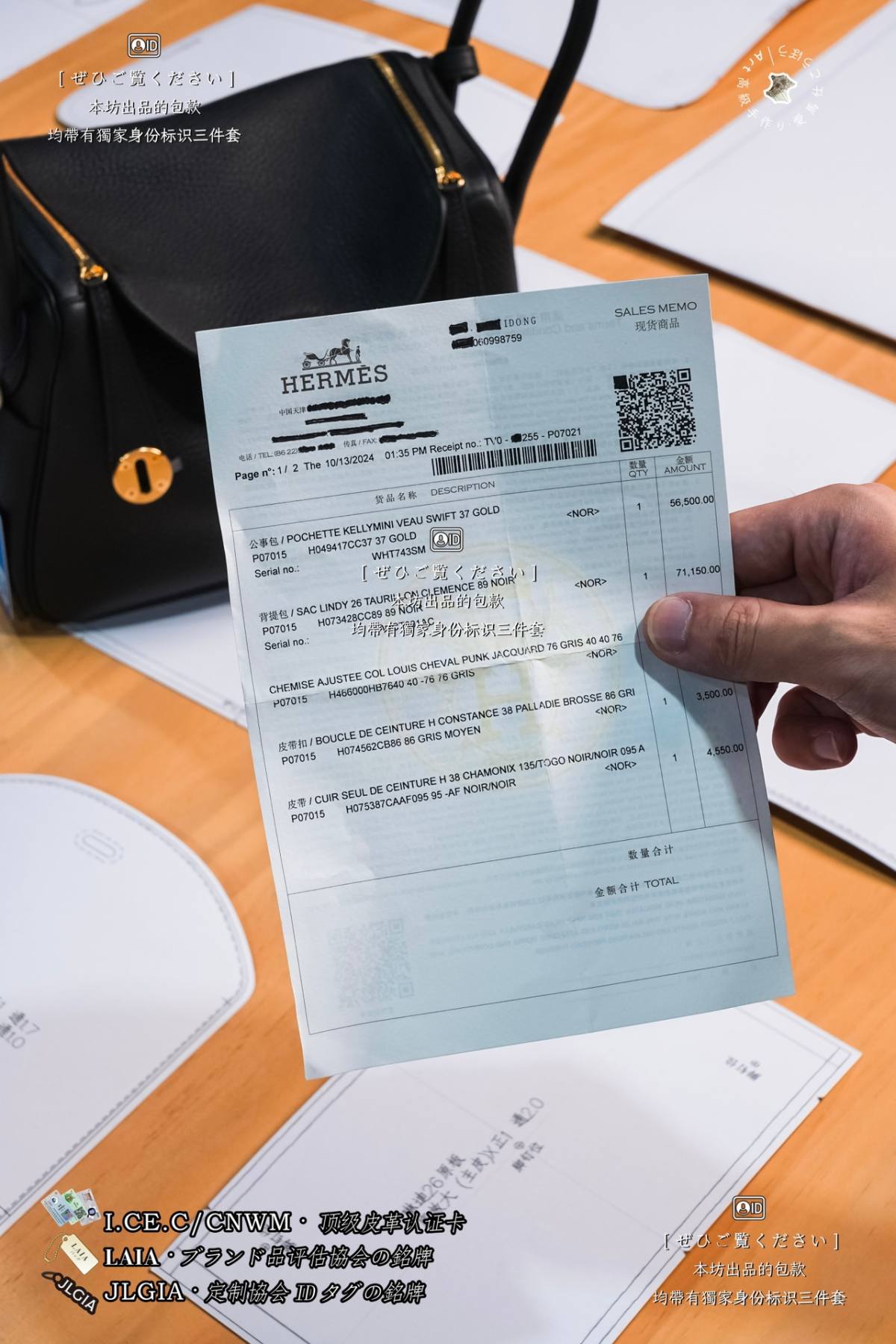
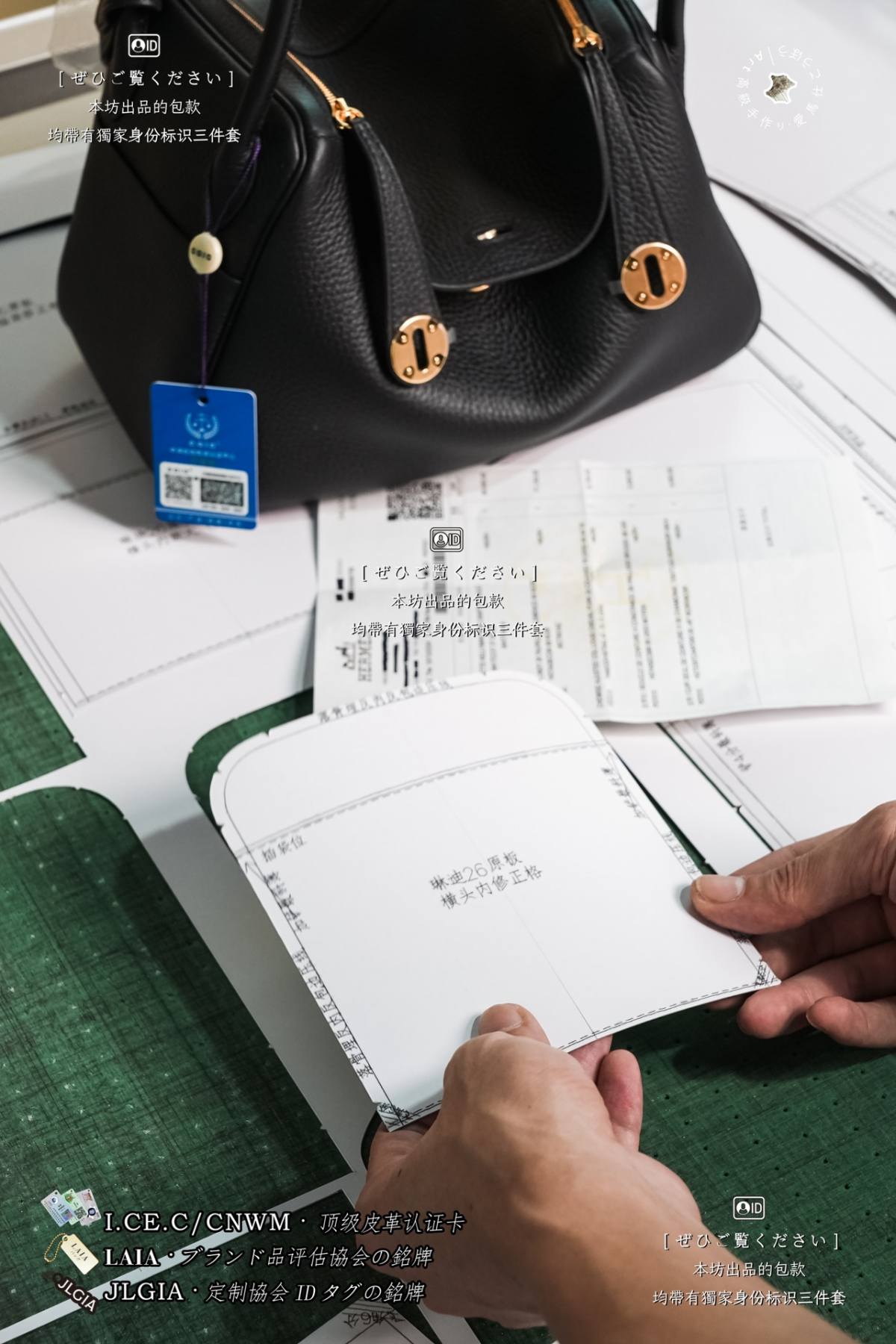
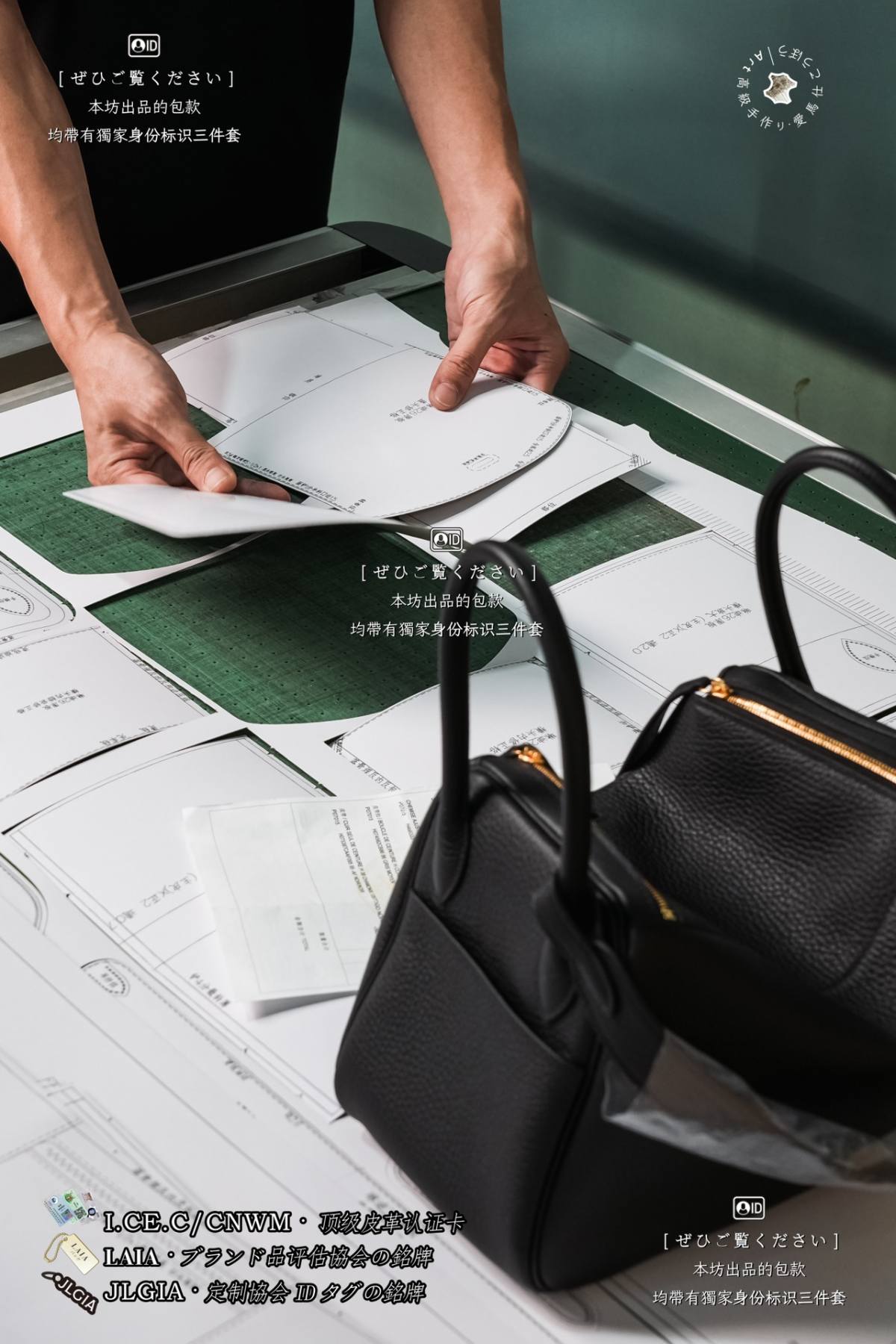
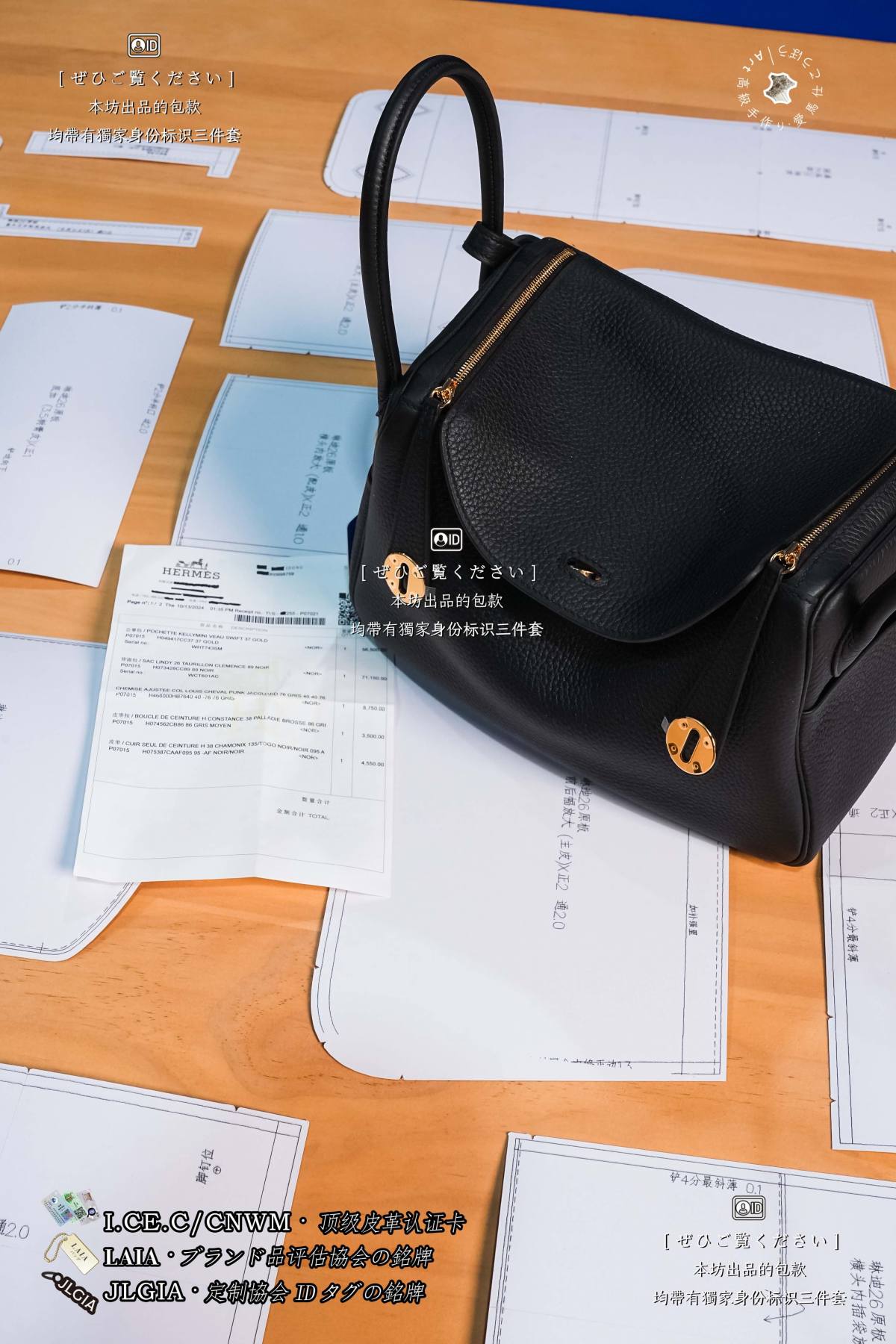
Shebag procures authentic Hermès handbags directly from official boutiques on an annual basis, covering iconic and contemporary styles including the Birkin, Kelly, Constance, Lindy and Evelyne. Each authentic piece undergoes full disassembly followed by digital three-dimensional modeling and structural decomposition, forming a comprehensive reverse engineering system that enables precise one-to-one full replication.
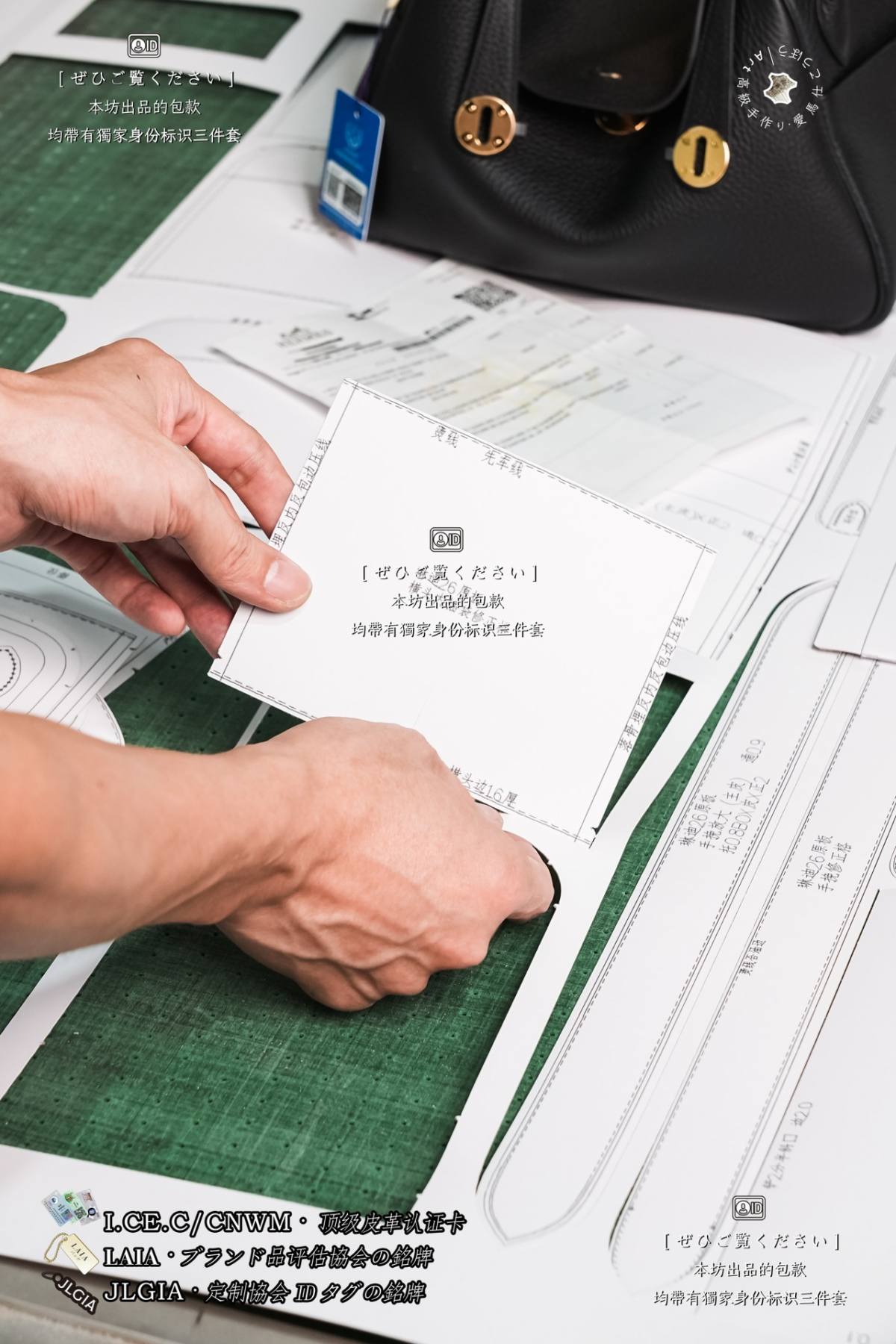
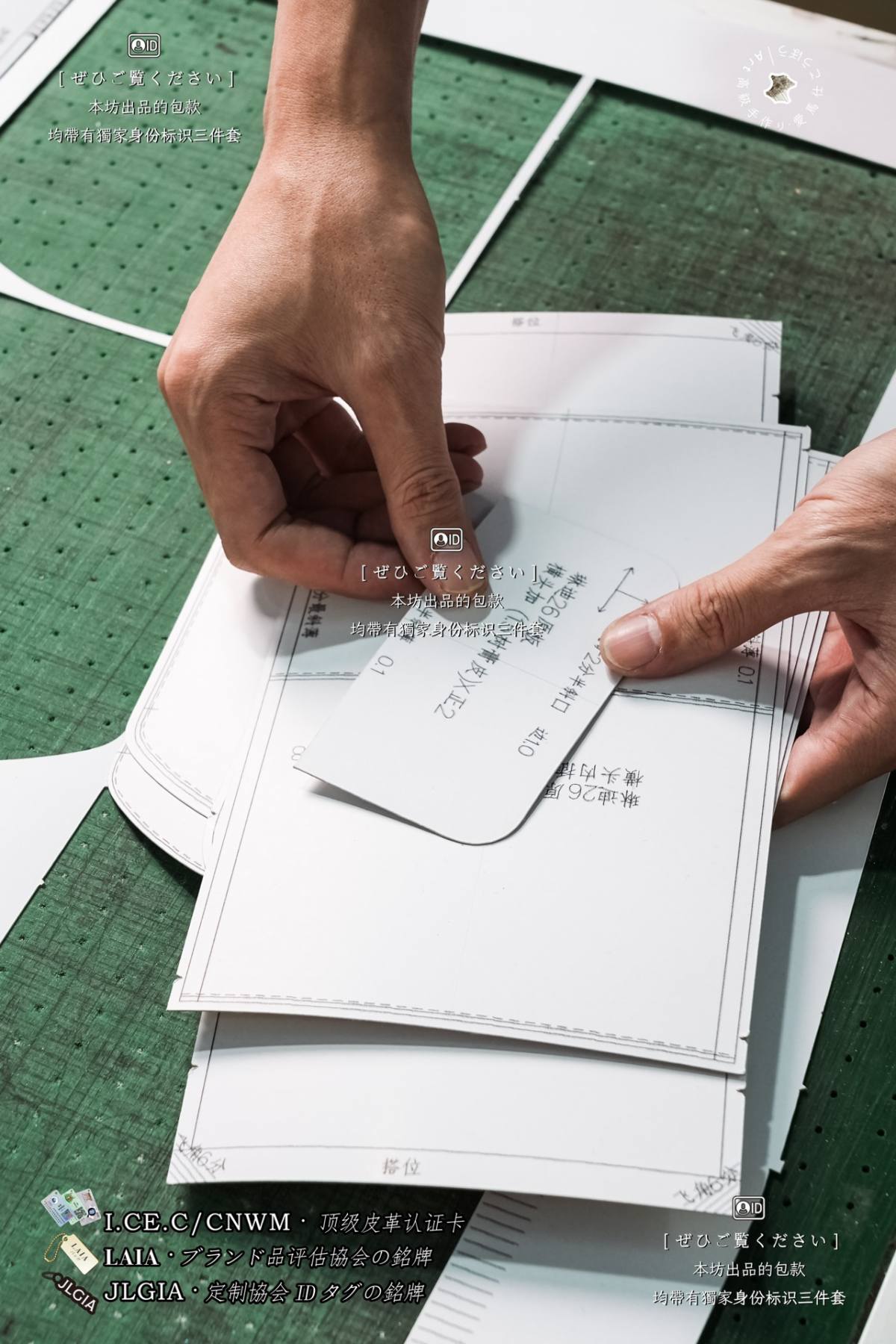
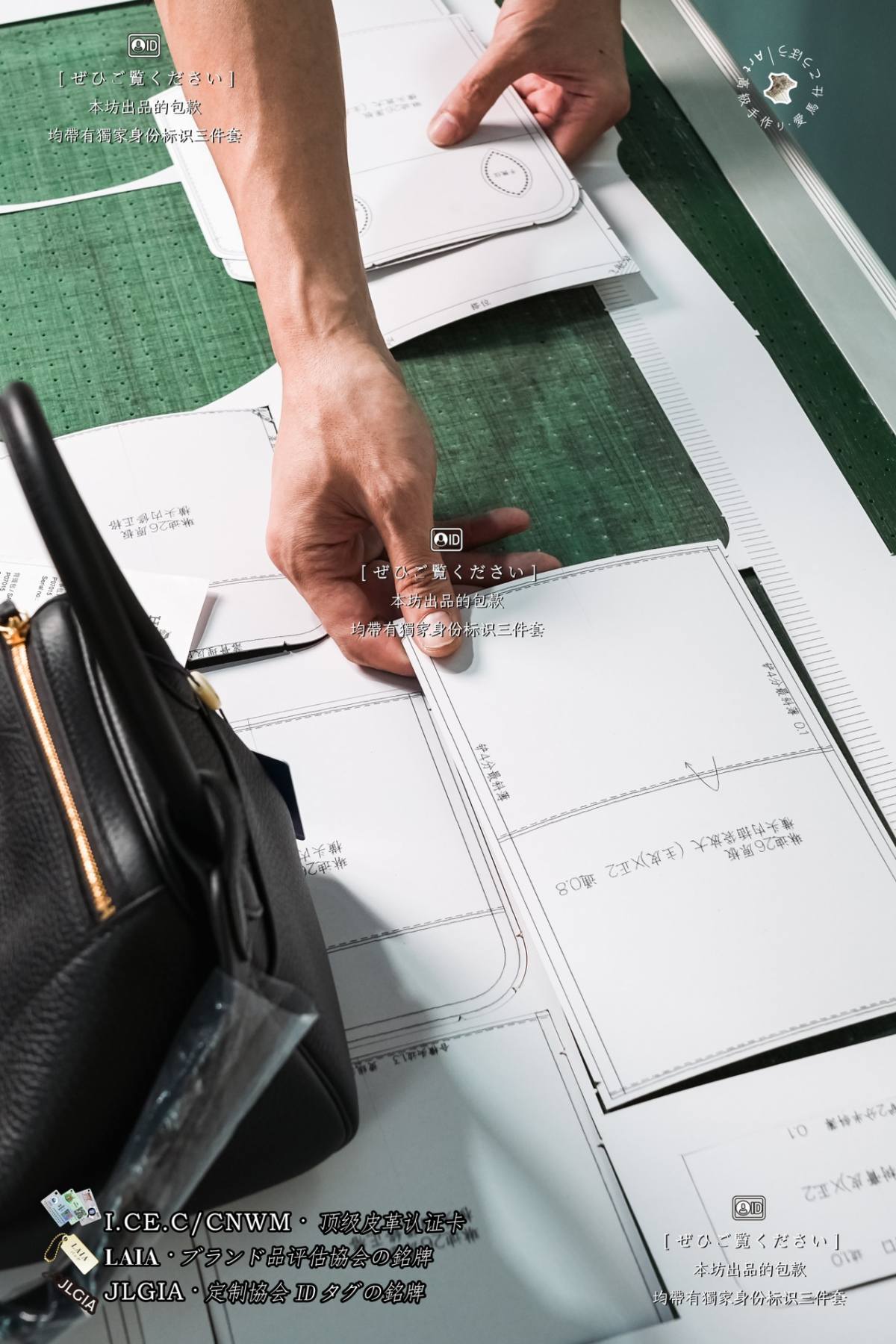
Adopting a central axis symmetry standard, the entire pattern system takes the vertical central line of the bag body as the sole reference benchmark, with all symmetrical components including front panel, rear panel, side gussets and top handles designed as mirrored patterns to eliminate lateral dimensional deviation. The silhouette definition of the soft-structured Lindy relies on integrated pleated side gussets and rounded bottom transition; the pattern development process converts three-dimensional curved surfaces into planar layouts while reserving dedicated material shrinkage allowances, approximately 1.2 percent for Clemence and Togo leather, and 0.8 percent for rigid Epsom leather. The pattern framework is categorized into three tiers, master patterns marked with net dimensions without seam allowances for precision cutting and positioning, cutting patterns integrated with a standard 3.0 millimeter seam margin extended to 3.5 millimeters at curved segments, and marking patterns preconfigured with stitching hole positions, hardware mounting cutouts, fold lines and cross or triangular alignment markers.
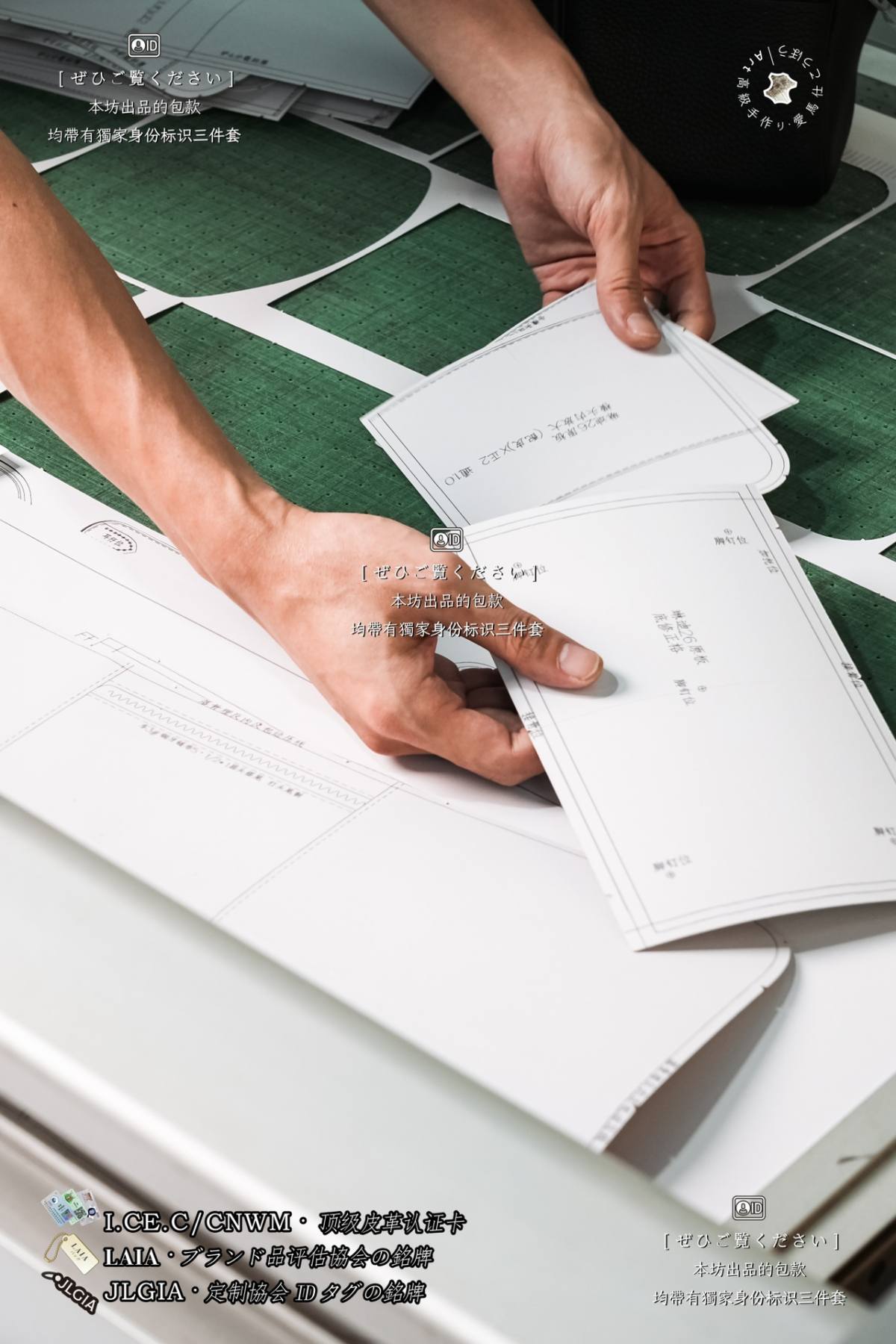
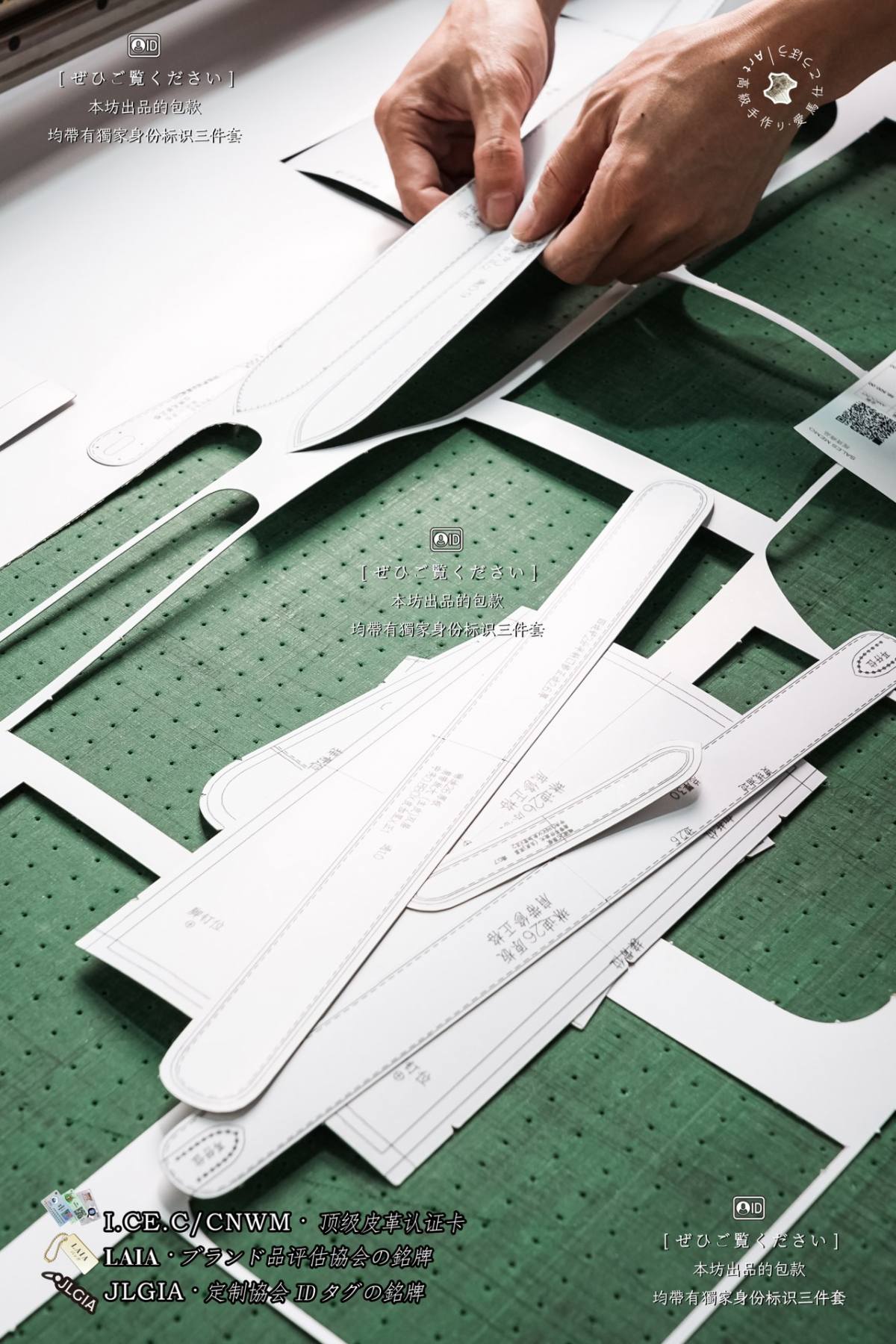
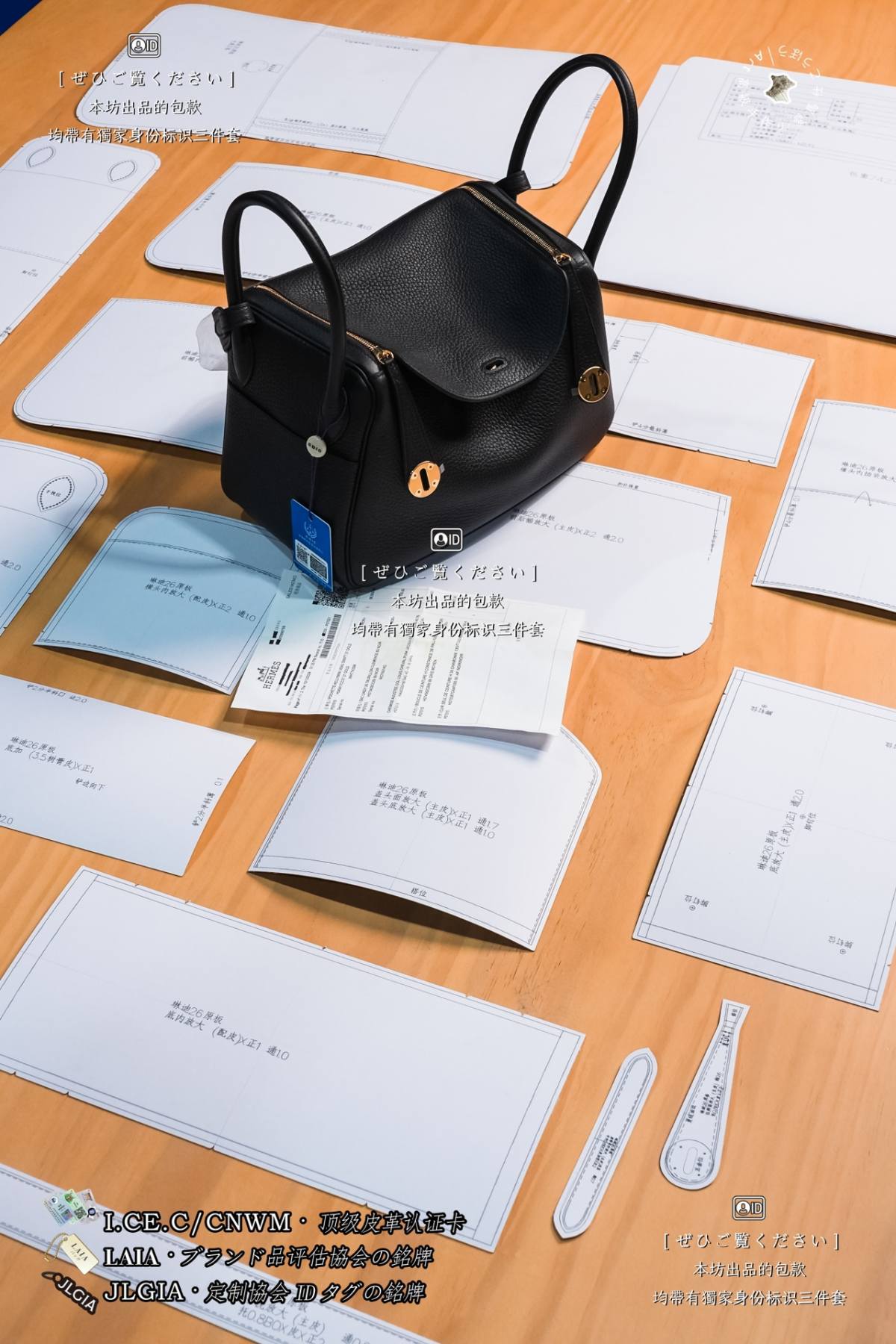
The complete pattern set consists of twenty-two core templates excluding lining and reinforcement components. The bag body structure incorporates six primary pieces, one front panel featuring an arc profile wider at the top and narrower at the bottom with an indented upper edge fitting the bag opening and a rounded bottom with a 4.2 centimeter corner radius, one rear panel produced as a mirrored counterpart with a straight top edge reserved for external pocket attachment positioning, a pair of symmetric left and right side gussets serving as the defining structural element of the Lindy design with a tapered upper to lower width configuration and central accordion pleats, standing at an overall height of 17.5 centimeters with an upper width of 6.8 centimeters and a lower width of 13.0 centimeters, a pleat depth of 2.2 centimeters and a fold line angle set at 45 degrees, one bottom panel adopting a rounded rectangular form measuring 26 by 13 centimeters with a 3.8 centimeter corner radius for seamless integration with side gussets, and one curved elongated opening trim with a width of 2.5 centimeters engineered to reinforce the bag rim and secure the touret turn-lock hardware.
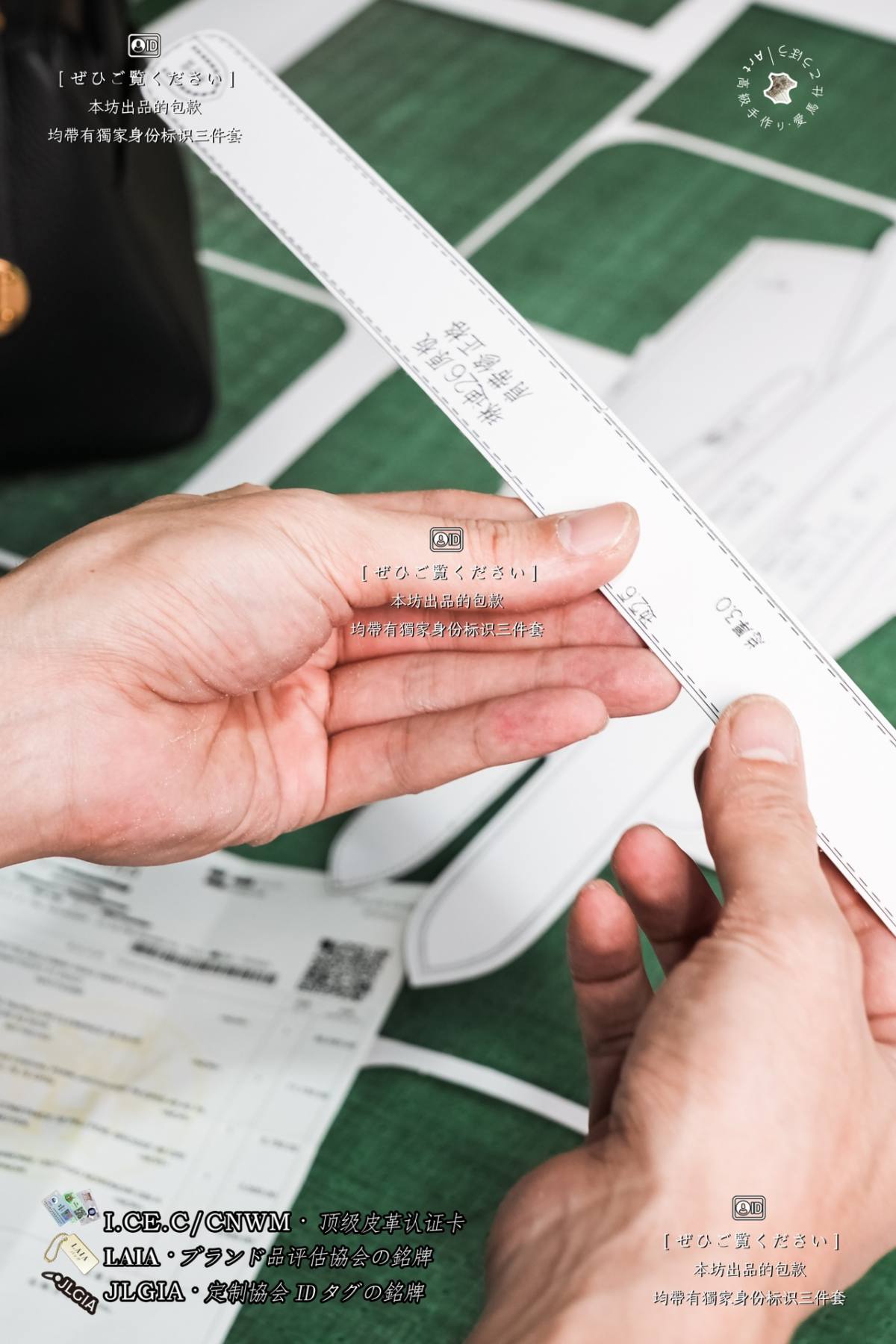
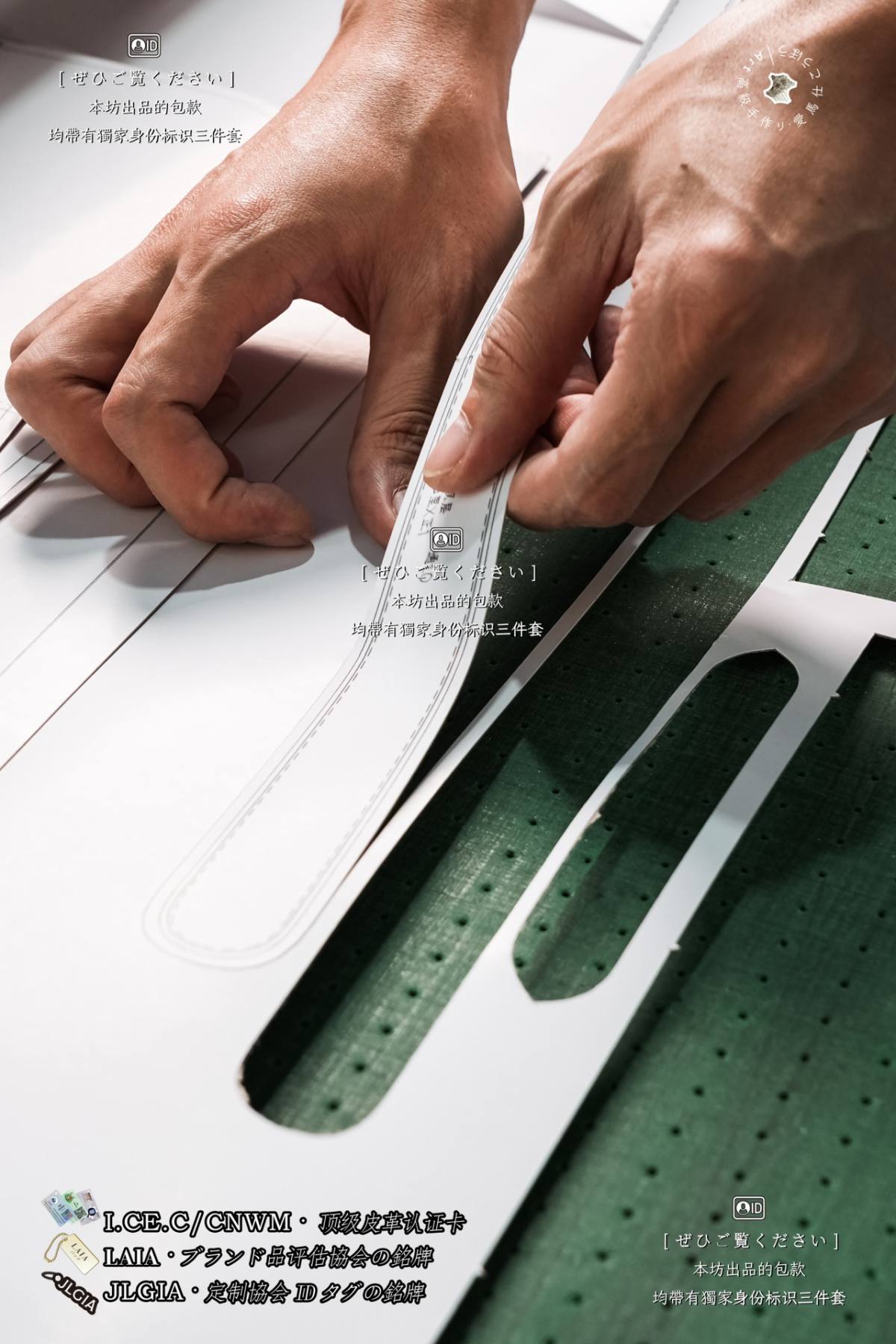
The handle and shoulder strap assembly comprises four components, a pair of symmetric short top handles with an overall length of 22 centimeters and a width of 2.8 centimeters, featuring a central arc drop height of 10 centimeters with both ends cut at a 45-degree bevel for insertion and reinforced fixation into side gussets, one full-length shoulder strap measuring 105 centimeters in length and 2.0 centimeters in width constructed with double-layer bonded structure and reinforced hardware connection points at both terminals, and one curved strap support plate designed to distribute stress by connecting the shoulder strap to side gussets.
Hardware installation and structural reinforcement include twelve supplementary pieces, two circular turn-lock base mounts with a diameter of 3.2 centimeters fixed to the upper edge of front and rear panels, one external pocket patch arranged on the outer surface of the rear panel in a rectangular layout of 18 by 12 centimeters with a rounded bottom contour, four lining templates for internal patch pockets and slip pockets incorporating edge binding and pre-set fold positions, three reinforcement patches crafted from 1.2 millimeter vegetable-tanned leather applied to joint sections of side gussets and handles, bag opening perimeter and bottom base, and two perimeter finishing strips with a width of 1.8 centimeters cut diagonally at 45 degrees along the natural grain for edge binding treatment.
Original manufacturing specifications adopt 300 gram imported coated white card paper with a fixed thickness of 0.3 millimeters, offering superior wear resistance, structural stability and reusability. Standard tooling consists of 30-degree precision craft knives, steel rulers with one millimeter calibration intervals, compasses, awls for alignment perforation and weighted pressing irons for pattern immobilization. Systematic alignment marking serves as the core quality control protocol, three sets of cross-shaped registration points positioned at the top, middle and bottom joints of front and rear panels with side gussets to ensure consistent accordion pleat distribution, triangular alignment markers placed at four corners where side gussets connect to the bottom panel for smooth curved transition control, and fixed insertion depth calibration lines of 2.5 centimeters for handle mounting to guarantee perfect bilateral symmetry.
Material selection and grain orientation management determine the final replication fidelity across leather variants, classic Clemence TC leather with natural pebbled texture delivers balanced softness and structural rigidity with inherent drape performance, requiring grain alignment parallel to the vertical bag axis and tensile strain controlled within 1.5 to 2.0 percent, Togo leather defined by coarser grain texture and enhanced rigidity maintains identical grain orientation standards with shrinkage ranging from 1.0 to 1.5 percent, and rigid Epsom cross-grain leather optimized for structured shaping adopts reverse grain cutting aligned horizontally with bag width dimensions with shrinkage restricted between 0.5 and 0.8 percent. The Lindy 26 requires a full hide of approximately twelve to fourteen square feet, with all primary panels including front and rear sections, side gussets and bottom base strictly sourced from the central hide area free of neck and belly grain imperfections to ensure uniform texture and flawless surface condition.
The skiving process directly governs tactile comfort and edge flatness, with the Lindy adopting a three-layer bonded structure combining outer leather, inner lining and embedded reinforcement, implementing graded thickness specifications across all components. The front and rear panels utilise 1.0 to 1.2 millimeter outer leather paired with 0.8 to 1.0 millimeter inner leather without additional reinforcement, with edges bevelled at 45 degrees over a 3.0 millimeter width. Accordion pleat side gussets feature 0.8 to 1.0 millimeter outer leather and 0.6 to 0.8 millimeter inner leather reinforced centrally with 0.6 millimeter vegetable-tanned leather, finished with 45-degree edge bevelling spanning 2.5 millimeters. The bottom panel uses 1.2 to 1.4 millimeter outer leather and 1.0 to 1.2 millimeter inner leather fully reinforced with 0.8 millimeter vegetable-tanned leather, with 3.5 millimeter wide 45-degree edge treatment. Top handles and shoulder straps adopt double-layer construction with 1.4 to 1.6 millimeter thickness integrated with a 1.0 millimeter vegetable-tanned inner core, bevelled at 30 degrees across a 4.0 millimeter edge width. Bag opening and hardware mounting sections combine 1.2 millimeter outer leather with 1.0 millimeter inner leather and 1.2 millimeter reinforcement leather with standard 45-degree edge bevelling at 3.0 millimeters.
Professional German imported skiving machinery is deployed to maintain sharp blade precision and consistent material feed without stepped surface marks, side gussets are processed with graduated skiving thickness thinner at the central pleat section and reinforced at upper and lower segments to balance folding flexibility and structural shaping, while both terminals of handle inner cores are cut at a 30-degree bevel to eliminate bulging after lamination bonding.