- 02
- May
Shebag handmade Hermes Togo leather cutting craftmanship review(May 2026 updated)
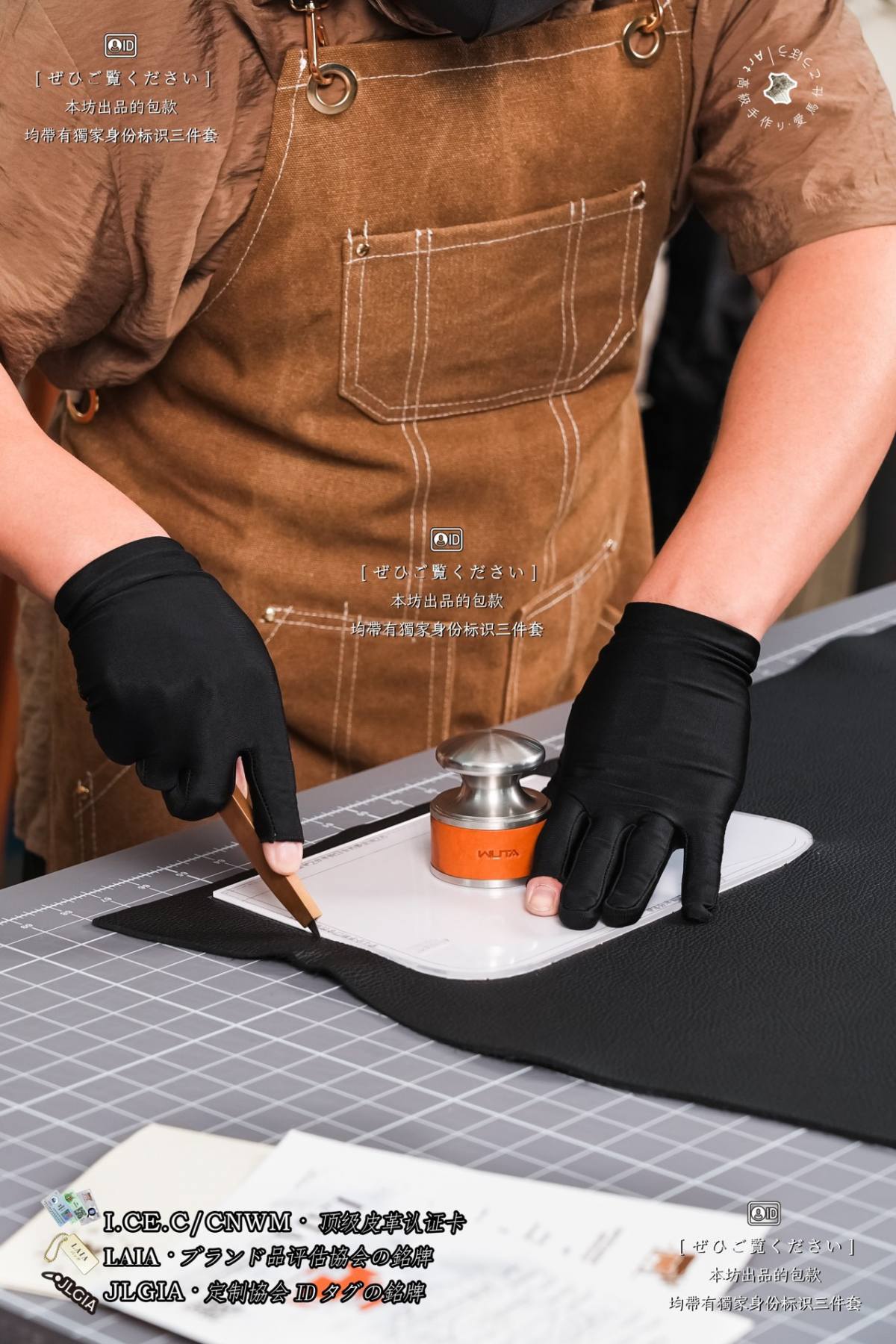
Upon the completion of pattern cutting data modeling and paper template development, Shebag proceeds with the process analysis of Togo leather pattern cutting for the Hermès Lindy 26.
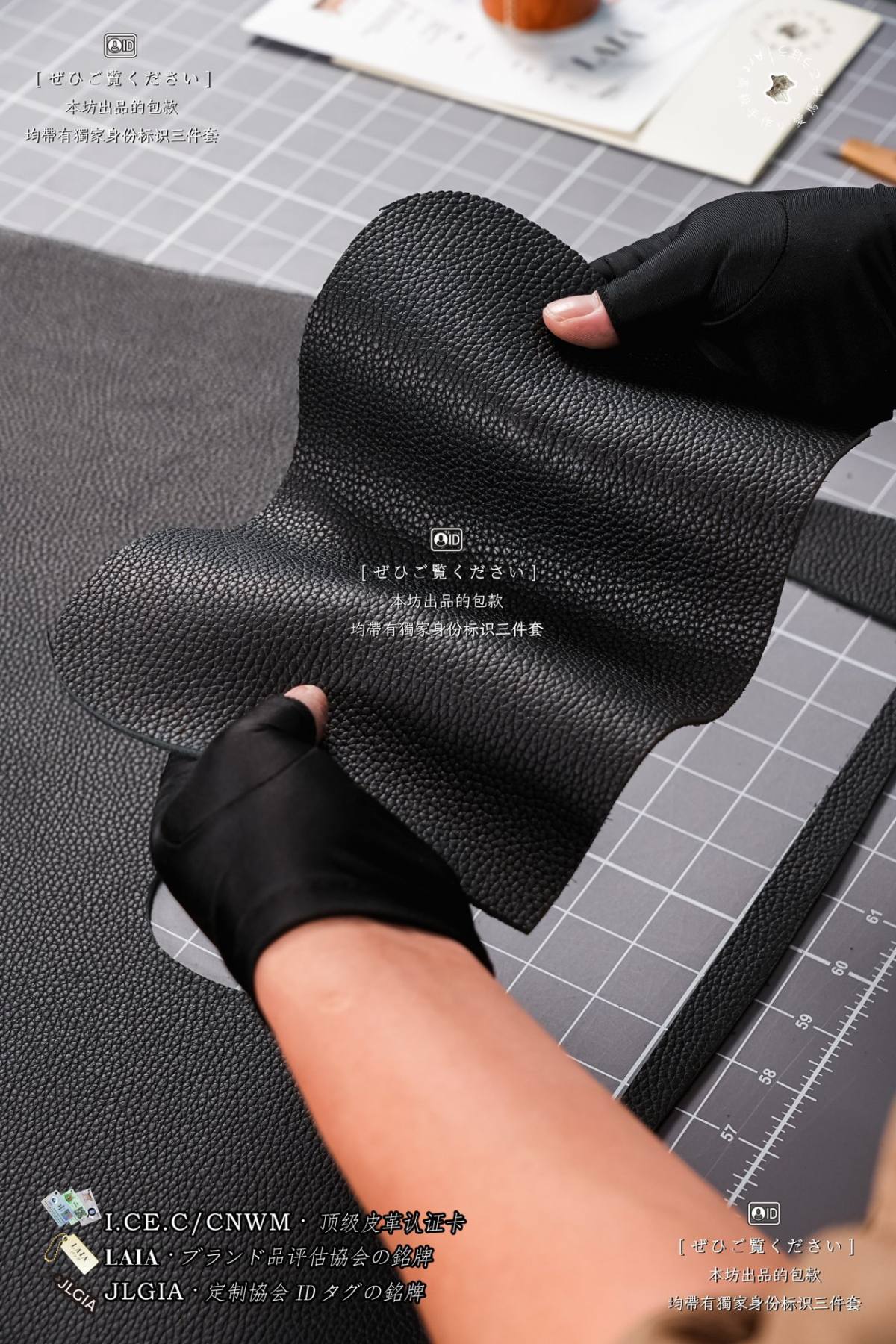
Togo leather is sourced from German or French calfskin, including fetal calf and young calf variants, processed through a combined chrome-vegetable tanning method with a raw thickness ranging from 2.2mm to 2.4mm. The material features a fine lychee grain with triangular particle textures and natural vertical grain lines, delivering outstanding wear and scratch resistance alongside a lightweight, supple and resilient tactile performance.
Material selection follows stringent core criteria, with a single Lindy 26 requiring six to seven square feet of leather hide. Priority is given to neck, shoulder and back sections of the hide for their dense fiber structure and uniform grain distribution. Only full-grain leather free from natural imperfections such as insect bites, scars and inherent creases is adopted, while all pattern pieces for one single bag are aligned in a consistent grain direction through parallel cutting, ensuring the force-bearing orientation matches the natural grain flow. Noticeable batch discrepancies exist between French and German sourced Togo leather; the French variant boasts higher fiber density with lower natural oil content, presenting a dry and matte tactile feel, whereas the German version contains richer natural oils for a softer, smoother texture and enhanced edge polish luster.
The complete standardized pattern cutting configuration for the Lindy 26 comprises twenty-eight individual leather pieces in total. The main body assembly includes eight components consisting of one front panel, one rear panel, two side gusset panels with accordion pleats, one base panel, two inner patch pockets and one top opening binding strip. The handle and shoulder strap assembly covers six pieces in total, including two main top handles, two adjustable shoulder straps and two handle connection tabs. Hardware mounting and reinforcement parts account for the remaining fourteen pieces, covering two lock hole reinforcement patches, four rivet reinforcement pads, two zipper edge strips, four internal structural reinforcement strips and two tail end sealing patches.
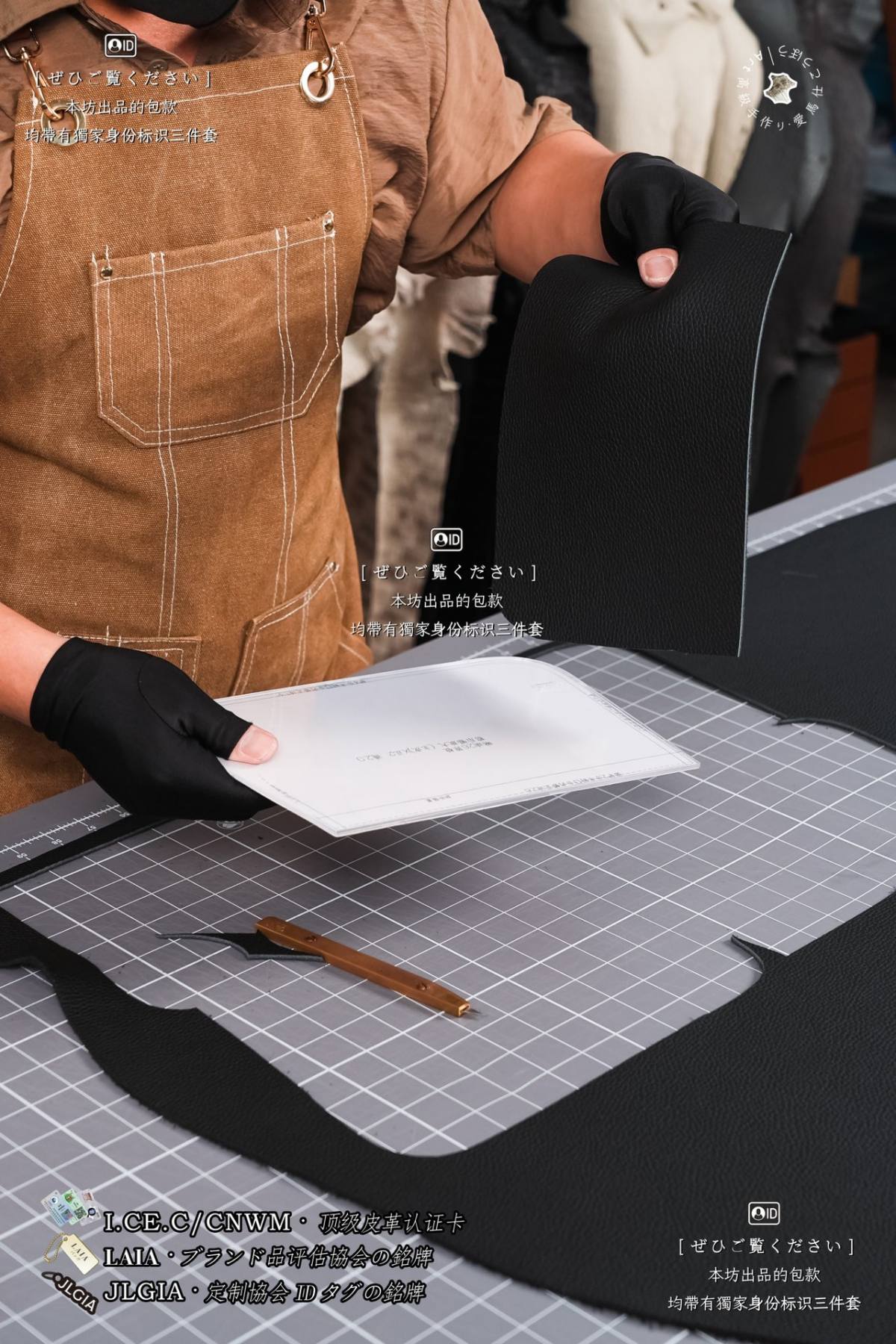
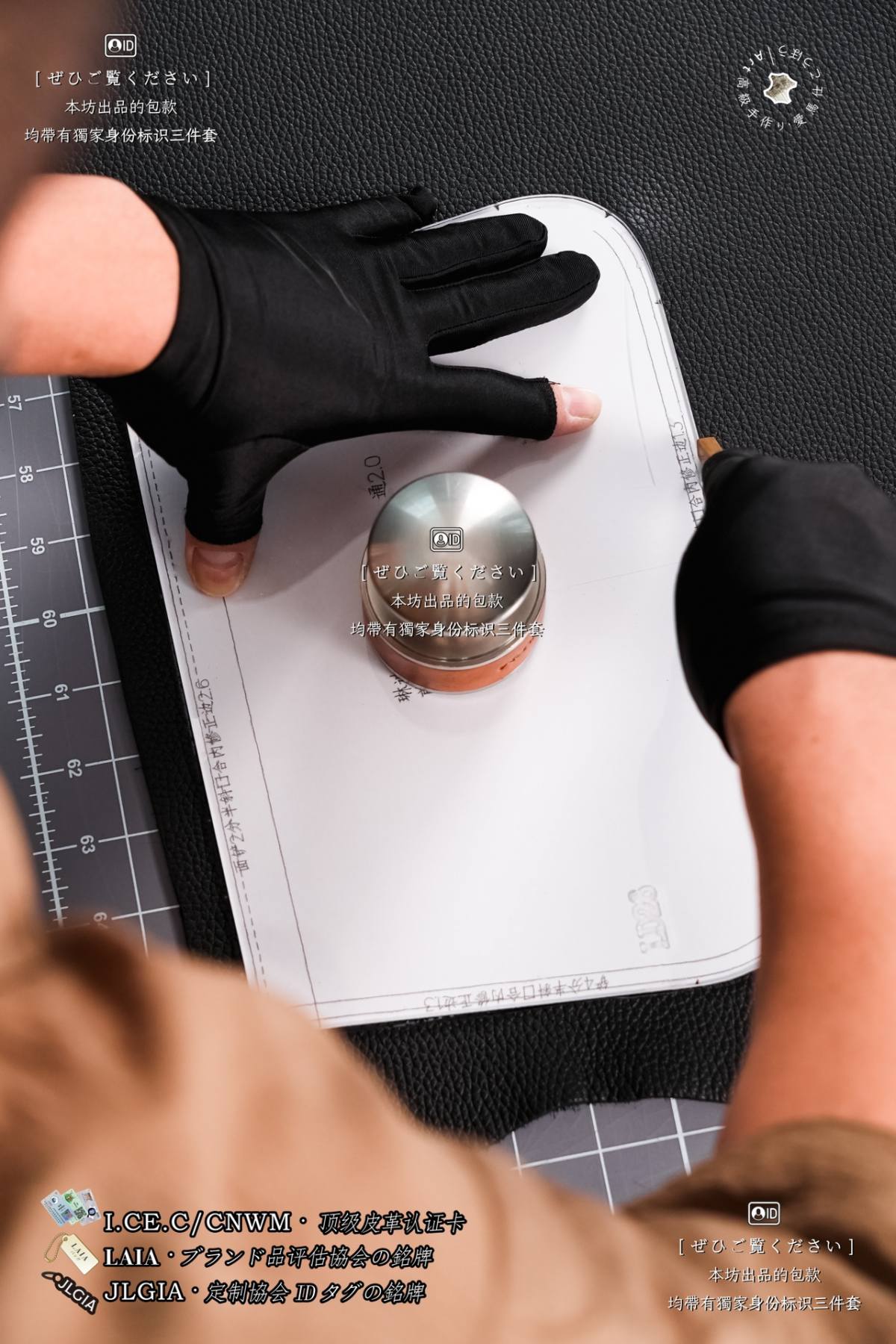
Pre-cut pretreatment serves as a fundamental procedure for shape stabilization and deformation control. Leather hides are laid flat for twenty-four hours in a constant temperature and humidity workshop maintained at 20 to 25 degrees Celsius with a relative humidity of 50% to 60%, eliminating internal material stress to prevent warping and cracking after cutting. Each hide undergoes thorough visual inspection under strong lighting, with natural blemishes precisely marked using silver tracing tools. Grain flow is clearly labeled along the spine line to guarantee all cut pieces follow a unified grain direction. Custom wooden molded paper templates with a dimensional precision tolerance of ±0.1mm are positioned and fixed firmly on the leather surface to avoid positional shifting during layout and cutting.
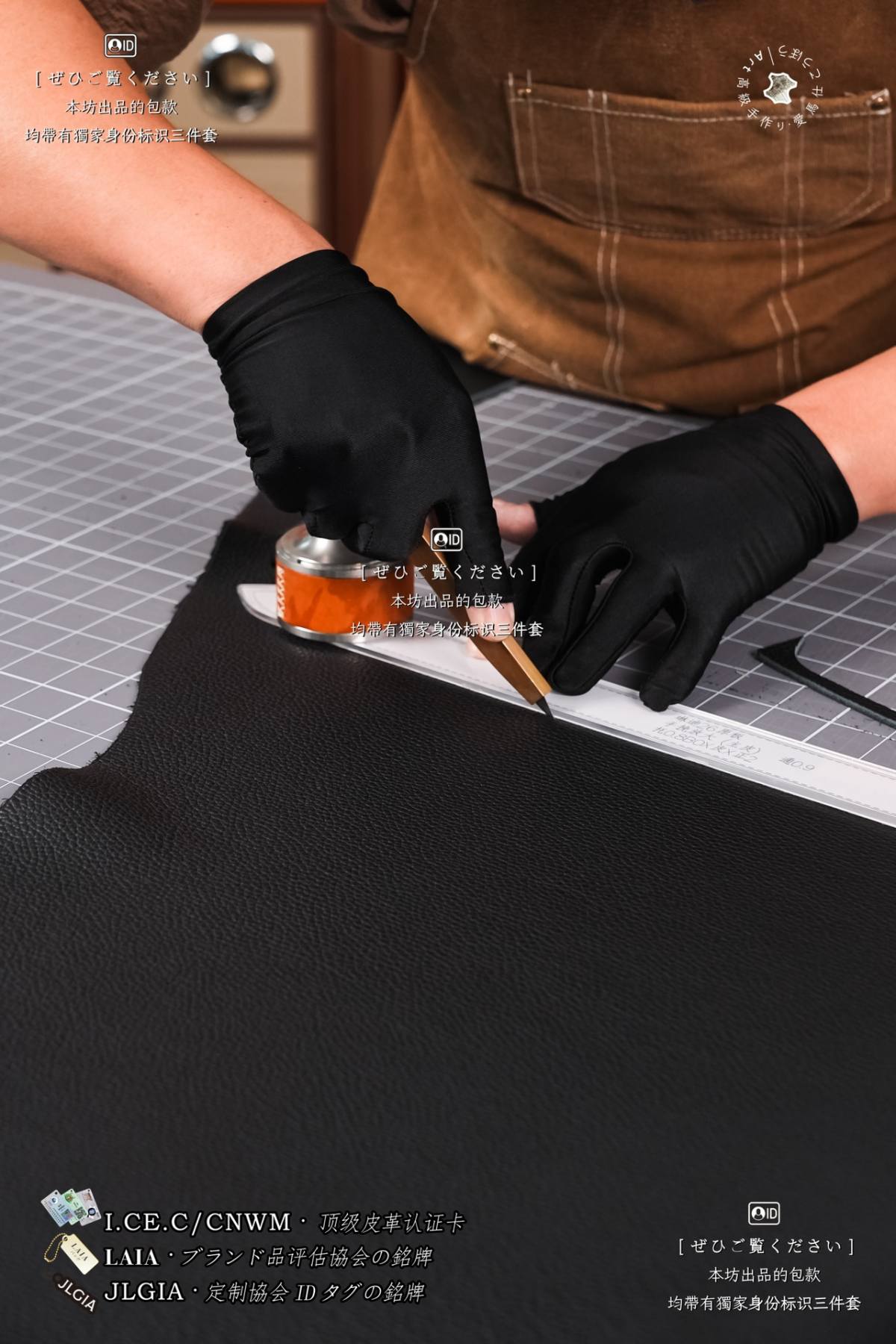
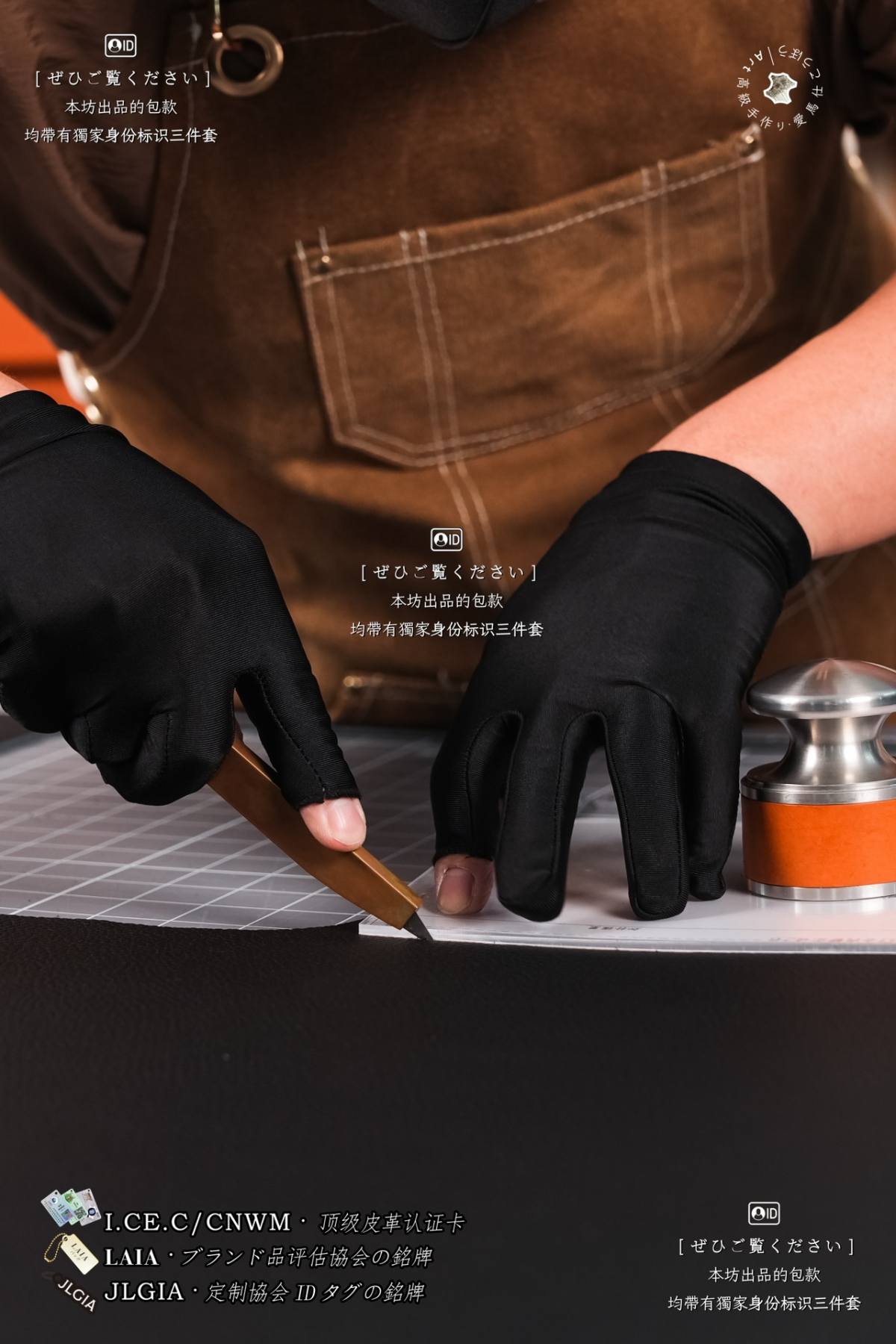
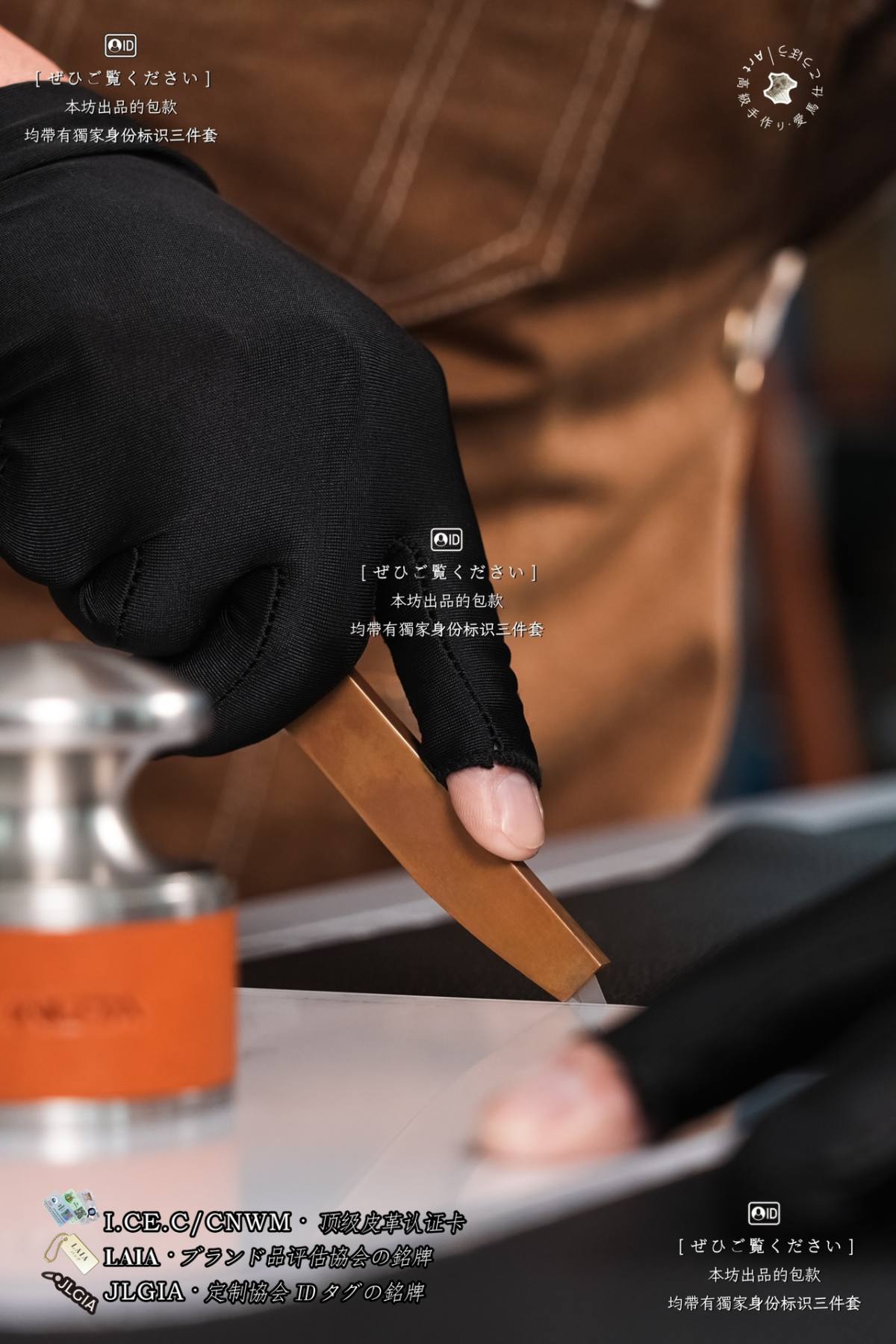
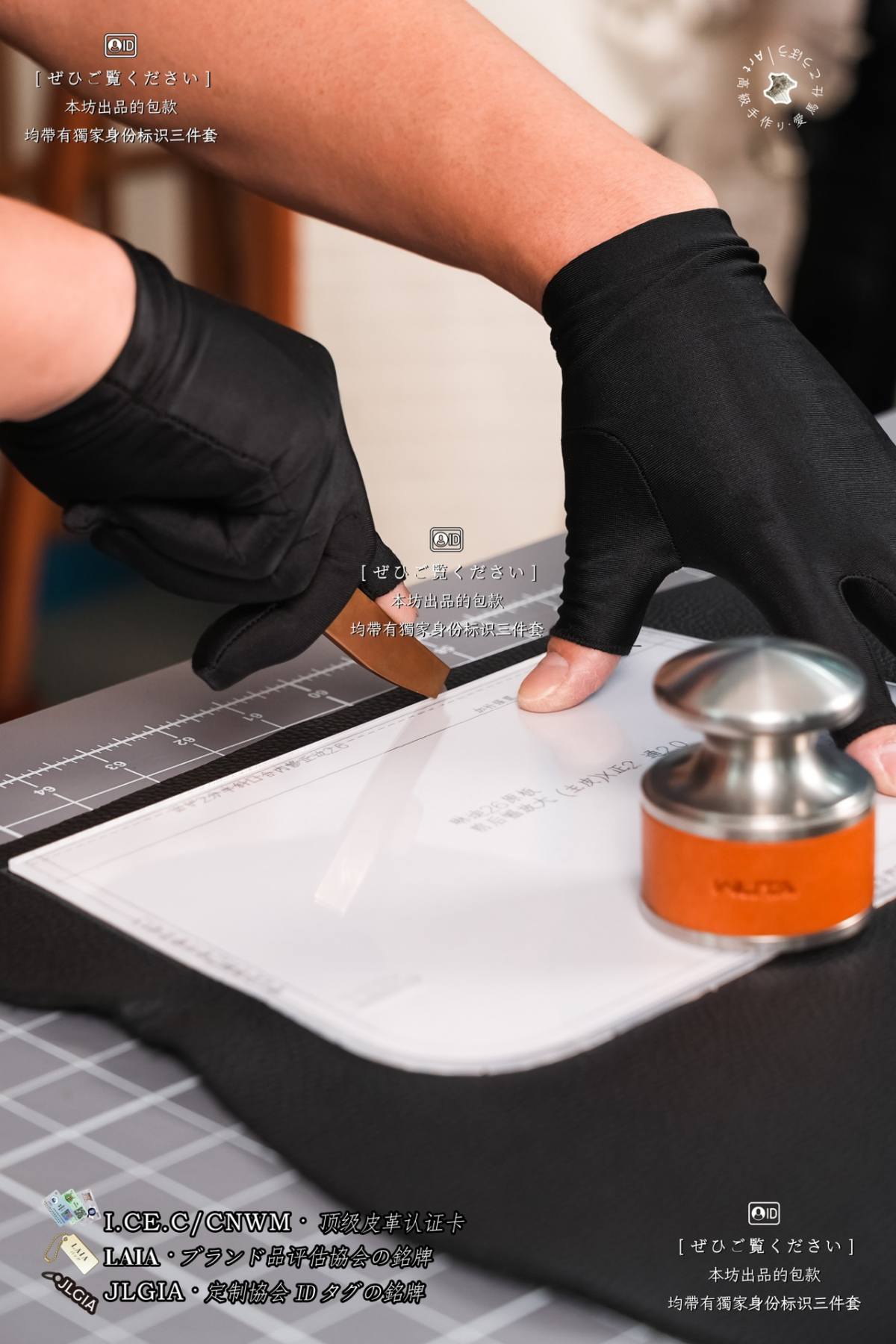
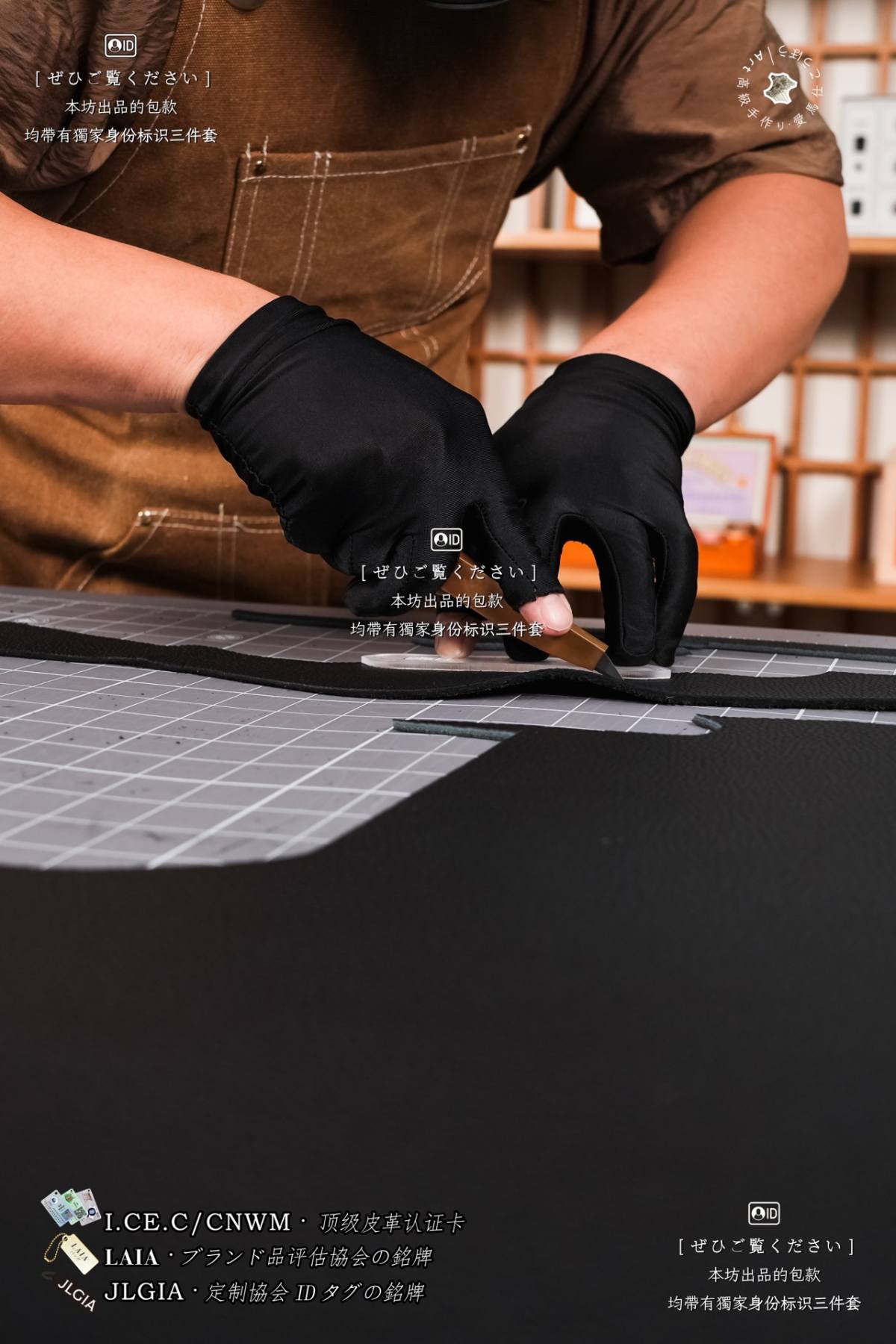
Precision cutting adopts a combined workflow of manual craftsmanship and digital numerical control processing. The cutting sequence adheres to the principle of processing large panels prior to small components, arranging main body pieces first followed by handles and auxiliary reinforcement parts to minimize raw leather material waste. Core cutting tools include 45-degree straight-edge cutting knives for primary panel trimming, round-edged knives for curved contours and small component shaping, alongside steel straight rulers, rolling measuring tools and positioning pins for accurate layout alignment. Premium ateliers deploy CNC laser precision cutting with a precision tolerance of ±0.05mm, delivering burr-free clean edges and high dimensional consistency, with subsequent manual refinement applied to curved transitions and sharp corner details.
Grain uniformity and material yield efficiency are strictly controlled throughout the cutting process. All pattern pieces are cut with parallel grain alignment consistent with the bag’s vertical dimension and mechanical stress direction, effectively preventing structural distortion and uneven tension during long-term usage. A reserved spacing of 3mm to 5mm is maintained between adjacent cut pieces, with 5mm spacing for thick leather and 3mm for thinner variants, avoiding connected cuts and dimensional errors. The overall material utilization rate of the Lindy 26 reaches 75% to 80%, significantly exceeding the 50% to 60% average of conventional luxury handbags, with flawed hide sections exclusively allocated to concealed internal reinforcement components.
Strict dimensional precision benchmarks are enforced for all cut pieces, with a tolerance of ±0.1mm for straight edges, ±0.2mm for curved profiles and a maximum diagonal dimensional deviation limited to 0.3mm. Symmetrical paired components such as dual side panels and twin top handles maintain a dimensional deviation below 0.15mm to ensure perfect structural symmetry.
Skiving, or leather thinning, stands as the core craftsmanship defining structural fit and tactile quality. With a raw thickness of 2.2mm to 2.4mm, Togo leather undergoes differentiated targeted skiving across different functional sections to strike an optimal balance between structural strength, material softness and stitching flatness. The splicing edges of the bag opening and side gussets are thinned to 0.5mm to 0.6mm within an 8mm to 10mm width range, facilitating clean folding alignment and seamless stitching finish. Base and main body joint edges are processed to 0.6mm to 0.7mm over a 10mm to 12mm width for load-bearing reinforcement and crack resistance. Top handles and shoulder straps, constructed with double-layer bonded leather, are uniformly thinned to 0.8mm to 1.0mm across the full width to achieve balanced firmness and comfortable hand feel. Inner patch pockets and concealed internal sections are reduced to 0.4mm to 0.5mm in full width for streamlined fitting and minimized bulk. Hardware mounting positions around rivets and lock fittings are thinned locally to 0.3mm to 0.4mm within a 5mm peripheral radius, reducing overall thickness for tight hardware fitting and seamless assembly.
Professional German-made precision skiving machines are deployed in the process, featuring a blade gap tolerance controlled within ±0.01mm and stable material feeding speed for consistent thinning performance. Operation techniques require skiving along the natural grain direction with single-pass complete processing, avoiding repeated scraping that may cause surface fiber fraying and structural fracture. Curved sections are processed at a reduced feeding speed with small incremental advances to maintain smooth contour transition. Post-skiving quality inspection mandates smooth burr-free edges without stepped thickness marks or complete layer penetration. Thickness verification is conducted at multiple sampling points per piece using a micrometer, with all measured deviations capped at 0.05mm.
Edge finishing and pre-assembly processing follow skiving operations to refine detail quality. Skived edges undergo wet sanding with progressive grit from 400 to 800 mesh sandpaper to remove micro burrs, forming a consistent 0.5mm rounded edge profile that prevents sharp contact and enhances the adhesion performance of edge coating polish. Pre-punching and saddle stitching marking are executed manually following paper template positioning, adopting 3.85mm French chisel sizing aligned with No.8 Blanchard craftsmanship standards, with a stitch pitch of 3.8mm to 4.0mm and a punching depth of 1.2mm to 1.5mm. Stitch density is increased by one to two additional stitches at corner transitions to mitigate cracking risks under structural tension. Reinforcement lamination is applied to high-stress areas including the bag opening, handle root connections and rivet mounting points, bonding 0.6mm high-density leather fiber or thin calfskin reinforcement patches with imported water-based adhesive. Laminated sections are compressed to expel residual air bubbles and cured at room temperature for four hours, substantially improving tensile strength and tear resistance.
The production of Togo leather pattern cutting faces three core technical challenges alongside a four-tiered quality control system. Natural irregularities in Togo grain texture demand manual piece-by-piece comparison to unify grain orientation, particle size and texture density across all components of a single bag for consistent visual presentation. Curved contour precision represents another key challenge, as the fluid symmetry of side panel accordion pleats, bag opening arcs and handle curves relies heavily on master artisan experience in manual cutting, while CNC precision cutting effectively elevates batch consistency. The loose fiber structure of Togo leather also poses risks of over-skiving and uneven thickness distribution, requiring precise blade calibration and steady feeding speed supported by frequent micrometer sampling inspections.
The four-tiered quality control framework covers full-process inspection from initial cutting verification assessing dimensional accuracy, grain consistency and edge integrity with immediate recutting for non-compliant pieces, secondary skiving inspection verifying thickness uniformity and layer integrity through three to five sampling measurements per piece, final pre-processing audit conducting full verification of punching positioning, reinforcement lamination and rounded edge finishing, and pre-assembly random sampling reviewing component symmetry and grain matching consistency.
Clear distinctions exist in pattern cutting characteristics between Togo leather and alternative mainstream materials including Epsom and Clemence leather. Togo calf lychee grain leather delivers superior softness and elasticity, with a skiving range of 0.5mm to 1.0mm and easy edge sanding, requiring rigorous grain alignment due to its natural irregular texture. Epsom embossed calfskin features rigid structure and exceptional abrasion resistance, with a skiving thickness of 0.6mm to 0.8mm, dense compact edges that complicate sanding procedures and standardized embossed grain that lowers pattern alignment difficulty. Clemence adult cow lychee grain leather presents thicker material weight, with a skiving range of 0.8mm to 1.2mm, rough natural edges requiring multi-round sanding treatment, bold coarse grain characteristics and relatively low material utilization efficiency.
The pattern cutting craftsmanship of Lindy 26 Togo leather embodies the integration of extreme dimensional precision and refined artisanal heritage. Every procedural stage covering material sourcing, pre-treatment, precision cutting, differentiated skiving and pre-assembly finishing is governed by millimeter-level process control. This rigorous system not only preserves the inherent natural texture and long-term durability of Togo leather, but also secures overall bag structural symmetry, seamless fitting, deformation resistance and maintainability, underpinning its core design value of lifelong usability and generational inheritance.