- 07
- Jul
Shebag handmade Hermes lizard birkin bag handle stitching craftmanship review(July 2026 updated)
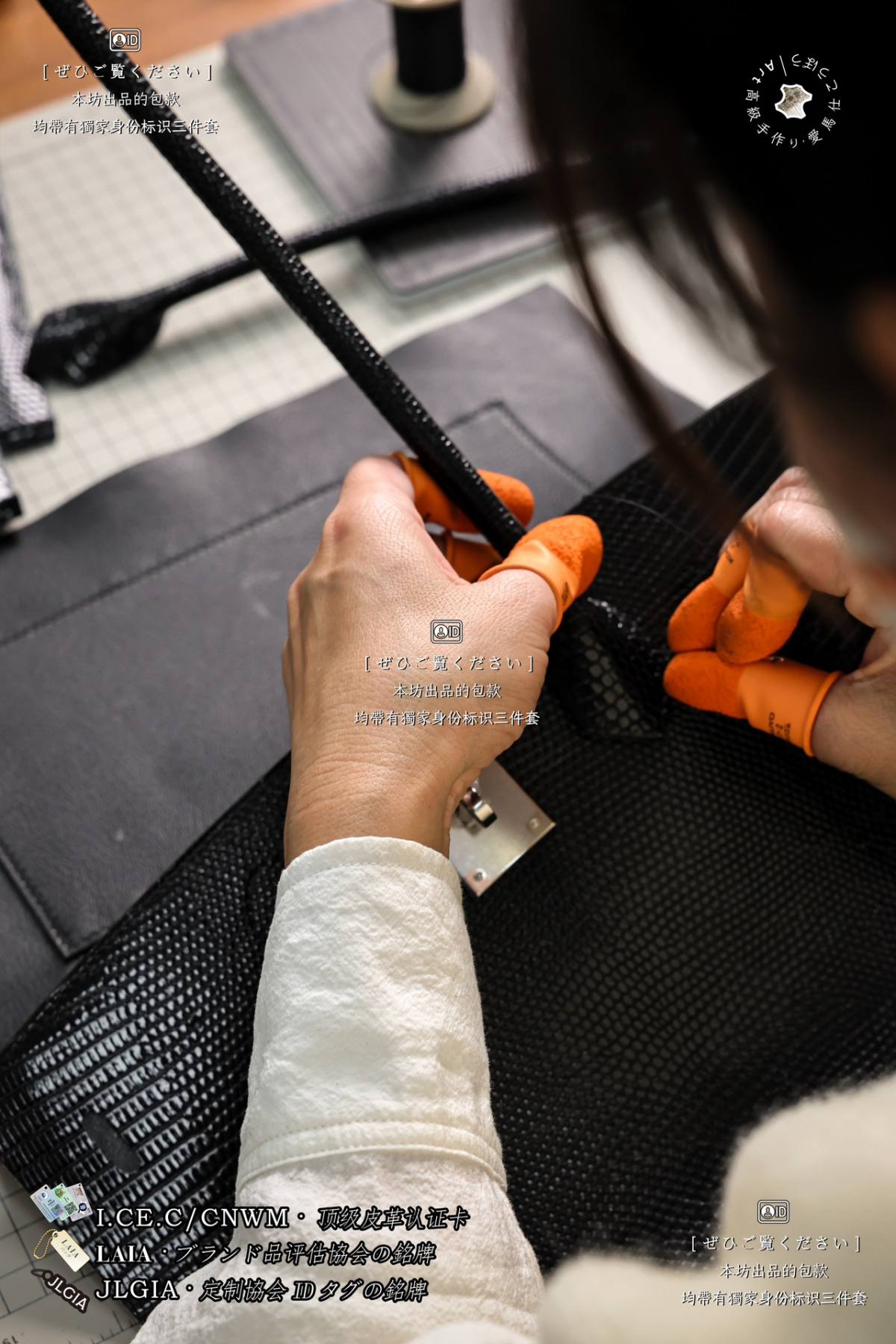
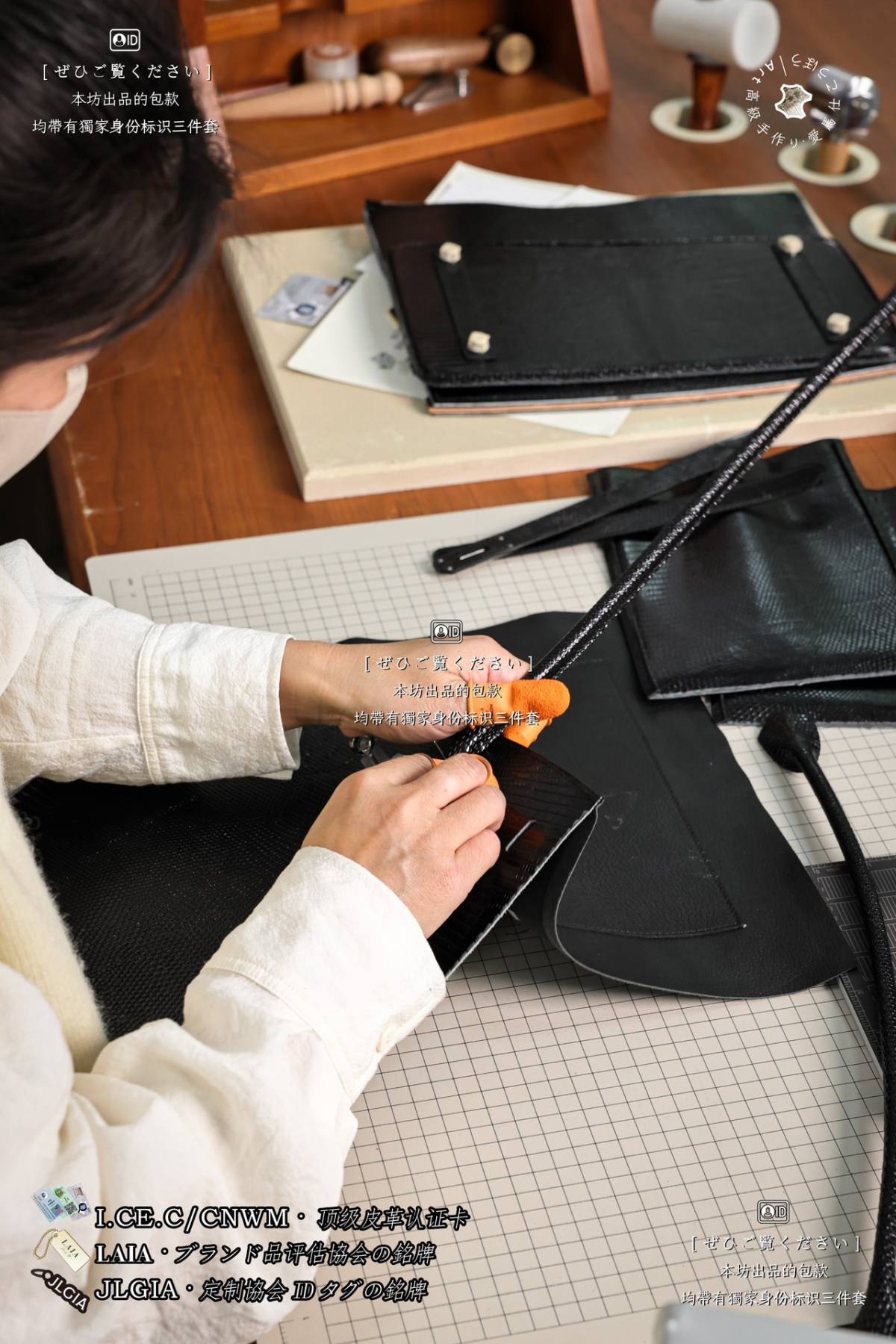
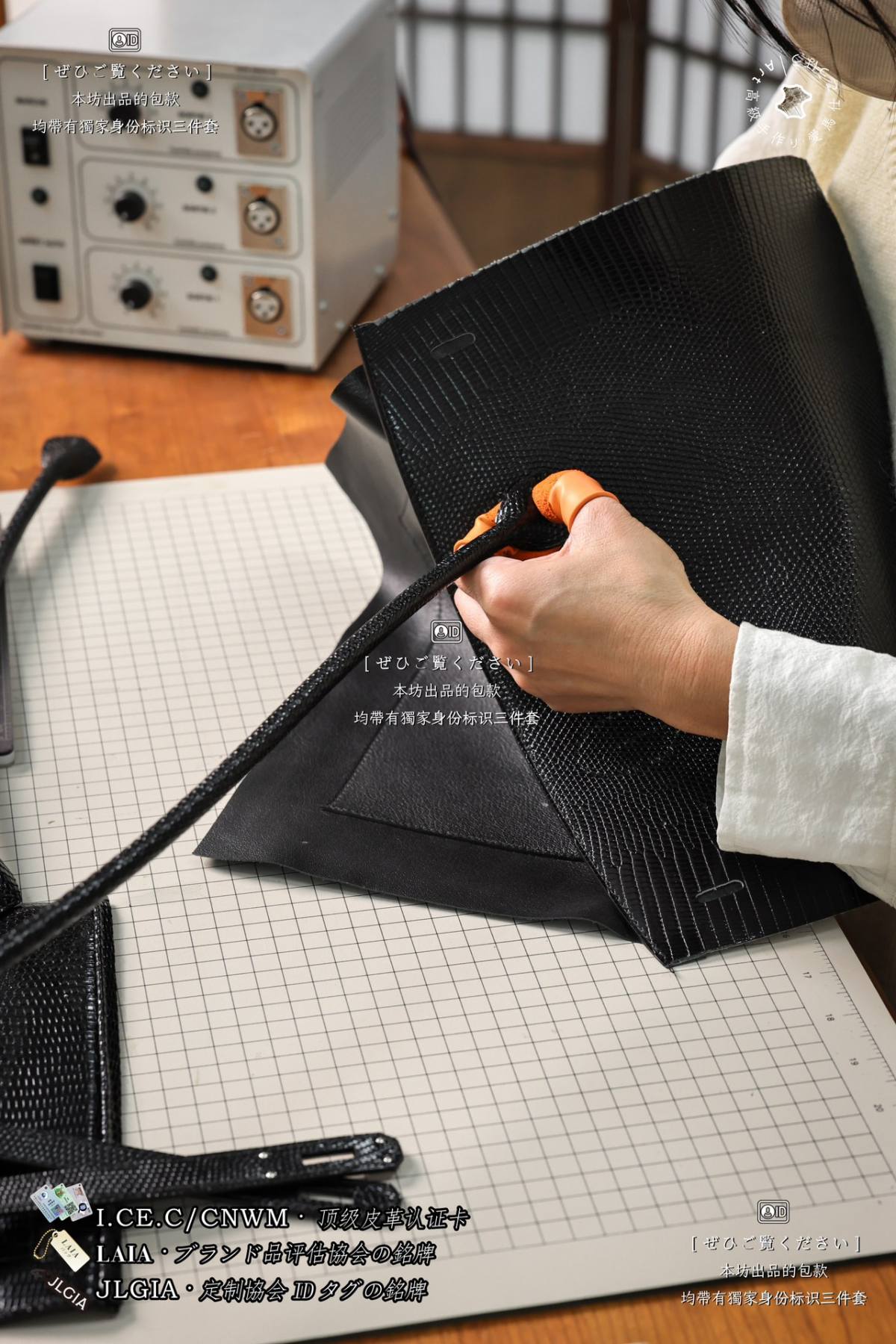
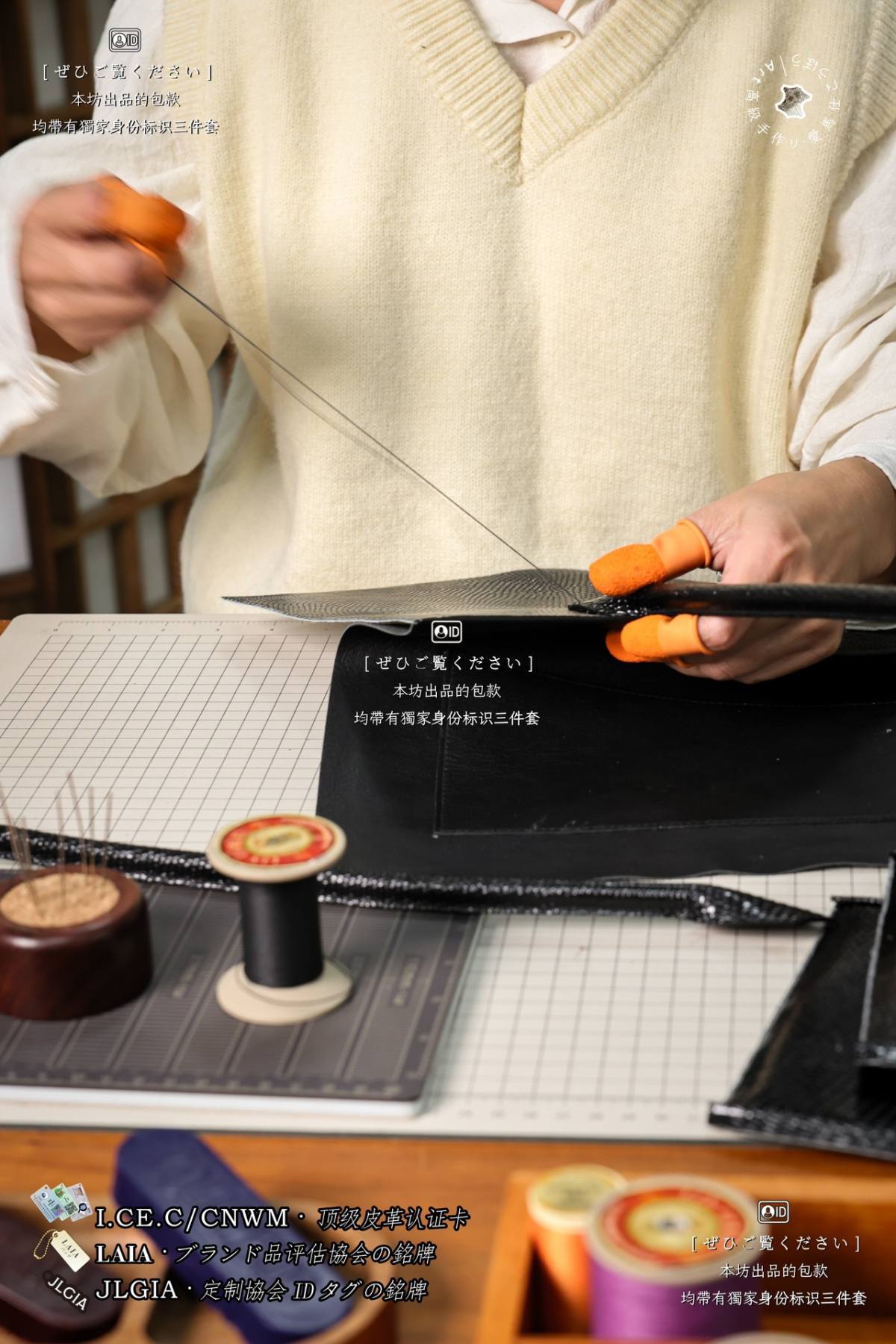
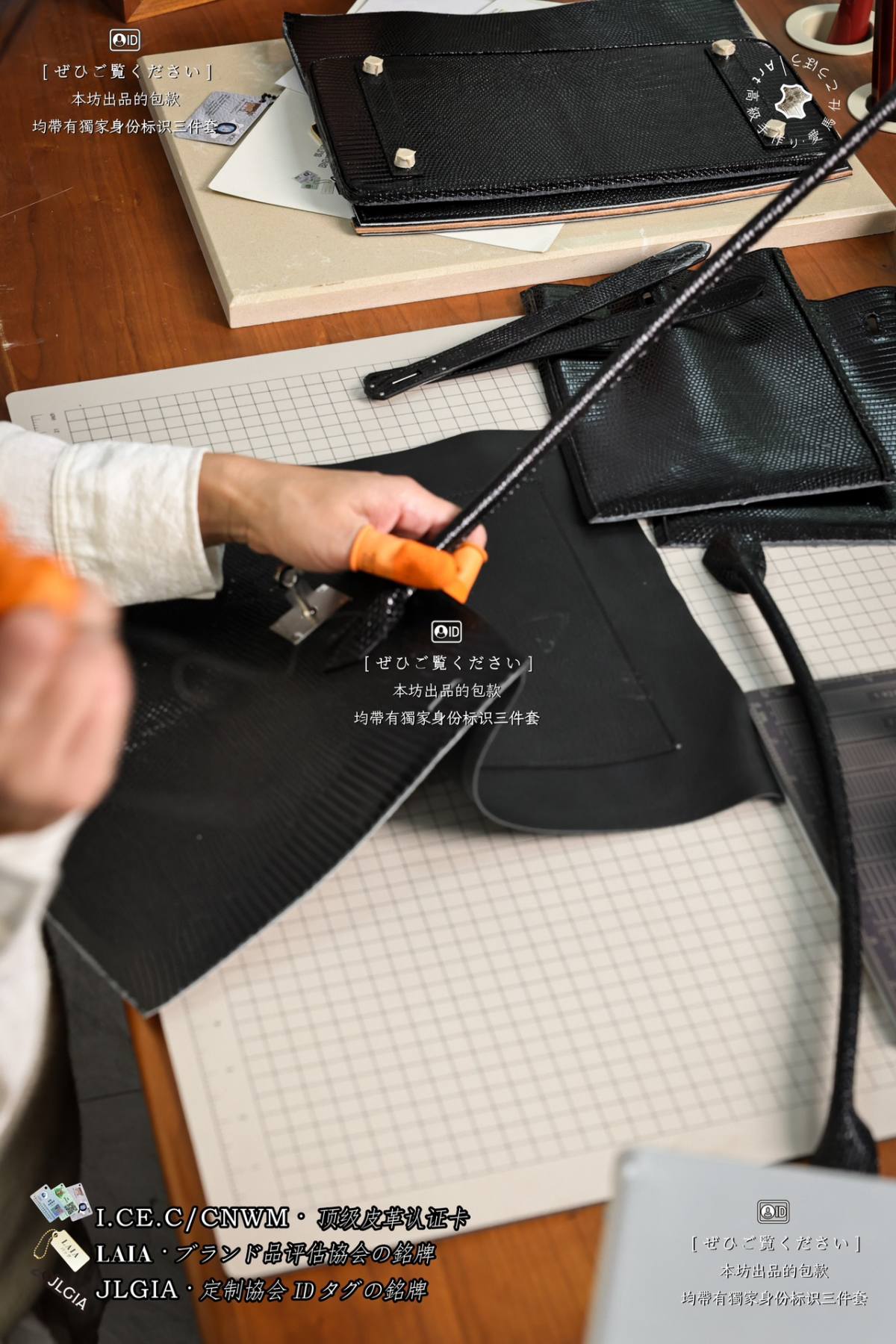
Today is for a story of Shebag Birkin Lizard Skin Handle Saddle Stitching Process Skills.
Lizard skin features a thin thickness of 0.6–1.2mm and fragile scales, which are prone to cracking around pinholes and wrinkling under tension. As a high-frequency stress-bearing component of the Birkin bag, the handle requires sophisticated craftsmanship. The complete Shebag stitching process consists of six core procedures tailored exclusively to the characteristics of premium lizard skin: pre-treatment of leather materials, diagonal hole punching, double-needle saddle stitching, reinforcement at corners and root joints, thread finishing and sealing, and final shaping.
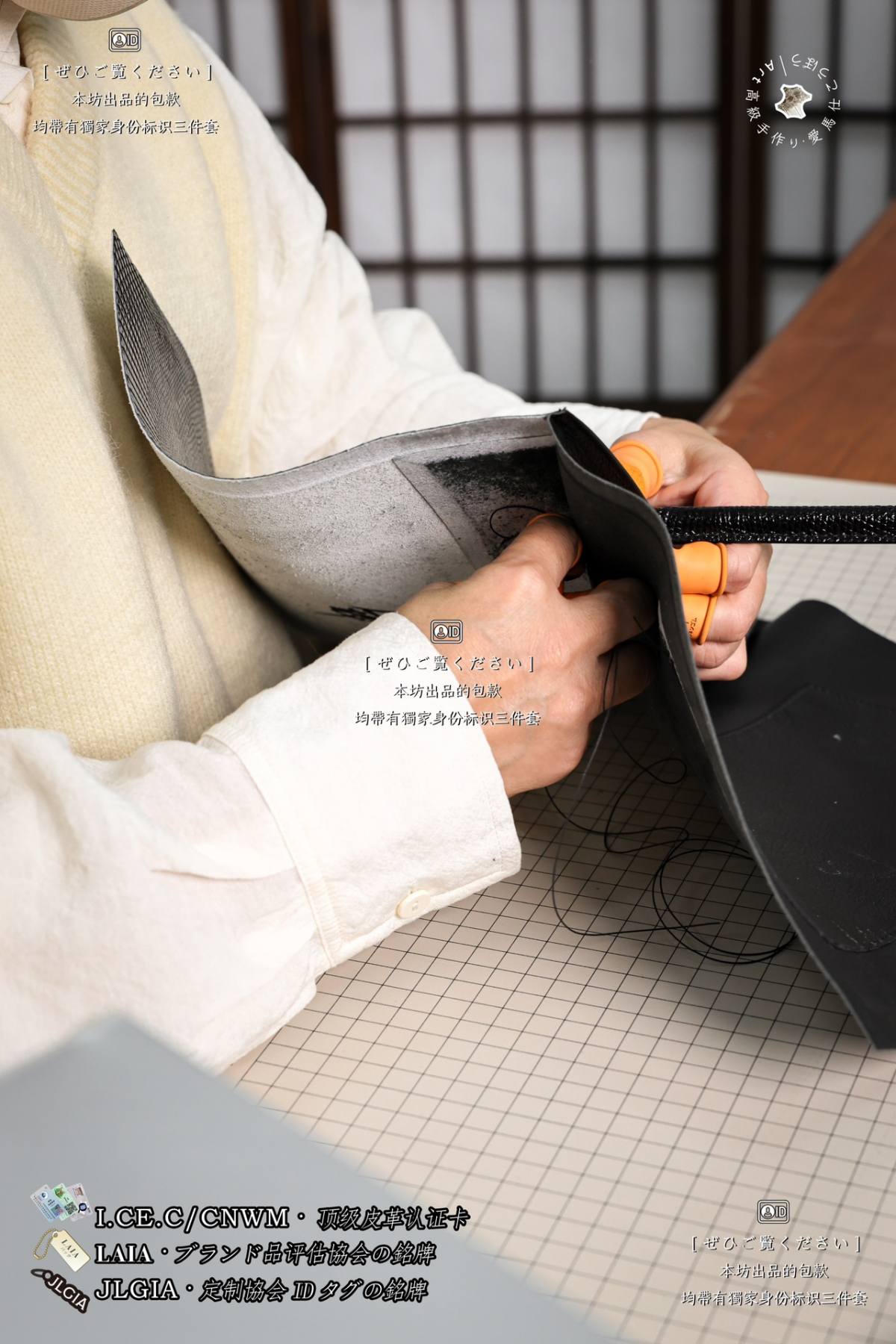
The Birkin handle adopts a three-layer composite structure, composed of outer lizard skin, high-density vegetable-tanned leather core and inner sheepskin lining. Comprehensive reinforcement and stress reduction treatment must be completed before stitching to prevent scale cracking. The edges of the upper and lower lizard skin panels of the handle are trimmed with a 45-degree thin bevel to a thickness of 0.3mm. Vertical straight trimming is forbidden, as thick edges will squeeze the stitching and crack the gaps between scales. The lug sections at both ends of the handle connecting to the bag body are additionally trimmed 0.1mm thinner to eliminate bulges at the three-layer overlapping areas. For multi-layer reinforcement and cushioning, a 1.8mm high-density vegetable-tanned leather is used as the supporting core layer, with a 0.5mm soft leather filler in the middle for buffering. A thin sheepskin reinforcing strip is attached to the curved stress-bearing middle section of the handle to disperse lifting tension and prevent long-term bending-induced scale peeling of the lizard skin.
In terms of traceless bonding and positioning, soft white glue is thinly applied only to the inner middle area of the leather, leaving a 2mm glue-free margin along the stitching edge. Horizontal binder clips are used for fixation without excessive clamping force, which may crush the surface scales. The leather must be fully air-dried before hole punching. Before stitching, a transparent removable protective film is pasted on the front side of the lizard skin to protect the glossy scales from scratches caused by wax threads and tools. Pinhole positions are marked with a light silver pencil, avoiding dark pens that may penetrate and stain the leather surface.
Shebag uniformly adopts a 4-degree diagonal diamond punching technique, while vertical punching will directly crack the gaps between lizard scales. The standard stitch spacing for Birkin handles is 3.0mm, equivalent to 14 stitches per inch, slightly denser than that of the main bag body. A fine-tooth 0.8mm diamond punch is mandatory; coarse punches with larger holes will tear the thin lizard skin. During operation, the punch is tilted 4 degrees inward toward the handle to create angled pinholes. The tightened stitching can naturally embed into the leather surface without protruding and pressing against the scales. Light single-stroke hammering is required for punching, as repeated hammering will loosen and dislodge scales.
Hole punching is conducted in segmented sections to avoid the central area of large main scales, with all pinholes positioned at scale gaps. The curved sections of the handle are punched separately in small segments instead of one-time full-length punching to prevent leather stretching and deformation. After all punching is completed, the inner wall of each pinhole is lightly coated with beeswax to reduce friction during needle penetration and avoid scratching scale edges.
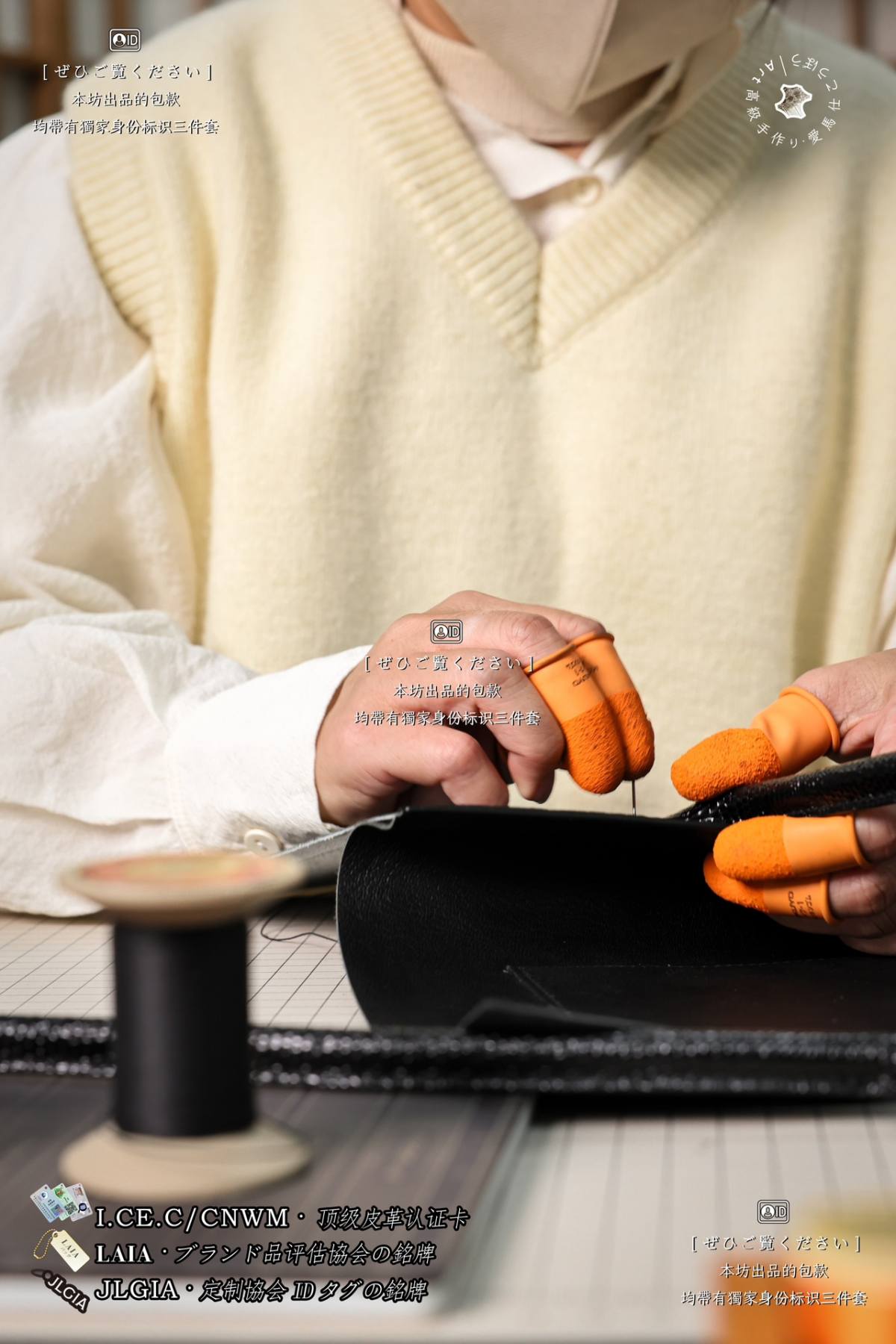
Professional materials are specially selected for exotic leather stitching. The stitching thread adopted is 0.35mm light gold and natural linen waxed thread from French brand Fil Au Chinois. The fine thread is perfectly compatible with thin lizard skin, while thick threads will cause irreversible wrinkles due to leather tension. Even for double-layer reinforced stitching on the handle’s stress-bearing areas, only single-strand fine threads are used for double locking rather than thick threads. Special fine triangular hand-sewing needles for exotic leather with slightly rounded blunt tips are applied to avoid piercing the scale surface, unlike ordinary sharp needles that easily scratch and damage glossy lizard scales.
For anti-loosening needle threading, both ends of the thread are fixed by bidirectional penetration in the middle section of the thread, with two arch-shaped locks at each end to prevent needle detachment during long-hour stitching. The total thread length for each handle is four times the handle length, and segmented stitching is adopted to avoid leather distortion caused by long thread tension.
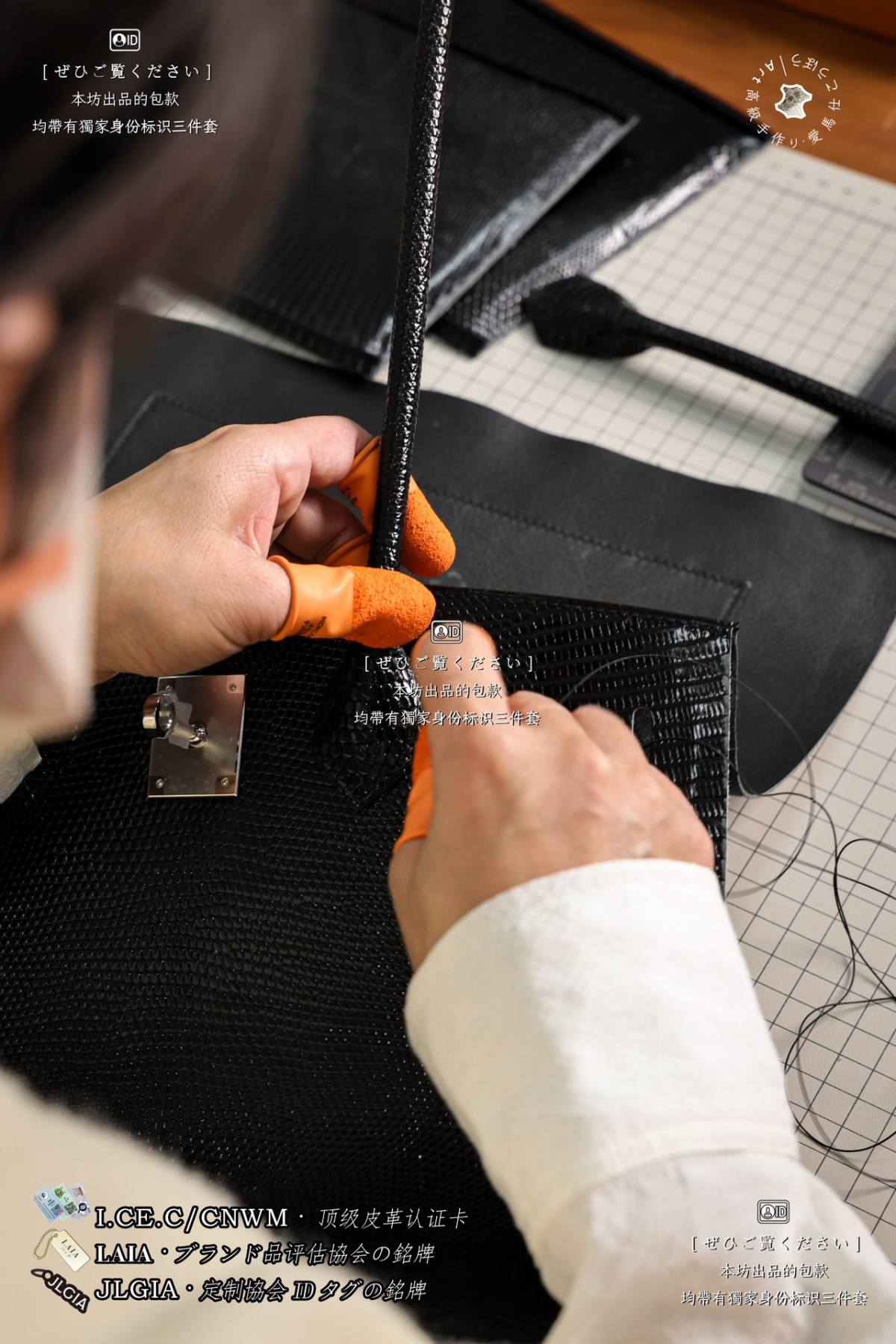
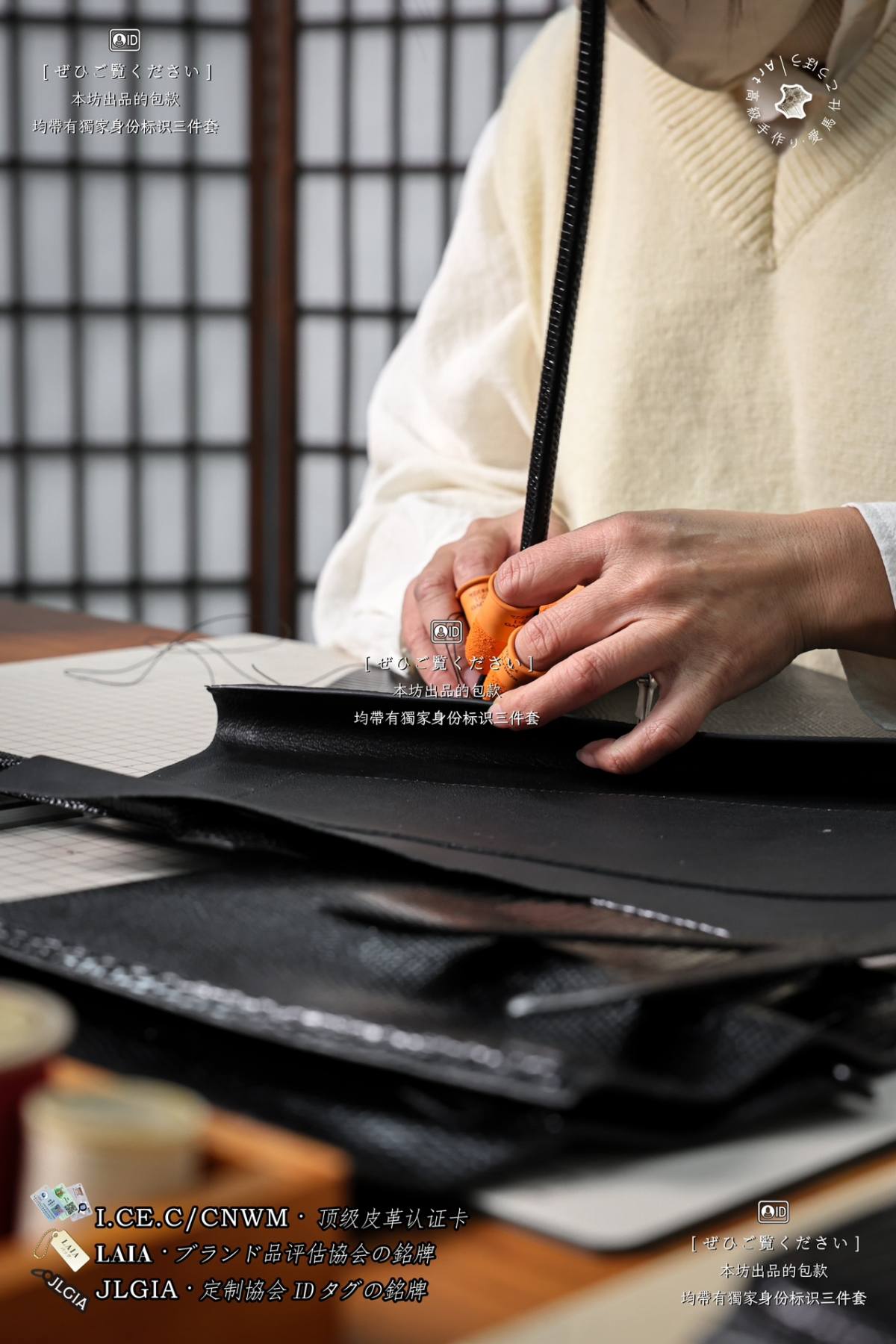
The whole process adopts the double-needle single-thread saddle stitching method that meets standard Birkin craftsmanship, forming 45-degree three-dimensional wavy stitches on both sides. This structure ensures no stitch collapse even if a single thread breaks, fully meeting the load-bearing requirements of the handle. Stitching starts from the flat middle section of the handle. Two needles penetrate the same diagonal hole from the front and back sides respectively with equal thread length on both ends. Each stitch is tightened diagonally along the 4-degree tilt of the pinhole with gentle pulling, and vertical hard pulling is strictly prohibited.
In terms of stitching sequence, the left needle penetrates the next hole forward first, and the right needle exits from the rear of the same hole, forming interlocked cross threads inside the leather layer. Tension calibration is conducted evenly after every 3 to 5 stitches to ensure consistent stitch height and tightness along the entire handle. Tension control is critical for lizard skin stitching. The tension must be gentle yet firm: excessive tension leads to leather shrinkage, wrinkling and scale cracking, while insufficient tension results in floating stitches and thread breakage under load. The optimal finished effect is slightly embedded stitches with flat and undeformed scales, bringing only a subtle tactile bump when touched by fingers.
For stitching the flat sections of the handle, maintain a constant stitching speed and a stable 45-degree cross angle of double threads. Slow down the penetration speed in dense fine scale areas, aligning the needle tip precisely with the center of the punched hole to avoid lateral sliding and scale piercing.