- 08
- Jul
Shebag handmade Hermes lizard birkin bag craftmanship review(July 2026 updated)
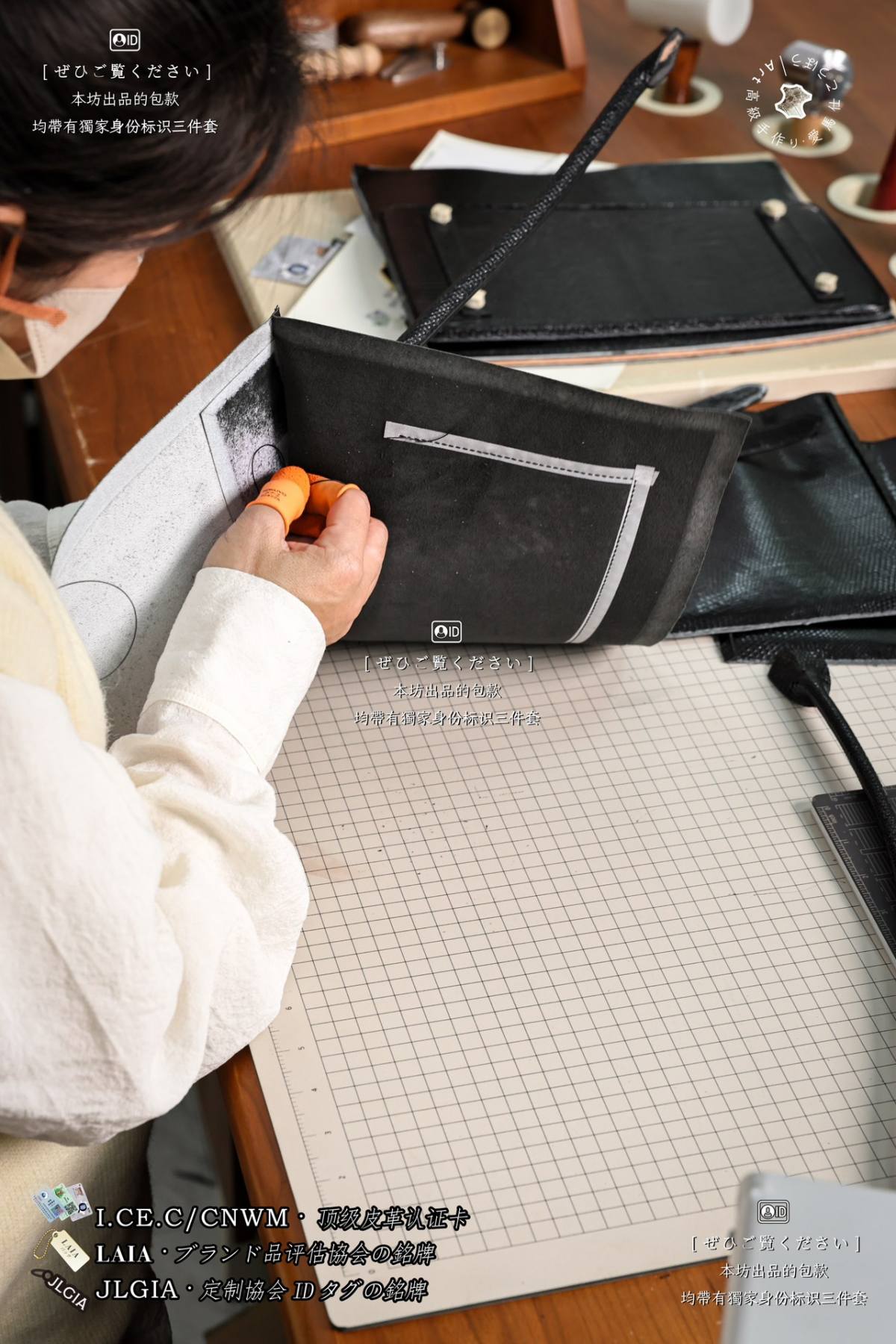
Lizard skin features thin scales, brittle fibers and high susceptibility to cracking and creasing. Shebag adopts a layered skiving composite process tailored for the Birkin bag structure. The original leather with a thickness of 0.7 to 0.9mm is gradiently skived in different areas according to structural demands. The stitching joint areas are diagonally skived to 0.35mm with a 12-degree bevel angle, ensuring a seamless fit between two leather layers without steps and preventing scale cracking caused by stitching tension. Load-bearing areas including handles, bag openings and bottom corners retain a thickness of 0.6mm, with a 1.2mm Italian vegetable-tanned leather reinforcing layer attached to the inner side to disperse pulling force. For thin material areas such as flaps and side panels, double-layer leather is bonded with a 0.4mm shaping lining sandwiched in between, and thermo-shaped at 130℃ to avoid collapse and warping after long-term use. The leather skiving error is controlled within ±0.05mm, with full-process water cooling to prevent delamination and scale warping of lizard skin under high temperature.
Anti-crack edge finishing pretreatment is implemented after skiving. The leather undergoes 3 rounds of basic polishing followed by 7 layered edge oil coatings, including water-based transparent primer, colored oil and matte topcoat. Each coating is dried at a low temperature of 40℃, with manual oil filling at corners to eliminate oil leakage and edge bursting in scale gaps. The outer edges are finally polished manually with horsehair brushes to unify the gloss of edge oil and scales without residual glue overflowing from scale gaps. For positioning punching exclusive to lizard skin, No.8 Blanchard diamond diagonal chisels are applied to create 45-degree oblique penetrating holes that avoid scale joints. Lines are first marked with metal positioning rulers with a density of 9.5 chisels per inch, equivalent to the standard 14 stitches per inch. Two additional reinforced stitches are added at corners to prevent leather tearing during bending. The punched holes are infiltrated with beeswax to strengthen the fragile lizard skin fibers.
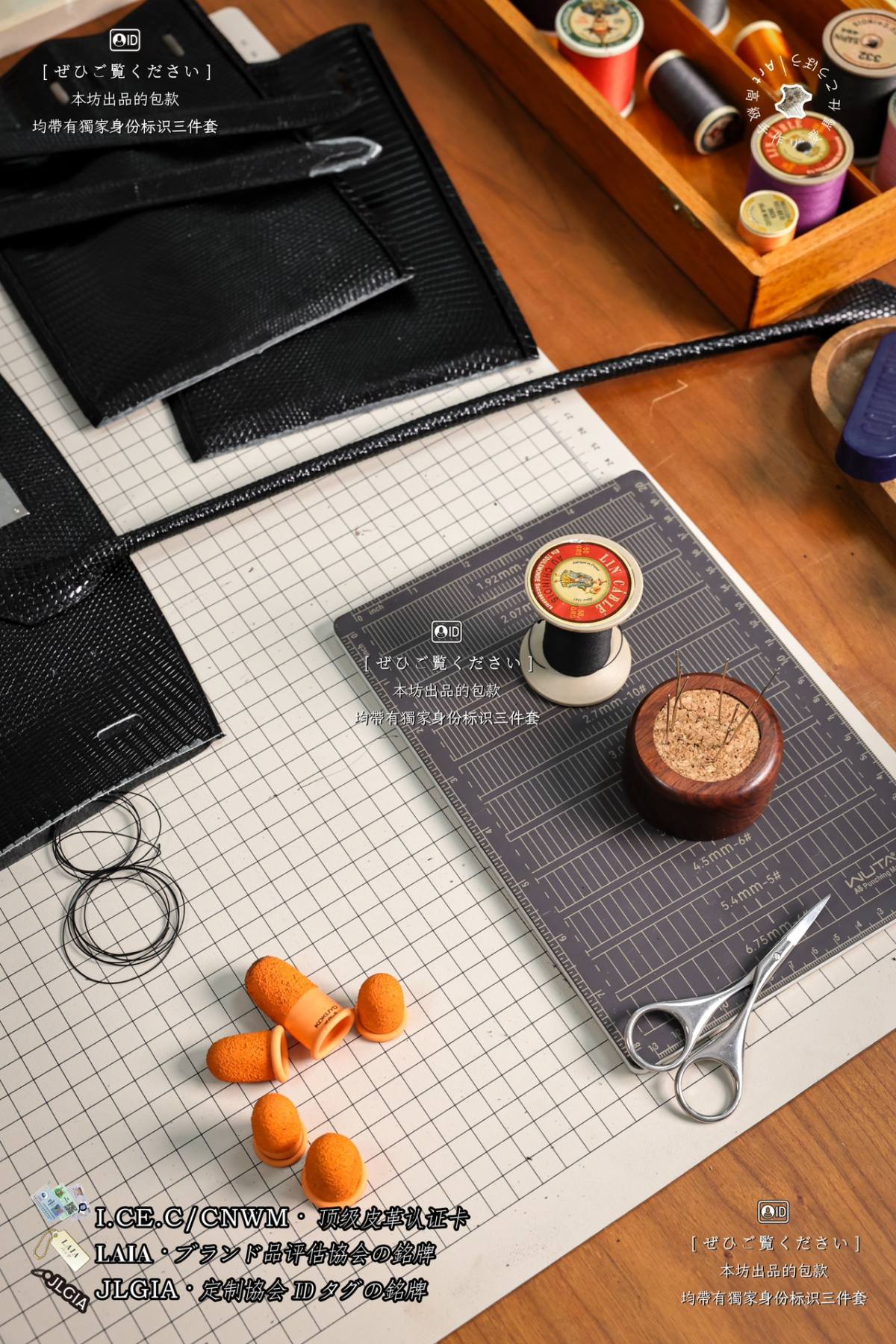
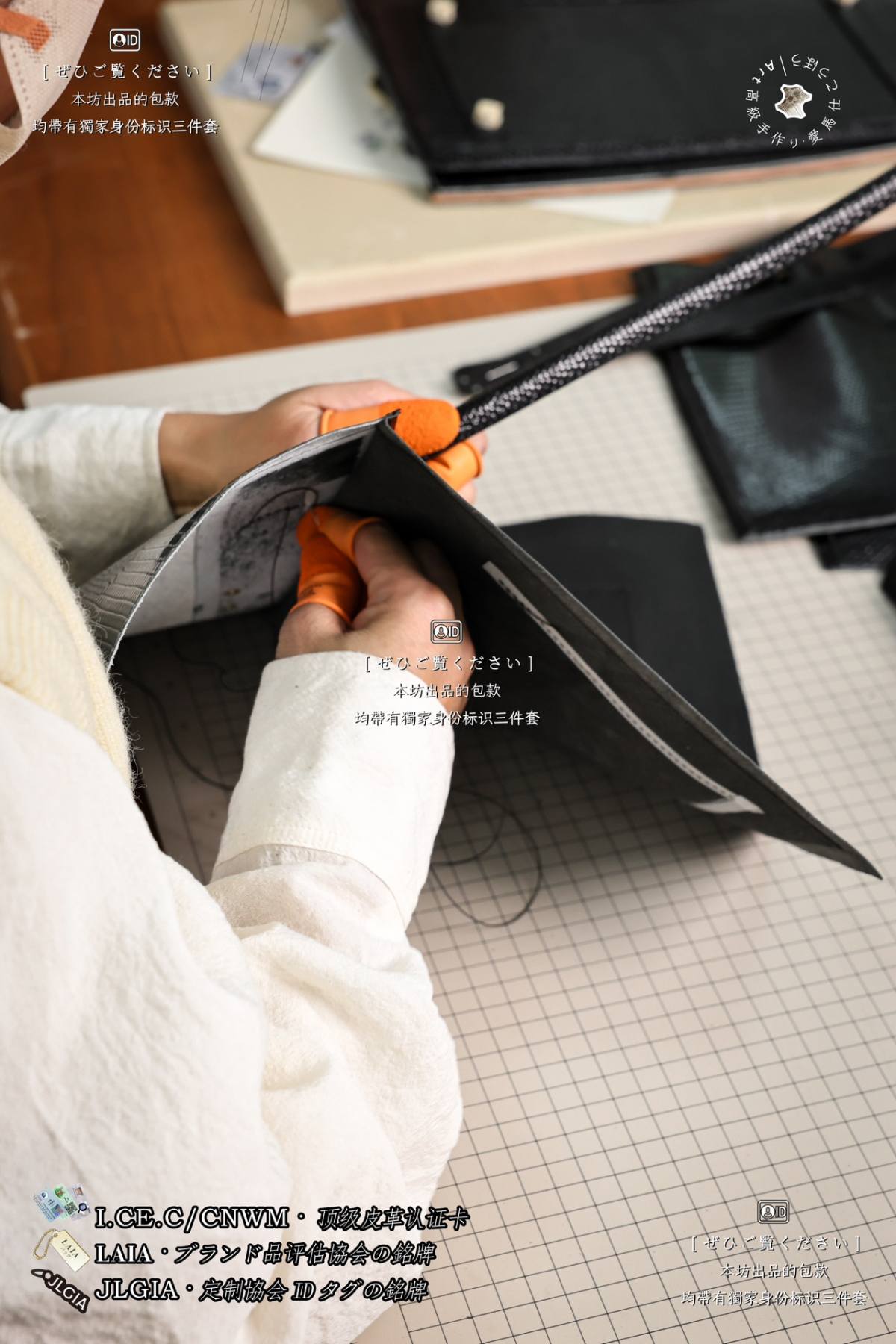
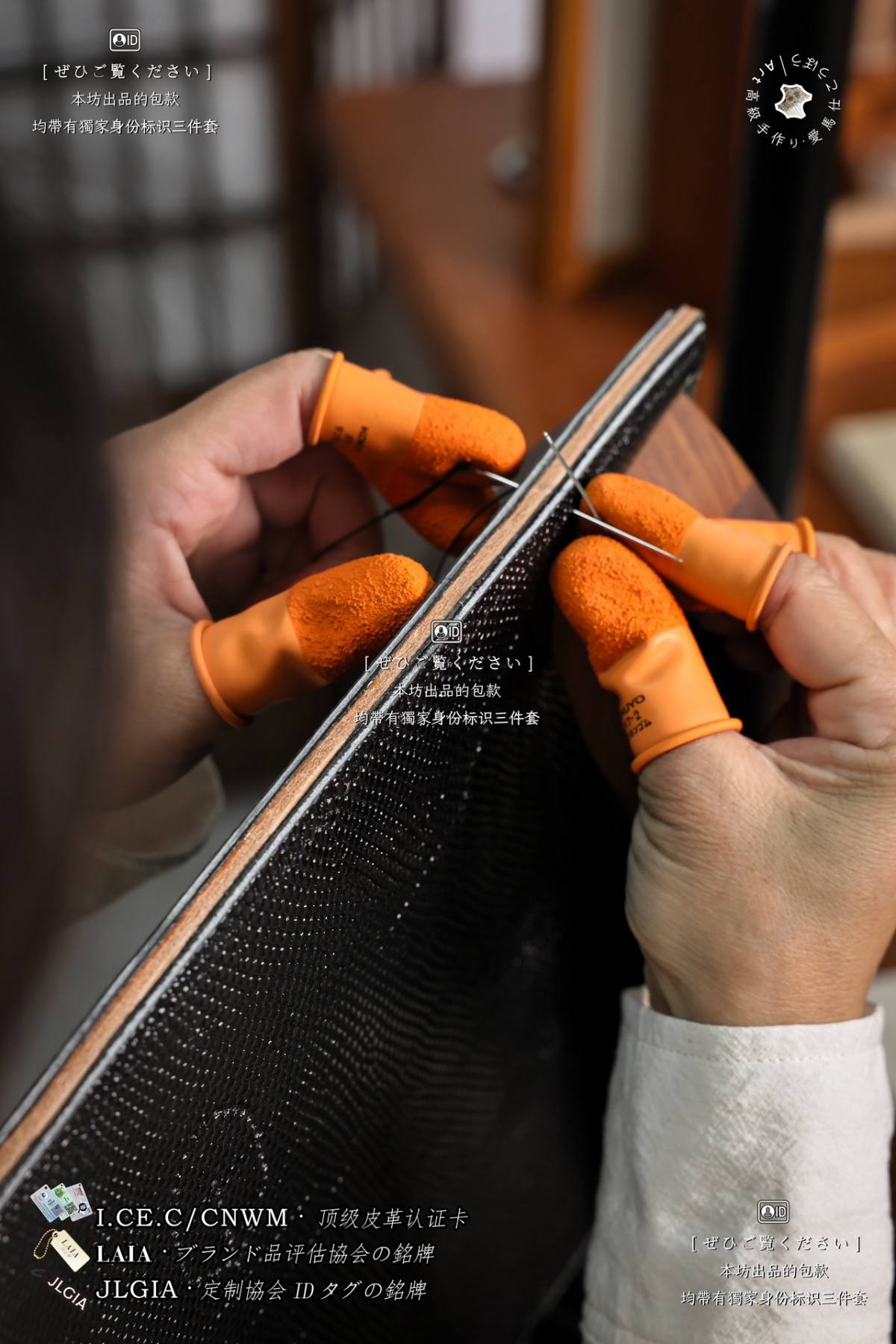
The core stitching adopts the French saddle cross lock stitch, namely the Sellier double-needle double-thread technique, with Shebag fully replicating the original factory standards. Double-strand French linen beeswax thread is used, fully soaked in natural beeswax to deliver anti-oxidation, waterproof performance and zero abrasion to lizard skin scales. The equal-length double threads bear force through the same hole in a crossed structure, ensuring the whole thread will not loosen even if a single thread breaks, which is ideal for high-load parts of the Birkin bag such as handles and bottom panels. All needles penetrate the chisel holes at a uniform 45-degree oblique angle, forming continuous and neat diagonal wavy stitches slanting from top-left to bottom-right on the leather surface, with flat and smooth straight stitches on the inner side. Each stitch is lightly locked by reverse pulling, making the stitches fully embedded in the leather without protruding or scratching the scales.
Unified stitch spacing standards are strictly followed: 14 stitches per inch for straight sections, and 16 stitches per inch for bag bottoms, flap corners and handle roots, with 3 additional back stitches for reinforcement at hardware base fixing positions. During stitching, the leather is gently clamped with soft sheepskin pads to prevent scale indentation, and the thread tension is manually controlled stitch by stitch without hard pulling the leather. Each stitch is lightly tapped with a wooden hammer to make the wax thread fit the scale depressions for a flat visual effect. Machine stitching is strictly prohibited, and all stitching work of a single bag is completed by one craftsman manually to ensure consistent tension throughout. All inner seams are locked with 3 back stitches, with thread ends trimmed to 0.5mm and sealed at low temperature without exposure. Uniform stitch standards are applied to hidden inner pockets and inner side panels, achieving consistent internal and external craftsmanship without simplified stitching.
Differentiated stitching designs are adopted for different parts of the bag. The side and bottom panels adopt double-layer lizard skin diagonal skiving and splicing with full wavy saddle stitches, and reinforced corner stitches to bear the weight of placed items. The front and edge areas of the flap use narrow-edge shallow skiving and thin stitching, with delicate stitches that do not cover the fine texture of lizard scales. The double-layer bonded handles are fitted with vegetable-tanned reinforcing strips in the middle and sewn with two parallel saddle stitches, with double-layer overlapping stitches at the connecting parts between handle roots and the bag body. The leather tabs for hardware bases are made of multi-layer bonded leather with dense punching and cross locking stitches to prevent tearing of thin lizard skin caused by hardware pulling.
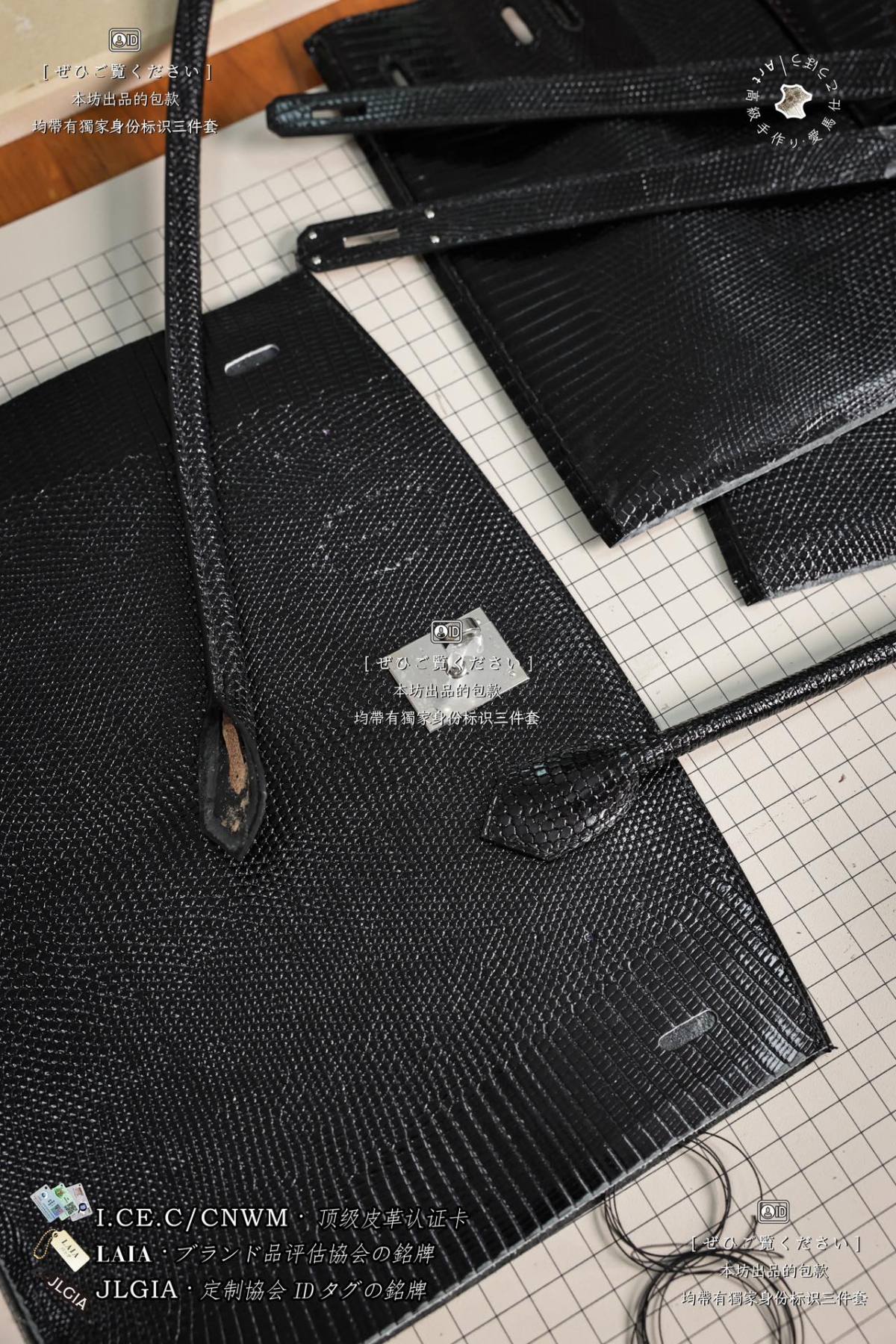
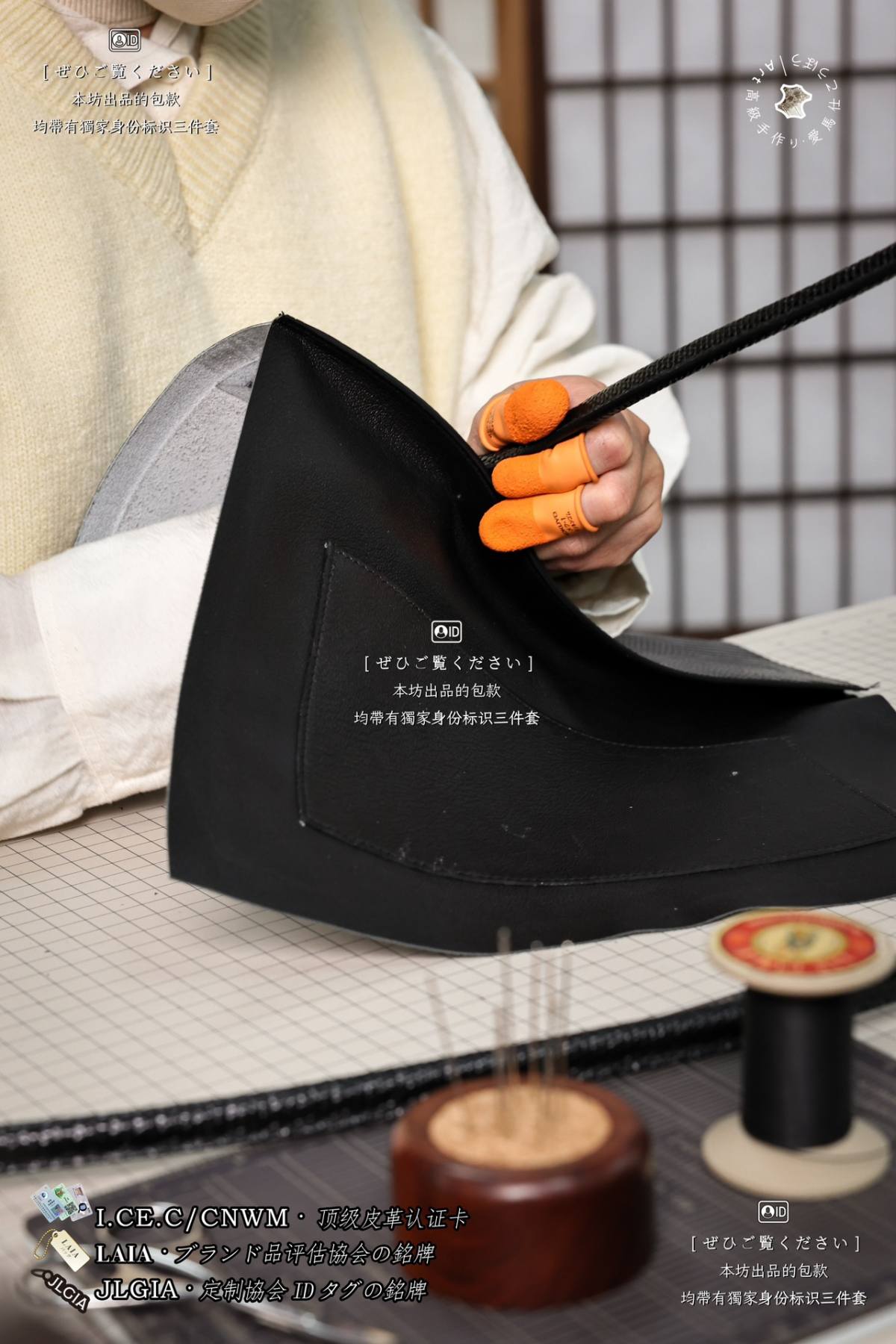
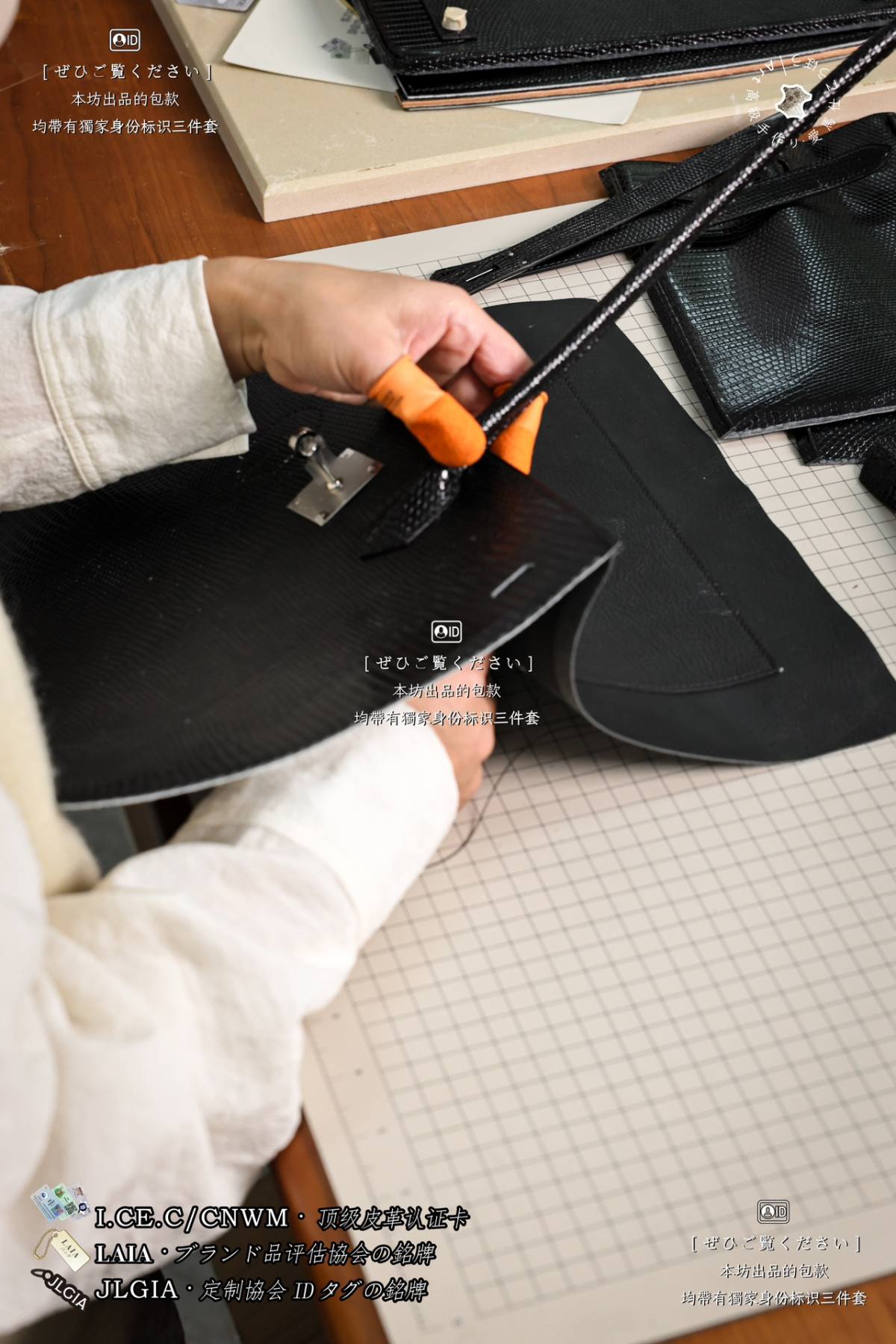
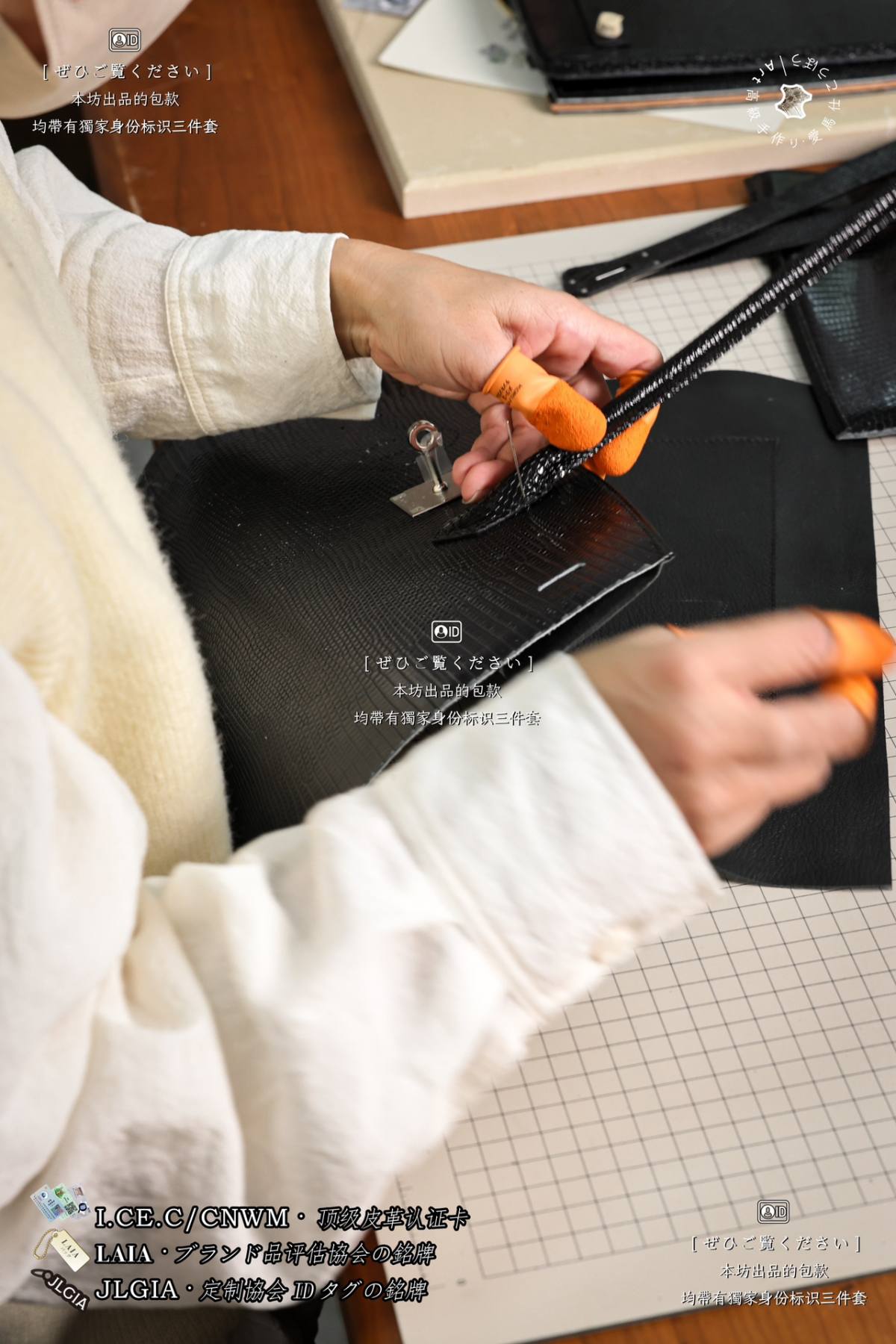
The full assembly process covers all procedures from discrete leather pieces to finished products. In the pre-assembly stage of individual components, the flap is made of bonded lizard outer leather and lambskin lining with a thin shaping lining in the middle, with three sides pre-stitched and edge-finished, hardware leather loops of the flap pre-locked and edges polished separately. The handle is composed of two bonded lizard leather pieces with a reinforcing core inside, sewn with double saddle stitches, with thickened leather tabs reserved and hardware mounting holes pre-punched at both ends. The inner bag adopts matching goatskin with the same stitching standards as the outer bag, and elastic shaping strips are installed at the bag opening to fit closely with the inner bag wall without hollow gaps. All hardware fitting leather parts including lock loops and bottom stud gaskets are pre-skived, edge-finished and stitched to avoid secondary pulling damage to lizard skin during overall assembly.
In the main body assembly stage, the bottom panel and two side panels are spliced first, temporarily fixed with wooden clamps to align the scale texture. All panels are cut from the same lizard skin hide to ensure continuous and uninterrupted scale lines, then sewn with segmented saddle stitches. Inner bottom corners are manually flattened with hammers to eliminate splicing protrusions. The integral lining is bonded to the inner bag wall with a thin coat of water-based environmental glue and pressed section by section, then cold-pressed for 2 hours for shaping, ensuring no glue overflow into scale gaps. The bottom of the lining is fixed with invisible hand stitches for a smooth and layered-free touch. The bag opening is folded inward by 0.8cm with reinforcing leather strips attached to the inner side and fixed with invisible stitches, ensuring no scale creaks even after ten thousands of opening and closing operations.
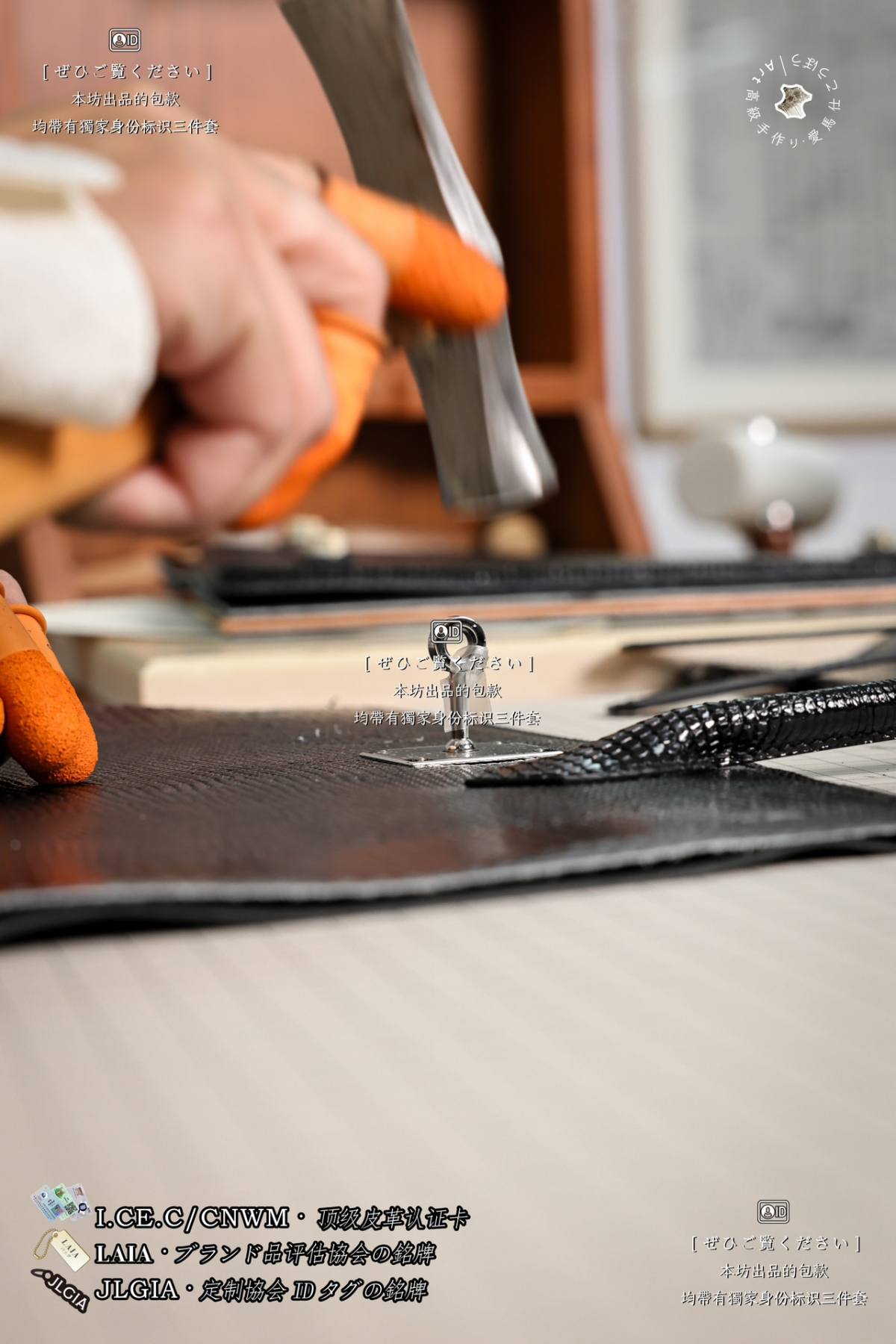
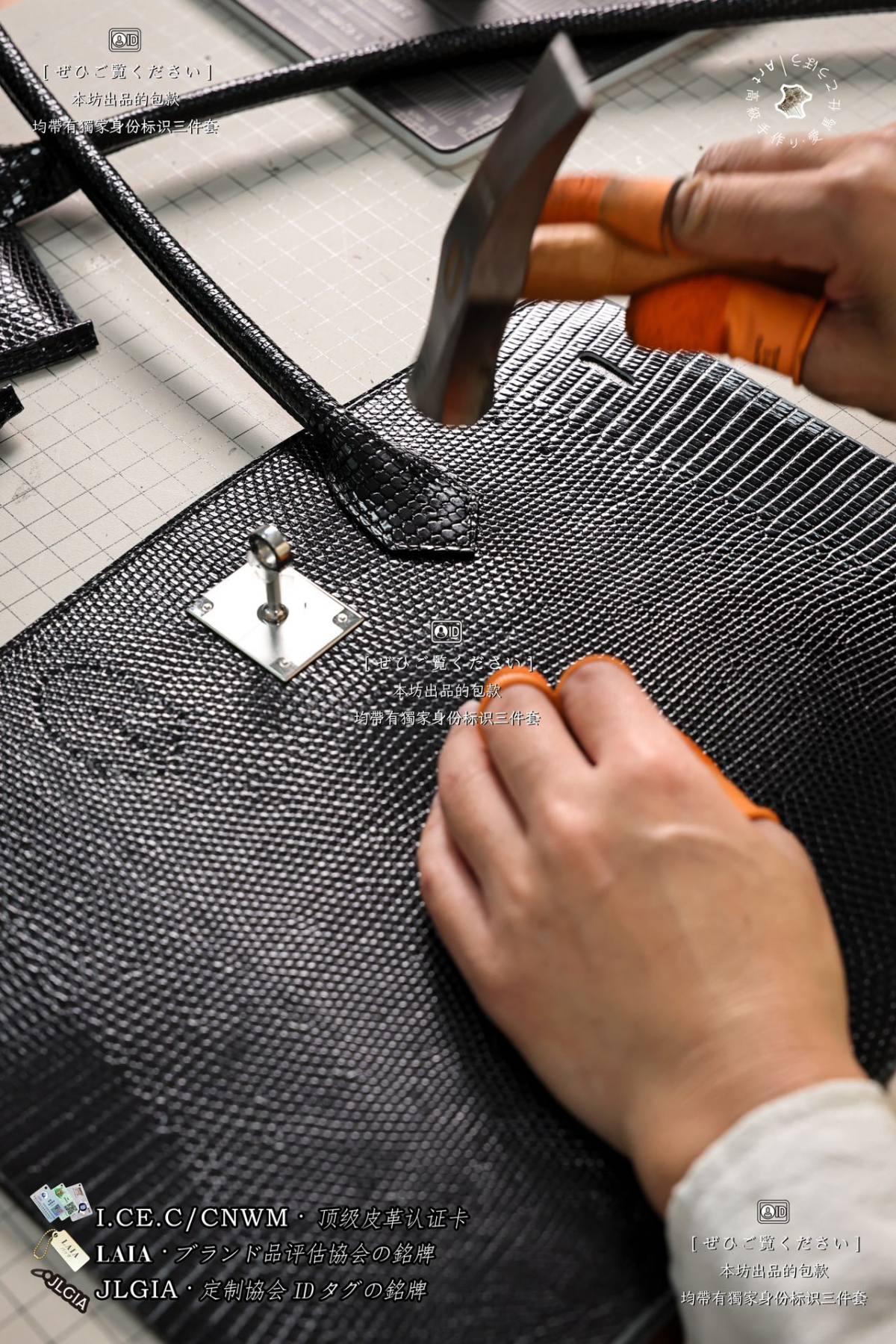
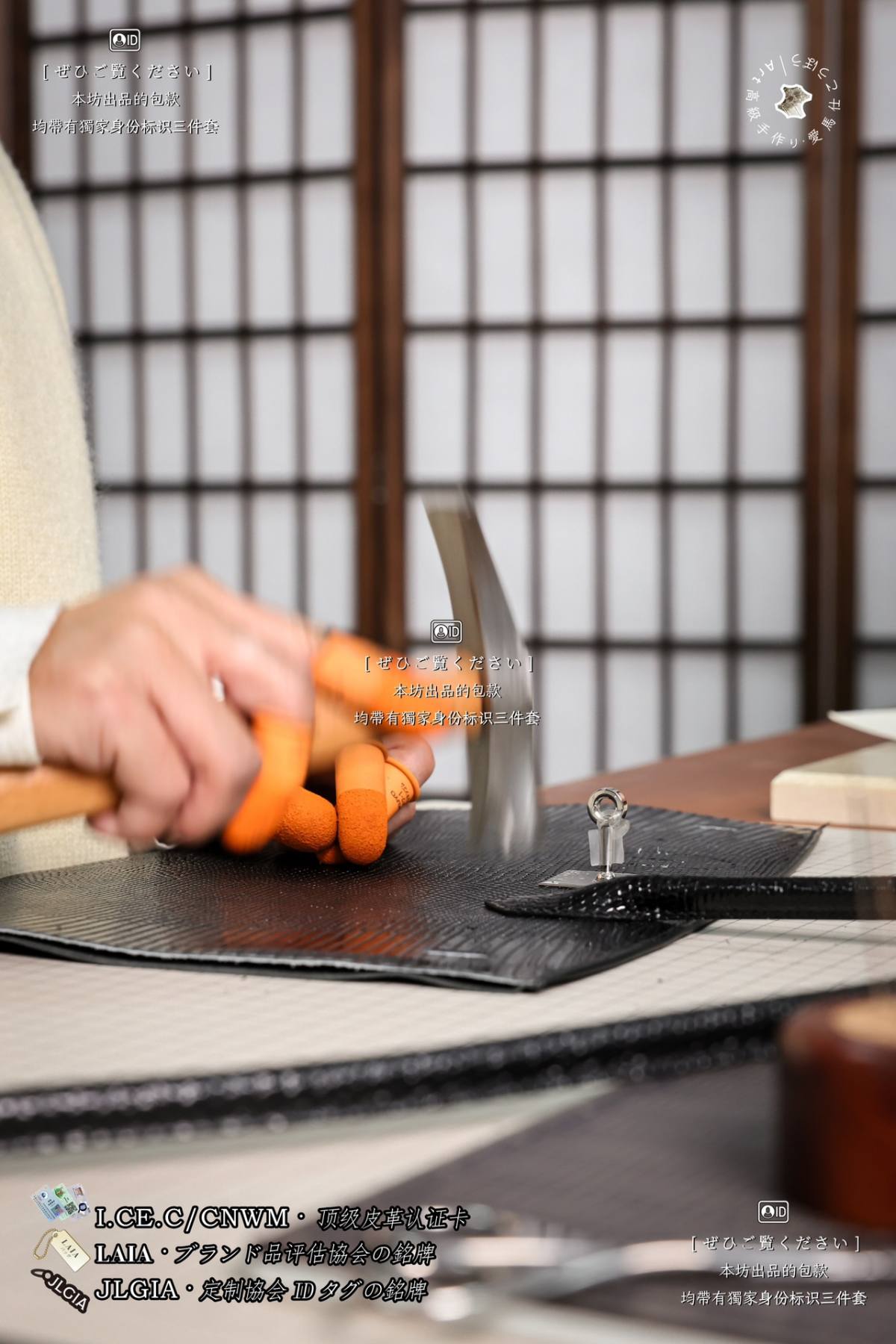
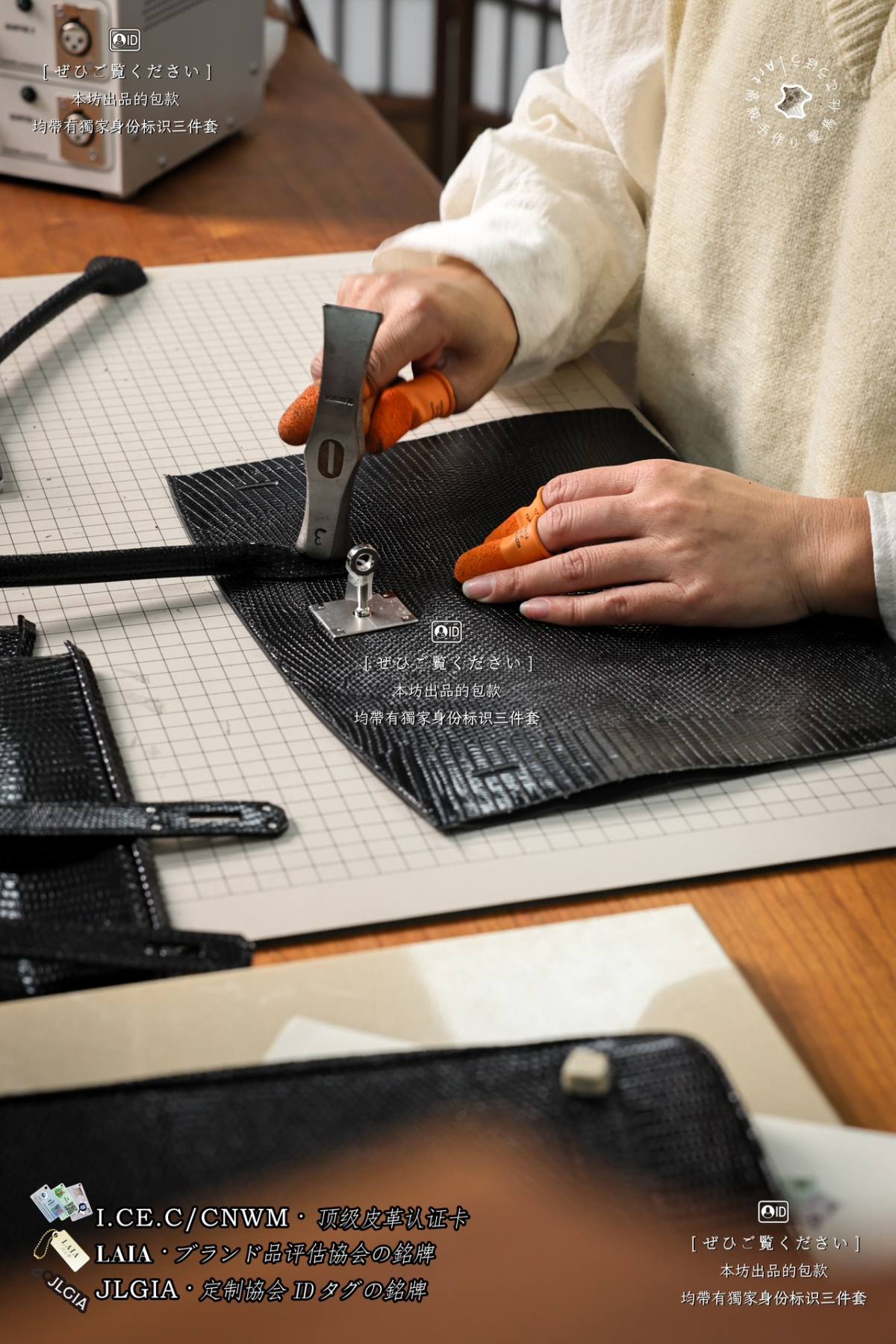
The hardware is assembled with low-stress techniques matching 316 precision cast brass hardware. For bottom stud installation, double-layer vegetable-tanned leather gaskets are added inside the bag bottom to disperse pressure. Holes are punched with round punches, and hardware screws are fixed with flat gaskets and lock nuts on the inner side, fastened gently by hand hammering to avoid squeezing the lizard skin surface. For locks and rotating hardware, multi-layer bonded leather loops of the flap are fixed with locking stitches, with a 0.1mm reserved gap at hardware shaft holes to prevent scale friction and scratching during opening and closing. Soft leather rings are fitted inside lock hanging loops to isolate metal from direct contact with lizard skin. For handle hardware tab assembly, pre-sewn thickened leather tabs pass through hardware rings and are double-fixed with inner inserting leather pieces, ensuring no pulling force on the bag body during lifting. All hardware is treated with a unified anti-oxidation coating after assembly with burr-free metal edges to prevent scale scratches.