- 14
- Jul
Shebag handmade Hermes birkin bag epsom leather stitching finish craftmanship review(July 2026 udpated)
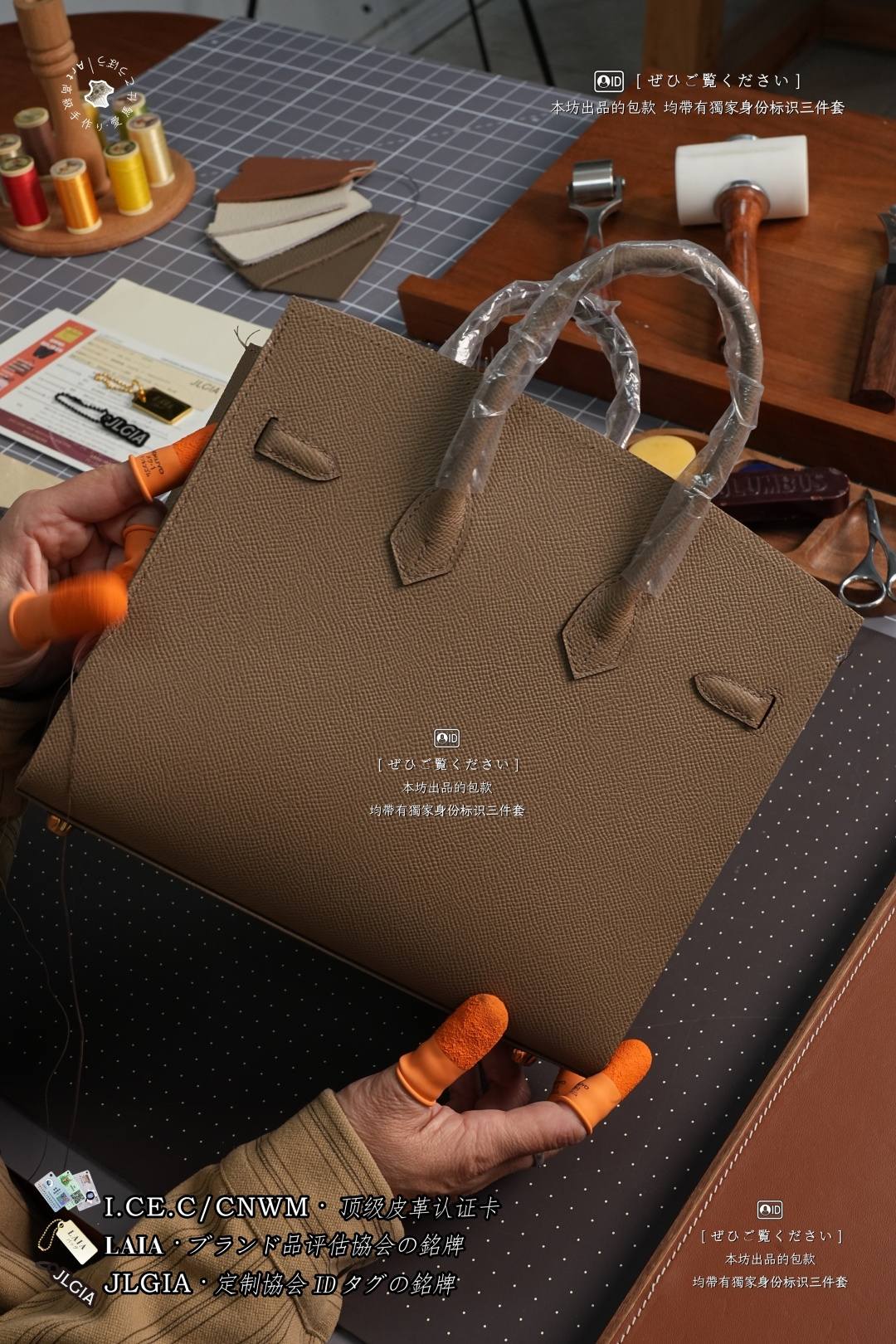
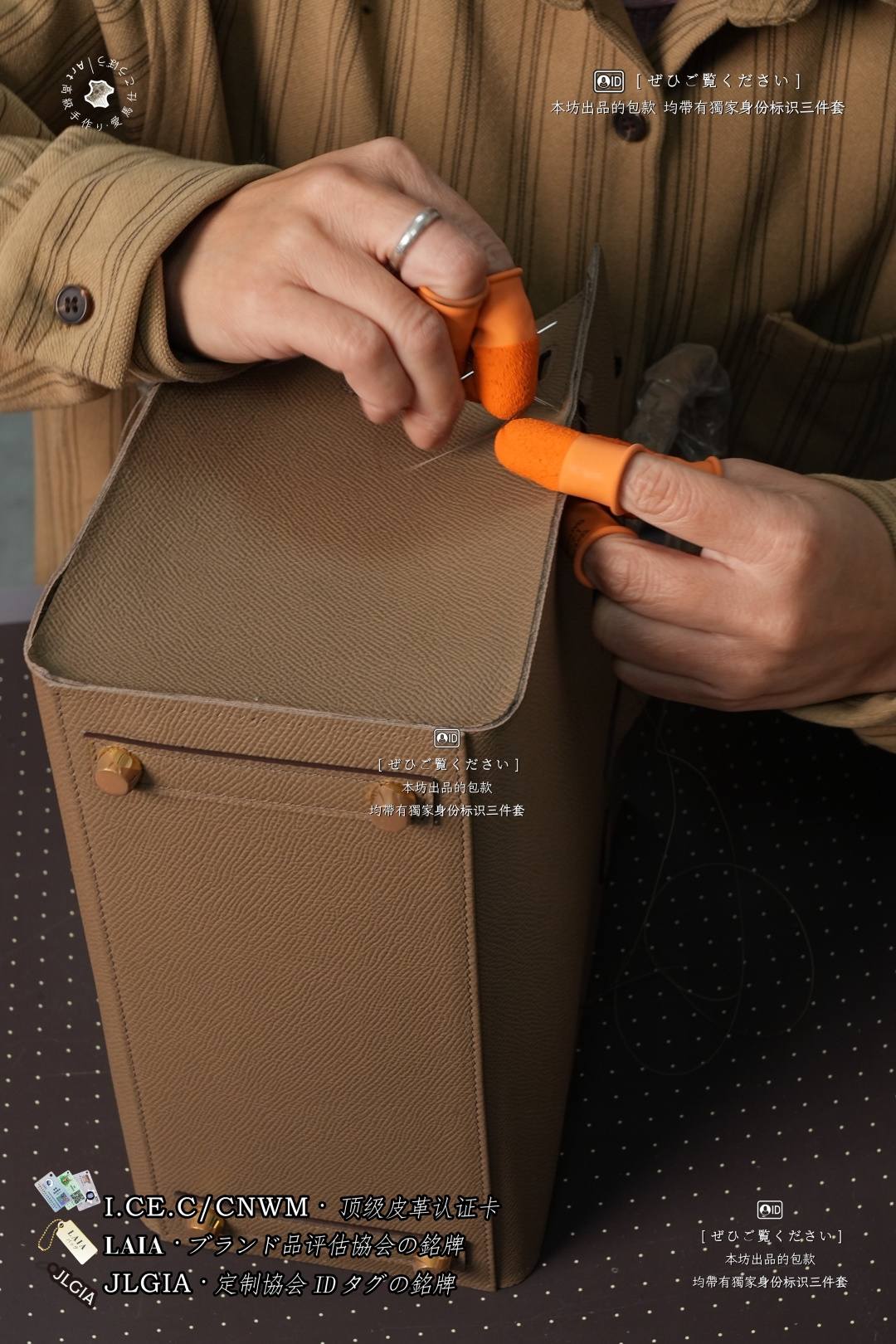
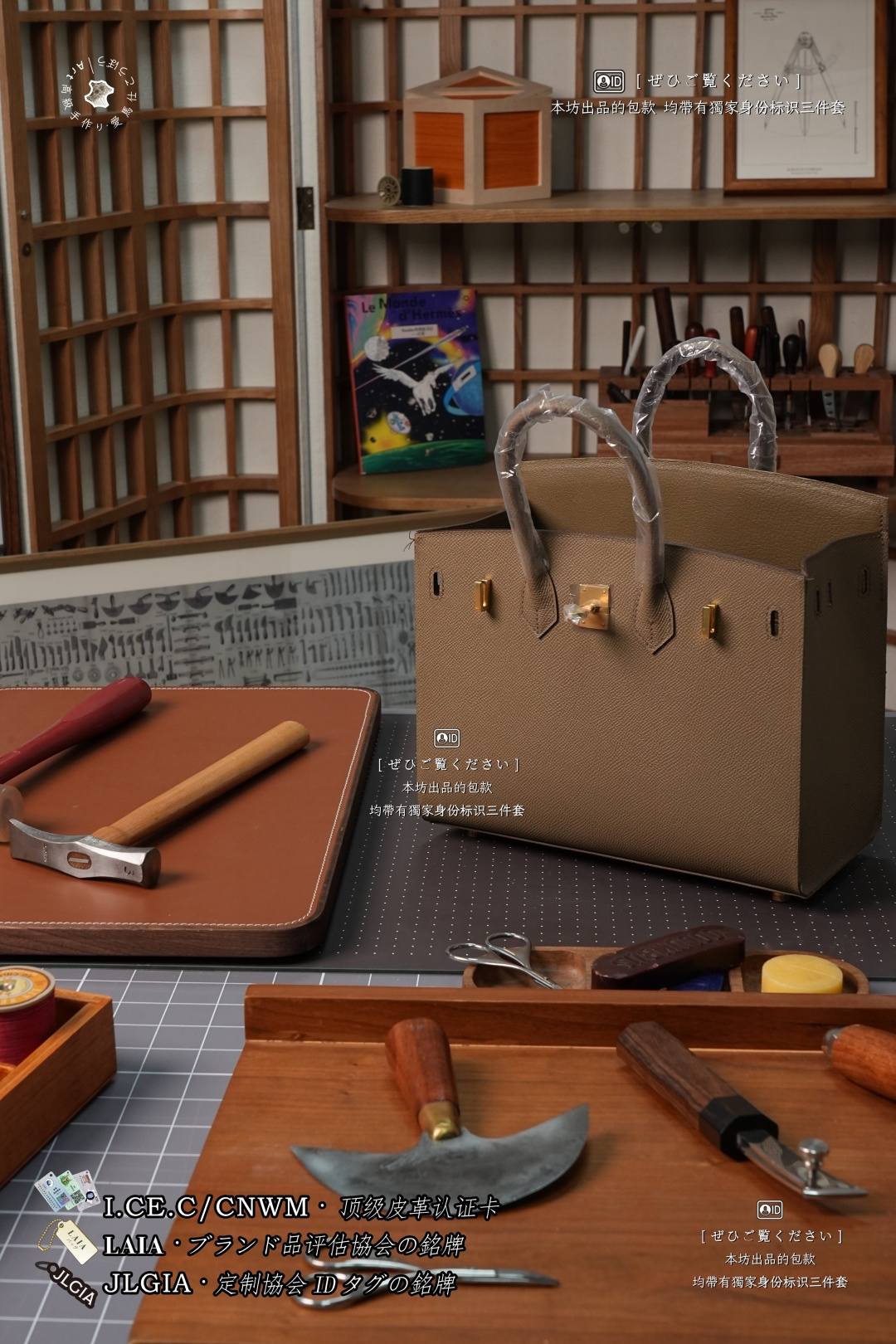
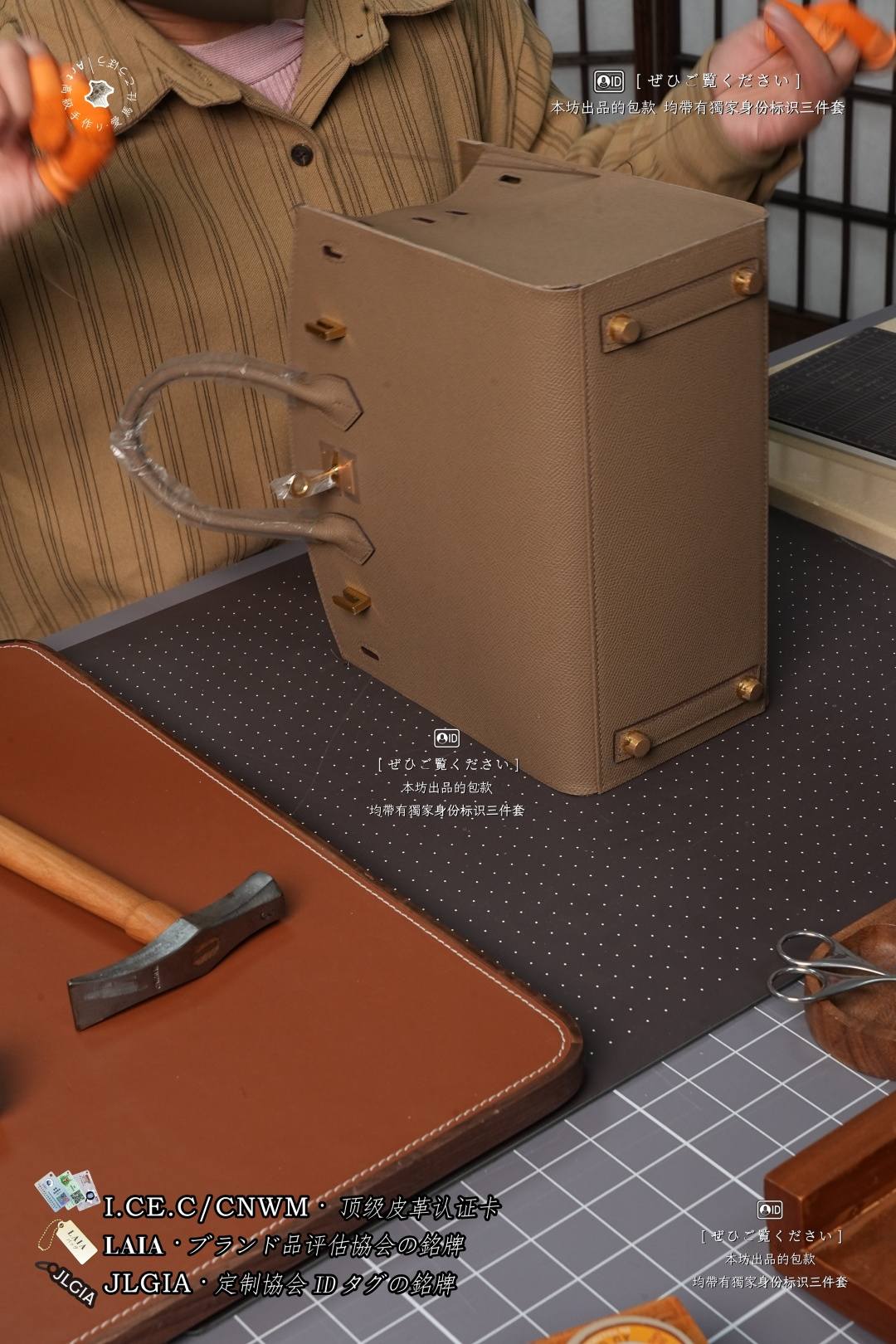
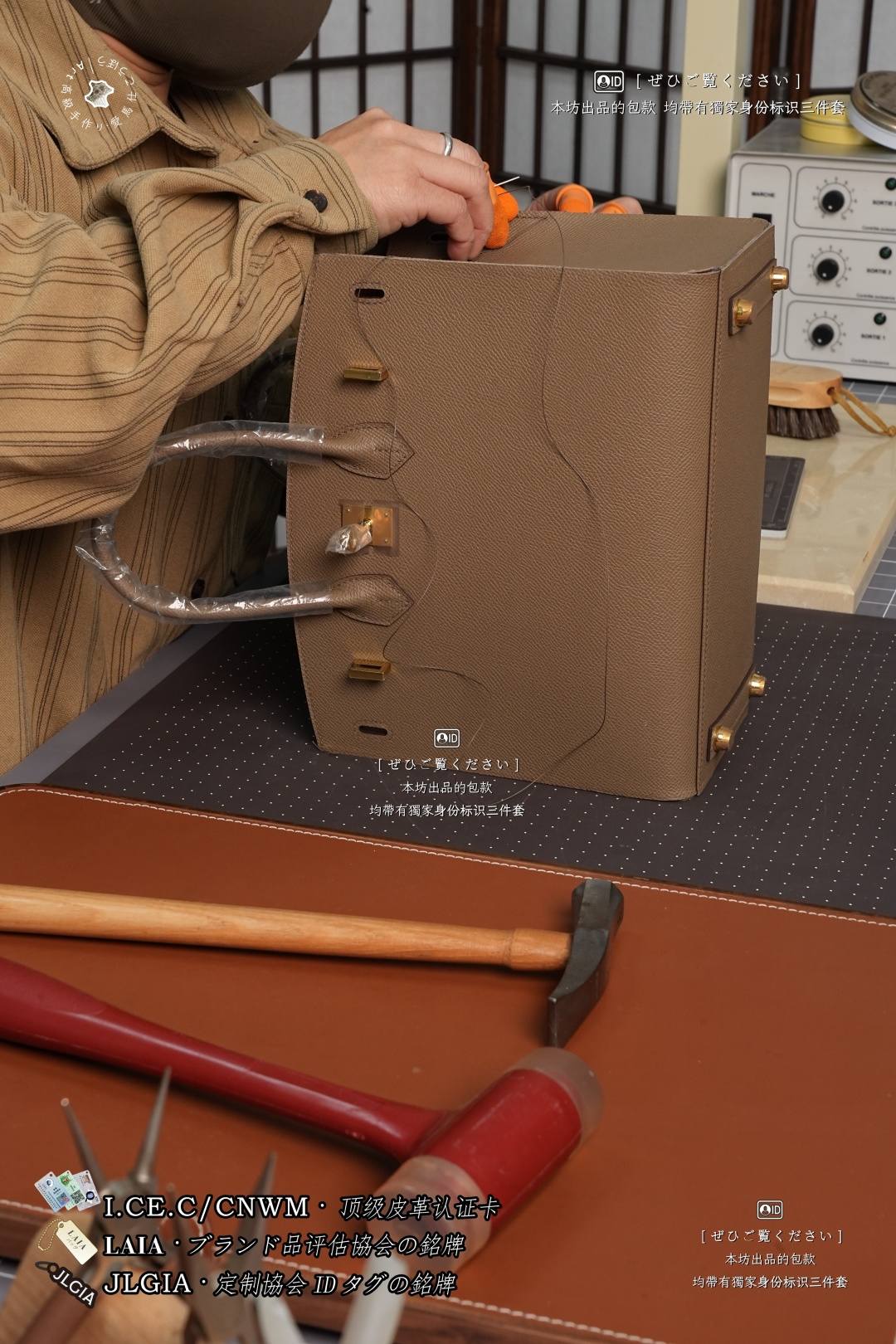
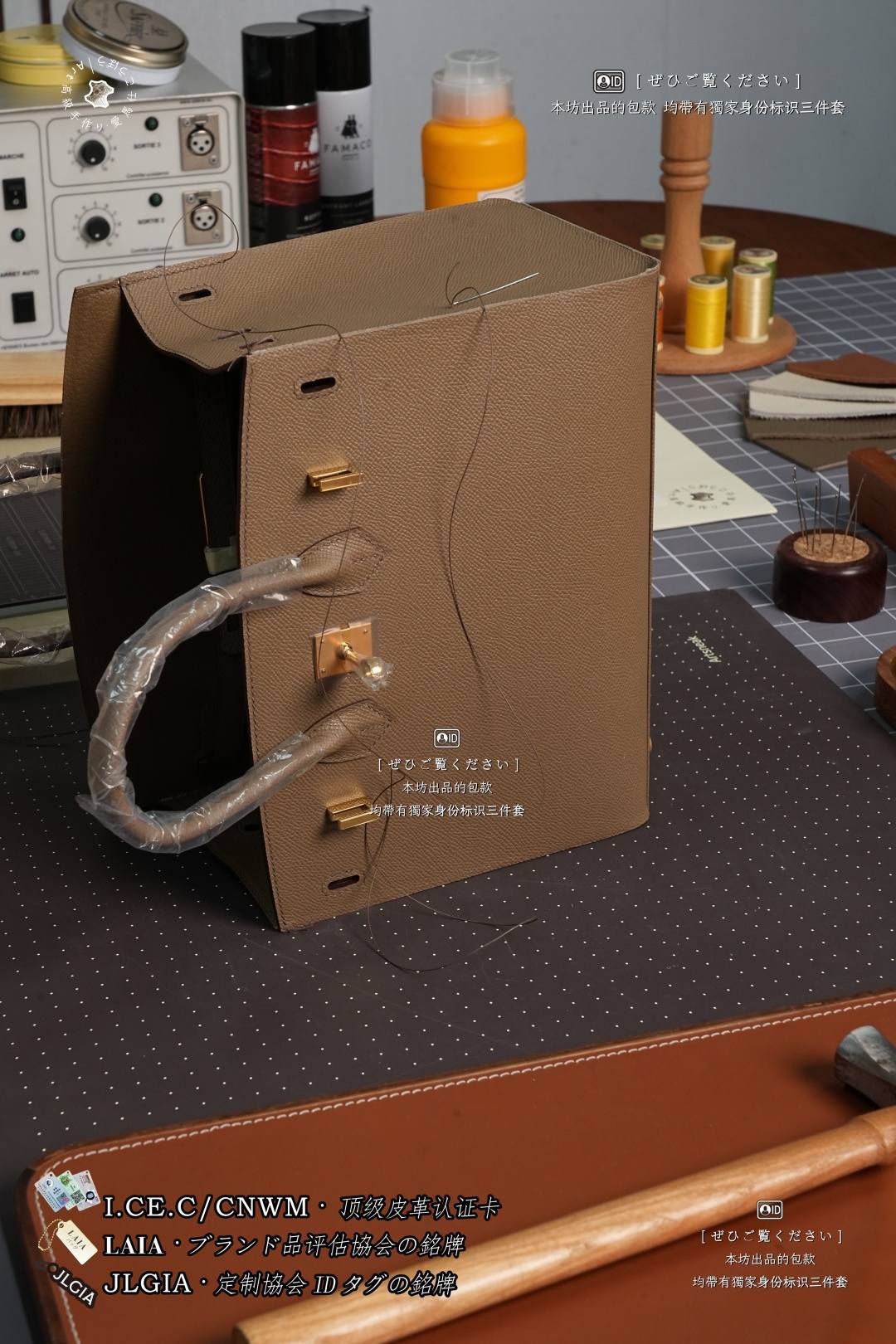
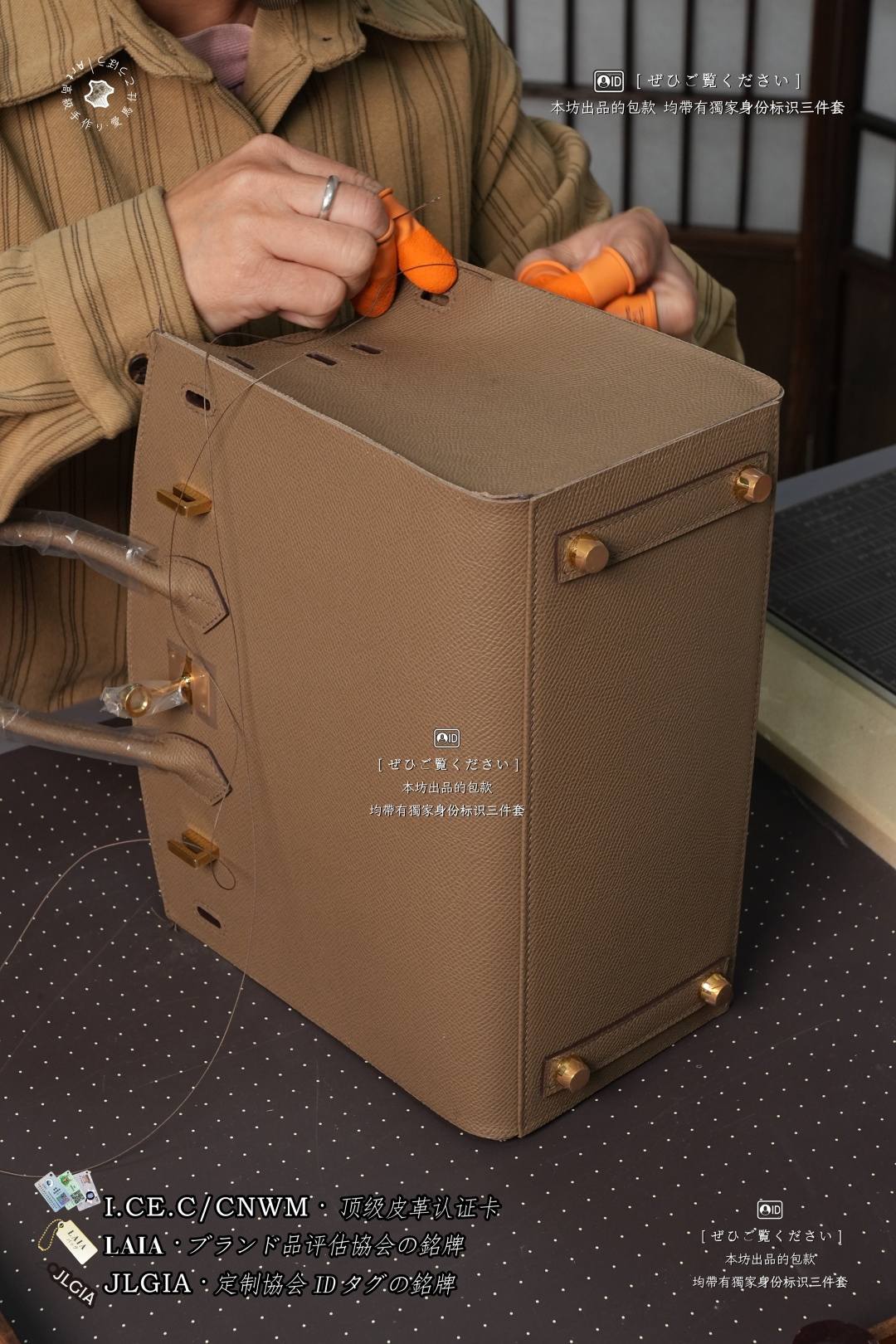
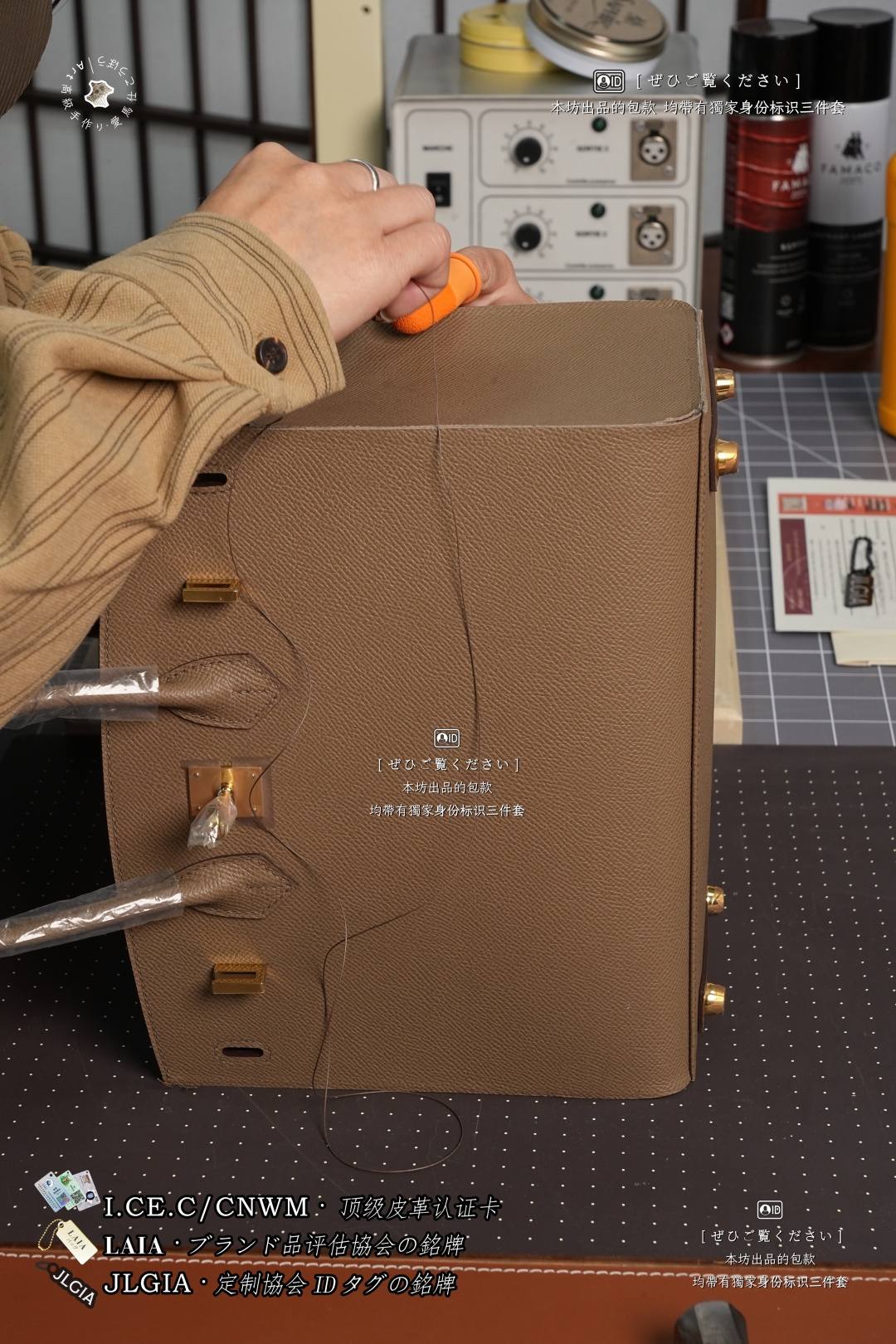
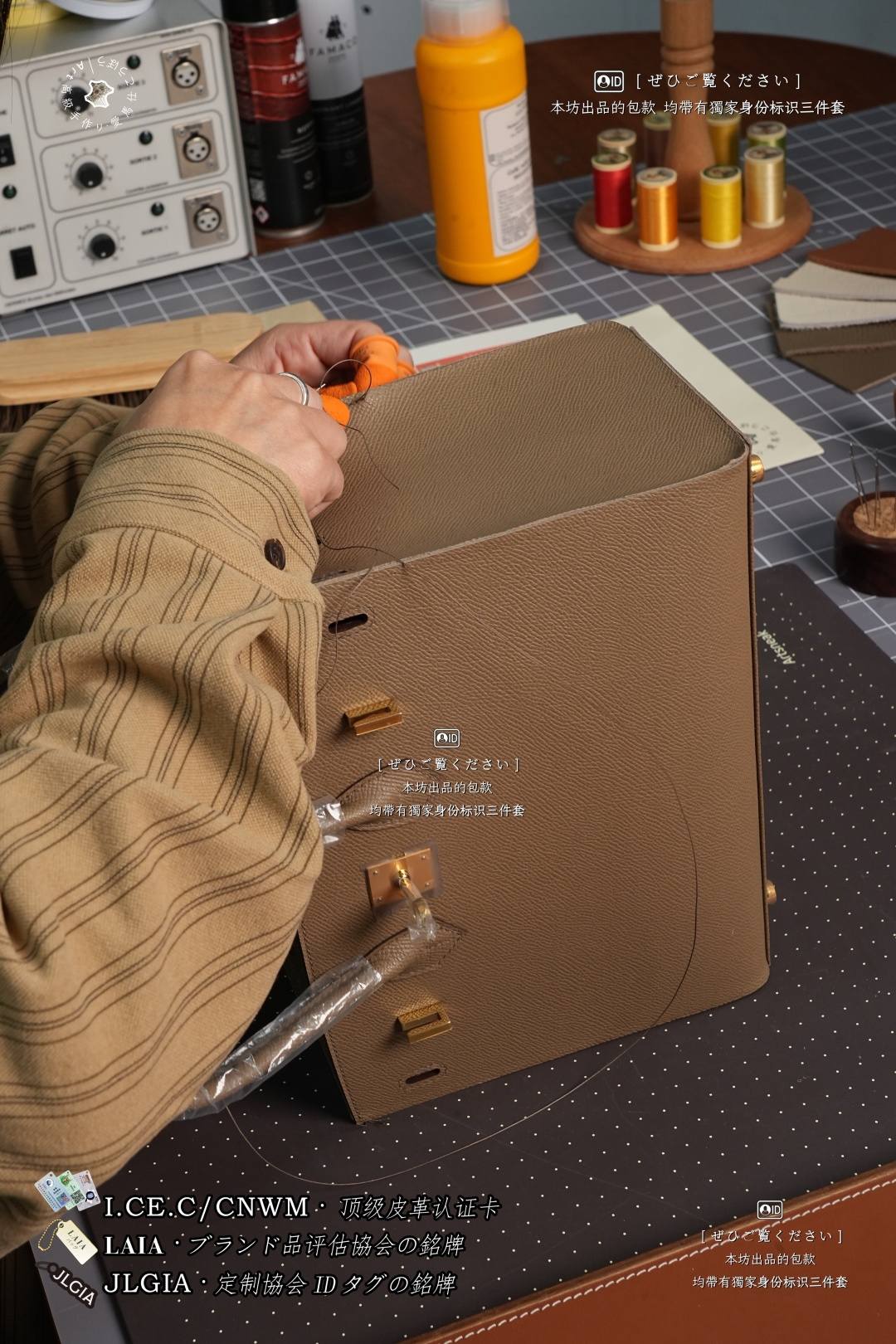
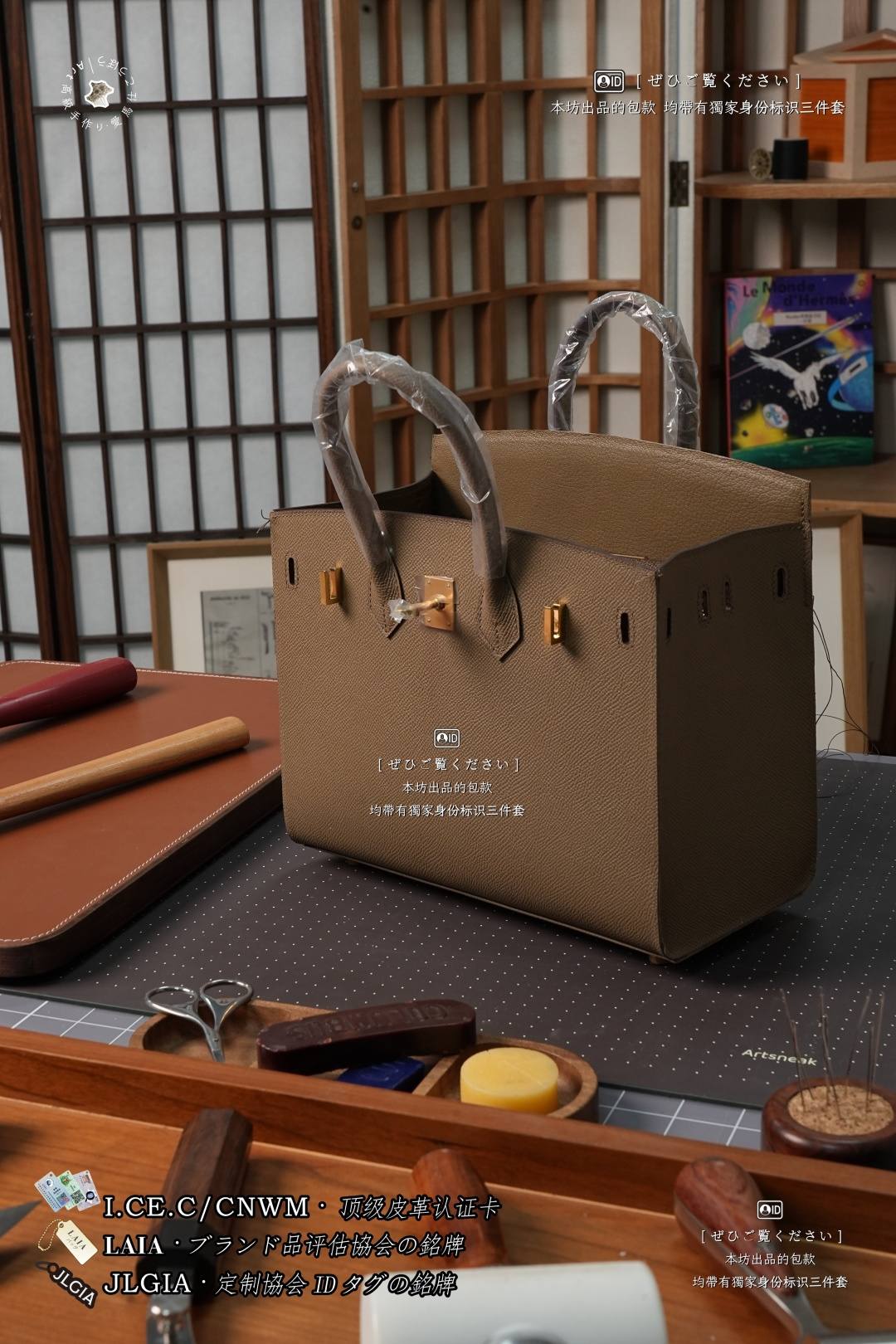
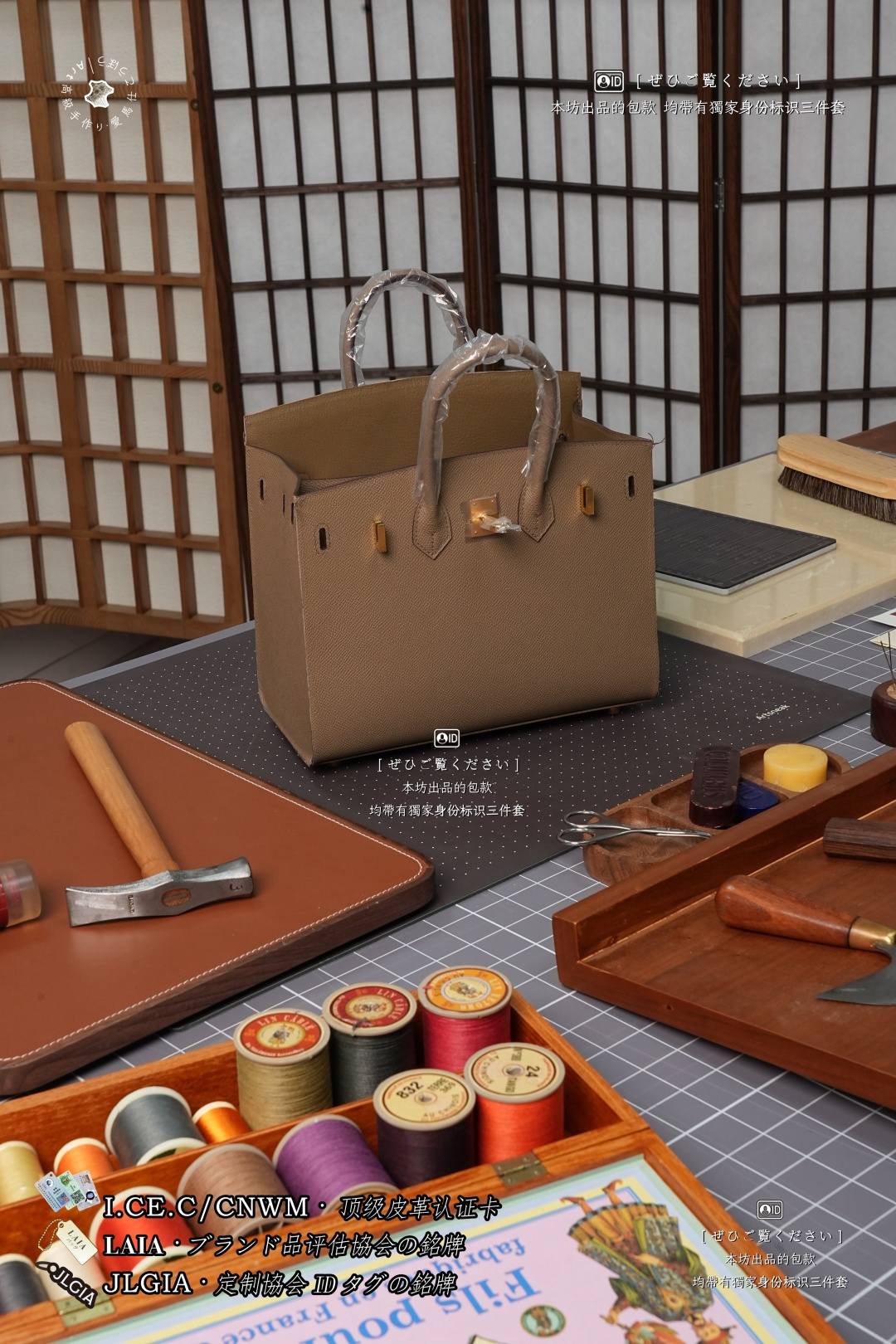
The handcrafted bags at the Shebag workshop are nearing completion, with only the final stitching process remaining. This final step is extremely crucial. Thanks to the high precision of all preceding procedures, the final sewing work can be accomplished with impeccable results. The overall bag shape, dimensions and silhouette are perfectly finalized with no further adjustments required.
Shebag fully replicates the original factory saddle double-needle hand-stitching technique for all Epsom Sellier Birkin bags. Unified standard finishing stitching is applied to all straight seams, corners, hardware tabs, bag bases and handle joints, adopting universal finishing rules and exclusive backstitch craftsmanship for key structural areas, with tailored processing adapted to rigid Epsom leather.
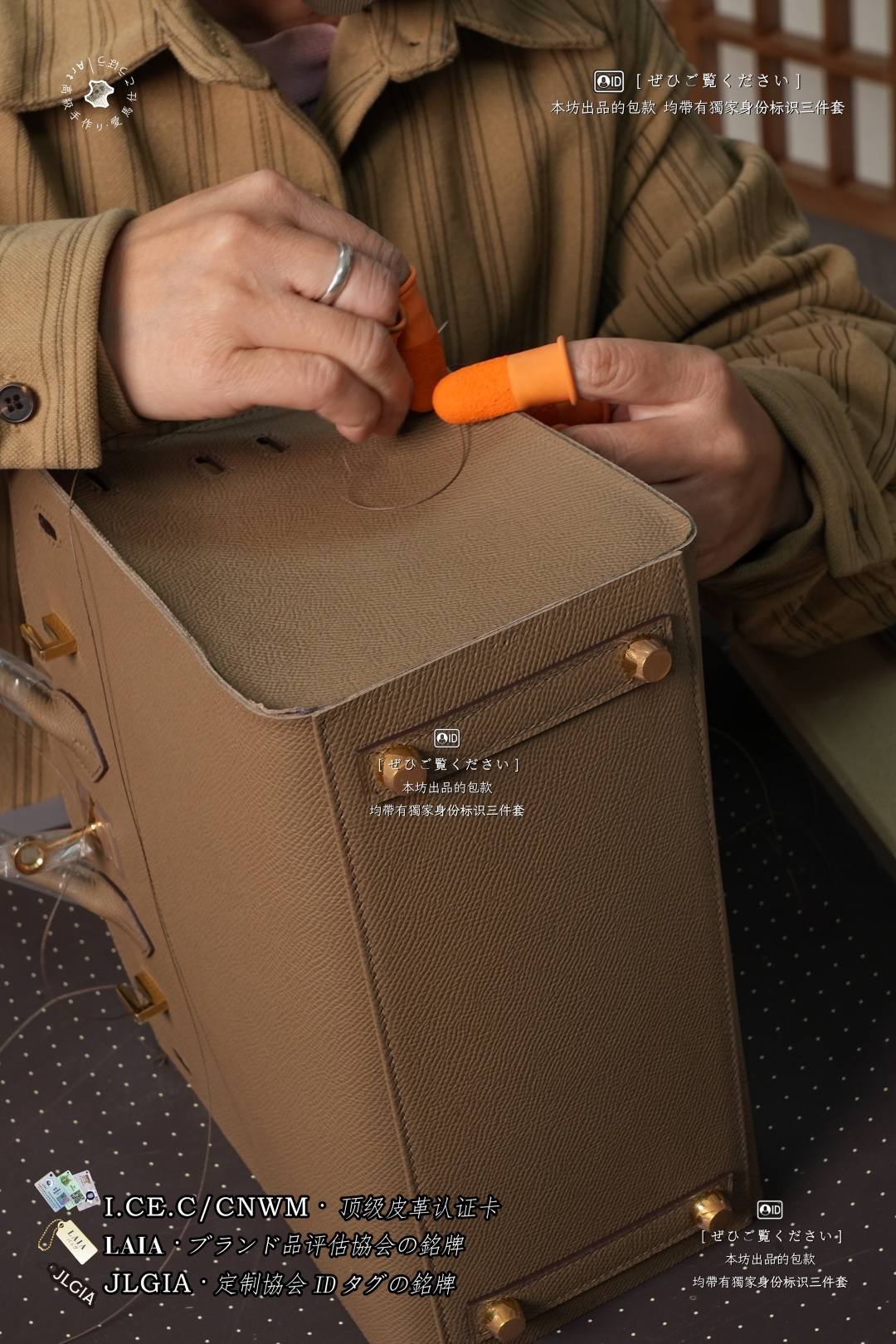
Premium imported beeswax linen double threads are adopted for production, with both ends of a single thread threaded with separate needles. Holes are punched at a 45-degree oblique angle with a fixed stitch density of 14 stitches per inch, equivalent to a single stitch spacing of approximately 0.9 millimeters. The front surface features neat oblique horseshoe-shaped wavy stitches that slope lower on the left and higher on the right, while the back presents flat interlocked double threads with each stitch bearing force independently. Before punching holes on rigid Epsom coated leather, a thin layer of wax is pre-applied to prevent leather surface cracking and whitened pinholes. In line with the Sellier outer-stitch structure, leather raw edges are folded outward with all stitches fully exposed on the bag exterior. With multi-layer laminated leather consisting of integrated bag body and side panels, the finishing stitching achieves a flawless exterior appearance and enhanced internal tensile strength without overlapping stitch marks on the surface.
For the universal standard finishing process applicable to all straight seams, reverse backstitching for reinforcement serves as the core procedure. After completing the last standard stitch hole at the seam end, three reverse backstitches are made, an industry-standard anti-counterfeit stitching technique. The two needles retreat three pre-punched holes toward the sewing start point to perfectly restore the original 45-degree oblique saddle stitch pattern. The tension of backstitches is slightly lighter than that of main stitches to avoid cracking and wrinkling of the Epsom leather’s surface coating. All backstitches run perfectly parallel to the main stitches with consistent spacing, leaving no visible stitch joints to the naked eye. After finishing the backstitching, both needles are threaded through to the leather interlayer and flesh side without any exit on the outer surface. The two thread ends are separated and diagonally threaded 2 to 3 millimeters through the leather fibers inside the interlayer to lock the stitch knots firmly. Threads are cut with a reserved length of 0.8 to 1 millimeter, then gently melted with the outer flame of a low-temperature lighter and pressed into the leather interlayer to create a smooth, bump-free finish. Direct glue application on stitch knots is strictly prohibited as it may erode the Epsom coating and cause whitening; only a minimal amount of edge paint is used to cover the melted thread joints. Post-finishing quality inspection involves gently pressing the stitch lines with a bone folder to ensure full adhesion of wax threads to the Epsom leather and eliminate slight bulges caused by backstitching. The raw edges covered by edge painting are thickened and polished at stitching joints to prevent delamination and exposed bases.
Exclusive customized finishing craftsmanship is implemented for key structural parts to distinguish Shebag’s premium outer-stitch and inner-stitch workmanship. The hardware tabs and lock strap joints, core identification details of the bag, adopt the original iconic three-stitch reverse backstitch finishing. After finishing the main stitches at the connection between tabs and the bag body, three independent reverse backstitches are added for reinforcement to form a distinctive short anti-counterfeit stitch segment. The backstitches feature symmetrical height on both sides and a unified 45-degree oblique angle, with identical stitch depth and tone matching the main stitches. All thread ends are concealed inside the double-layer leather interlayer of the tabs with no melted thread traces visible on the exterior. The 90-degree corner finishing represents the most sophisticated procedure of Sellier outer stitching. For the sharp angular edges of rigid Epsom leather, piled stitches and bulged leather surfaces at corners are strictly avoided. The needle entry angle is adjusted in advance one stitch before reaching the corner, piercing the vertex hole at a 45-degree oblique angle. One locking backstitch is made right after crossing the vertex before continuing straight stitching. After completing all side seams, three reverse backstitches are added at both ends of each corner to lock the angular tension bidirectionally and prevent cracking during long-term use. Partial thinning and trimming are performed on multi-layer overlapping corner edges to reduce stitching tension.
The full-loop enclosed stitching on the bag base features no external joints. All stitching start and end points are hidden inside the inner interlayer of the bag base, delivering a continuous seamless loop on the exterior. Three reverse backstitches are applied bidirectionally at the closed-loop joints, with interlocking double threads reinforcing the load-bearing base structure. The double-layer thickened Epsom leather of the bag base allows deeper concealed stitching for doubled load-bearing tensile strength. Reinforced finishing is adopted for the high-tension joints connecting handles and upper bag tabs. Four reverse backstitches are made bidirectionally after main stitching, exceeding the standard three-stitch reinforcement for enhanced durability. Thread ends are concealed through dual locking by embedding separately into the handle interlayer and the bag body leather interlayer. All melted stitch joints are completely covered by the handle base, remaining invisible from both front and side views.
Shebag has developed exclusive optimized finishing techniques tailored specifically for Epsom leather. Constant temperature control is implemented throughout backstitching and thread melting processes for the embossed resin surface coating of Epsom leather, preventing whitening and indentations caused by direct high-temperature contact on the leather surface. Pre-waxing of punched holes effectively stops coating cracking under stitching tension. Adapted for Sellier outward folded raw edges, all finishing backstitches fit closely to the seams without crossing the raw edges, maintaining a constant 0.6-millimeter distance between stitch lines and edge paint for zero overlapping or covering defects. Uniform thread color matching is strictly enforced, with all main stitches, backstitches and concealed melted threads using waxed linen threads from the same batch and color. No color differentiation or segmented traces appear even under strong light.