- 03
- Aug
Shebag Hermes handmade Perlage craftmanship of Kelly crocodile leather bags(August 2026 updated)
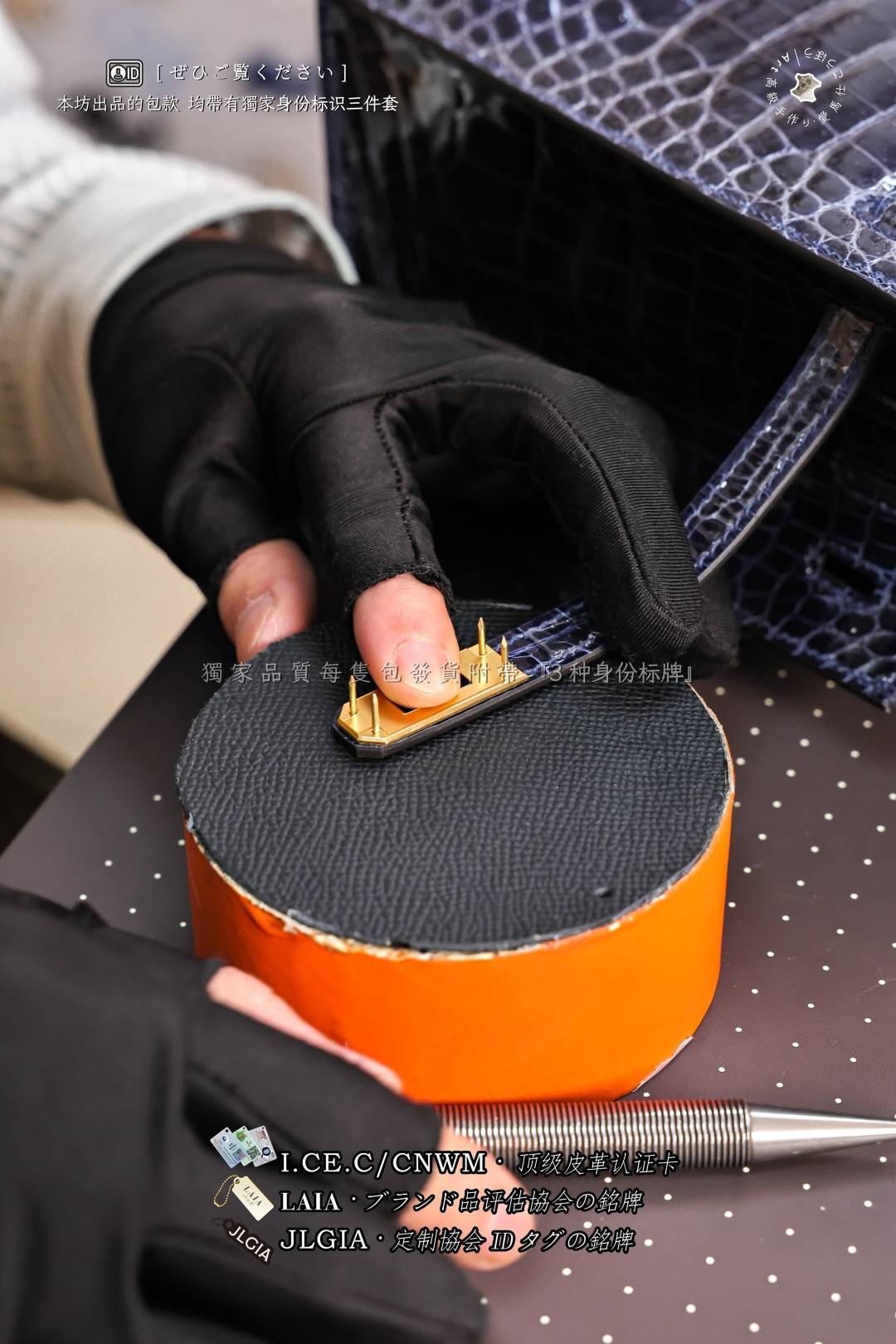
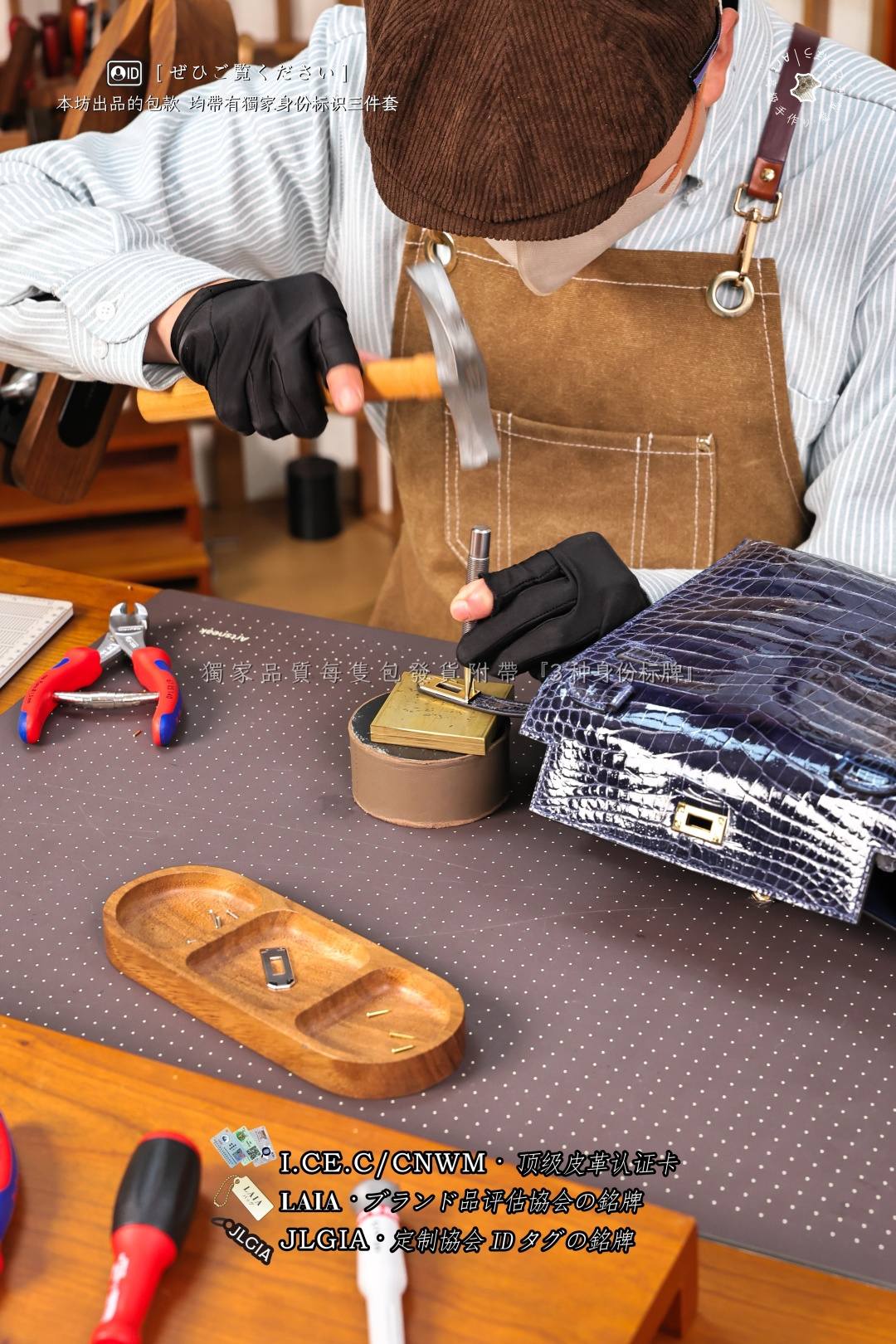
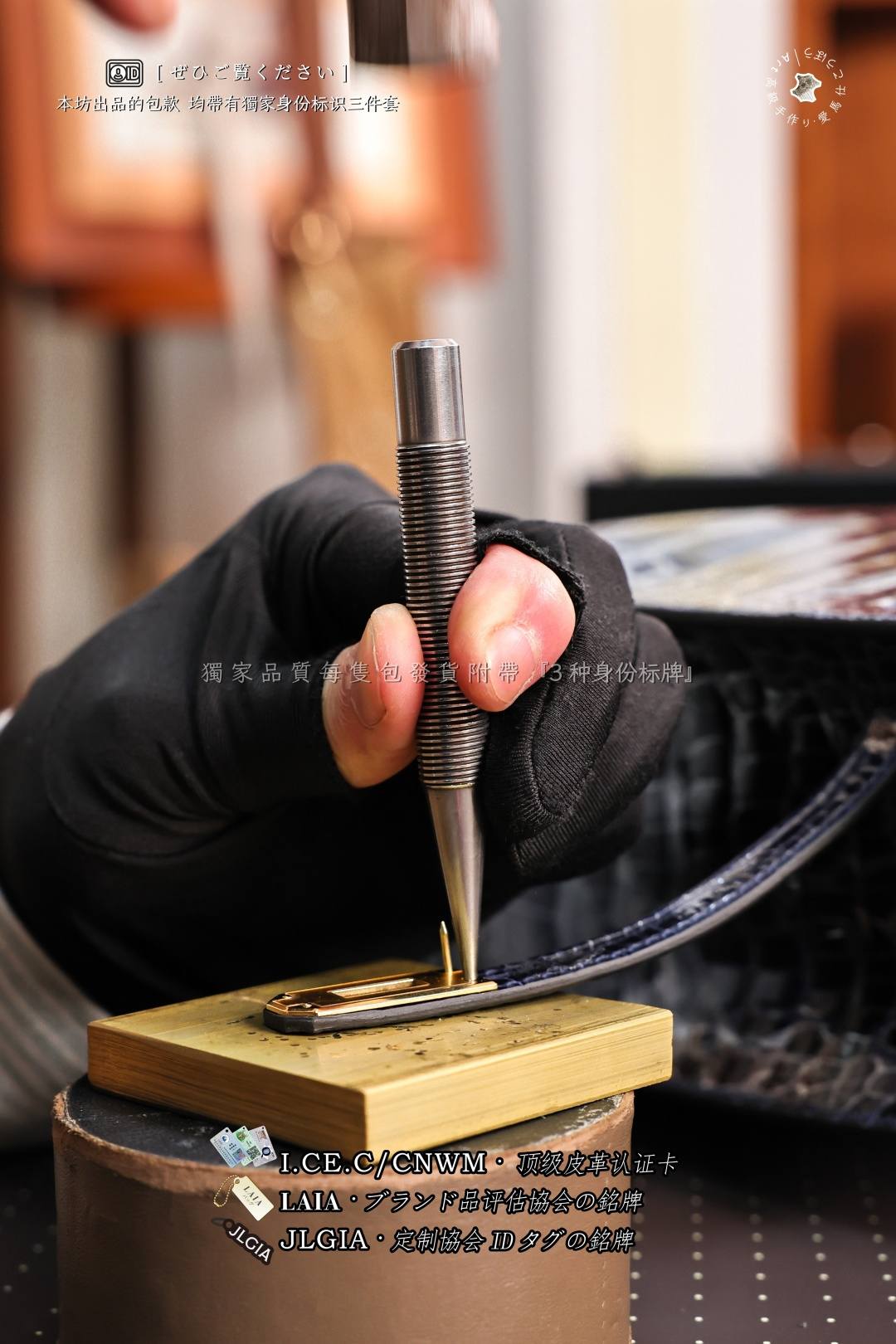
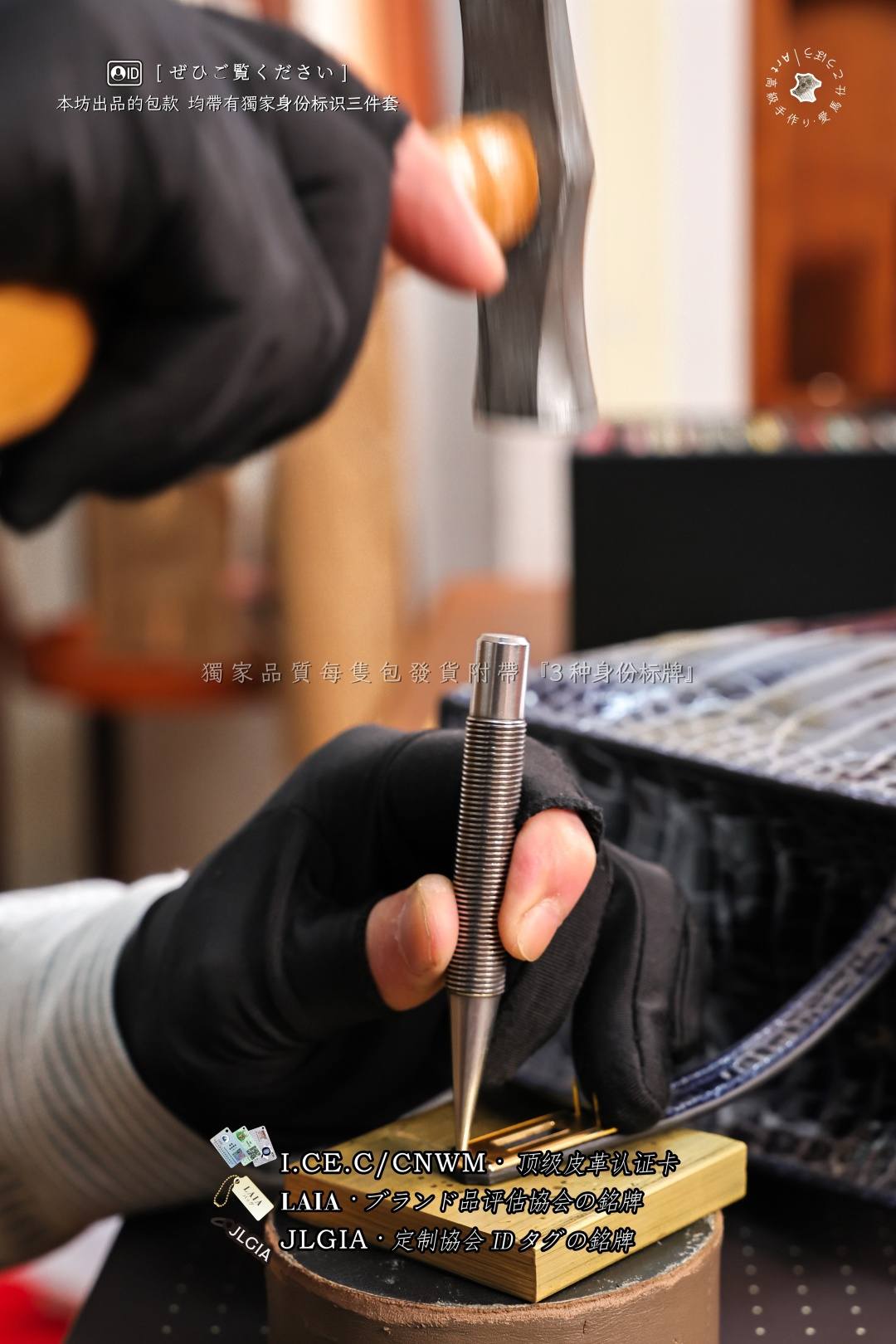
The core tool is the spherical rivet punch, the most vital piece of equipment. Its die cavity replicates the contour of original French tools. The concave tip of the punch features an accurate hemispherical curve that matches the forming profile of rivet ends on authentic Hermès bags.
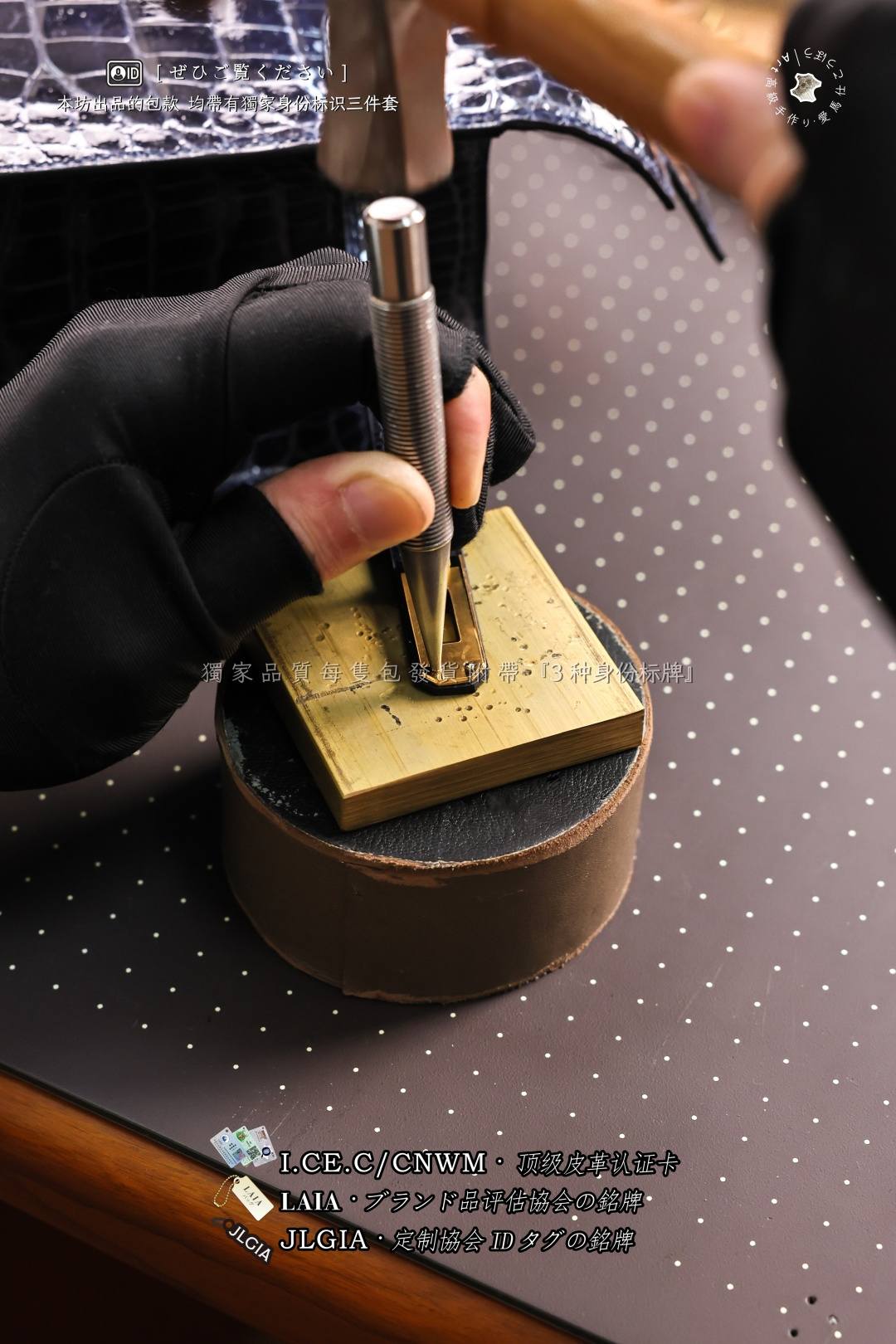
This sets it apart from flat-bottom punches widely used by ordinary manufacturers, whose shallow curved or flat surfaces produce flattened rivets with rough edges after hammering. Shebag adopts quenched Cr12 high-hardness alloy steel, reaching a hardness level close to imported French tools. By contrast, small generic factories merely use 45# steel, whose die cavities deform after hundreds of strikes. Multiple graded punches are deployed for different procedures, consisting of two punch heads. The smaller pre-forming punch preliminarily forges rivet ends to prevent copper rivets from shifting or cracking. The larger finishing spherical punch shapes smooth, uniform pearl-like rivet heads. The original craft rules out completing forming with only one punch in a single strike, marking the biggest dividing line between premium workshops and generic manufacturers.
Instead of ordinary soft rubber hammers available on the market, weighted professional leather-wrapped cobbler hammers are adopted. The hammer face is laminated with multiple layers of cowhide, enabling controllable cushioning during striking and concentrating impact force without scratching the plating on the front of metal hardware. Low-cost workshops commonly use basic plastic hammers. Such tools fail to regulate striking force properly, often leading to displaced hardware and scratches on surface electroplating.
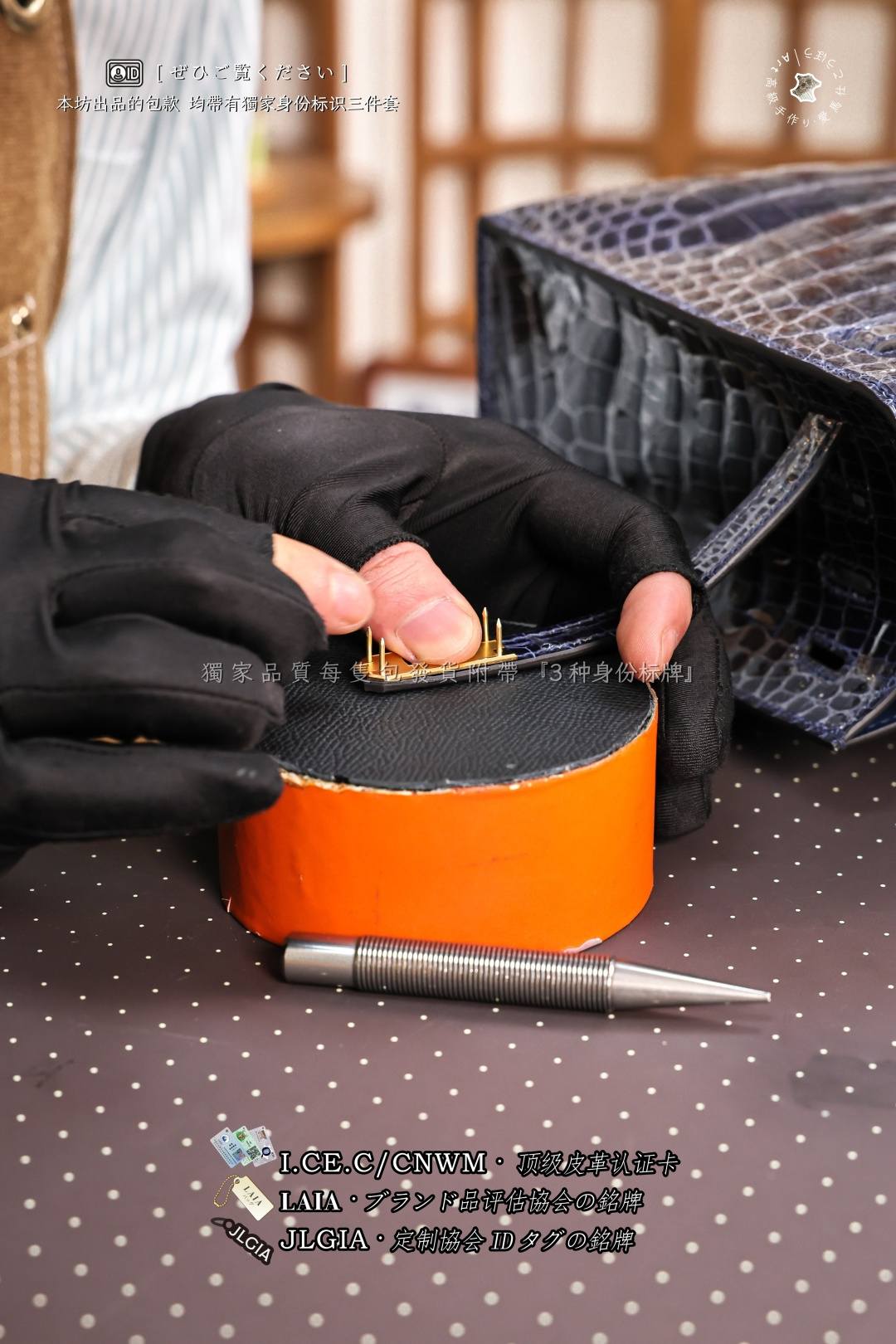
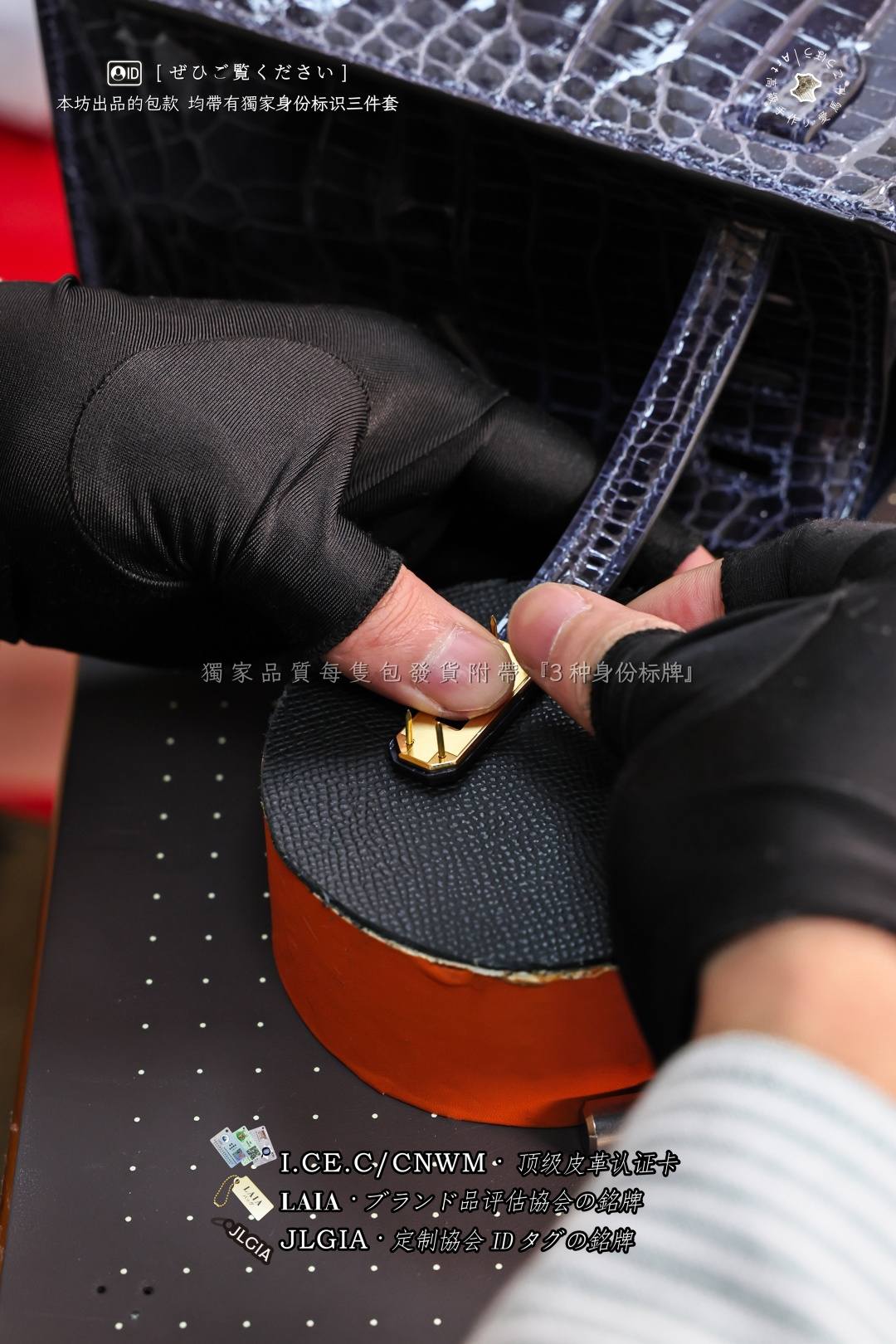
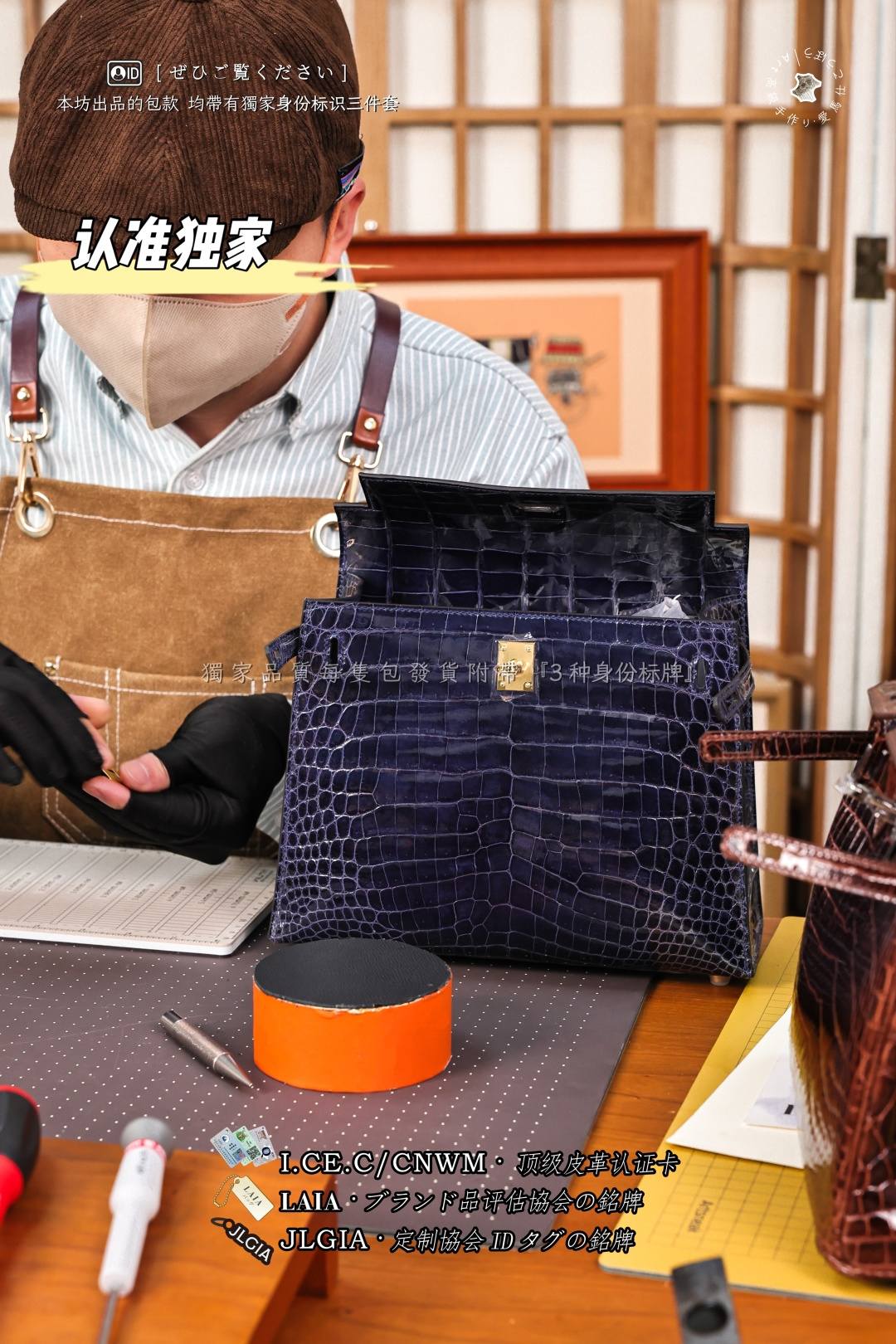
Custom grooved steel anvils serve as base mould plates. Placed against the front of hardware, they secure clasps and Pontet hardware to avoid shifting while hammering. Multi-layer wool buffer pads are matched with the anvils to block hard objects from direct contact with leather and stop indentations left by compression. Many replica workshops simply replace the dedicated setup with iron blocks and cardboard, resulting in frequently crooked hardware.
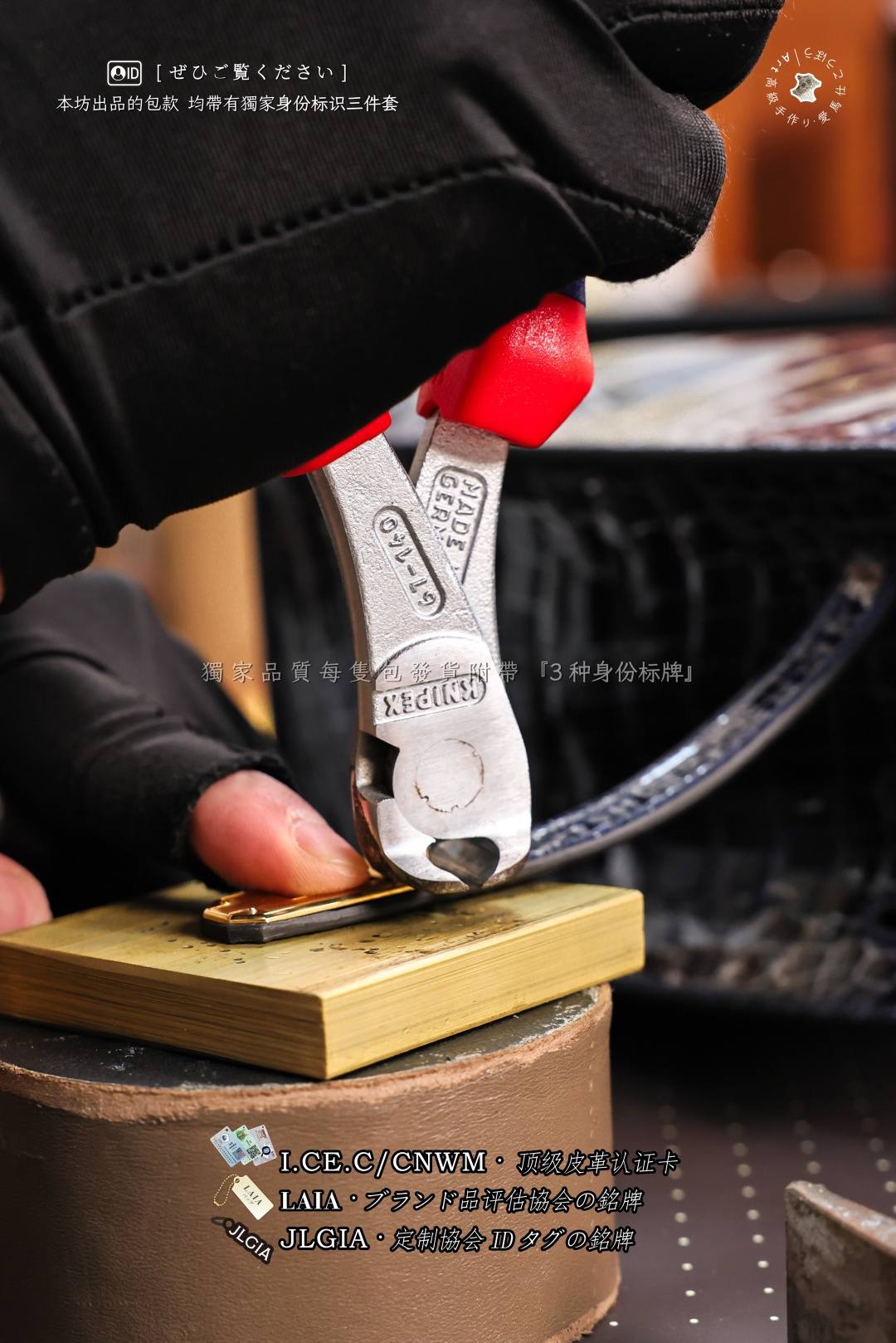
Supporting auxiliary tools include dedicated diagonal rivet cutters. After solid long copper rivets penetrate leather, the cutters trim rivets to a precisely unified reserved length. The reserved length directly determines the final appearance of spherical rivet heads. Ordinary pliers create tilted cuts, leading to unevenly shaped rivets. Limit positioning gauges ensure every rivet hole sits vertically centered and prevent tilted rivets, and vertical alignment of rivets is a key identification indicator.
A comparison between the tool solution adopted by Shebag, generic mass-production factories and the original French workshop.
The original Hermès workshop in France uses authentic Blanchard striking tools and manually calibrated anvils. These tools represent the peak of precision yet come with extremely high procurement costs; a single set of punches costs thousands. Shebag purchases high-precision domestically made replicated French-style striking tools that fully match the cavity curve of original equipment. It abandons prohibitively expensive authentic tools but retains the complete dual-step procedure of pre-striking and finishing punching. Its advantage lies in smooth rivet heads with consistent curvature, whose shape is hardly distinguishable from those made with original tools by naked eyes. The disadvantage is that the alloy punches show slightly weaker wear resistance than French-made tools under long-term frequent use. Low-end generic factories rely on one simple punch, regular rubber hammers and no dedicated anvils. Numerous production steps are simplified, and semi-automatic machine riveting is even adopted. The resulting rivet ends appear flat with inconsistent sizes.