- 09
- Sep
Shebag handmade replica Hermes Kelly 25 crocodile handle bag oil edge craftmanship review(Sep 2026 updated)
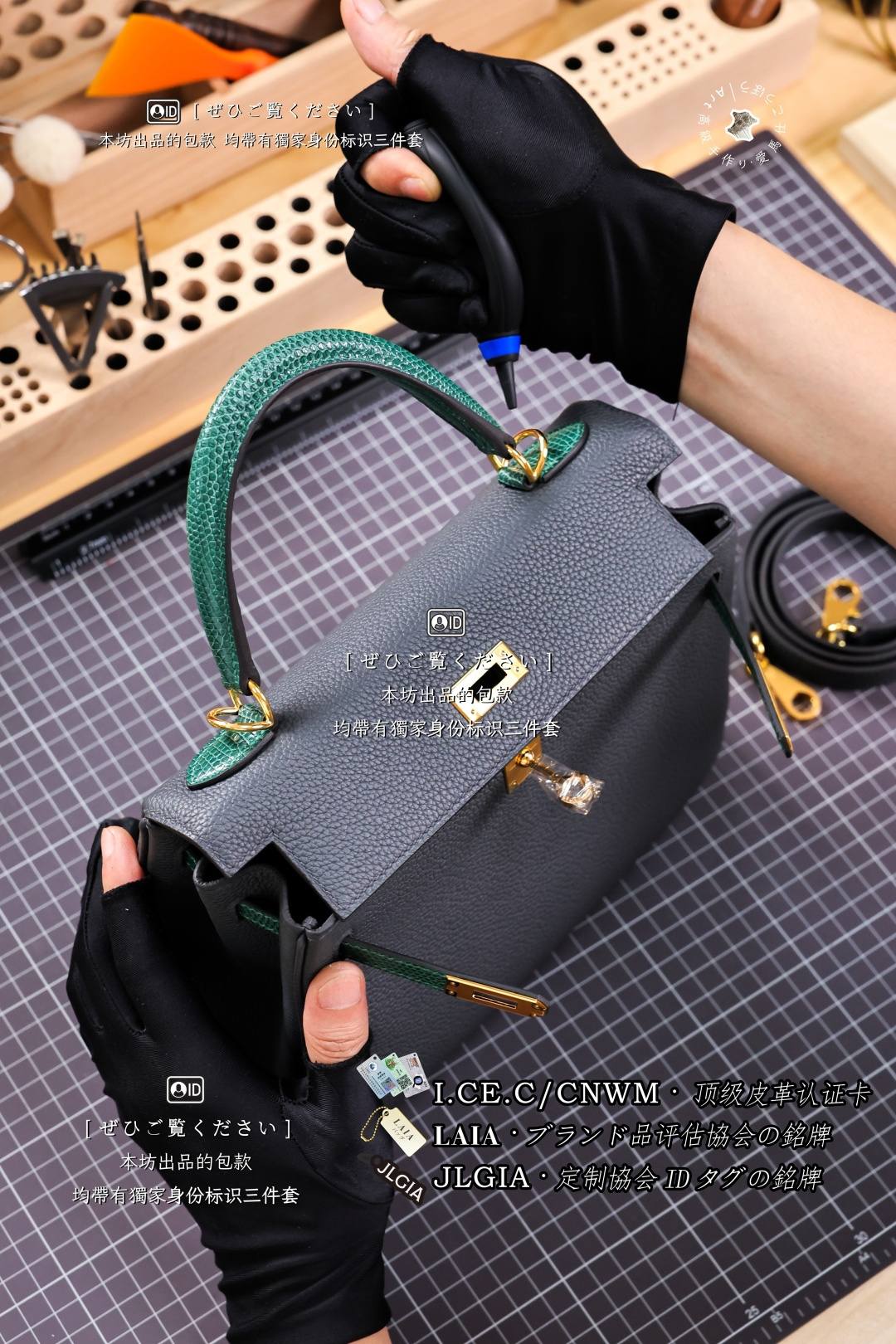
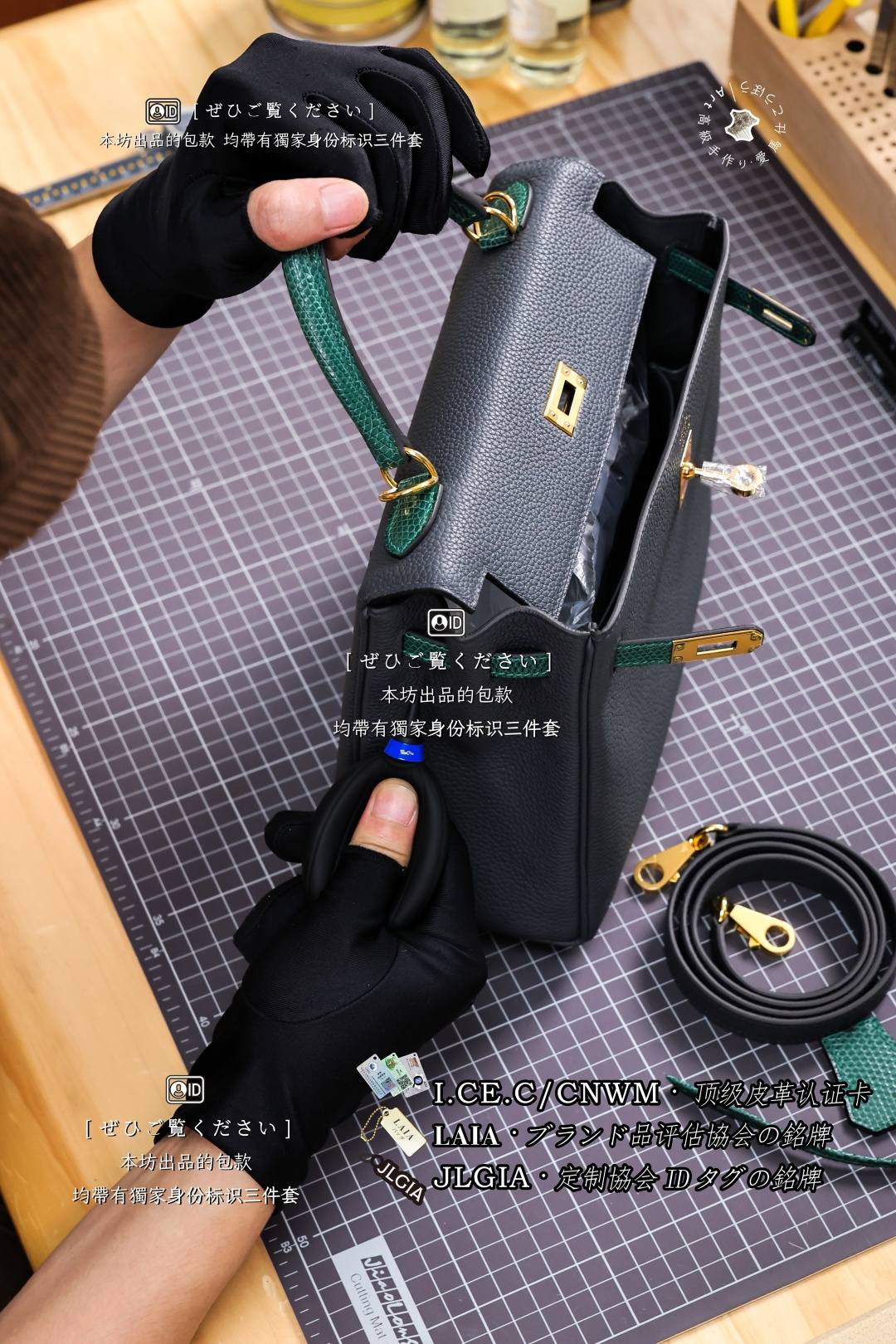
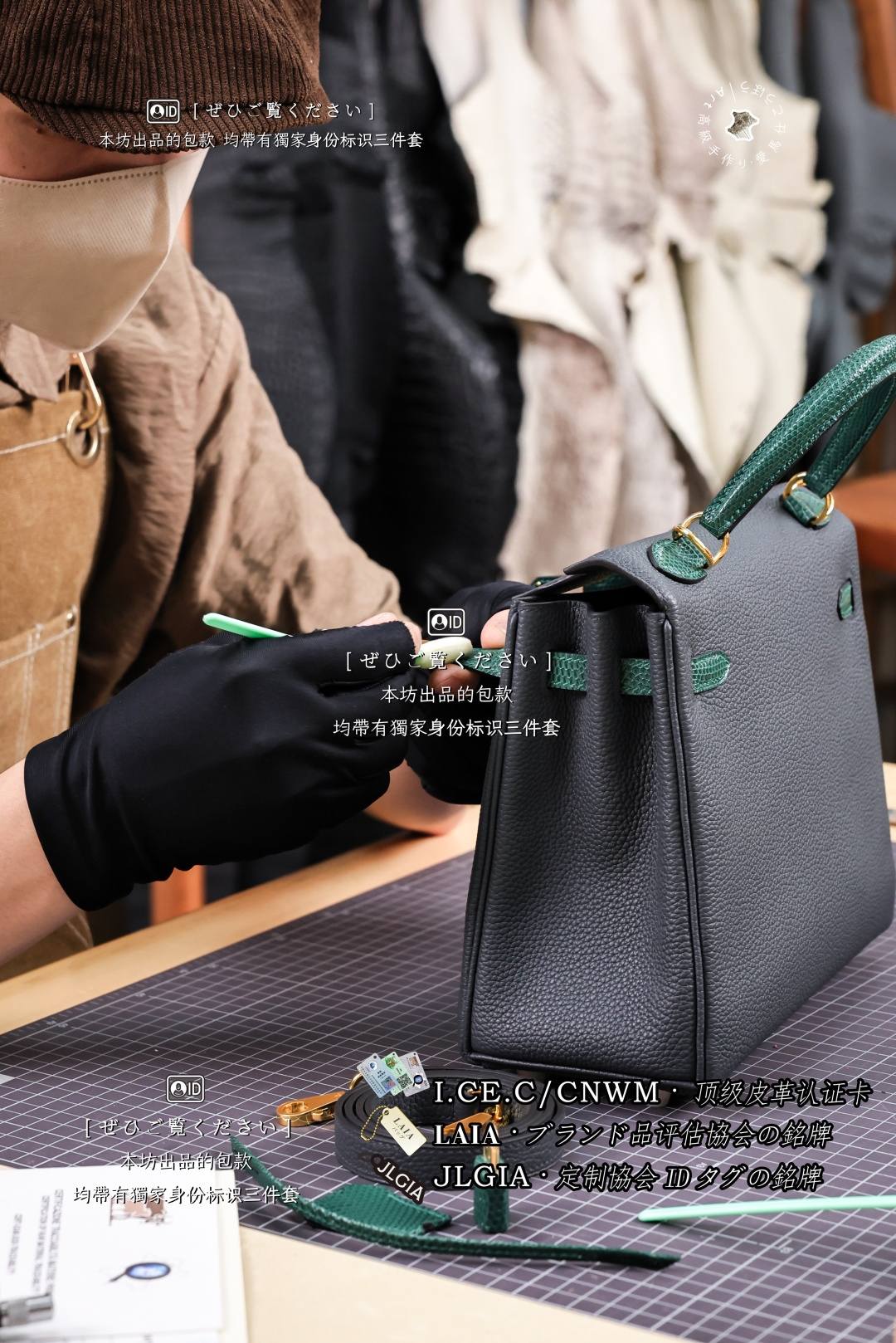
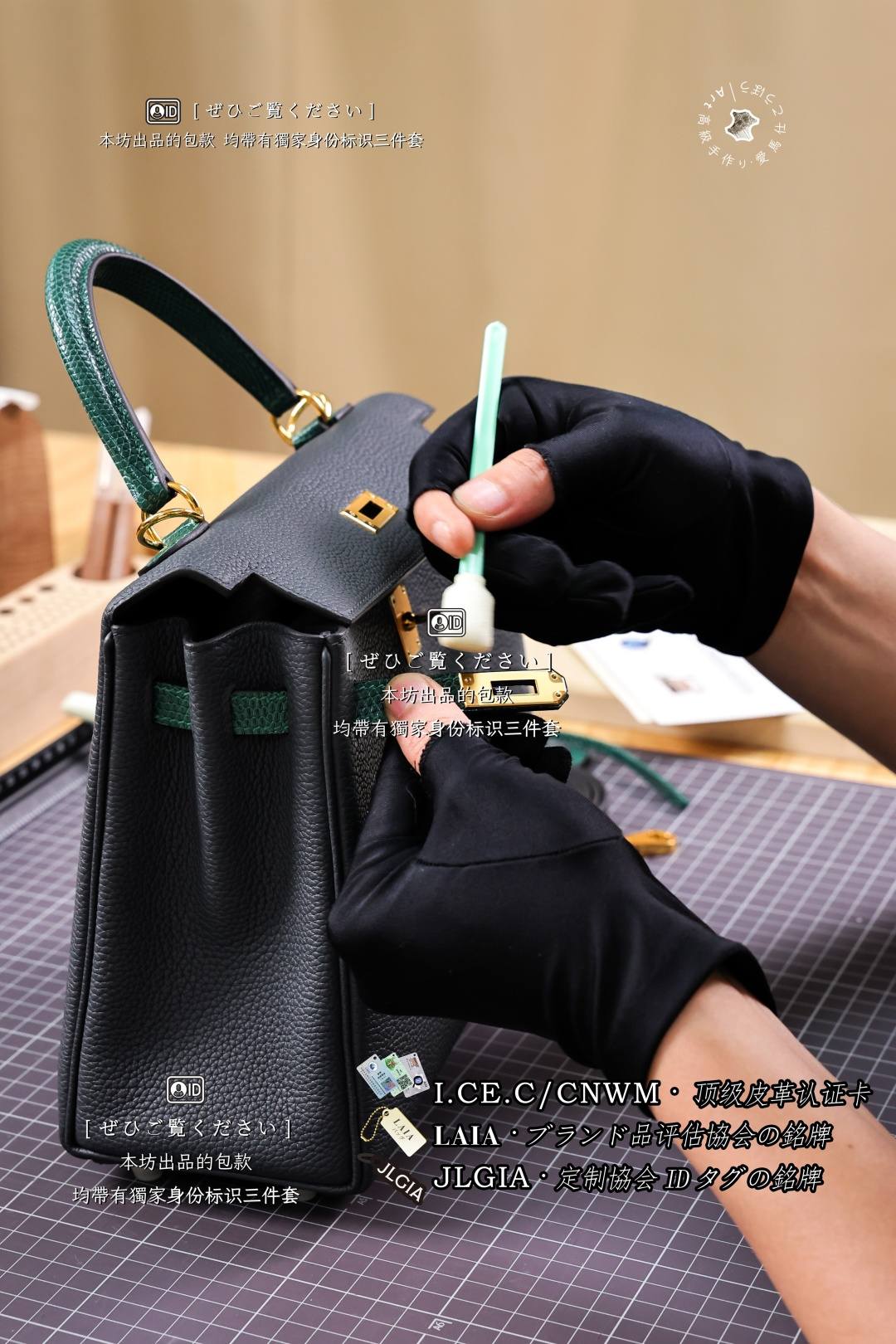
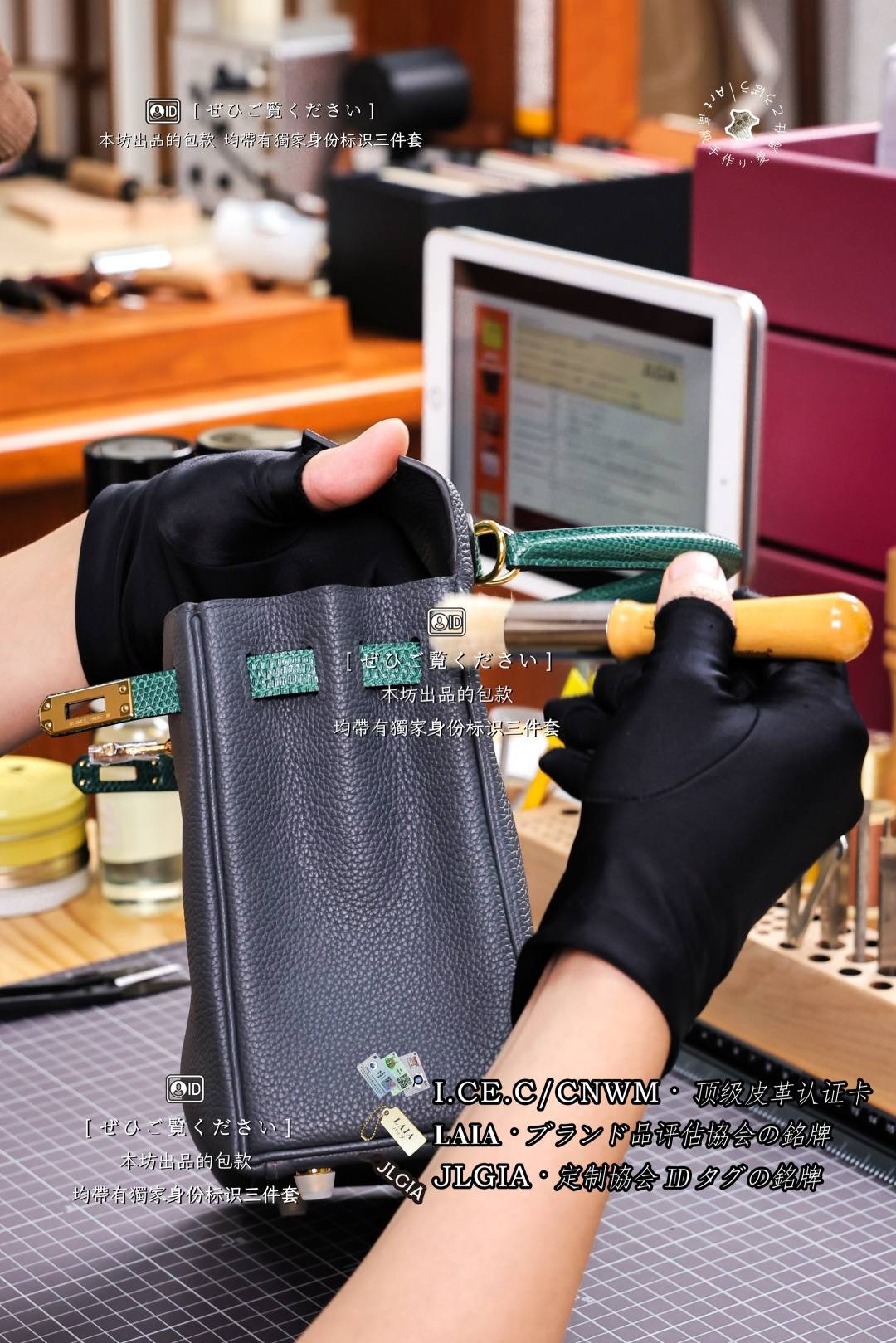
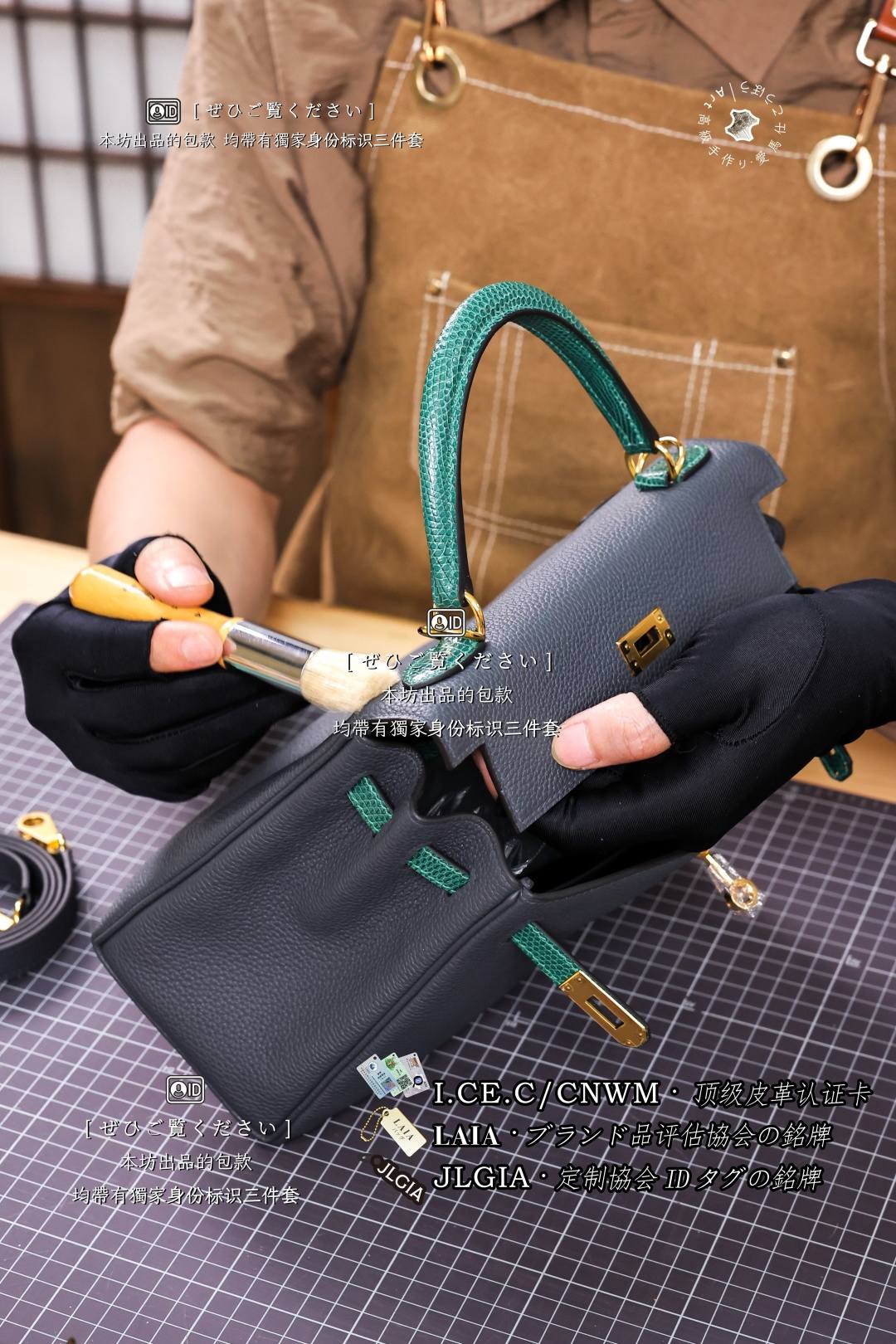
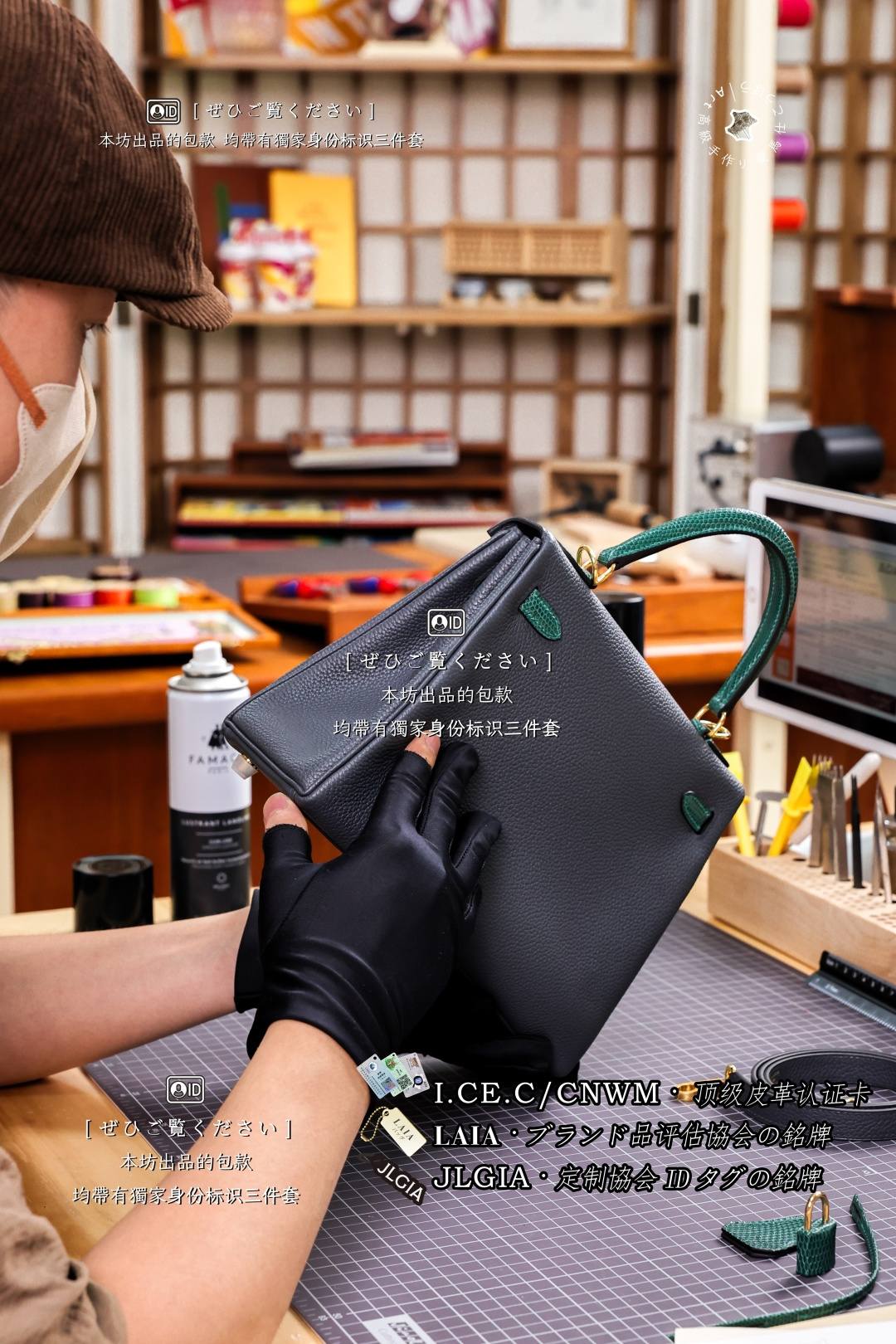
Shebag recently produced a batch of top-quality replica Hermès Kelly 25 bags with alligator-skin handles. We have conducted in-depth research into Hermès’ oil-edging technique, particularly as it applies to alligator skin, which is relatively thin.
The crocodile‑skin handle bears high‑frequency stress, constant hand contact and repeated bending, making it the most challenging component for edge finishing on the entire bag. Unlike standard leather edges on the bag body, crocodile hide features dense fibres with major structural differences between the scale layer and subcutaneous connective tissue. Poor‑quality edge finishing readily causes blistering, delamination, local chipping, and colour bleeding triggered by sweat.
Note that two configurations exist for crocodile‑skin handles. The first uses solid Alligator, Porosus or Niloticus crocodile leather for the full handle, while the second pairs a crocodile‑skin bag body with a handle made of Barenia or Box calfskin. The following analysis focuses on the oil‑edge or edge‑paint finishing applied to full crocodile‑skin handles from Hermès.
Pretreatment of base material determines the success of edge finishing and is frequently skipped in replica production. A crocodile‑skin handle is not a single layer of leather but a multi‑layer composite curved‑core construction. It consists of outer crocodile skin, a middle vegetable‑tanned leather core and reinforcing lining leather. These components are pre‑curved for shaping, bonded and firmly pressed together before uniform skiving and trimming of cross‑sections.
Precise cross‑section trimming is carried out with sharp hand‑cutting blades to deliver smooth surfaces free of scale debris and loose leather burrs. Hard scale roots lie beneath crocodile scales, so sanding pressure must be carefully controlled. Excessive sanding damages scale roots, allowing water seepage along root gaps and resulting in blistered edge finishing later on. Degreasing and cleaning are performed by wiping cross‑sections with alcohol and white wax to remove natural oils from crocodile hide and residual wax from tanning processes. Crocodile skin contains far more oil than calfskin. Insufficient degreasing directly undermines edge‑paint adhesion and leads to full‑scale peeling over time. A thin custom‑formulated resin primer penetrates fibre gaps on the cross‑section without heavy filling. Mass‑market factories tend to apply thick primer to cover defects, whereas Hermès primer anchors fibres and preserves subtle cross‑section textures, leaving faint visible layering in the finished edge.
The original factory adopts a custom blended system of flexible resin and trace beeswax instead of rigid pure lacquer. Pigments precisely match the native tone of crocodile hide, with separate formulations for matte and glossy crocodile leather. For glossy Lisse crocodile, the edge finish carries a subtle sheen consistent with polished crocodile surfaces and features a higher resin proportion. For matte Matte crocodile, the edge delivers soft non‑specular finish with elevated wax content to avoid mirror‑like reflection. Its defining property is thermal‑modifiable performance. Commercially available generic edge paints scorch and discolour under high heat. This proprietary mixture softens on heating, permeates leather fibres and solidifies upon cooling to boost adhesion and flexibility, forming the foundation of French hot‑edge finishing techniques.
Below is the exclusive workflow for crocodile‑skin handles, incorporating three to seven thin coats plus inter‑layer thermal processing. The core principle lies in multiple thin applications. Each coat must fully cure, undergo fine sanding and receive hot‑press edge ironing. Single heavy coating is strictly forbidden. Technical difficulties concentrate on the handle’s curved surfaces and corner joints where handles connect to the bag body.
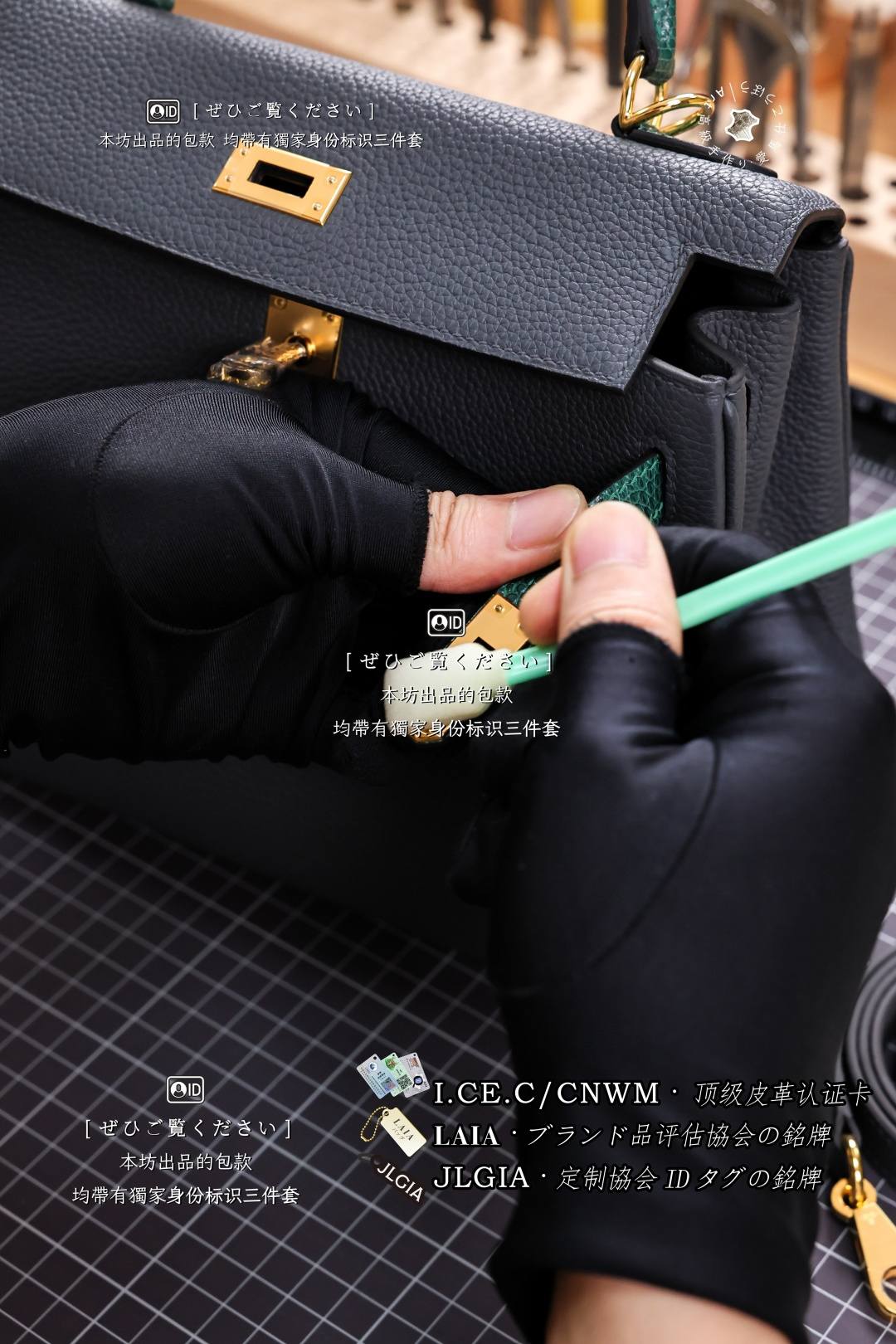
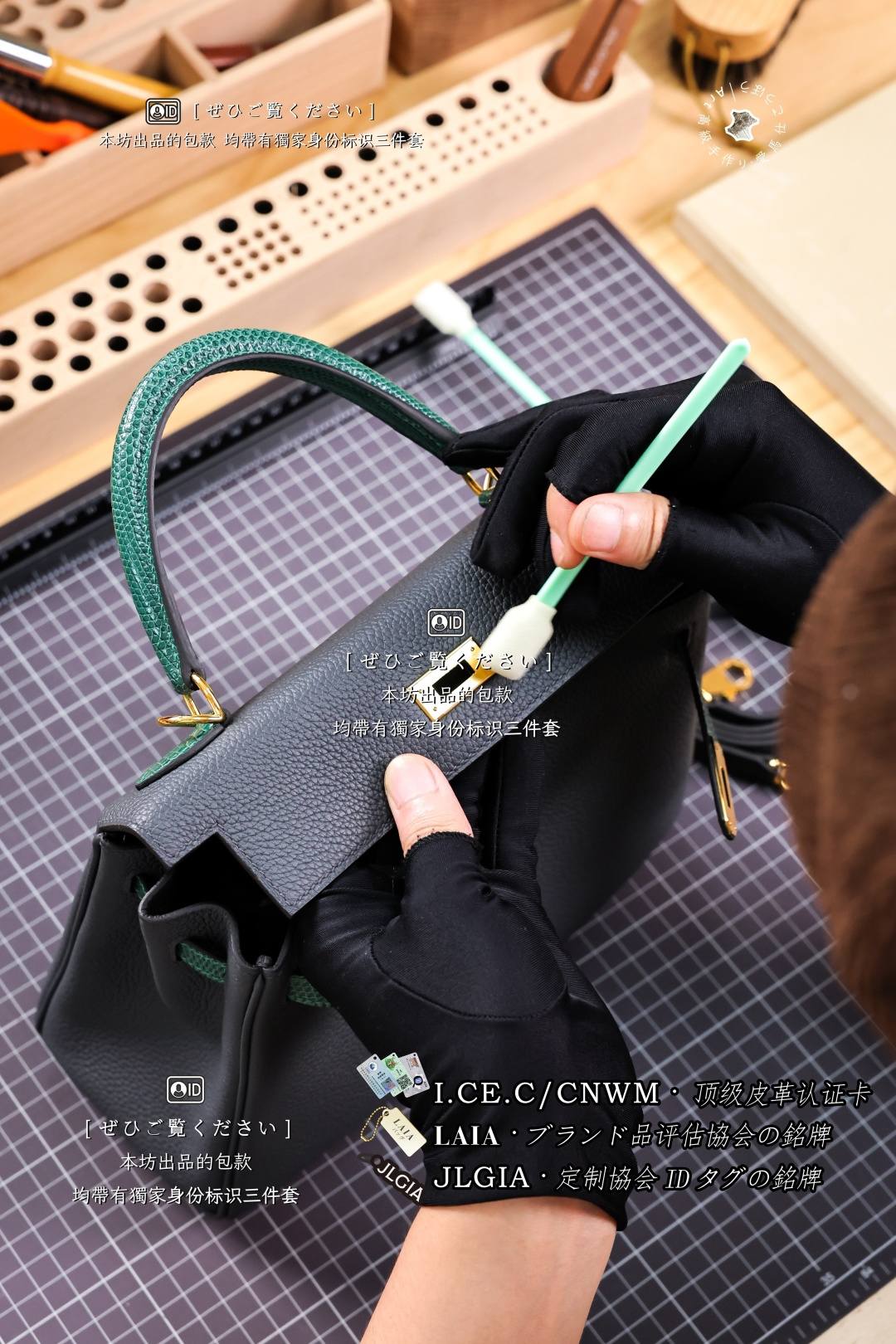
Apply primer and allow thorough curing at room temperature. Gently sand cross‑sections with fine‑grit sandpaper only to remove raised particles without abrading the primer layer. Lay down the first coloured edge‑paint coat thinly by hand brush, covering only cross‑sections and avoiding overflow onto crocodile scales, then let it air‑dry naturally. Conduct sanding followed by temperature‑controlled hot ironing using agate or metal edge tools. Temperatures are precisely regulated to achieve mild melting of edge paint, pressing coatings into leather fibres to eliminate brush marks and improve compactness. High heat must never contact crocodile hide, as overheating darkens and discolours scales.
Repeat the cycle of painting, air‑drying, sanding and hot ironing for three to seven iterations. Craftsmen adjust brush angles to follow the handle’s curved geometry. Excess edge‑paint easily accumulates at corners, so overflow must be trimmed away in every pass. The final sealing and polishing step uses an ultra‑thin beeswax wipe along edges, followed by manual buffing with cotton cloth. Properly finished edges appear slim yet full‑bodied rather than resembling thick rubbery layers.