- 11
- May
Shebag handmade Hermes bag oil edge review(May 2026 updated)
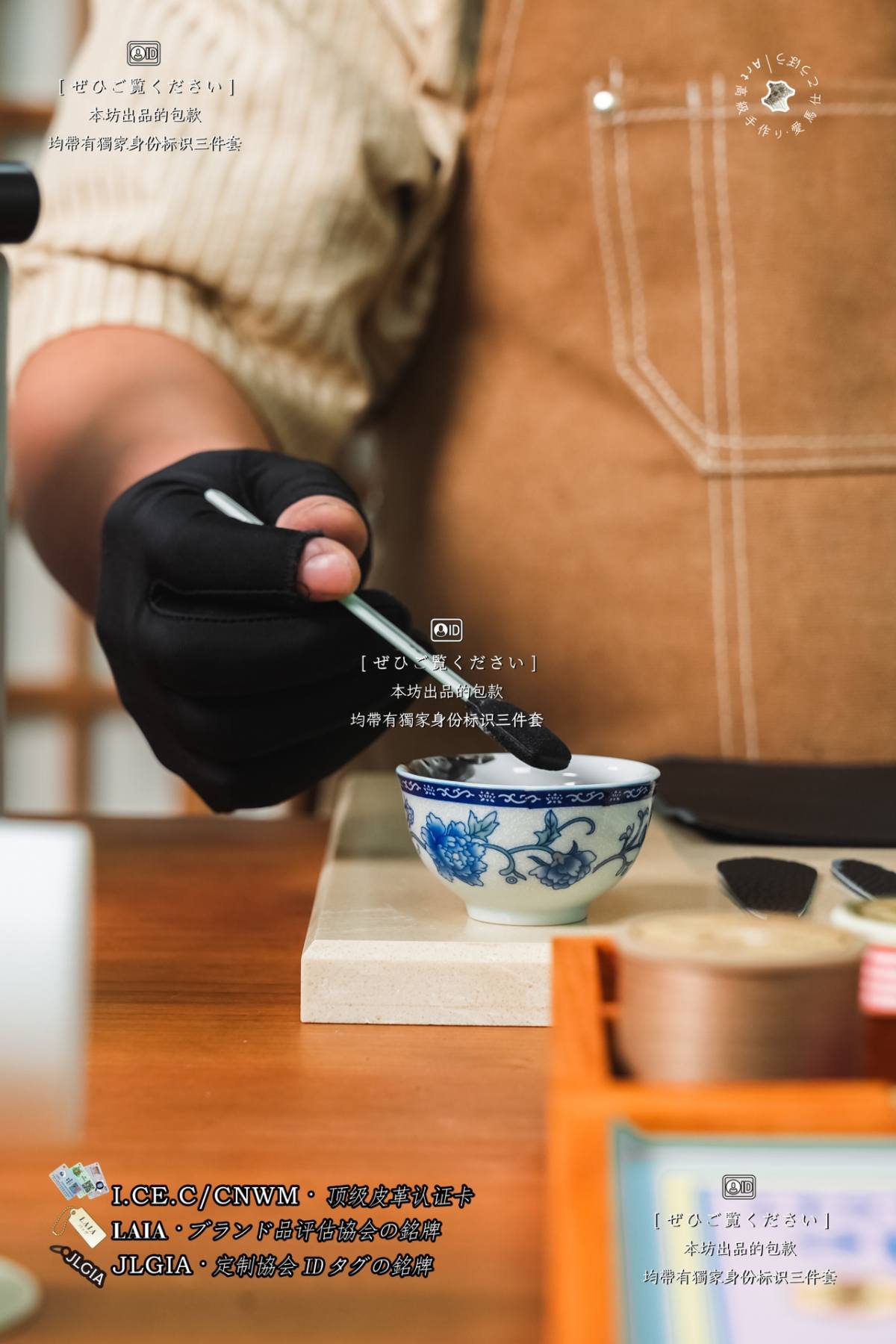
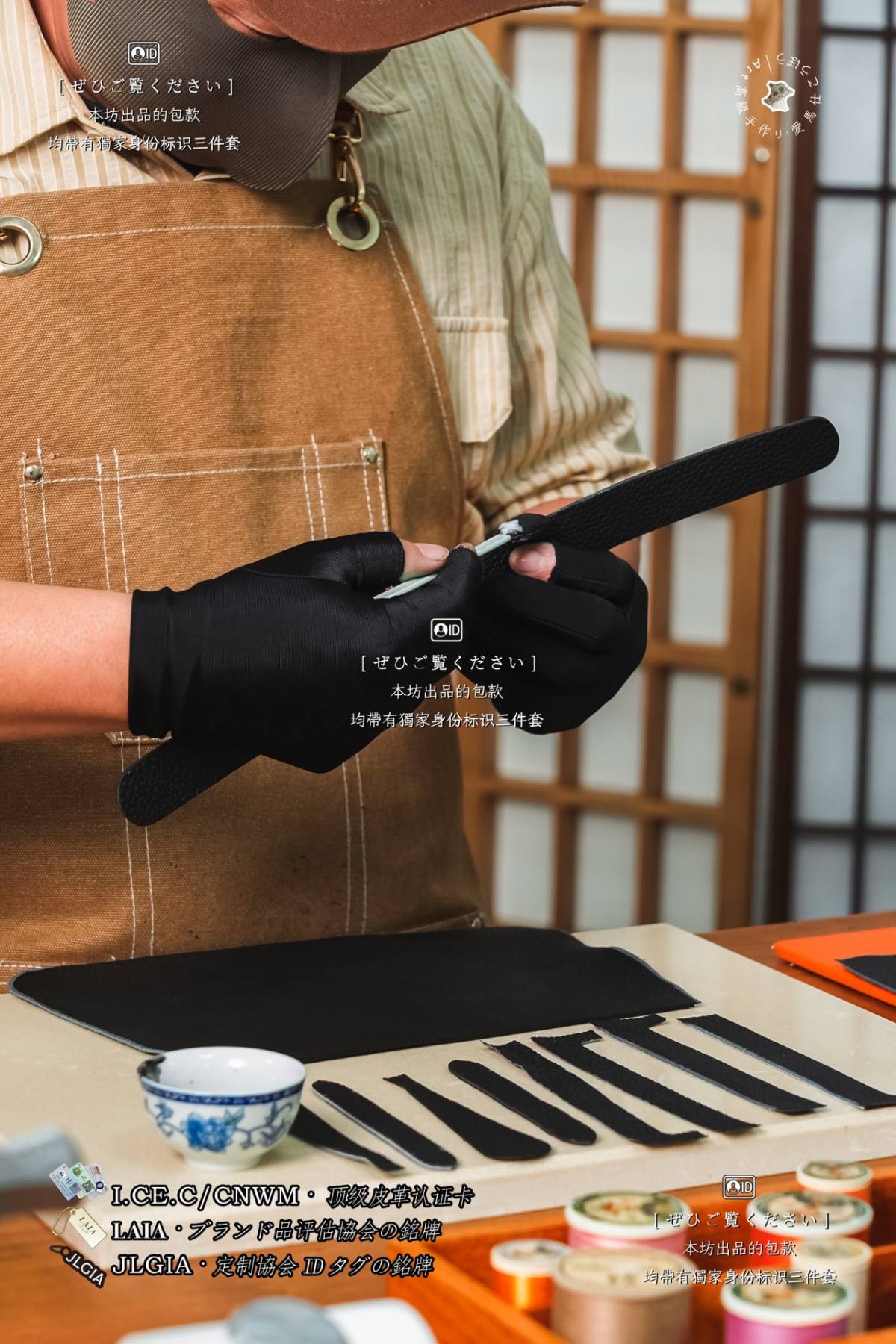
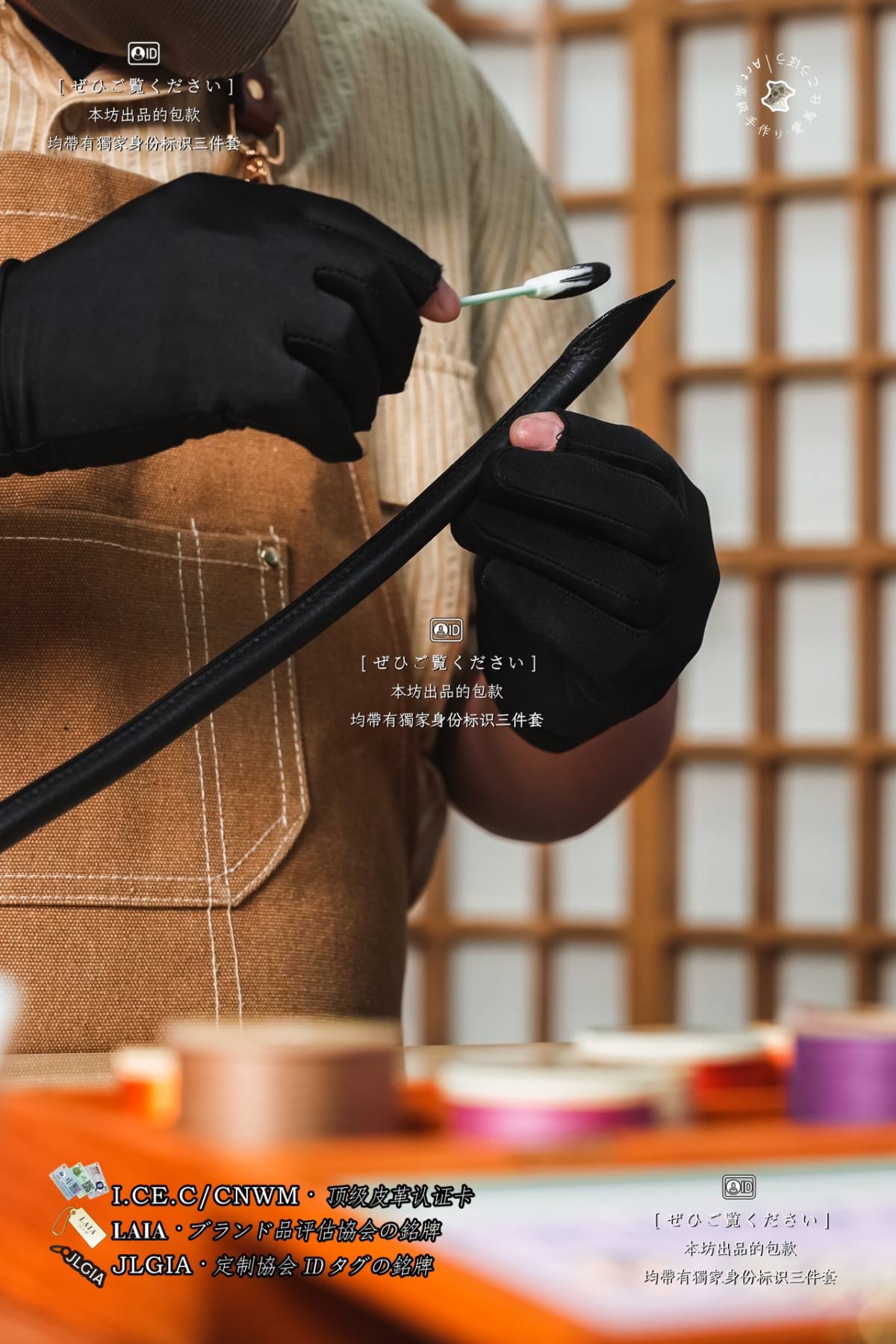
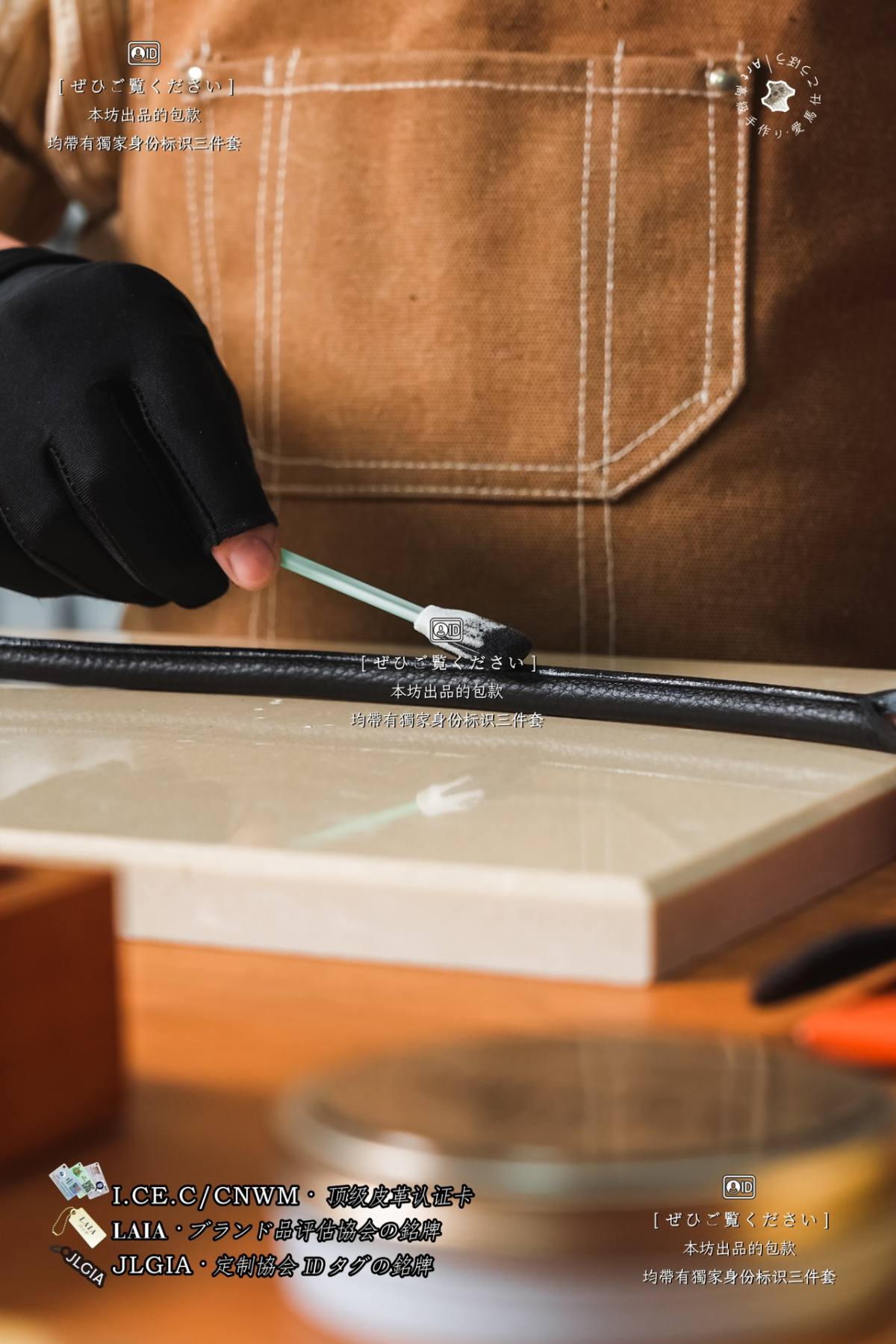
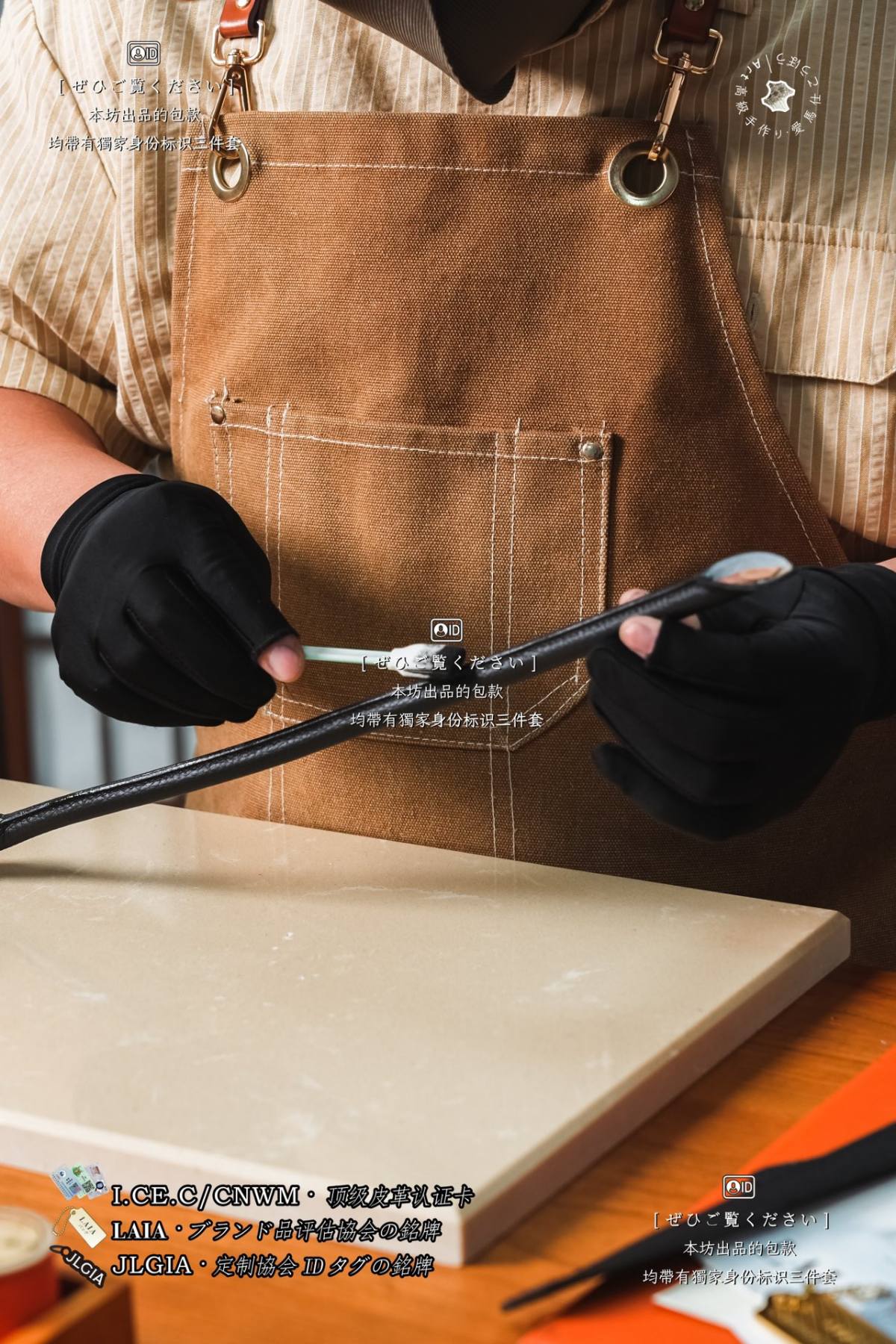
When it comes to black edge coating, the execution criteria differ distinctly from those of other colour tones. Only French Mandala plant-based resin edge coating exclusively adopted by Hermès is permissible, while ordinary industrial chemical edge coatings are strictly prohibited. Black finish is highly susceptible to revealing colour deviation, brush marks and surface whitening, hence requiring a formulation with high colour density, superior coverage and robust yellowing resistance. The pre-treatment of leather edges demands exceptional flatness and cleanliness; the standardized workflow encompasses precise trimming followed by edge skiving to a thickness of 0.5 to 0.8 millimetres, coarse sanding with 180-grit abrasive paper, fine sanding with 320-grit material, and final dust removal and degreasing, as any minor surface roughness will be visibly amplified on black finishes. The industry standard adopts four thin coating layers consisting of two base coats and two top coats, achieving an overall thickness ranging from 0.3 to 0.5 millimetres. Excessively thick black coating tends to induce cracking and peeling, whereas insufficient thickness leads to base layer exposure and a dull greyish appearance. Temperature regulation is critical during the hot edge sealing process, with the operating temperature maintained between 180℃ and 220℃. Black material possesses strong heat absorption properties; excessive temperature results in charring and brittle cracking, while insufficient heat fails to deliver a durable high-gloss finish. Given the difficulty of cleaning overflow residue on black edges, preliminary wax sealing with beeswax or French refined wax is mandatory, with immediate residue removal upon completing each coating application.
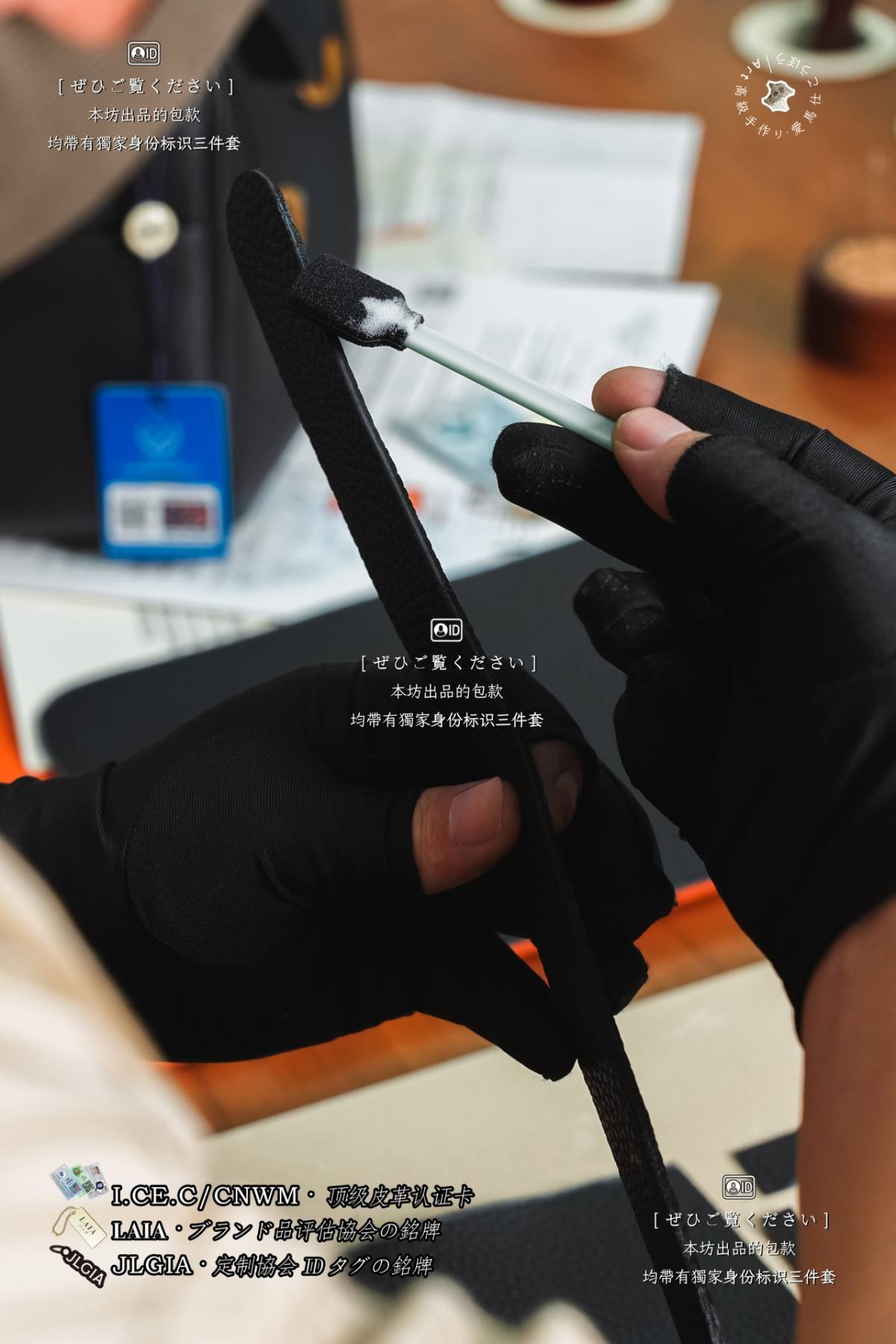
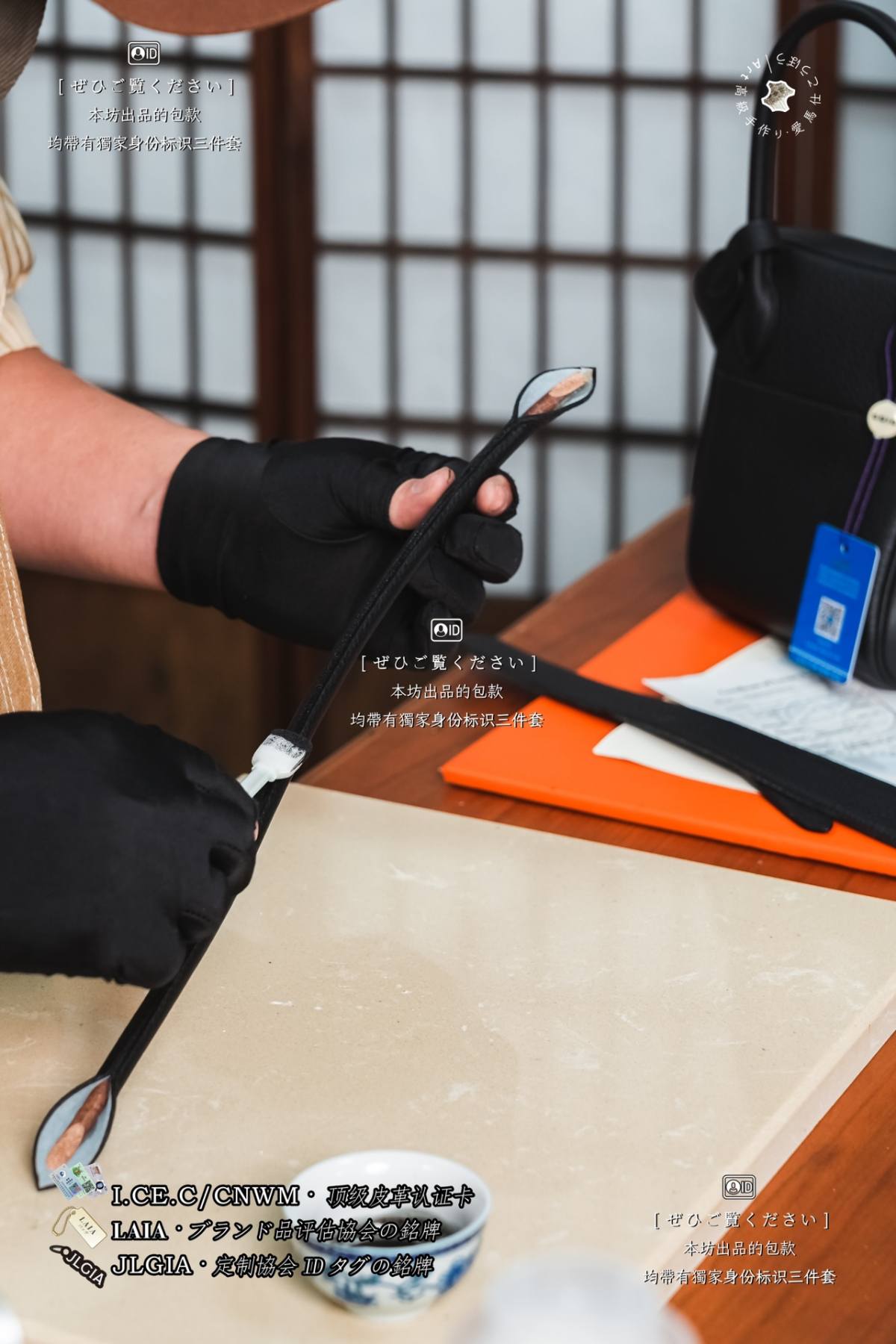
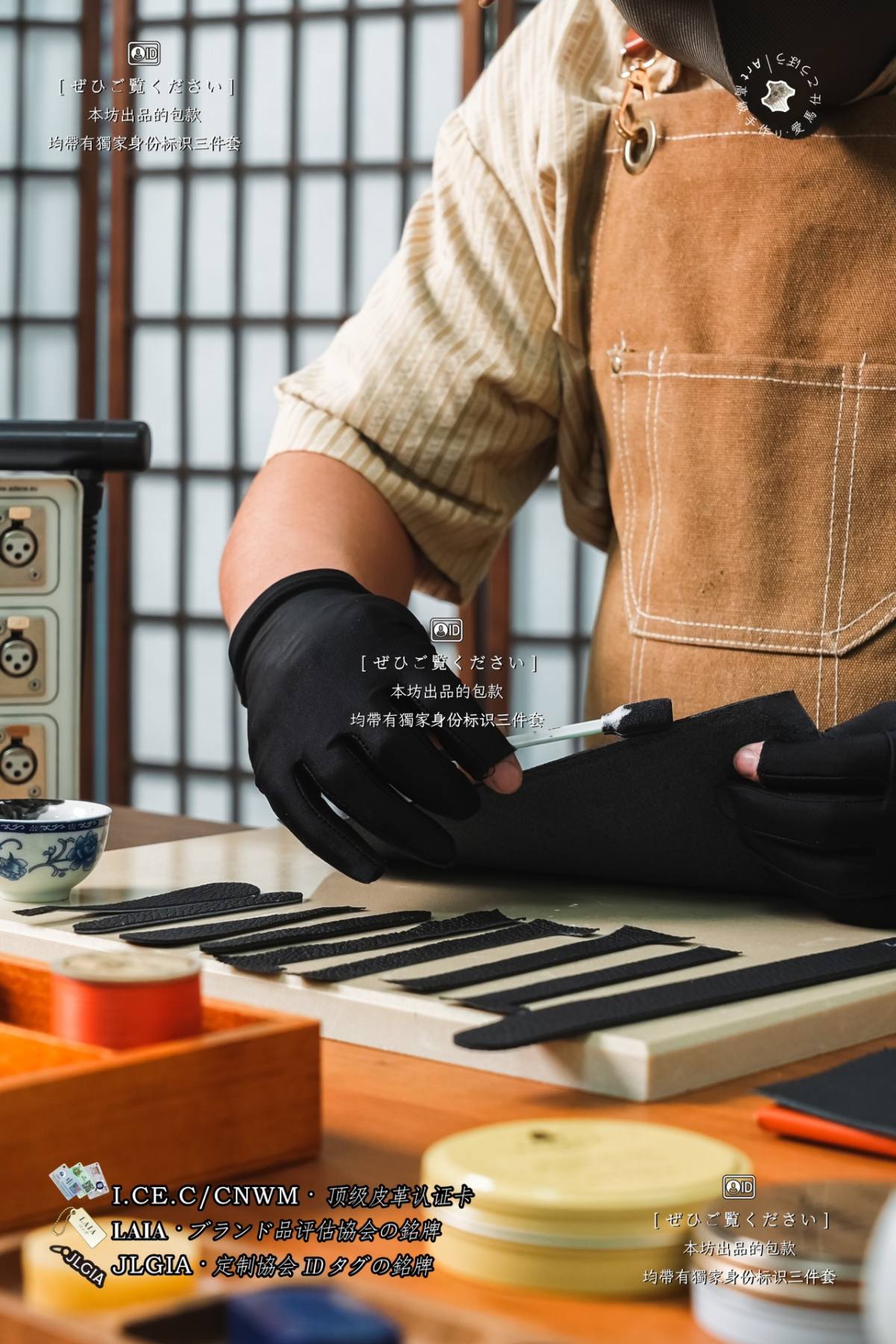
The standardized manufacturing procedure strictly aligns with Hermès original factory protocols, starting with leather edge pre-treatment that fundamentally determines the final tactile and visual quality. Trimming is conducted with a sharp leather cutter for vertical clean cuts free of burrs and serrations. Edge skiving shapes the rim to 0.5 to 0.8 millimetres with a smooth curved profile to prevent angular cracking. Coarse sanding follows the natural grain direction with 180-grit paper until the surface is uniformly levelled without indentations, succeeded by gentle fine sanding using 320-grit paper to attain a silky smooth texture. Comprehensive dust elimination is performed with soft brushes and lint-free cloths, paired with alcohol wipe degreasing to avoid cratering defects. A thin layer of French beeswax is then applied along the edge and melted with mild hot air to form an isolation barrier against coating overflow.
Custom blending protocols are implemented specifically for black edge coating. The foundational formula comprises Mandala black resin edge coating blended with 5% ethylene toughening agent and 3% to 5% deionized water to adjust viscosity, calibrated to a 25 to 30 second flow time via a No.4 viscosity cup at 25℃. The mixture undergoes five minutes of low-speed clockwise stirring to eliminate air bubbles and ensure uniform pigment dispersion, with thorough re-stirring required before each use due to the tendency of black pigment to settle. A 100-mesh filter is utilised to remove particulate impurities, as even minute particles are highly conspicuous on black finished surfaces.
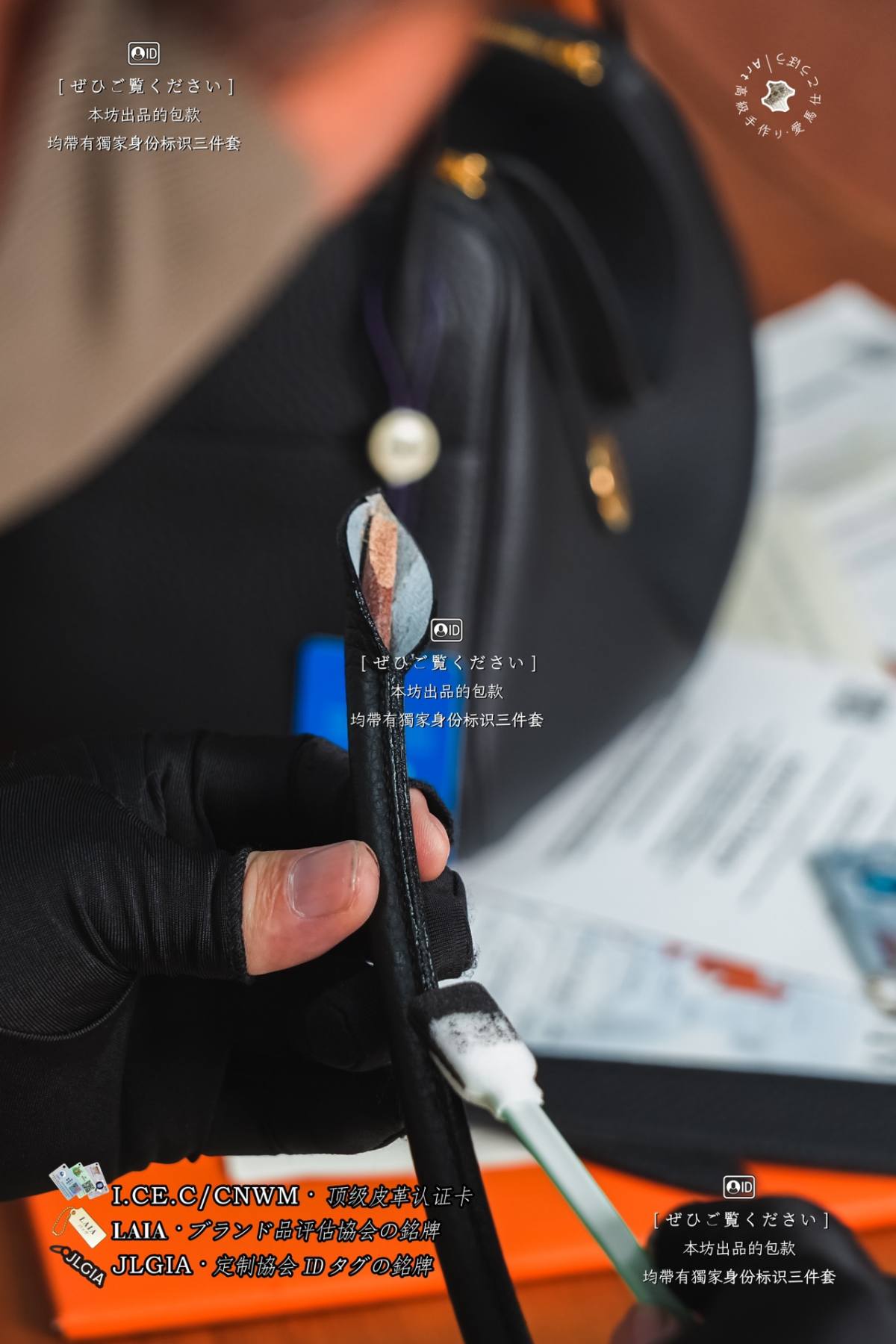
Coating is applied in four separate thin layers, with each layer fully cured prior to the next application. The first base coat is lightly and evenly spread with a fine bristle brush for full coverage without accumulation or sagging, then left to air cure at room temperature between 22℃ and 25℃ for 30 to 40 minutes until surface dry without tackiness. The second base coat follows the same application method to fill micro pinholes and sanding marks, with a curing period of 40 to 50 minutes. The first top coat is brushed consistently in a single direction to eliminate visible brush strokes and allowed to cure for 50 to 60 minutes, while the ultra-thin final top coat serves as a finishing layer to deliver seamless tactile smoothness, requiring 60 to 90 minutes for complete full curing.
High-temperature hot edge sealing stands as the core procedure that finalises surface gloss and coating durability. The process employs a professional temperature-controlled edge sealer fitted with arc-shaped copper nozzles matched to the contour of the leather edge. The recommended temperature range is set between 190℃ and 210℃ for black finishes within the overall 180℃ to 220℃ operational spectrum to avoid overheating damage. The copper nozzle is preheated to the calibrated temperature and kept impeccably clean and oil-free, then moved steadily in a single direction with gentle pressure to facilitate resin fusion and penetration into leather fibres, yielding a mirror-like glossy surface. Corners and joint seams are precision heat-sealed to ensure full coverage without omission. The finished edge is left to cool naturally for 10 to 15 minutes with no physical contact or bending during this period to prevent permanent surface marking before full stabilization.
Post-processing consists of refined sanding and final finishing stages. Extremely light longitudinal sanding with 320-grit paper removes minor surface protrusions generated during heat sealing while preserving the integrated gloss effect. Polishing is completed using suede or cotton fabric to achieve a jet-black sleek finish resistant to fingerprint smudging. Final quality inspection is conducted under backlight conditions to verify zero bubbles, cracks, colour deviation and brush marks, with edges required to present a full rounded profile maintaining perfect perpendicular alignment with the leather surface.
Common defects associated with black edge coating and corresponding corrective measures follow established industry experience. Surface whitening and greyish dullness stem from insufficient coating thickness, inadequate pigment coverage or low sealing temperature, remedied by applying an additional top coat, raising the sealing temperature by 5 to 10 degrees Celsius or upgrading to high-density black edge coating material. Cracking and peeling typically result from over-thick layered application, excessive operating temperature or incomplete edge skiving, resolved by reducing individual layer thickness, lowering temperature by 10 to 20 degrees Celsius and re-skiving the leather edge to a standard 0.6-millimetre thickness. Visible brush marks and coating sagging are caused by low viscosity, rushed application pace or contaminated tools, addressed by thickening the coating mixture, maintaining steady uniform brushing motions and thorough tool cleaning. Cratering and pinhole formation arise from residual grease on leather edges, incomplete dust removal or trapped air bubbles in the coating, mitigated by alcohol degreasing protocols, enhanced dust elimination and allowing the blended mixture to stand for defoaming prior to use.
The full toolkit and material inventory adheres strictly to original factory specifications, including French Mandala plant-based black resin edge coating from the 800 and 1000 series, supporting auxiliaries such as ethylene toughening agent, deionized water and French beeswax, alongside graded abrasive paper with 180 grit for coarse processing and 320 grit for fine sanding and polishing. Essential working tools cover leather cutting knives, edge skiving knives, fine bristle brushes in weasel hair and nylon variants, temperature-adjustable edge sealers with a temperature tolerance of ±5℃, arc-shaped copper nozzles, lint-free cloths, medical alcohol and soft cleaning brushes.