- 05
- Jun
Shebag Hermes handmade birkin bag stitching craftmanship review(June 2026 updated)
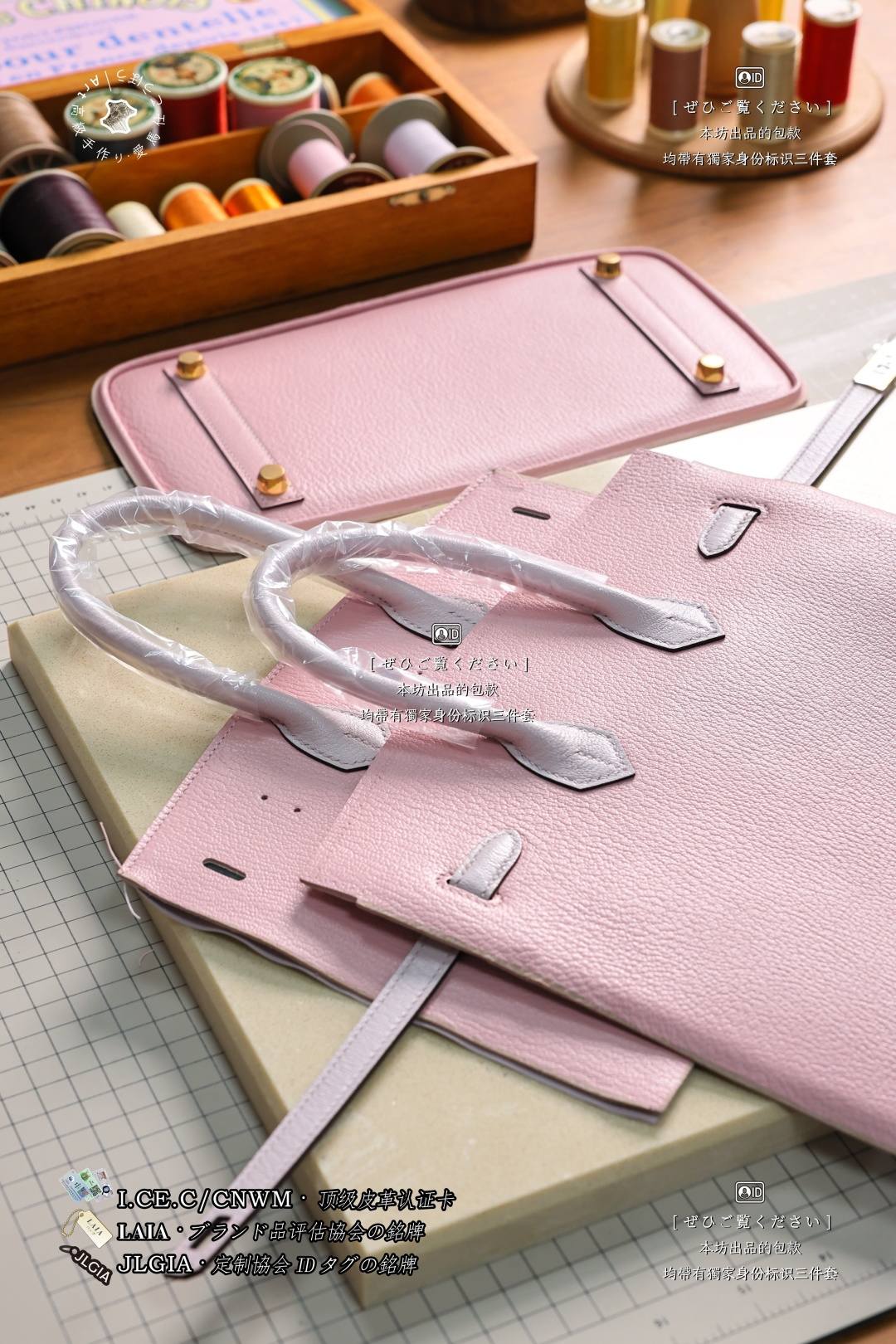
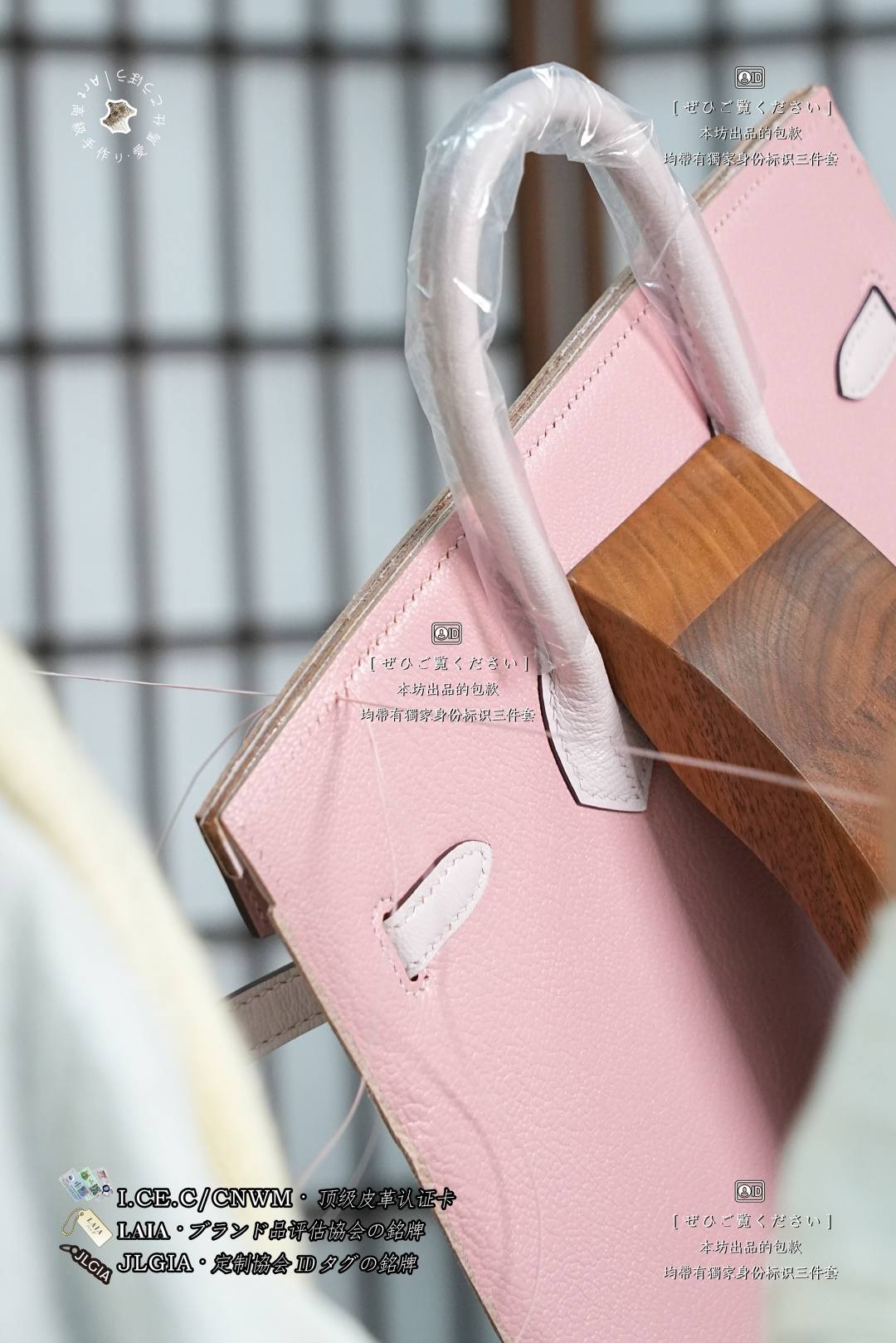
The Hermes Birkin bag is Shebag’s flagship product, featuring 100% hand-stitching with craftsmanship identical to the original. Our artisans are recruited from luxury bag OEMs in Dongguan. Following the relocation of these factories to Southeast Asia, Shebag successfully onboarded a large volume of these highly skilled leather craftsmen.
Full Specifications for Hermès Original Saddle Stitch (Double-Wave Stitching) on Birkin: Angles, Stitch Patterns and Practical Craftsmanship Tips
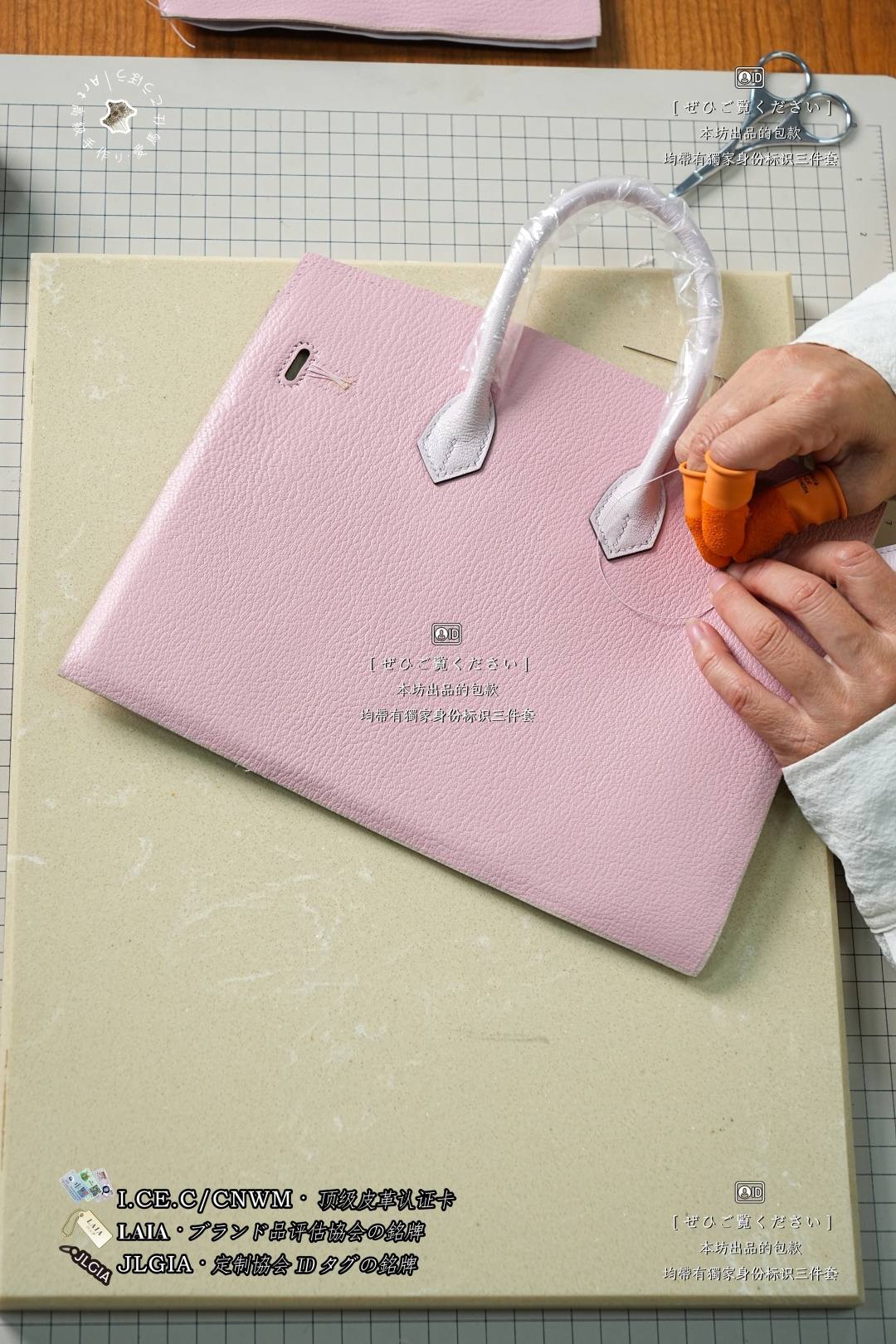
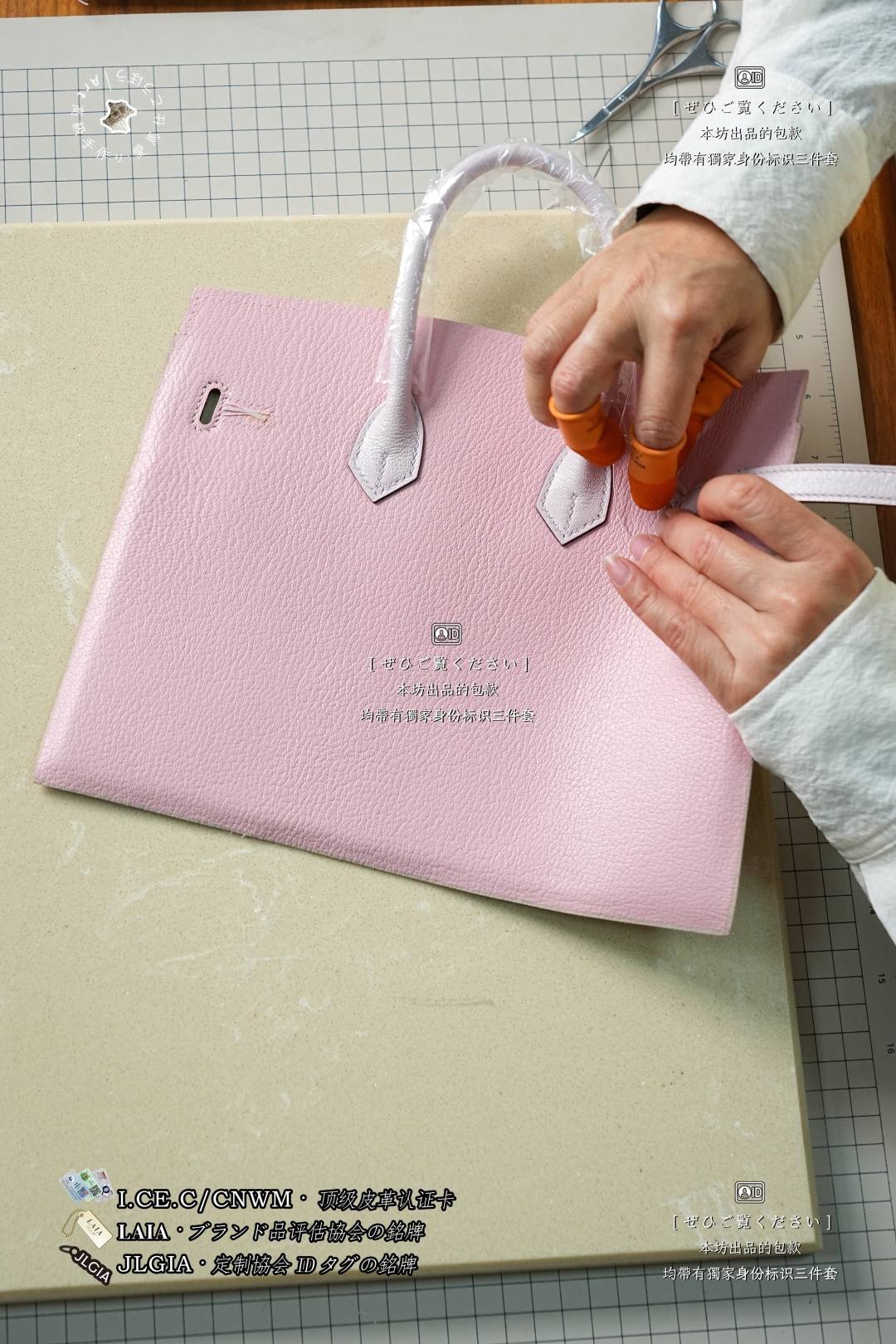
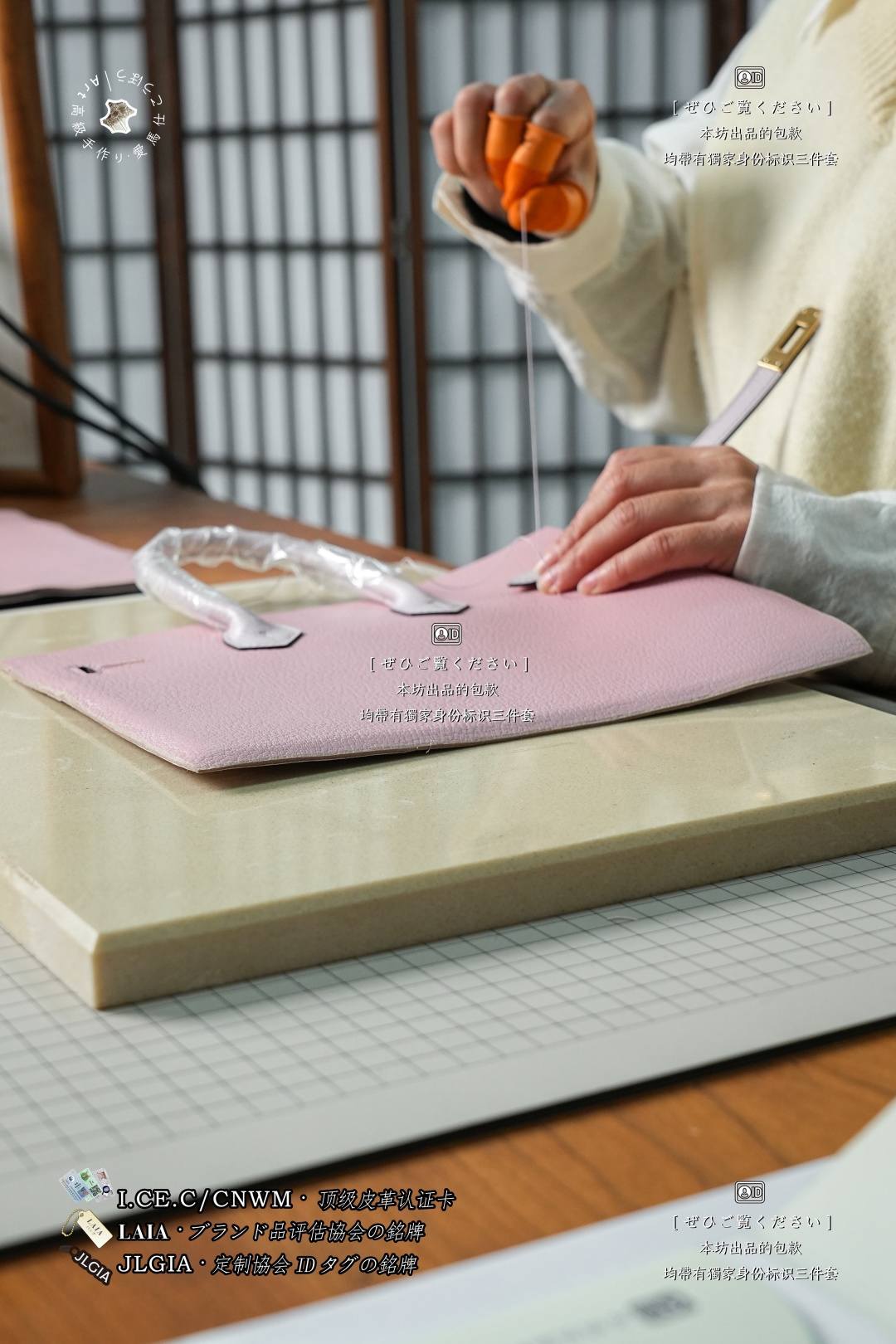
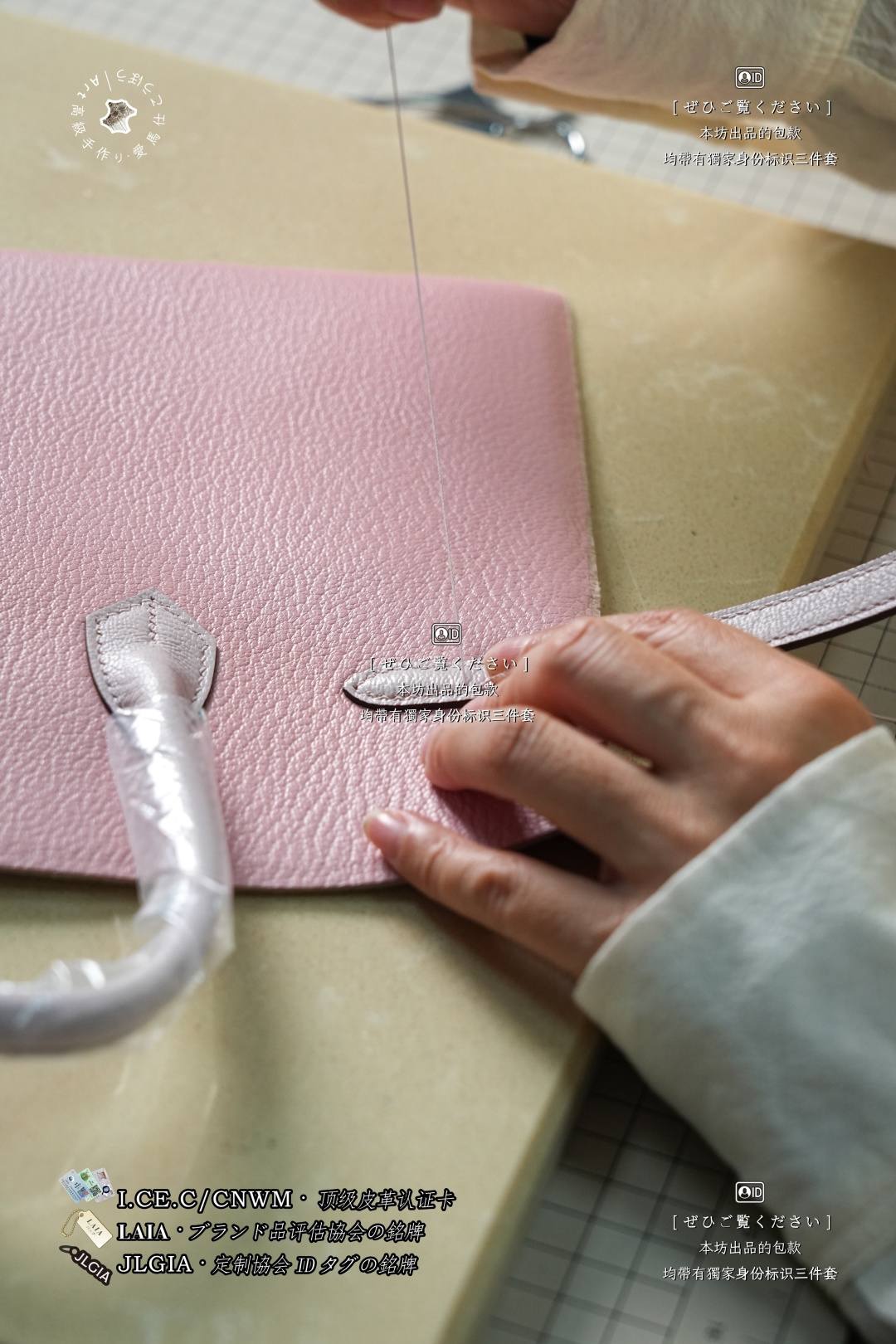
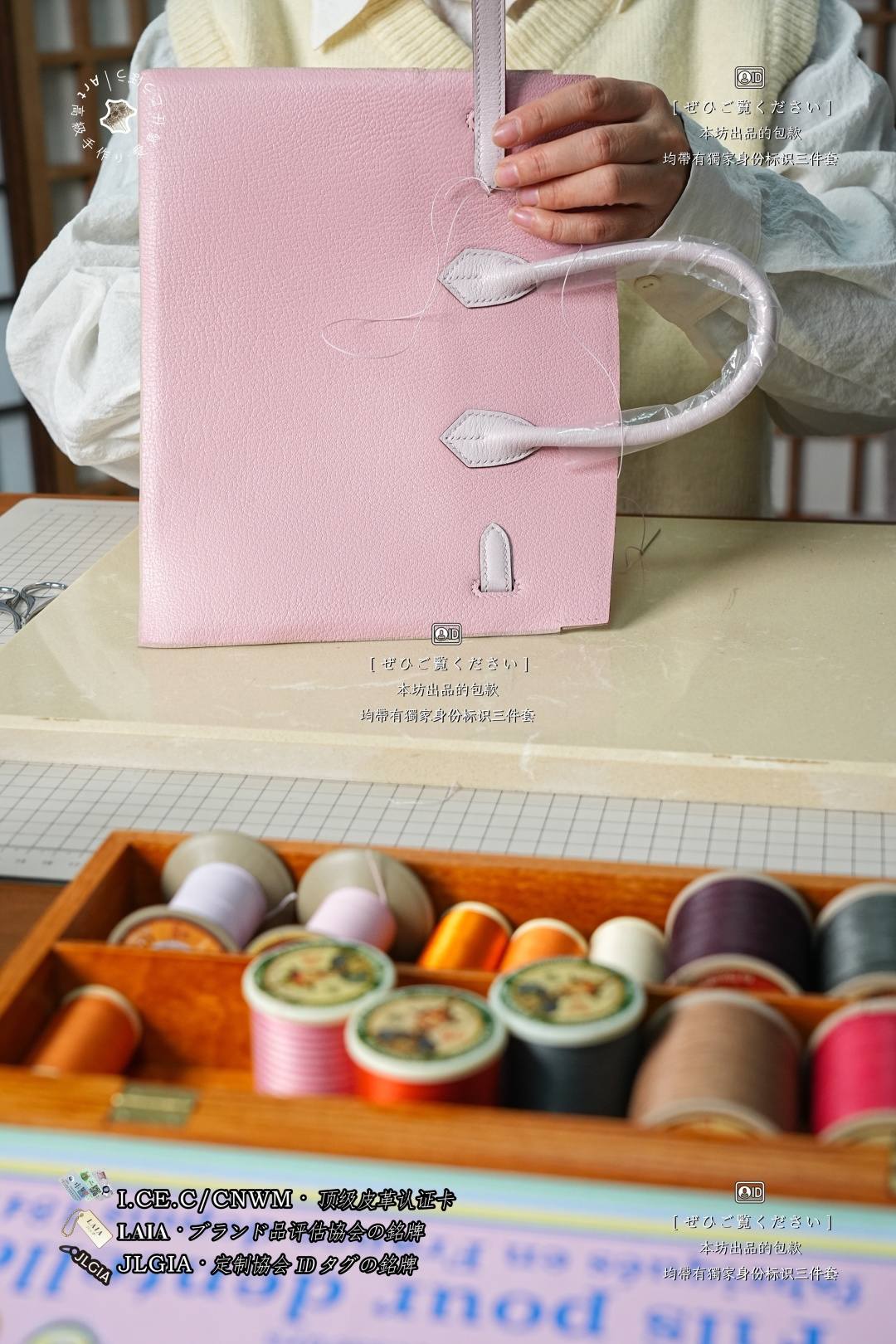
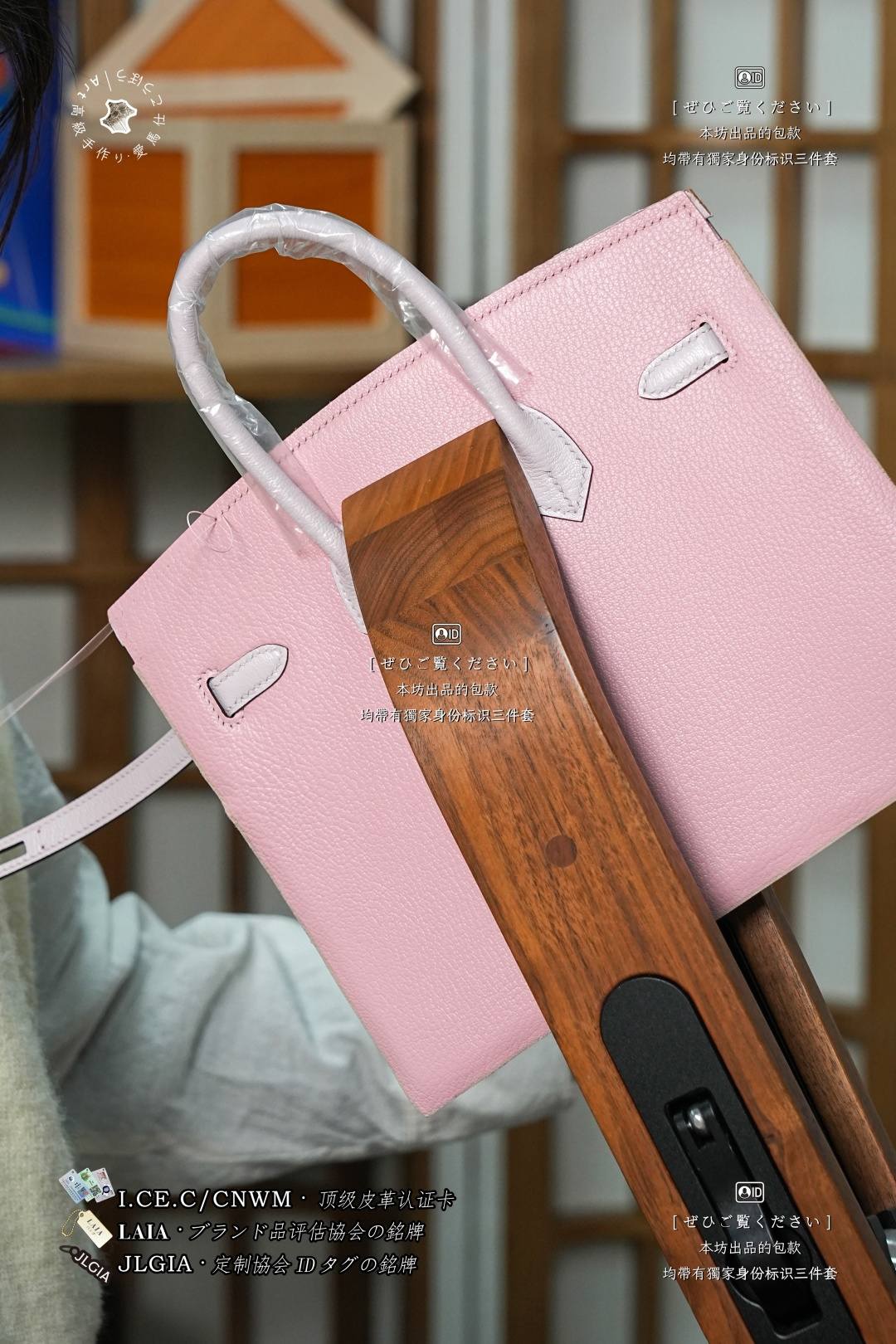
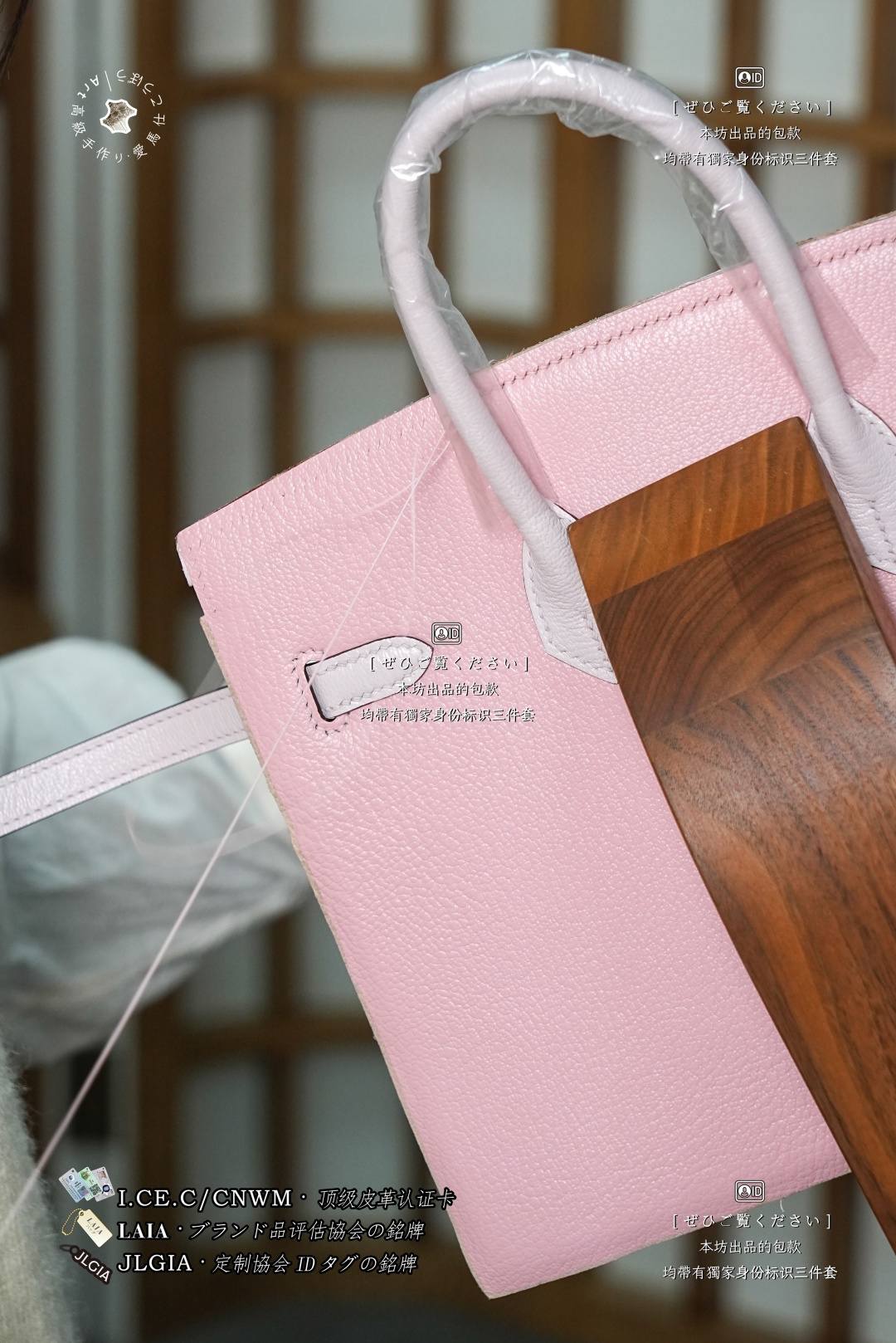
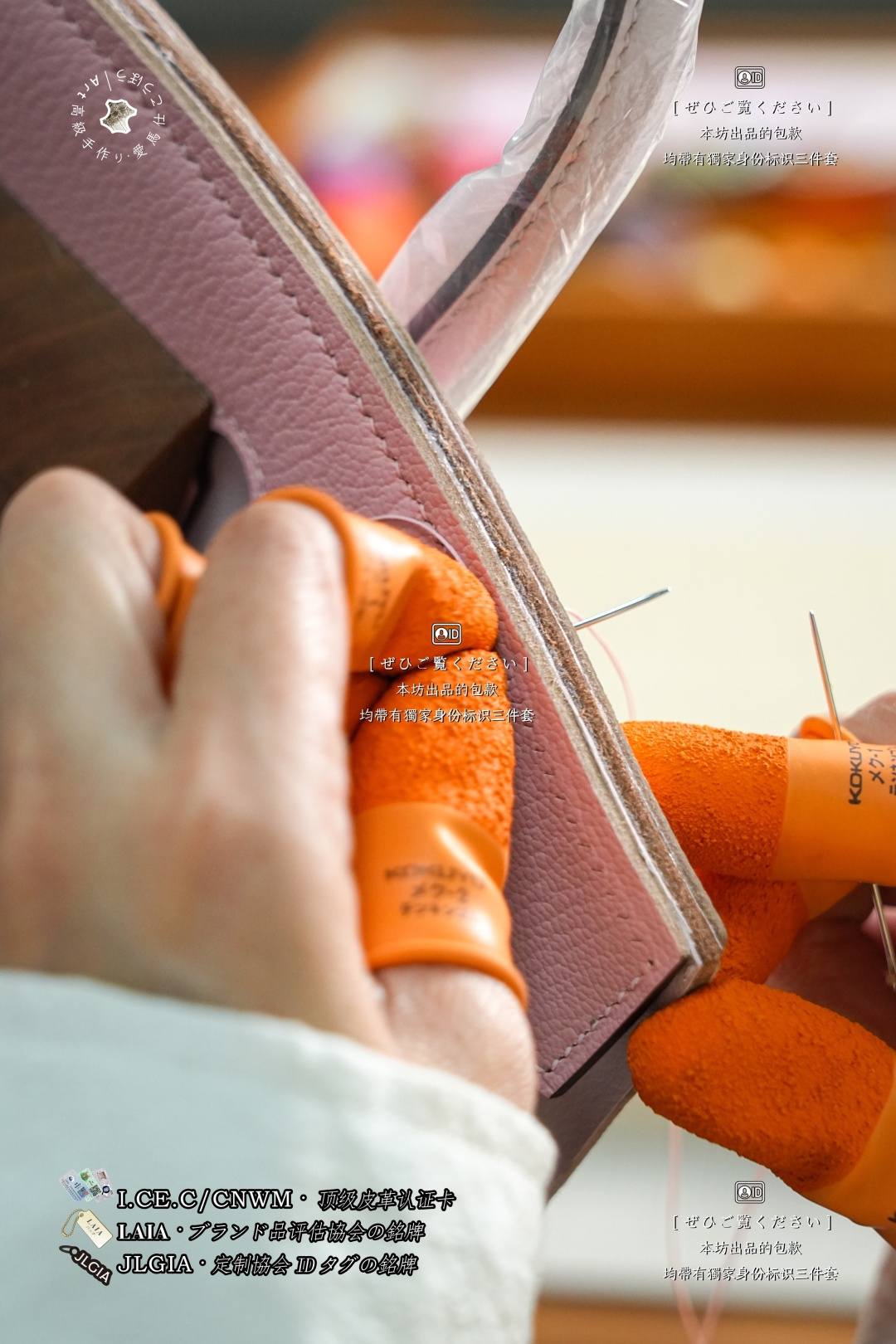
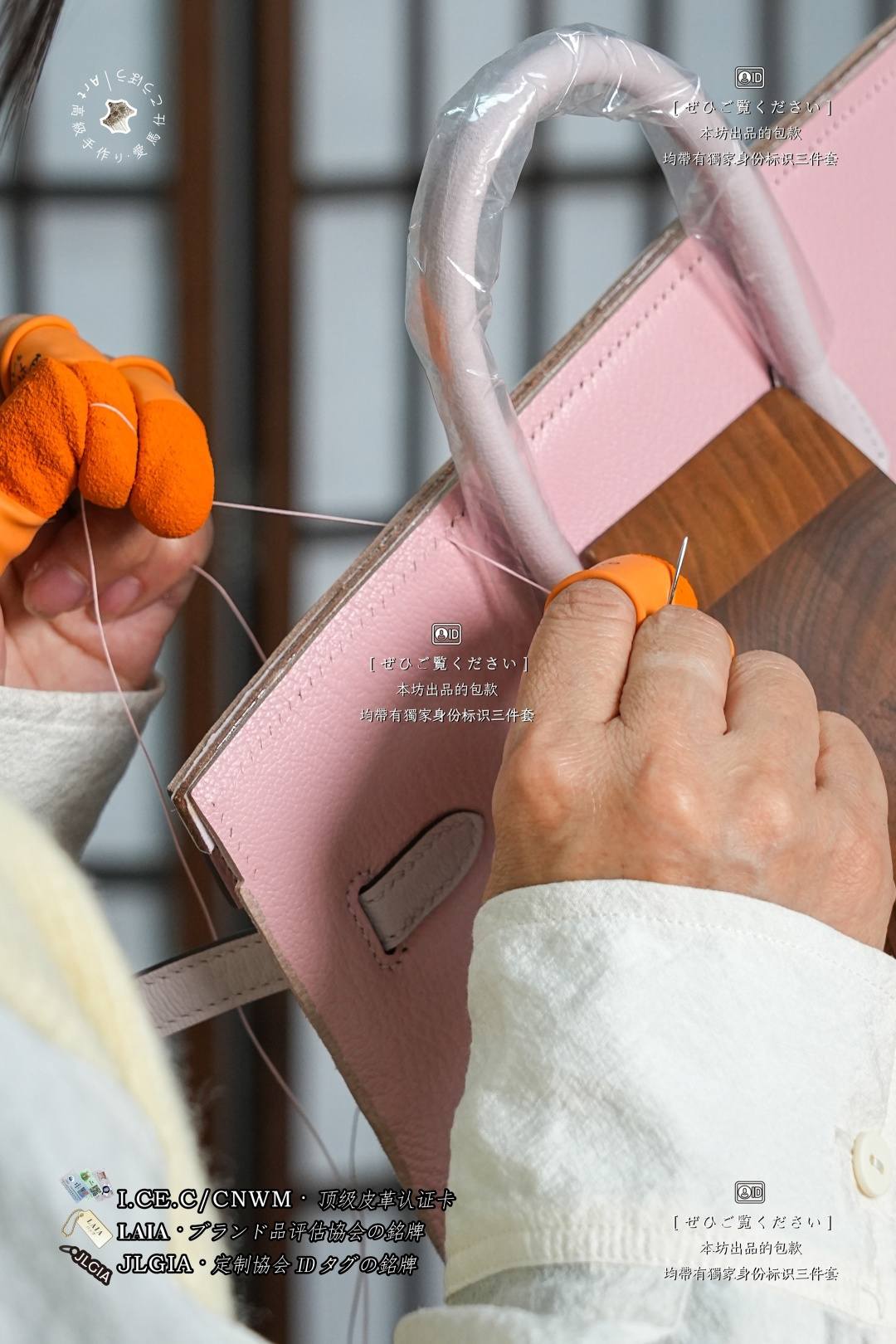
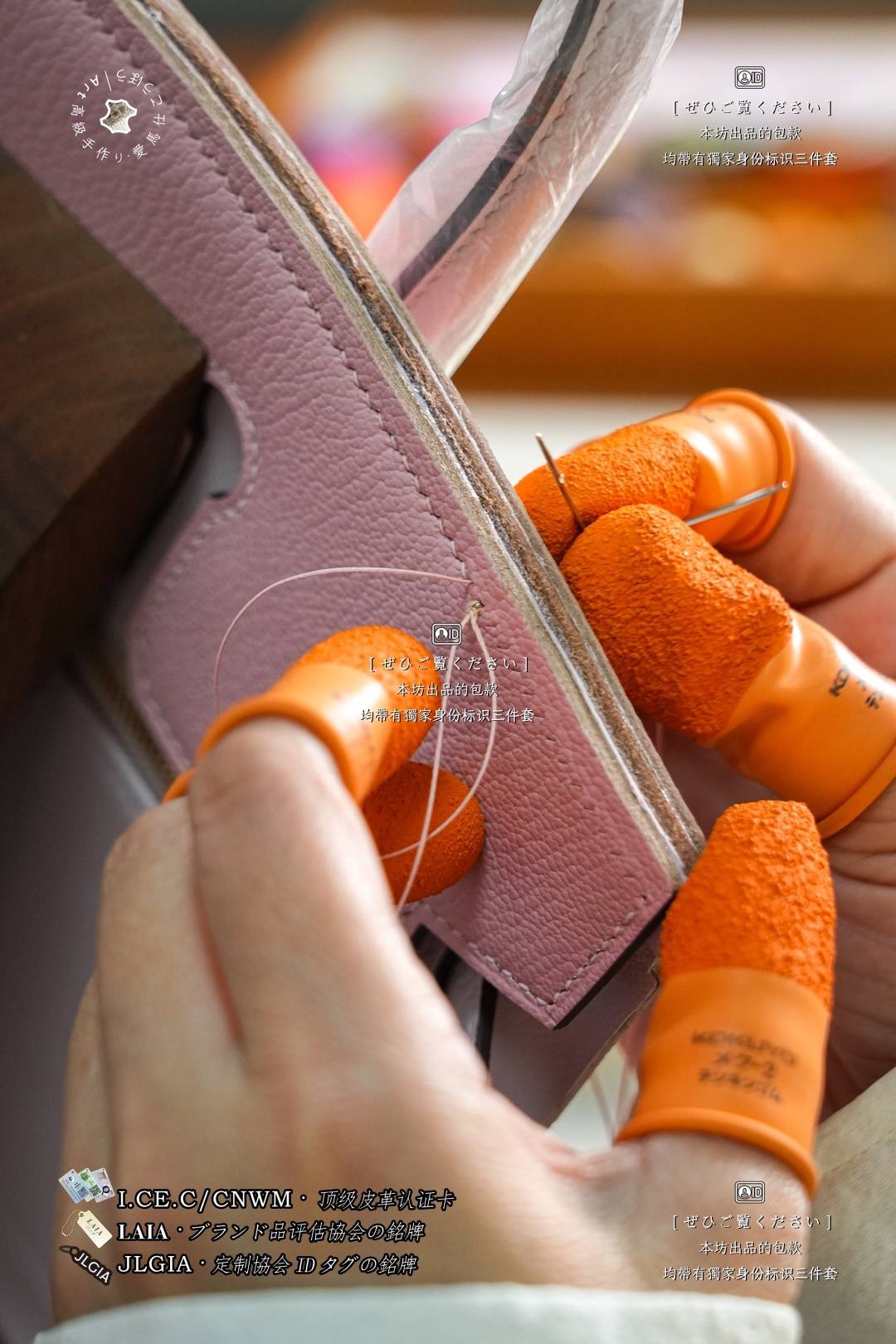
All Birkin models adopt traditional hand saddle stitch, also known as two-needle single-thread saddle stitch, the signature craftsmanship of Hermès. Finished pieces feature uniformly slanted front stitches, symmetric stitching on both leather sides, and intact continuous seams even if a single thread snaps. Shebag strictly adheres to this production benchmark.
Diamond chisel penetrates leather at a 20-degree offset from the vertical leather surface to form spindle-shaped angled holes instead of round holes, the fundamental cause of slanted stitches. Completed stitching sits at an 18-degree tilt against the vertical reference of the seam. All straight seams across the bag follow a consistent 18-degree downward right slant when viewed front-on, with an overall angle tolerance no greater than ±1 degree on authentic Birkin products. Needles enter curved and corner sections at a 45-degree inclined angle. A uniform 45-degree varied stitching path applies to handle roots, bag opening rounded edges and bottom corners to avoid piled stitches and bulged leather. Awl piercing matches the 20-degree punching bevel; vertical piercing is prohibited, as upright straight stitches are a typical flaw of counterfeit goods.
The front-side needle inserts into holes at a 30-degree downward tilt against the leather surface, while the reverse-side needle exits the leather at a reversed 30-degree upward tilt. Both needles are pulled horizontally left and right during tightening, with pulling force parallel to the seam; vertical upward or downward pulling distorts stitch angles and ruins finished work.
A fixed 14 stitches per inch (25.4 millimetres), universally referred to as Hermès’ 14-stitch industrial standard. Standard 14 stitches per inch across main bag panels. Stress-bearing sections including handles, pull loops and metal fitting bases adopt an upgraded 15 to 16 stitches per inch with dual parallel reinforcing seams. Excessively dense stitching damages leather fibres, while loose stitching compromises wear resistance; this parameter directly defines Birkin’s long-term durability.
Material: French Fil au Chinois beeswax linen thread, also called original factory thread. Full thread is coated with beeswax two to three times before sewing, with excess surface wax wiped off to yield smooth, burr-free cord. Cut thread to four times the total length of the targeted seam; thread one hand-sewing needle onto each cord end and pierce thread with needle tips to lock ends against slipping. Backstitch three to five times into the initial hole to secure seam start, tucking thread ends inside leather interlayers with no exposed cord.
Right needle pierces the punched hole from the leather’s outer face and exits from the inner side to leave a loose thread loop. Left needle enters the identical hole from the leather’s reverse side, always threading beneath the right needle’s existing loop before emerging on the outer leather face. This step enables the formation of standard 18-degree slanted double-wave stitching. Pull both needles evenly and simultaneously with identical tension to sink thread naturally into leather grooves and form uniform slanted stitches.
Backstitch three to four times upon seam completion, dab a tiny amount of leather glue on inner thread tails and tuck cord ends into punched holes for concealment; authentic Hermès production never burns thread ends for closure.
Maintain steady 18-degree stitch inclination and consistent pulling tension throughout stitching for flat main bag panels including front and side panels, sinking thread slightly below leather surface via recessed stitching to avoid protruding cord.
Adjust entry angle to 45 degrees following handle curvature while retaining fixed 18-degree stitch tilt for handles, the most technically demanding Birkin component; double parallel saddle stitching is mandatory at handle roots for load-bearing reinforcement.
Adjust chisel hole angle one stitch ahead of turning point and switch to 45-degree angled piercing with unchanged stitch spacing at 90-degree bottom bag corners for seamless transition free of clustered stitches.
Reduce pulling tension and slightly expand stitch spacing by 0.1 millimetres to prevent delicate lining tearing for thin sheepskin lining while keeping the fixed 18-degree stitch angle intact.
Upright vertical stitches without tilt stem from vertical chisel punching inconsistent with authentic Hermès craftsmanship. Erratic fluctuating stitch angles are caused by irregular needle grip and uneven pulling tension. Protruding floating thread above leather surface comes from over-tightened pulling and failed recessed stitching; genuine products feature thread embedded inside pre-formed leather grooves. Mismatched front and reverse side stitches result from incorrect loop threading order, which invalidates the signature double-wave stitch structure entirely.