- 10
- Jun
Shebag handmade Hermes Evelyne leather piece polishing craftmanship review(June 2026 updated)
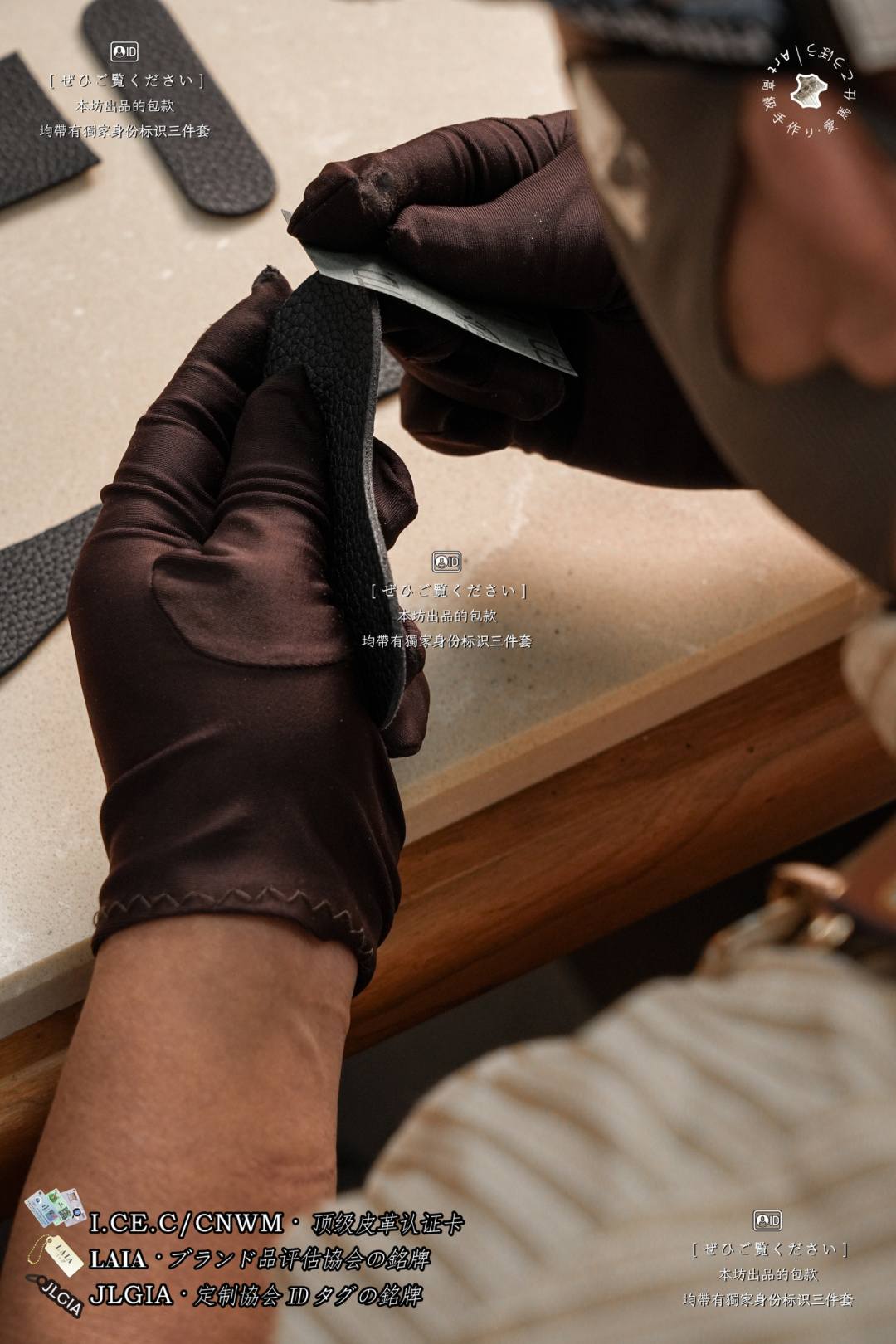
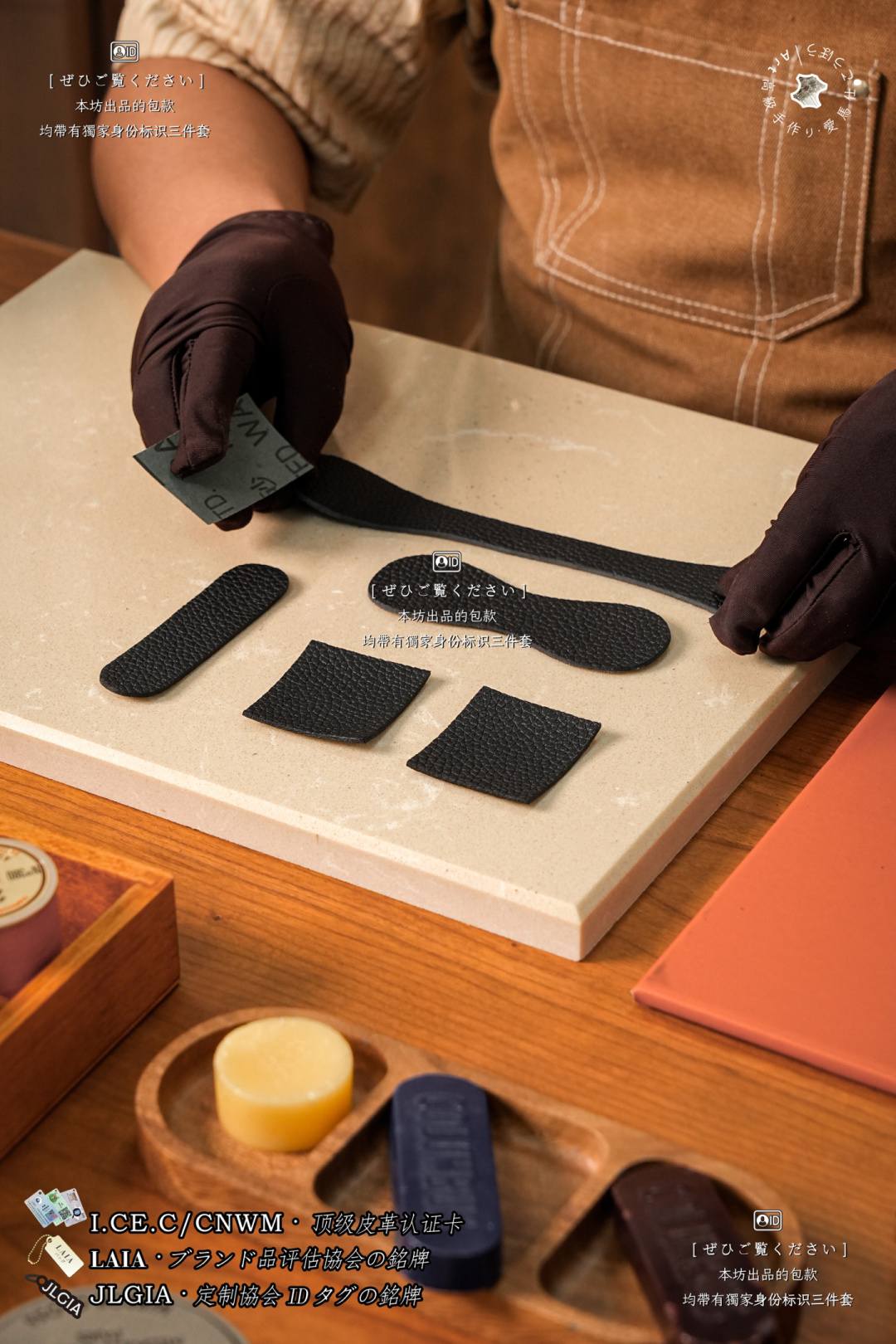
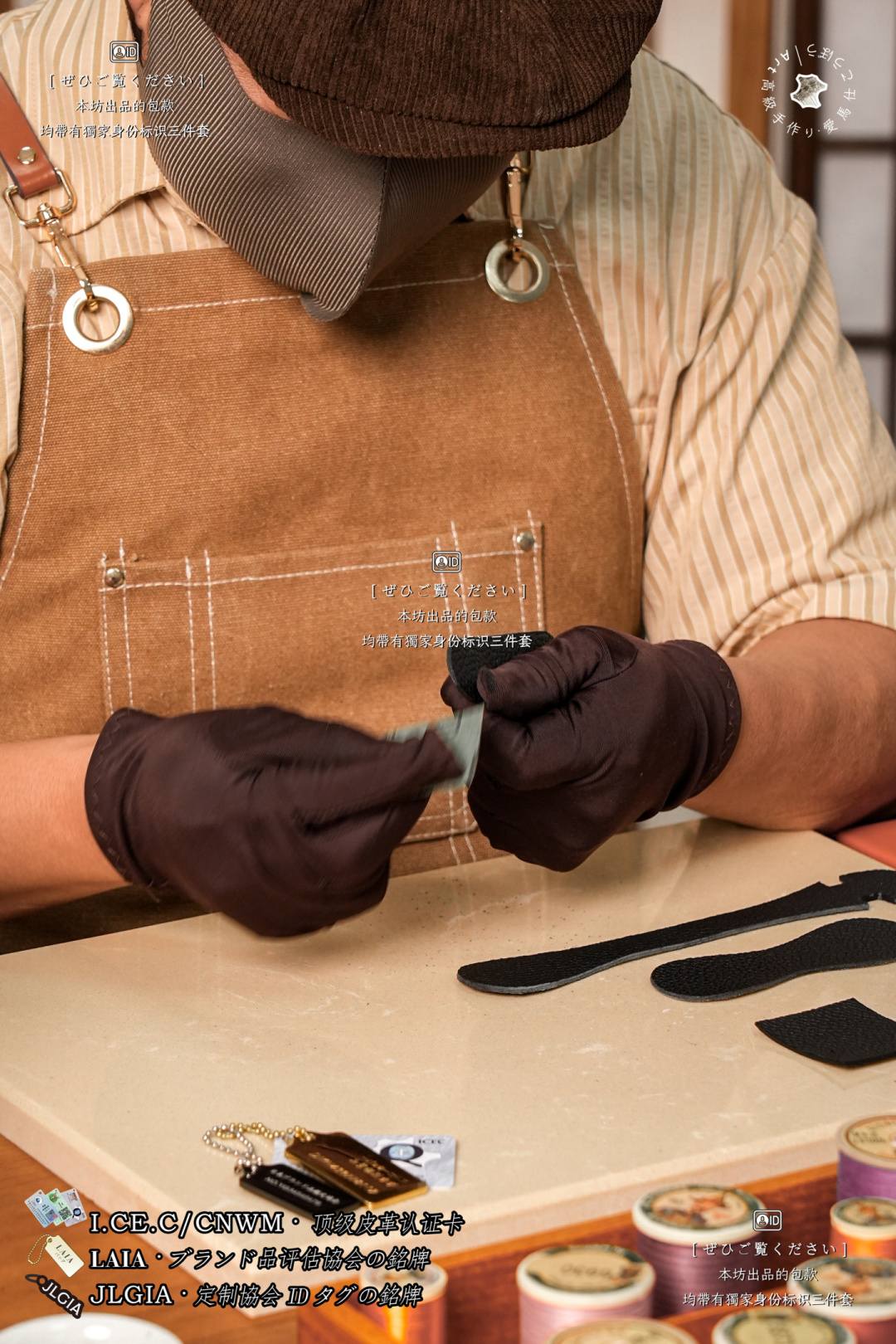
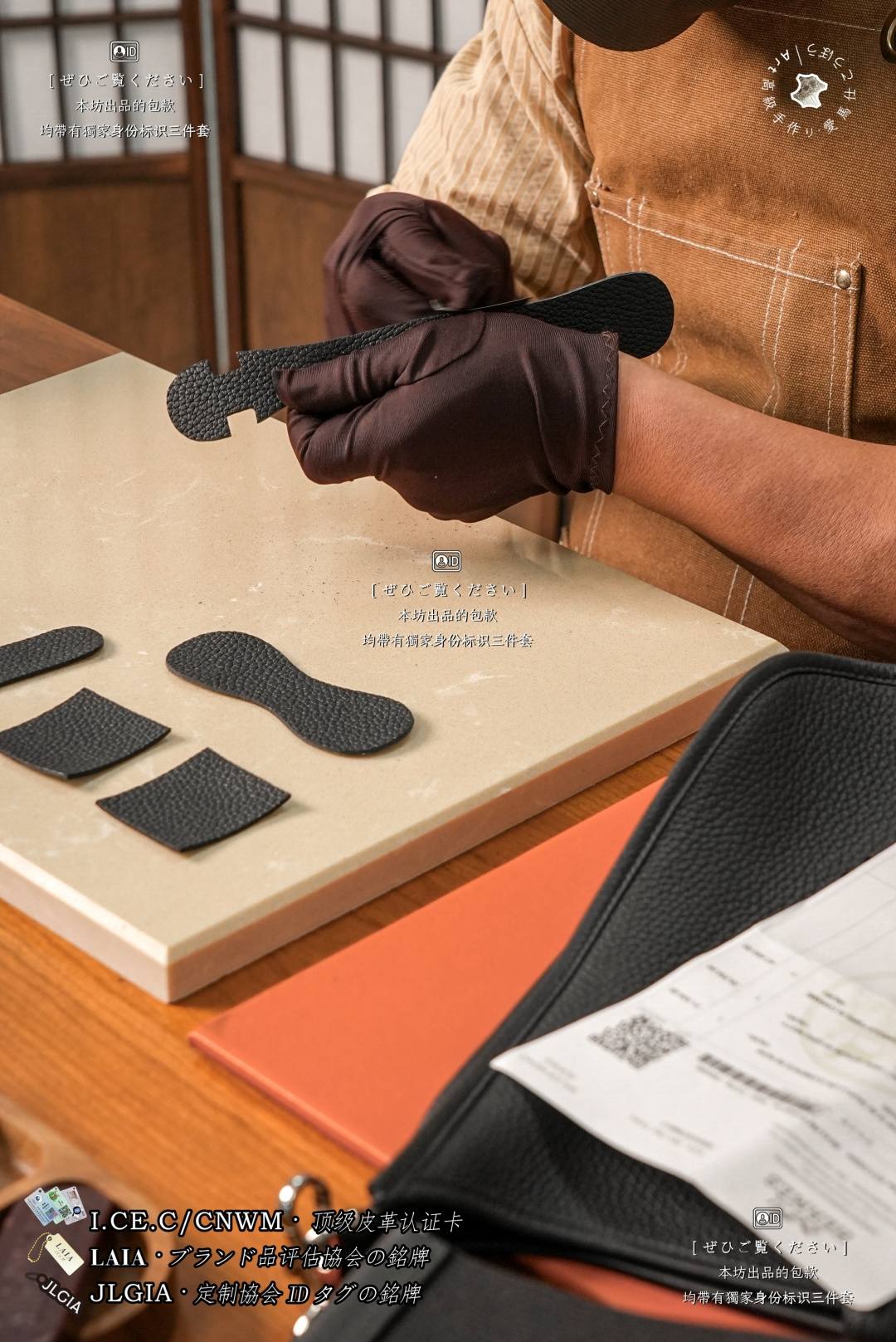
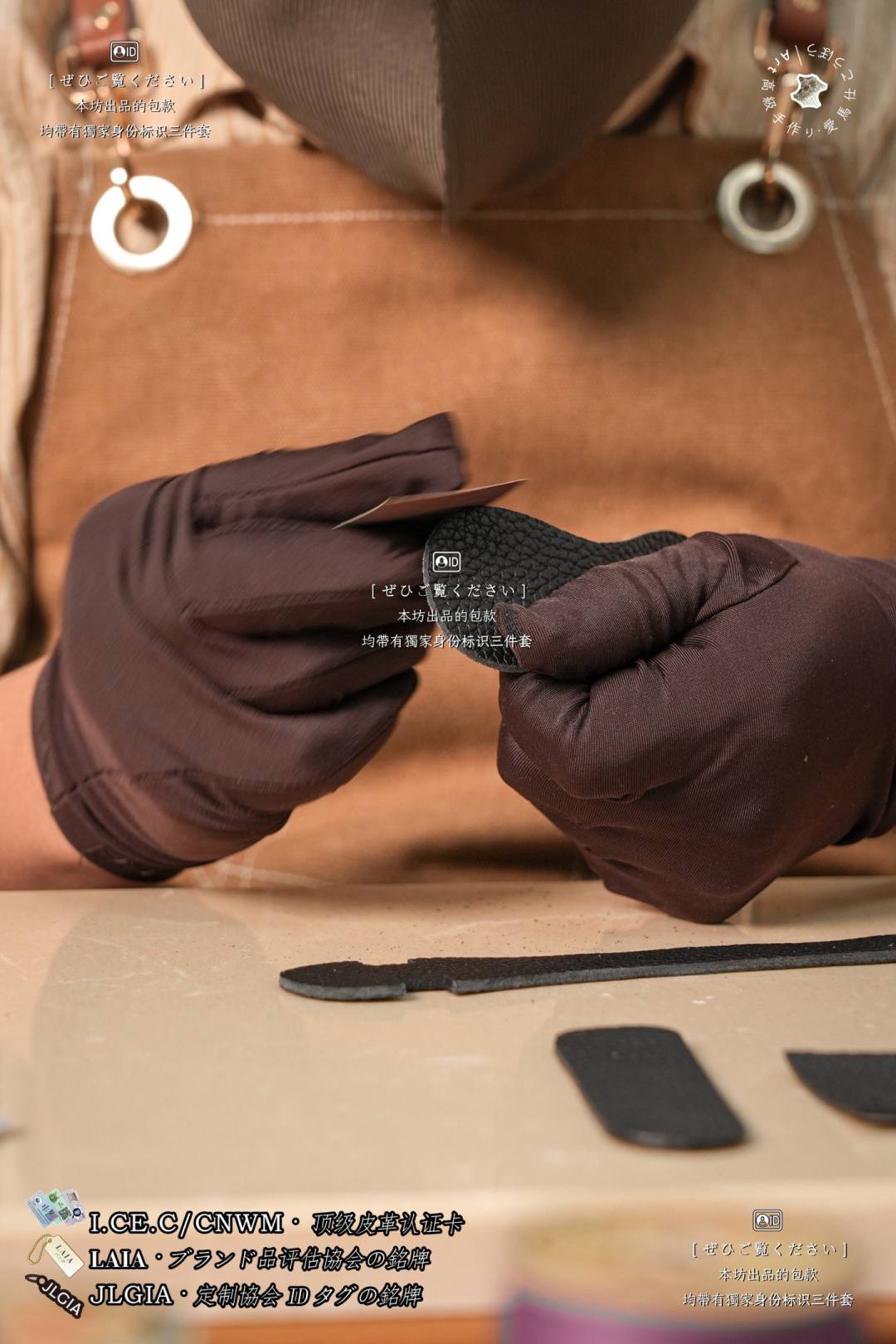
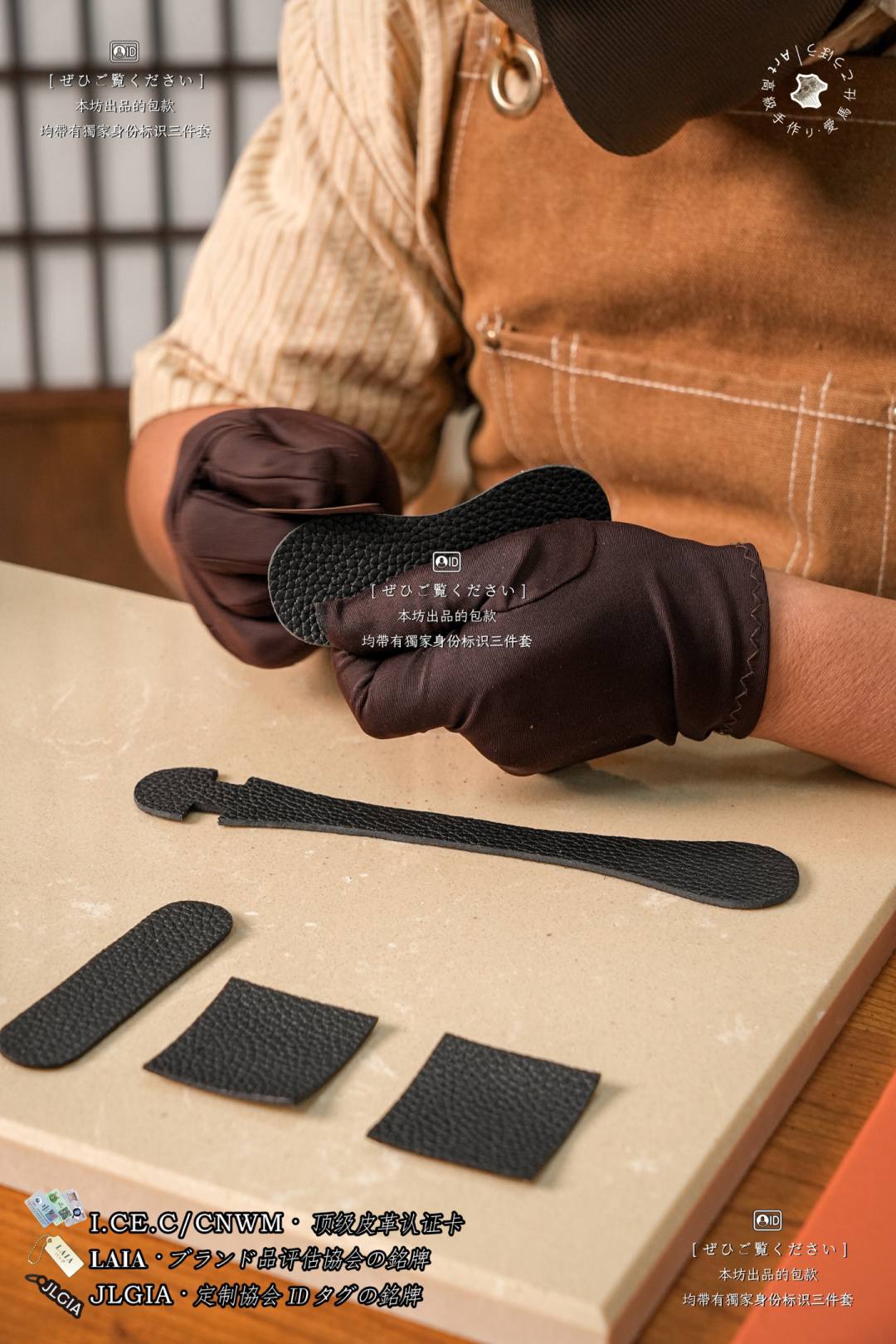
The edge sanding process for leather panels of the Hermès Evelyne bag is entirely different from that used for ordinary bags. It adopts full hand sanding techniques. Shebag uses sandpapers of varying grits, starting with coarse grit and gradually moving to finer ones to achieve a flawless finish. This process is extremely time-consuming, yet Shebag strictly adheres to the authentic craftsmanship. Our customers expect our products to match the genuine articles in every detail.
Before sanding, the leather is first cut and trimmed. A rotary leather cutter is used for precise cutting to ensure perfectly flat sections free of burrs and uneven surfaces. A 45-degree beveler is then applied to create a micro-bevel of 0.5 to 1 millimeter along the edges, preventing chipping at sharp corners.
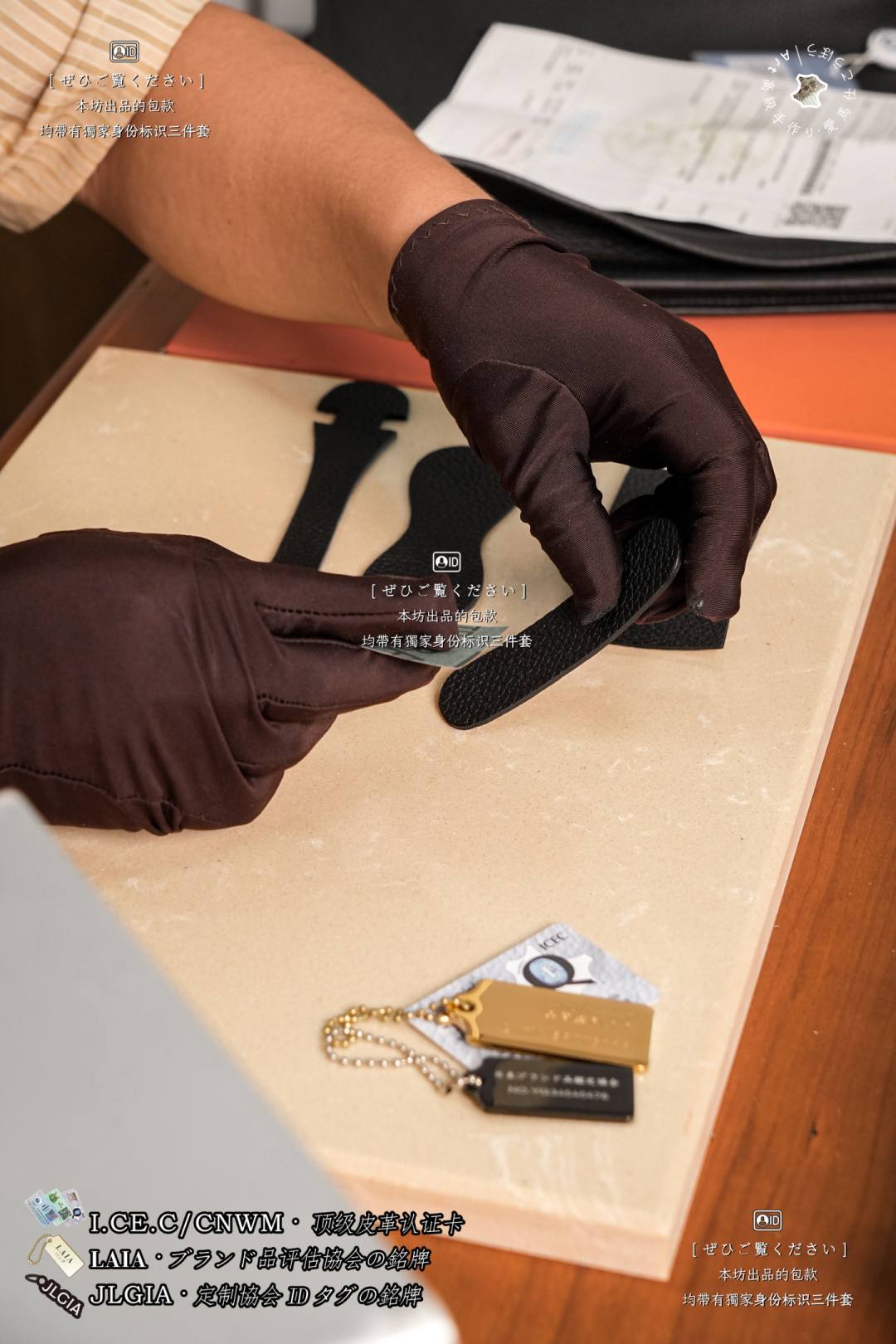
The edges are wiped with alcohol pads to completely remove grease, dust and adhesive residues. This eliminates impurities and uneven sanding during the subsequent process.
Below is the standard grit sequence adopted by the original Hermès workshop. 400-grit sandpaper is used for rough sanding to level surfaces, remove cutting marks and form initial bevels. 800-grit sandpaper refines the texture, erases deep scratches left by 400-grit paper and shapes smooth curves. 1200-grit sandpaper creates a base for a mirror finish, compacts leather fibers and prepares the edges for edge coating. 5000-grit sandpaper serves for final polishing, delivering a smooth lustre with no visible scratches to the naked eye.
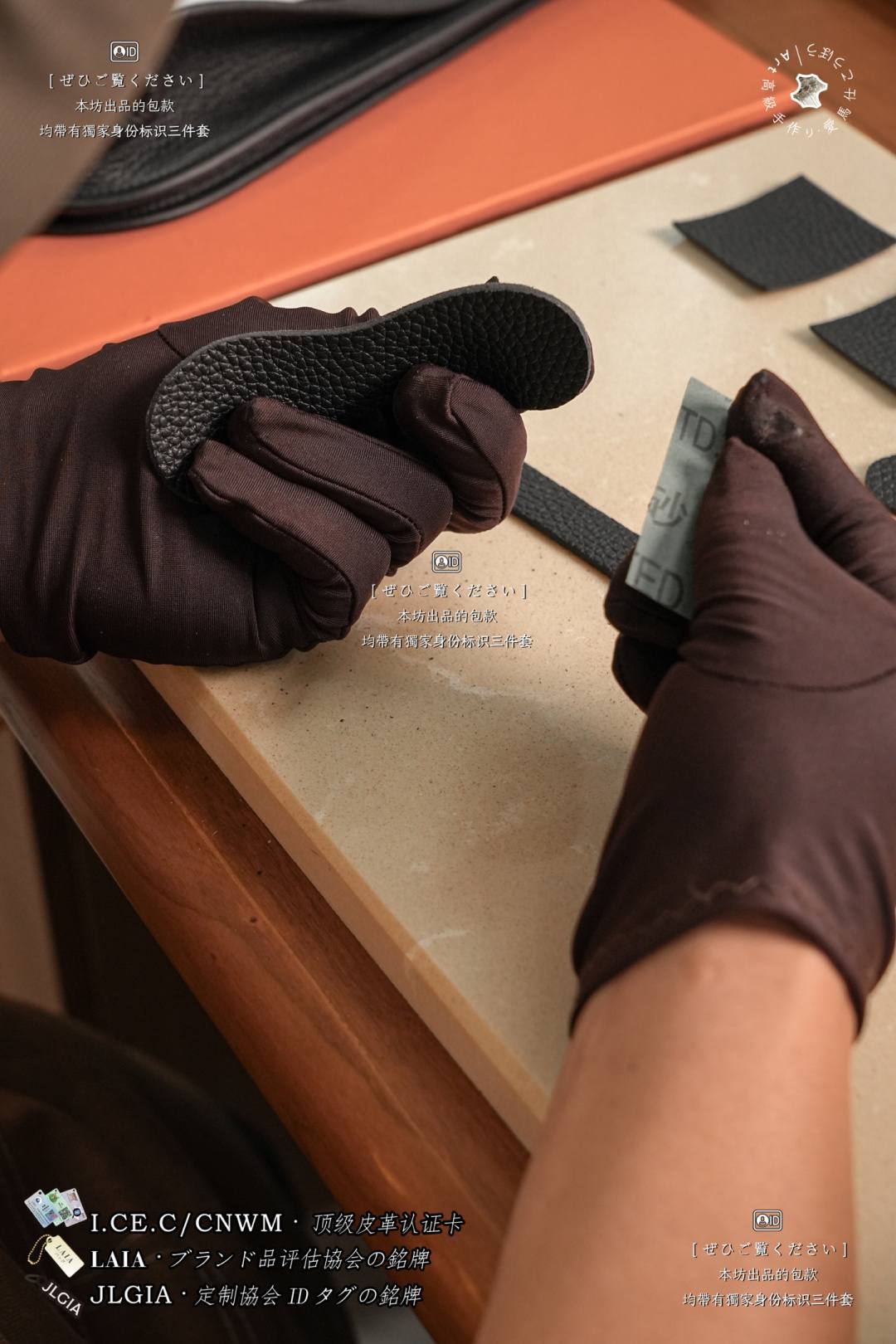
A sanding block with wood, cork or rubber base is used to distribute pressure evenly and avoid indentations from fingers. We use waterproof silicon carbide sandpaper cut into pieces of 10 by 5 centimeters. Supplementary tools include angled LED spotlights for inspecting tiny scratches, lint-free cotton cloths and distilled water for wet sanding.
For dry sanding with 400 to 800-grit sandpaper, always sand in one direction along the grain instead of back and forth. Hold the sandpaper at a 30 to 45-degree angle against the leather edge, and sand gently from both sides towards the center five to eight times per side until cutting marks disappear and bevels become smooth. When using 800-grit sandpaper, maintain the same angle and one-way movement with lighter pressure and more passes. This removes scratches from the previous step and leaves the edges with a fine matte curved surface.
Wet sanding from 1200 to 5000 grit represents the core technique of Hermès craftsmanship. Prepare the wet sanding solution by mixing distilled water with one drop of neutral soap. Fully soak the sandpaper without excess dripping. For 1200-grit wet sanding, keep the angle between 15 and 30 degrees. Sand alternately on both sides in a single direction for ten to fifteen passes per side. Wipe the edges with lint-free cloth during the process to keep them moist and clear accumulated paste, until the surface feels velvety and scratch-free.
For the ultimate polishing with 5000-grit sandpaper, use a brand new sheet fully soaked in water. Glide it across the edges with nearly zero pressure for twenty to thirty passes per side. Check under an angled spotlight. Qualified edges show no scratches, with closed pores and a translucent mirror-like shine, feeling silky and smooth to the touch.
Special treatments are applied to specific areas of the Evelyne bag. For the rims of holes such as keyholes and strap holes, use round 400-grit sandpaper or fine sanding sticks for internal sanding, followed by wet sanding with 800 to 1200-grit paper. The openings must be smooth, intact and burr-free. For seams, perform dry sanding with 400-grit paper first to level uneven joints, then proceed with wet sanding using 800 to 1200-grit paper for seamless transitions. When working on curved surfaces and corners, bend the sandpaper slightly to fit the contours. Use light pressure with short and frequent strokes to prevent corners from collapsing or distorting.
These are the standards for transitioning from sanding to edge coating on Evelyne bags. Once 5000-grit polishing is finished, the edges shall be dry, dust-free, grease-free and glossy like a mirror. Inspect the edges with an angled spotlight and a magnifying glass before edge coating. They must be free of scratches, pinholes and chipping, with densely packed fibers.
Apply Hermès water-based edge paint in thin coats. Let the first coat air dry for 15 to 20 minutes, then perform light wet sanding with 1200-grit paper and wipe clean with lint-free cloth. Repeat the procedure for three to five layers. Each coat must be applied thinly, fully dried and lightly sanded. The finished edges are plump, smooth, uniformly glossy, wear-resistant and crack-proof.
This craftsmanship stands out from that of ordinary leather goods in several key aspects. The entire process is completed manually without mechanical equipment. Every edge is sanded individually with precise tactile control, and consistent quality relies entirely on the artisan’s experience. Wet sanding is the essential technique. Sanding from 1200 to 5000 grit must be done wet to avoid scorching leather fibers and leaving deep scratches caused by high heat from dry sanding. Never skip grit levels in the sequence of 400, 800, 1200 and 5000. Skipping grades will leave deep permanent scratches that cannot be repaired. Pressure must be strictly controlled throughout the process. Use light pressure for rough sanding, even lighter pressure for medium sanding, and nearly no pressure for fine polishing. Uneven pressure will inevitably result in scratches and deformation.