- 28
- Jun
Shebag Hermes crocdile leather cutting craftmanship review(June 2026 updated)
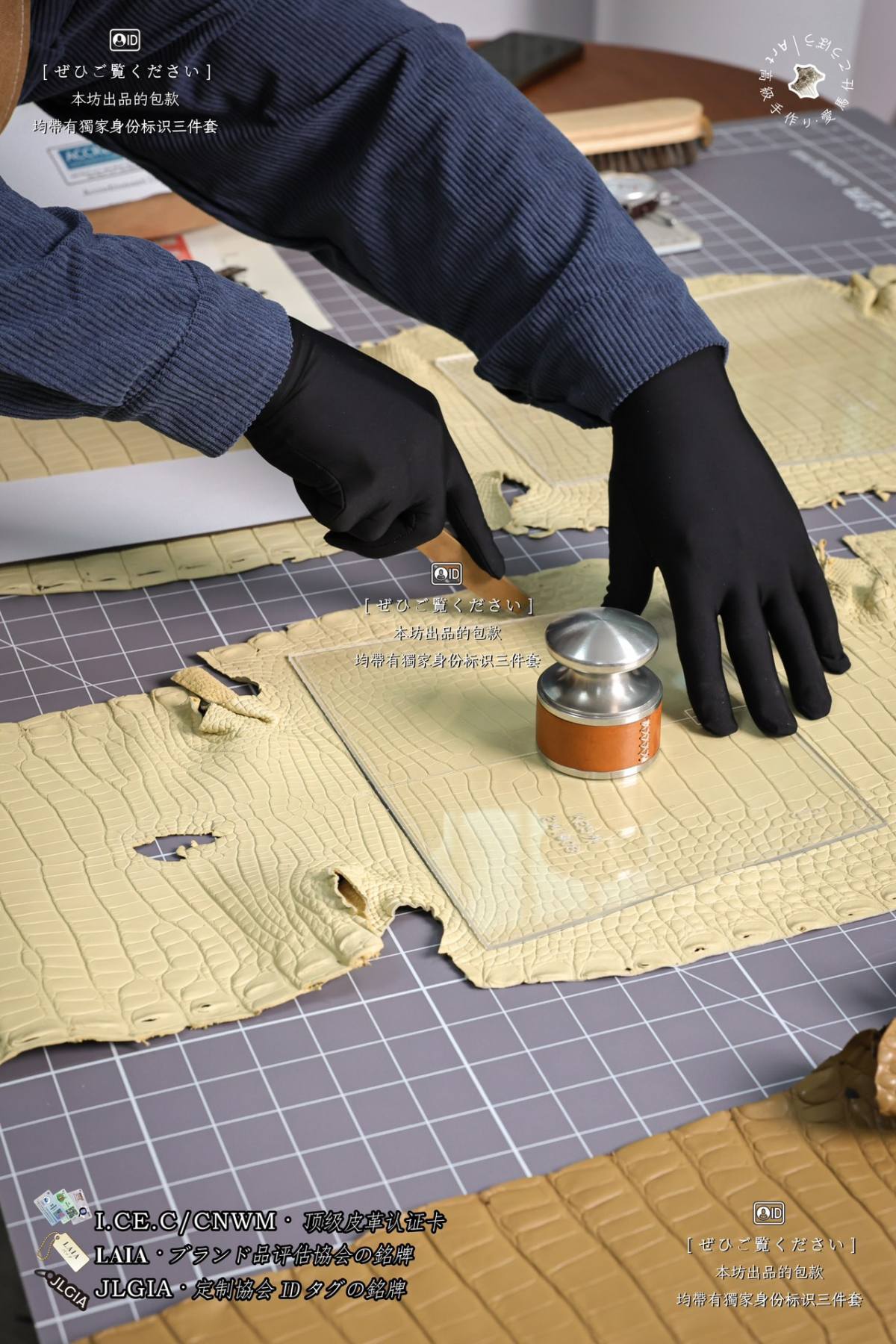
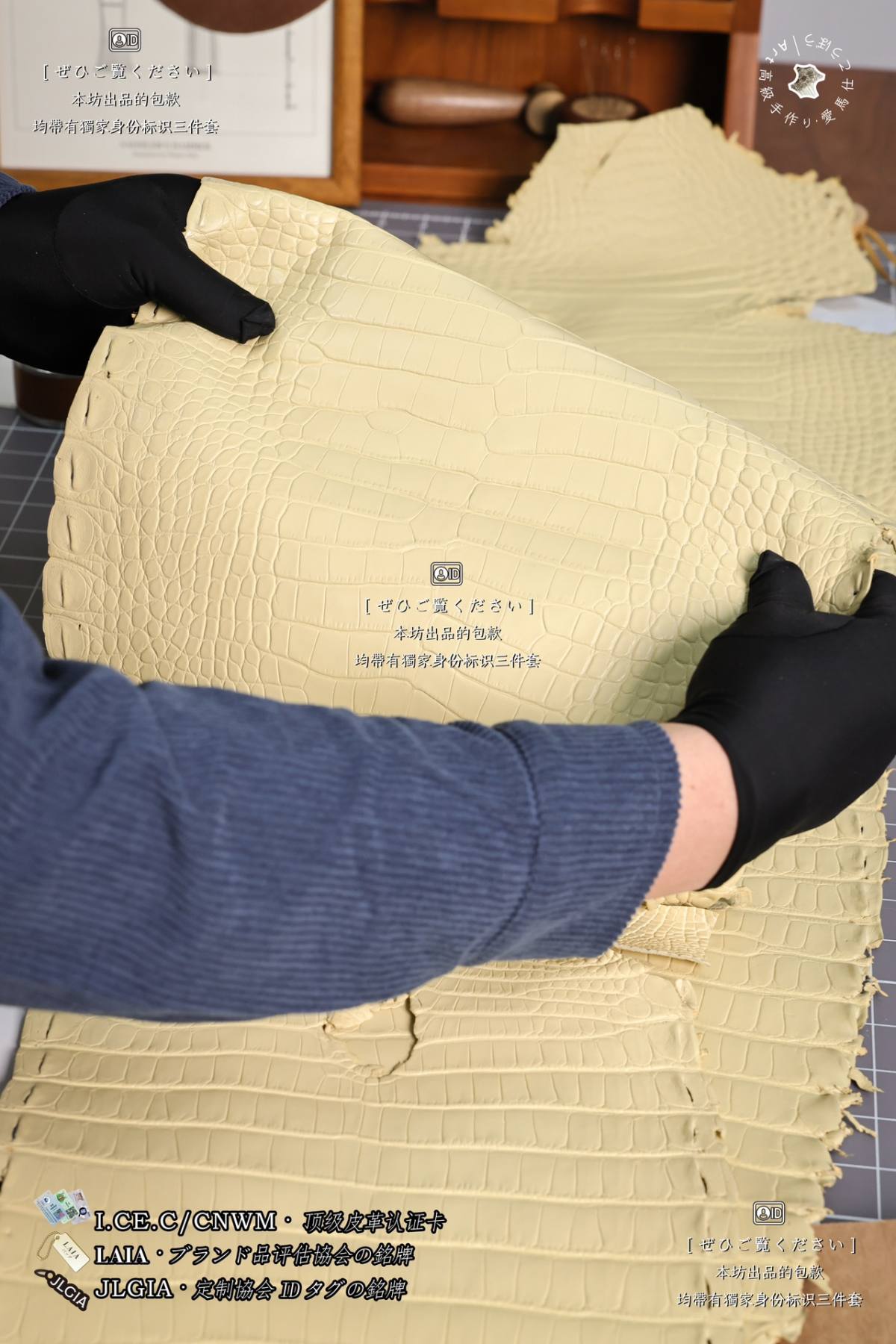
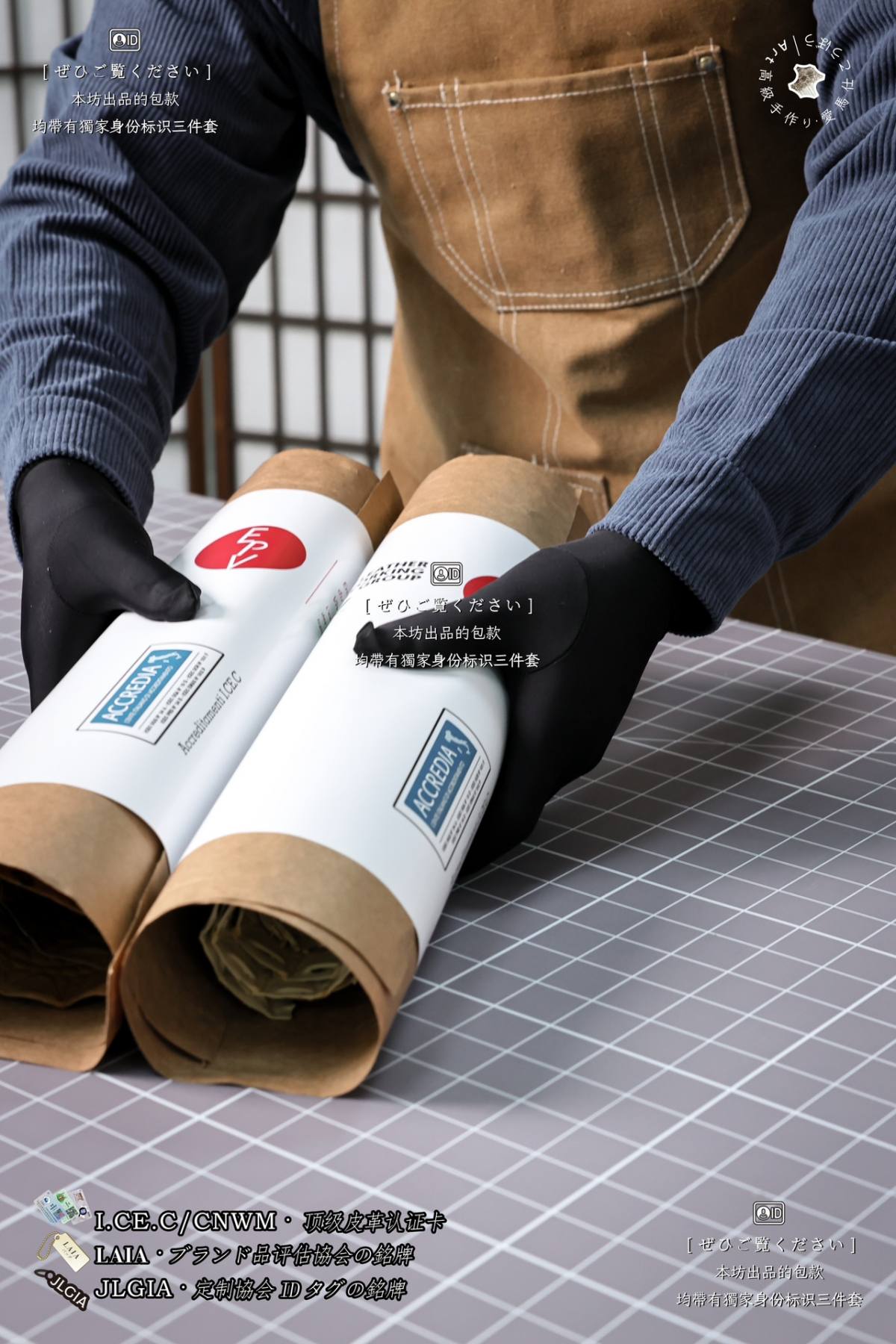
The leather we work with today stands as the most luxurious material processed at the Shebag workshop, Niloticus crocodile hide, universally recognised as the highest grade of exotic crocodile leather. Thanks to established channels with professional global leather suppliers, Shebag is able to source top-tier Niloticus hides of identical quality to those utilised by Hermès, and our craftsmen transform these premium raw materials into fully handcrafted handbags matching Hermès’ construction standards in every detail.
We follow a complete set of rigorous procedures for pattern cutting and slicing Niloticus crocodile leather, adhering to refined technical specifications refined through long-term practice. Niloticus is a freshwater crocodile originating from Africa, whose belly skin boasts orderly square scales, distinct epidermal pores, and an ideal balance of rigidity and softness. Hermès only adopts tanned belly hides processed via dorsal splitting, carrying out all pattern cutting entirely by hand without any mechanical die stamping. Only artisans holding professional certification for years of exotic leather experience are qualified to handle the cutting work of Niloticus belly hides, and Shebag fully replicates this stringent personnel standard in our own production line.
The first core procedure before any cutting work is hide grading and zoning, an indispensable screening step for every piece of Niloticus leather. We divide each full tanned belly hide into distinct functional areas based on a cross quadrant zoning method, a clear layout illustrated in dedicated hide zoning diagrams. The cross centred on the chest and abdomen separates the hide into four core pattern sections marked Q1, Q2, Q3 and Q4, which supply the primary exterior panels for finished handbags, while peripheral secondary zones labelled E1 to E4 cover the sides of the crocodile’s head, limbs and tail. The premium quadrant sections on the chest and abdomen feature evenly sized square scales free from bony growths, scars, creases or inconsistent pores, reserved exclusively for the front and back main panels, exterior flaps and large side panels of Birkin and Kelly handbags. A single qualified Niloticus hide can merely provide two to three intact quadrant sections fit for large bag bodies, meaning two to four complete Niloticus hides are required to source panels with perfectly coordinated grain patterns for one finished handbag. Secondary lateral belly zones near the root of limbs present square scales gradually transitioning into rounded shapes with diminished flexibility; these areas are only used for bag bases, interior lining panels and inner handle layers and will never appear on any visible exterior surface. Zones taken from the head and tail carry irregularly sized scales, thin subcutaneous bony deposits and abundant natural creases, which we only allocate to small leather goods such as card holders and watch strap trims, discarding them entirely for full-size luxury handbags.
Before starting cutting, craftsmen mark all visible defects on the flesh side of each hide and steer clear of all marked regions during layout. Defects subject to elimination include surface scratches, combat scars left from crocodile breeding, pinholes, shed scales and subcutaneous calcified bony deposits. We also flag uneven gloss performance, including inconsistent agate polishing on glazed Lisse Niloticus hides and uneven dye saturation on matte Mat finishes, alongside naturally creased, stretched deformed and overly thinned edge sections. Zero imperfections are tolerated within the four core quadrant pattern zones; any hide bearing blemishes in these critical areas will be downgraded solely for small accessory manufacturing and cannot be applied to formal full-size handbags.
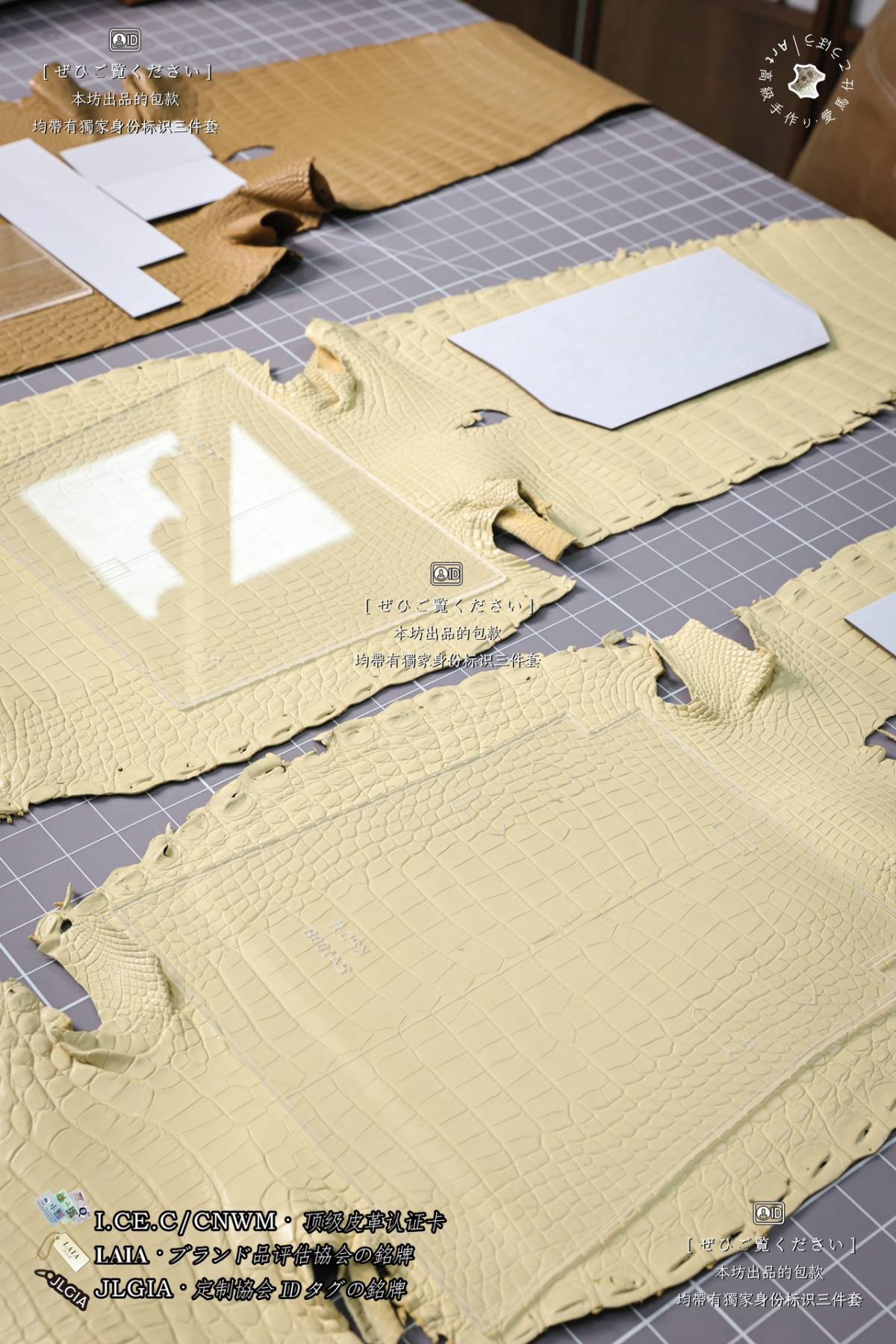
Our pattern positioning workflow is built around precise grain matching logic, consistent with the exclusive standards adopted by Hermès. The fundamental goal of Niloticus hide cutting is to deliver unified visual effects across all exposed panels, with consistent scale orientation, uniform square scale dimensions and even pore density achieved through a three-stage layout and positioning process.
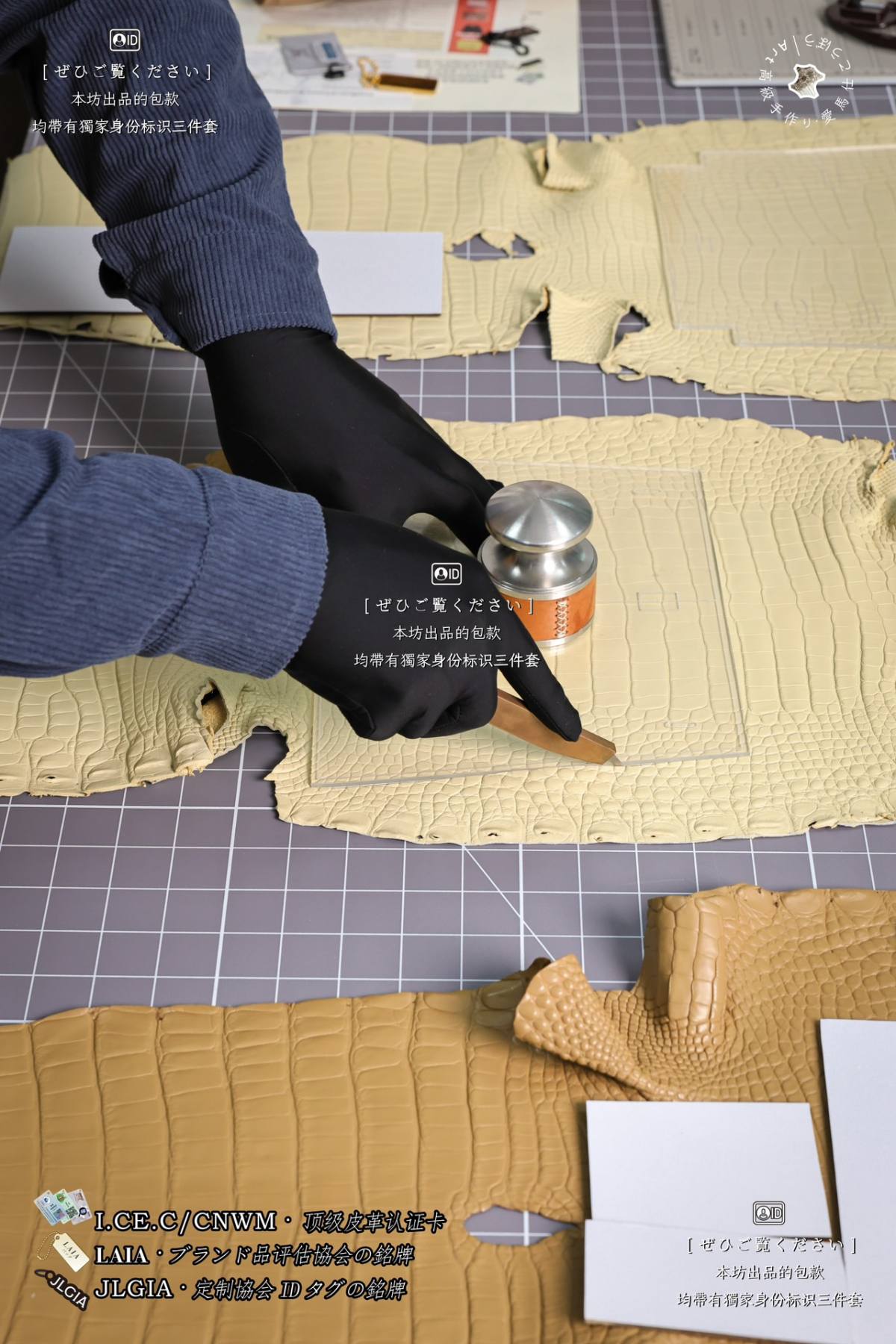
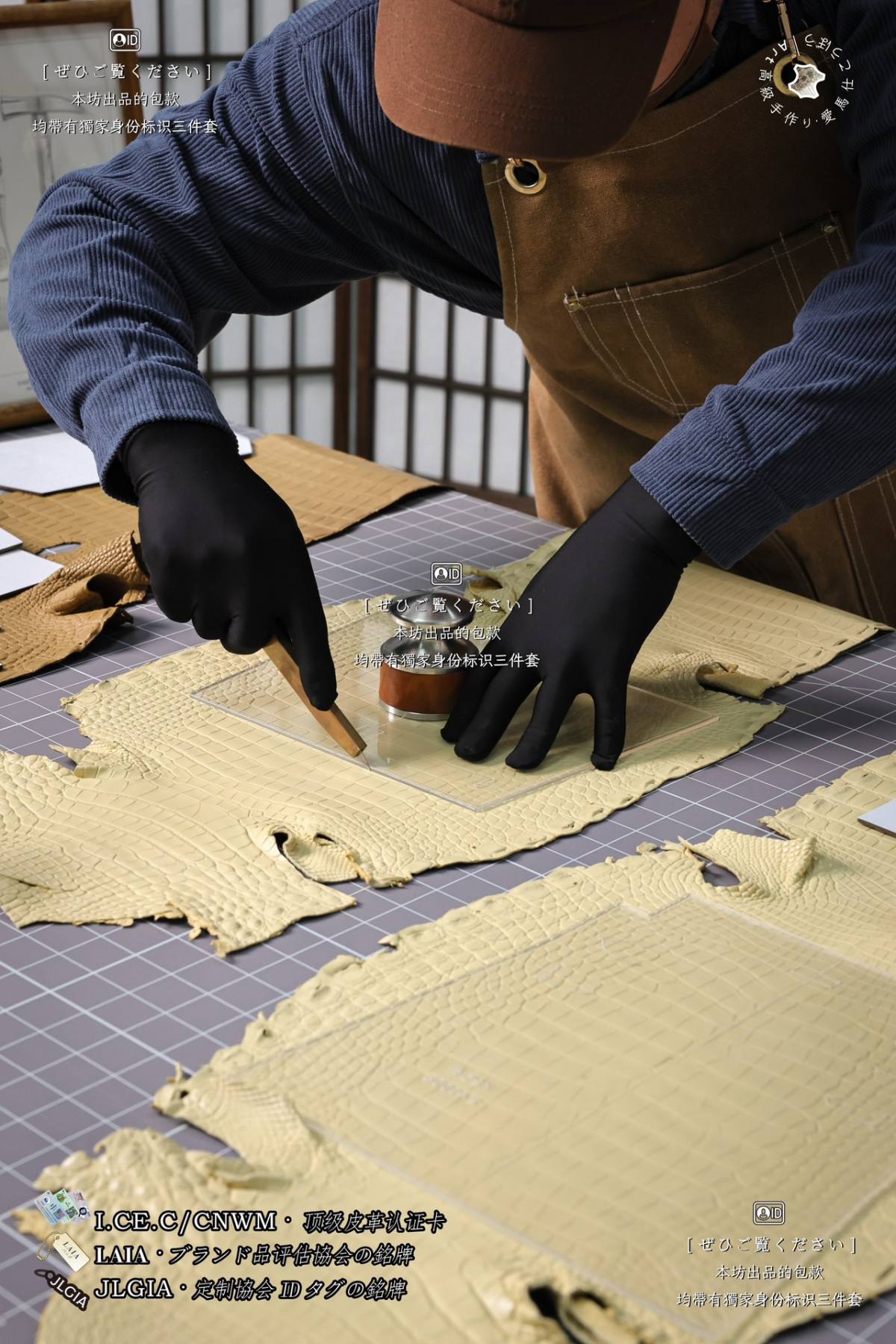
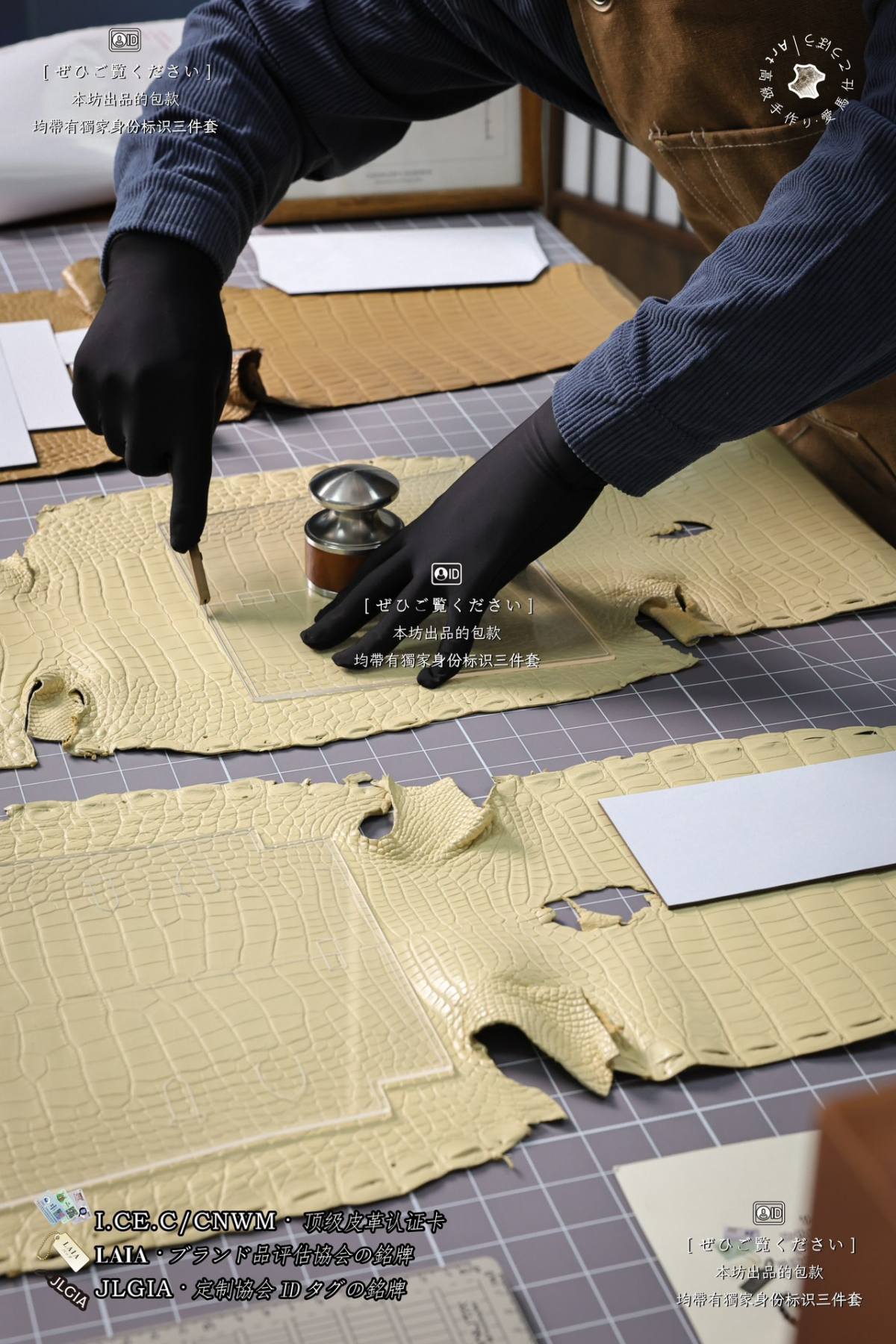
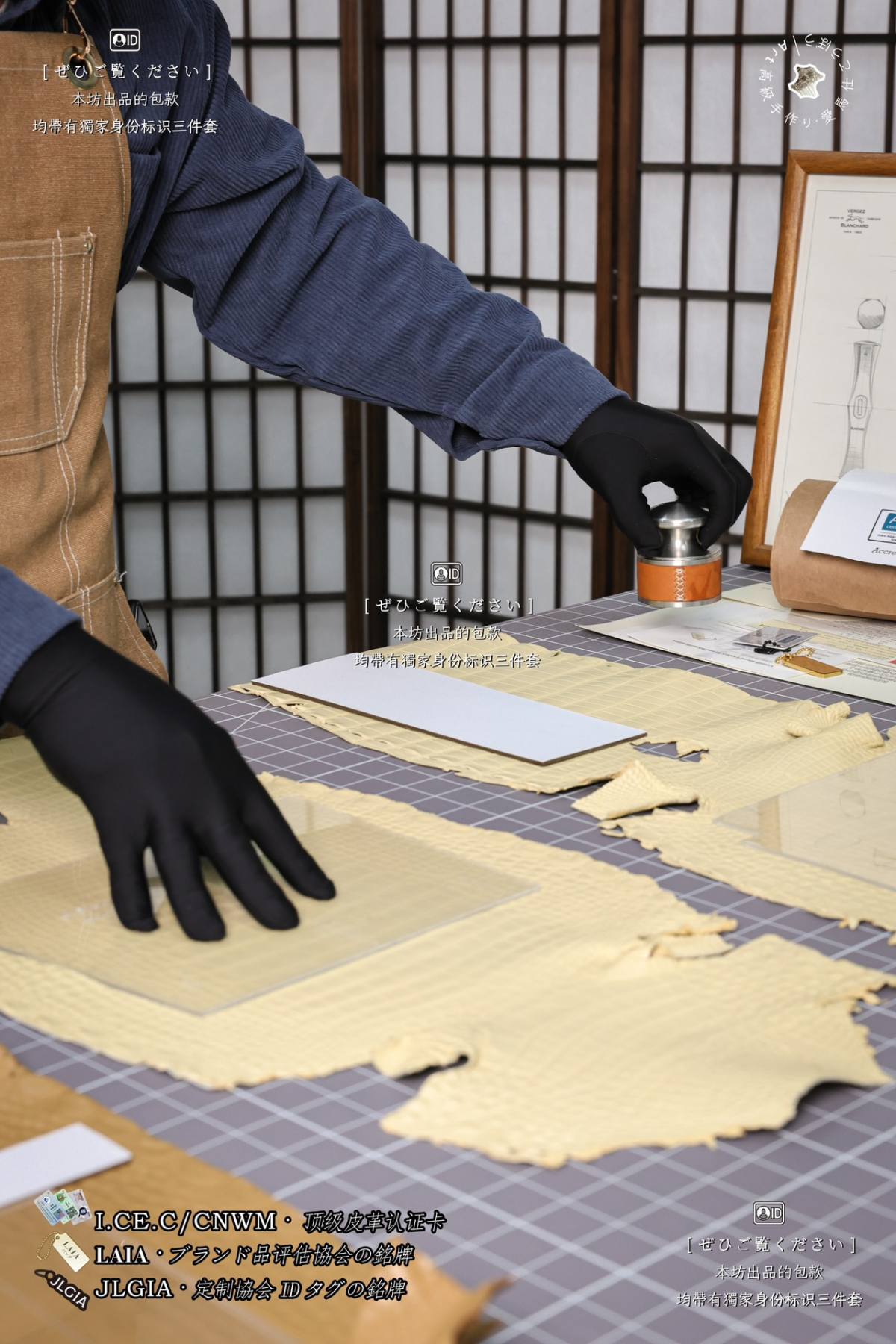
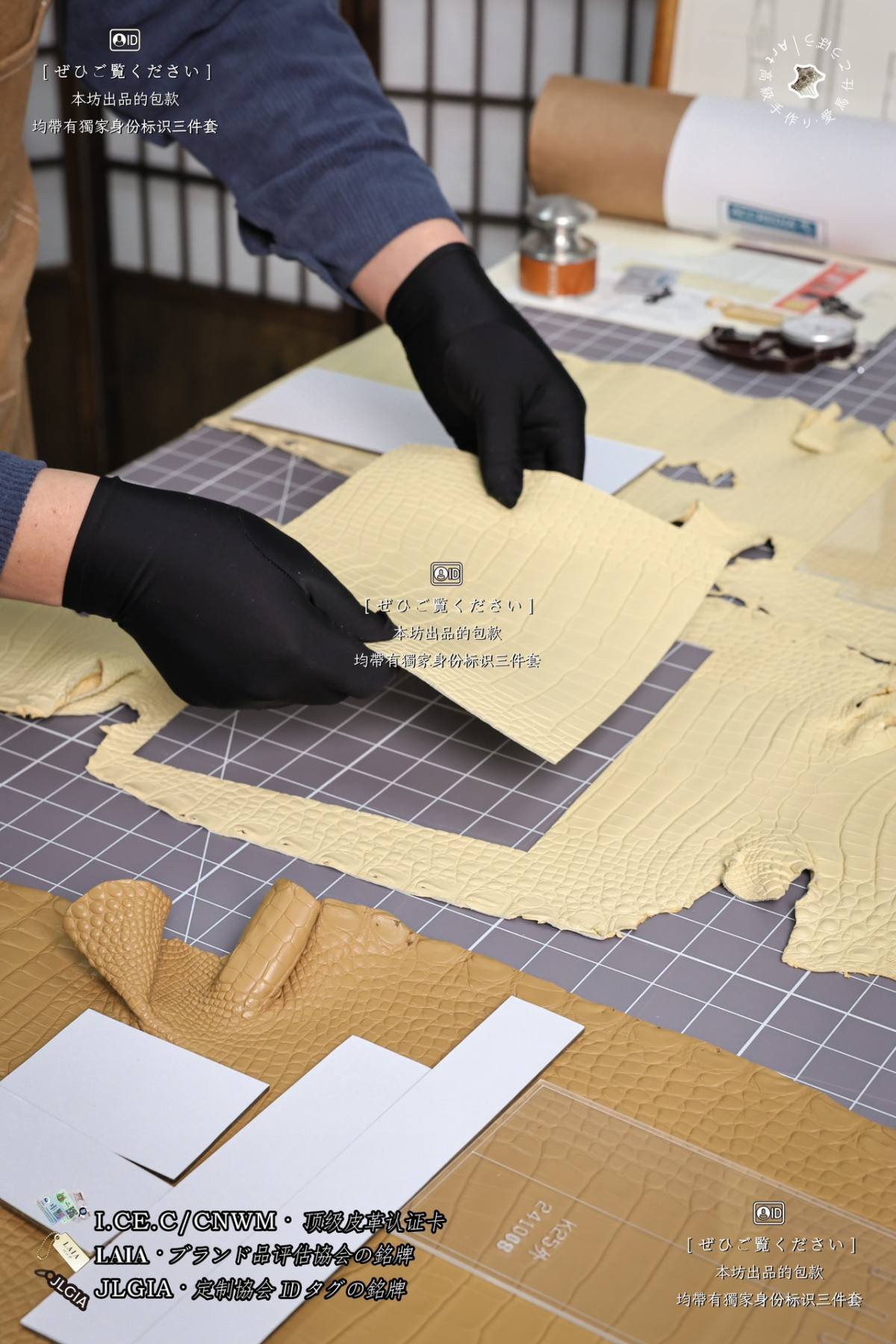
The first stage is pre-layout alignment with full-size paper templates. Our artisans craft 1:1 scale templates on thick rigid cowhide paper covering all bag components, including front panels, back panels, exterior flaps, side panels, base panels and handle blanks. Each full Niloticus hide is laid flat on a temperature and humidity controlled workbench kept at a steady 22 degrees Celsius to prevent dimensional distortion caused by leather expansion or contraction. Heavy flat weights are placed over the hide, which rests undisturbed for thirty minutes to release internal residual stress accumulated during the tanning process. Templates are laid evenly across the grain surface under unified alignment rules: horizontal lines of all exterior square scales run parallel to one another, and vertical grain lines stay perpendicular. Flaps and primary front and back panels must be cut from adjacent quadrants of a single hide to guarantee identical square scale measurements. Strict symmetry rules apply to grain coordination: left and right side panels of externally stitched Kelly Sellier styles, as well as the front and back panels of Birkin bags, are cut from mirror-symmetrical areas of the hide to create perfectly mirrored scale patterns visually. To minimise material waste, we reserve a trimming margin of 0.8 to 1 millimetre between all template outlines. As Niloticus counts as an extremely scarce exotic leather material, overlapping template layout is strictly forbidden, and all defective zones on the hide are left completely unused during the layout phase.
All marking operations are conducted on the hide’s flesh side to avoid any scratches to the delicate grain surface; no pen marks are ever drawn on the polished exterior grain of crocodile leather. Craftsmen trace template outlines lightly with metallic silver pens whose faint traces can be fully wiped away without permanent staining. Sharp curved edges, tight corners and stitch reference lines are indented onto the hide with a fine awl, applying gentle pressure only without piercing leather fibres. Long straight reference lines for large primary panels are drawn with the assistance of a metal straightedge.
We implement extra protective positioning steps specially for glazed Niloticus hides. Glazed Niloticus undergoes high-temperature agate polishing, forming a brittle surface resin layer highly vulnerable to scratches. Prior to cutting, a thin soft wool mat fully covers the entire grain side of the hide to create a protective barrier separating leather from cutting tools. Low-adhesion masking tape is applied along every template edge to stop sliding cutting blades from damaging the glossy resin finish, and dragging metal rulers or heavy weighted tools directly across the grain surface is prohibited entirely.
Every detail of our fully manual cutting process, including dedicated cutting tool sets, standard blade manipulation techniques and supplementary layered splitting treatment, follows unified internal production protocols, with a complete set of specialised exotic leather cutting tools prepared for all procedures.
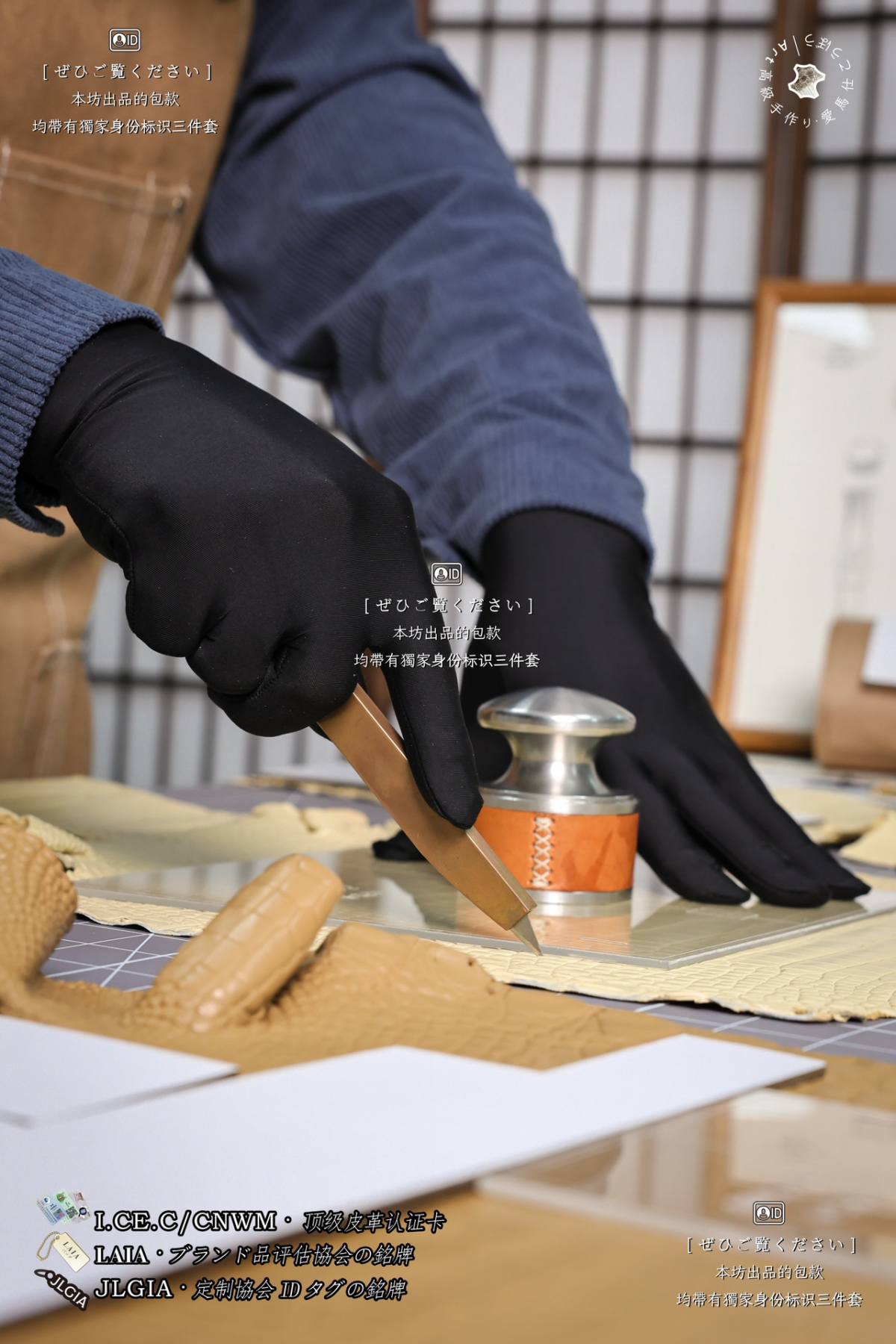
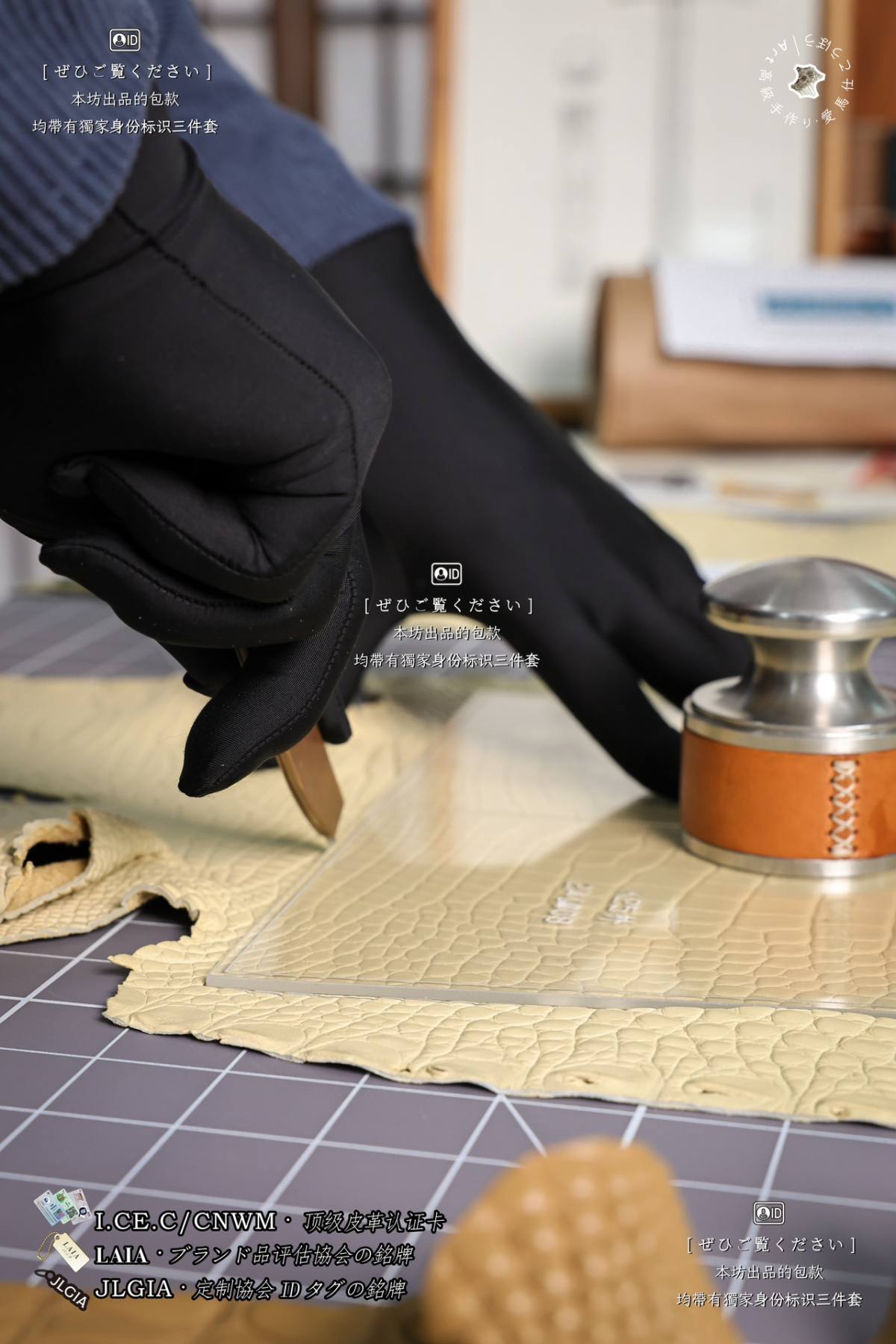
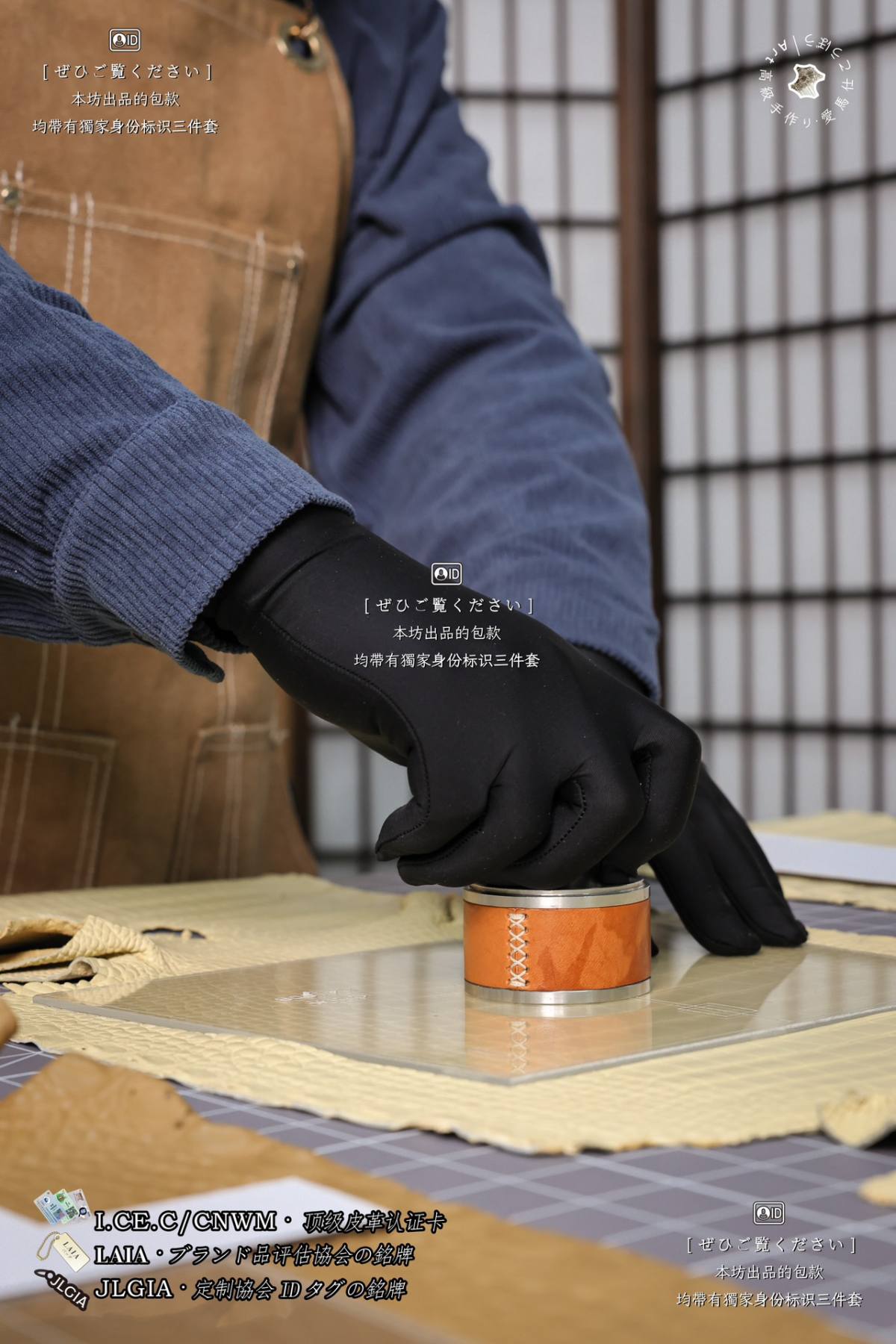
Our primary cutting implement is a professional curved rotary leather knife fitted with high-carbon steel blades hand-sharpened by craftsmen. The blade requires re-sharpening after cutting every three hides, serving as the main tool for straight panels and wide curved bag body components. The knife is held at a fixed 45-degree angle against the hide surface to slice through the material in one single continuous pass; repeated backward cutting strokes are banned, as they tear the fragile resin layer covering Niloticus surface scales. Fine detail work relies on surgical-grade pointed carving knives, which handle sharp flap corners, curved handle profiles, small interior patch panels and narrow leather strips. Tight small-radius corners are cut in one smooth fluid motion to prevent chipping and splitting along scale edges. We use cork-backed metal straightedges for positioning assistance; the cork bottom layer prevents slippage during straight cutting and avoids scratching the crocodile grain surface, paired with weighted metal clamps to fix templates firmly to the hide throughout cutting. All cutting work takes place on self-healing soft rubber mats, which cushion blade impact and shield delicate lower leather fibres. Hard solid worktops generate vibration that fractures the thin scale layer of Niloticus hides and are never used for cutting operations.
We follow a standardised step-by-step manual cutting workflow. For stable fixation, a wool mat lines the work surface, the Niloticus hide is flattened completely, and weighted metal clamps secure all four corners of each template to eliminate shifting during cutting. Straight cutting applies to primary front and back panels and rectangular base components. A cork-backed metal straightedge aligns with reference lines marked on the flesh side, and the rotary knife glides steadily in one consistent direction with even pressure, slicing fully through both the grain layer and underlying leather fibres to form perfectly vertical 90-degree clean edges free of slants or loose frayed fibres. Backtracking blade strokes crack the glazed resin coating of polished Niloticus and trigger peeling along scale edges. Curved and corner cutting targets exterior flaps, curved handle contours and bag corners. The metal straightedge is removed, and the pointed carving knife follows awl indent outlines in short sequential passes. Cutting speed slows noticeably at every corner, with the blade slightly lifted to reduce pulling tension on the scales. Structured Sellier style panels carry an extra one-millimetre margin at all corners reserved for subsequent edge trimming and sanding. After cutting finishes, craftsmen lift finished panels gently from the hide instead of yanking them forcibly, which would cause delamination and peeling along scale borders.
Layered splitting serves as a supplementary thickness reduction process carried out after cutting, extending the full pattern cutting workflow. Raw untreated Niloticus hide measures between 0.9 and 1.3 millimetres in thickness, with precise custom thickness targets set for each individual bag component. Exterior primary panels including front, back and flap sections are split down to 0.75 to 0.85 millimetres, retaining complete raised square scale profiles to balance structural rigidity and soft malleability. Bag bases and interior lining panels are split to 0.6 millimetres to simplify edge folding and adhesive bonding. Outer handle leather only receives partial angled splitting on the flesh side, with a thin 0.3-millimetre cut applied solely along fold margins; the full original thickness remains intact on the grain side to deliver superior tactile grip comfort. Splitting work is completed with a dedicated vertical precision splitting machine that only removes material from flesh-side fibres and never makes contact with the outer scale grain layer. Every split panel undergoes manual inspection, with edge thickness deviation controlled within a maximum tolerance of 0.05 millimetres.
A full series of post-cut finishing and quality control procedures are mandatory after every batch of cutting work. Initial edge finishing uses fine-grain imported soft abrasive sticks to lightly sand frayed cut edges at a 45-degree angle; coarse sandpaper is forbidden for glazed Niloticus hides to avoid scuffing the polished resin finish. Every cut edge receives visual inspection to confirm no cracked scales, layer separation or jagged serrated blade marks appear. The secondary grain matching verification stage arranges all exposed cut panels side by side for comparative visual checking. The horizontal count of square scales, individual scale length and width, and pore quantity must align uniformly across all visible surfaces. Any panel presenting excessive colour variation or obvious grain misalignment is discarded and recut from fresh hide stock. We conduct pre-treatment edge sealing by applying a thin base coat of beeswax to all Niloticus cut edges to seal exposed fibres, stopping leather from absorbing oil and deforming during later dyeing and stitching processes. Separate beeswax formulations are developed for matte and glazed Niloticus varieties; the wax blend for polished hides uses a thinner consistency to avoid dulling the natural reflective lustre of the scales. All finished cut panels follow strict sorting and storage standards. Every panel belonging to one single handbag is assigned matching unique identification numbers and wrapped individually in soft wool paper. Storage spaces are light-shielded with constant stable temperature control to prevent surface scratches on the polished glazed layer of Niloticus hides caused by mutual friction between separate leather pieces.
There exist clear core distinctions in cutting techniques between Niloticus crocodile hide and Porosus saltwater crocodile hide processed at Shebag. Niloticus grows larger scales with denser thin subcutaneous calcified deposits distributed underneath, requiring slower cutting speed at every corner to lower the risk of scale chipping and splitting, which sets higher professional certification requirements for craftsmen handling this material. Porosus hides feature finer, more compact scales with tightly interwoven fibres, granting greater fault tolerance during cutting operations. The surface agate-polished resin layer on glazed Niloticus is far more brittle, demanding full wool mat protective coverage across the grain surface for the entire cutting duration. Polished glaze coatings on Porosus hides possess stronger flexibility, allowing moderately relaxed protective handling standards. The four core quadrant zones on Niloticus belly hides deliver larger usable surface area, enabling production of bigger single panels from one individual hide. Nevertheless, grading and screening standards for consistent uniform grain patterns are markedly stricter for Niloticus leather compared to Porosus alternatives.