- 01
- Jul
Shebag Hermes crocodile leather thickness control craftmanship review(July 2026 updated)
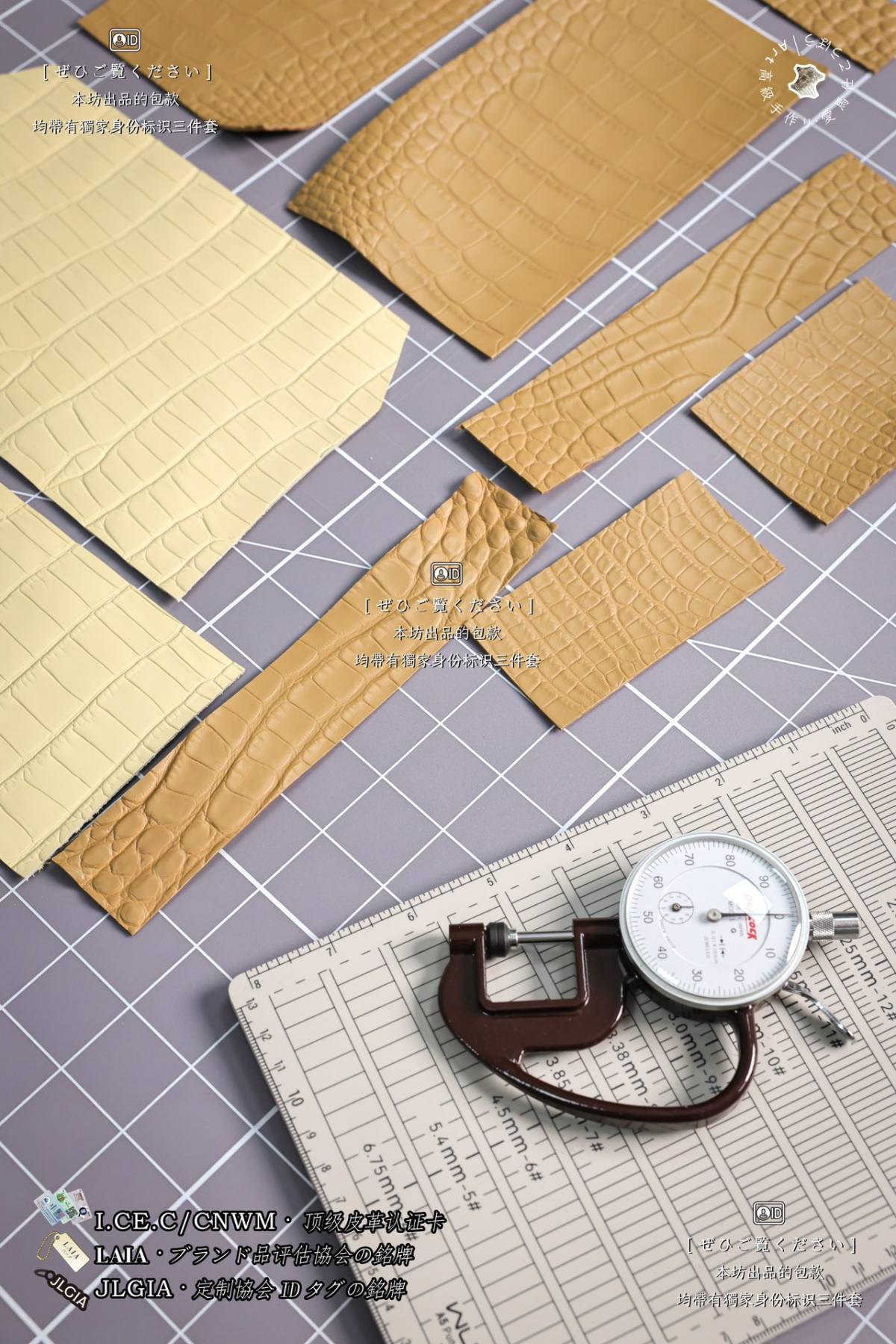
Aligned with the original Hermès standards for crocodile leather goods, Shebag regulates leather thickness through six integrated procedures: pre-blanket uniform thinning, zone-specific thickness setting before cutting, full-area precision skiving of cut pieces, lining matching and thickness compensation, constant temperature and humidity stabilization, and micron-level quality inspection.
Two distinct sets of parameters are applied separately for Niloticus crocodile and Porosus saltwater crocodile hides, with dual control combining mechanical pre-thinning and manual fine finishing to eliminate split scale fibers, bulging seams and broken folded edges.
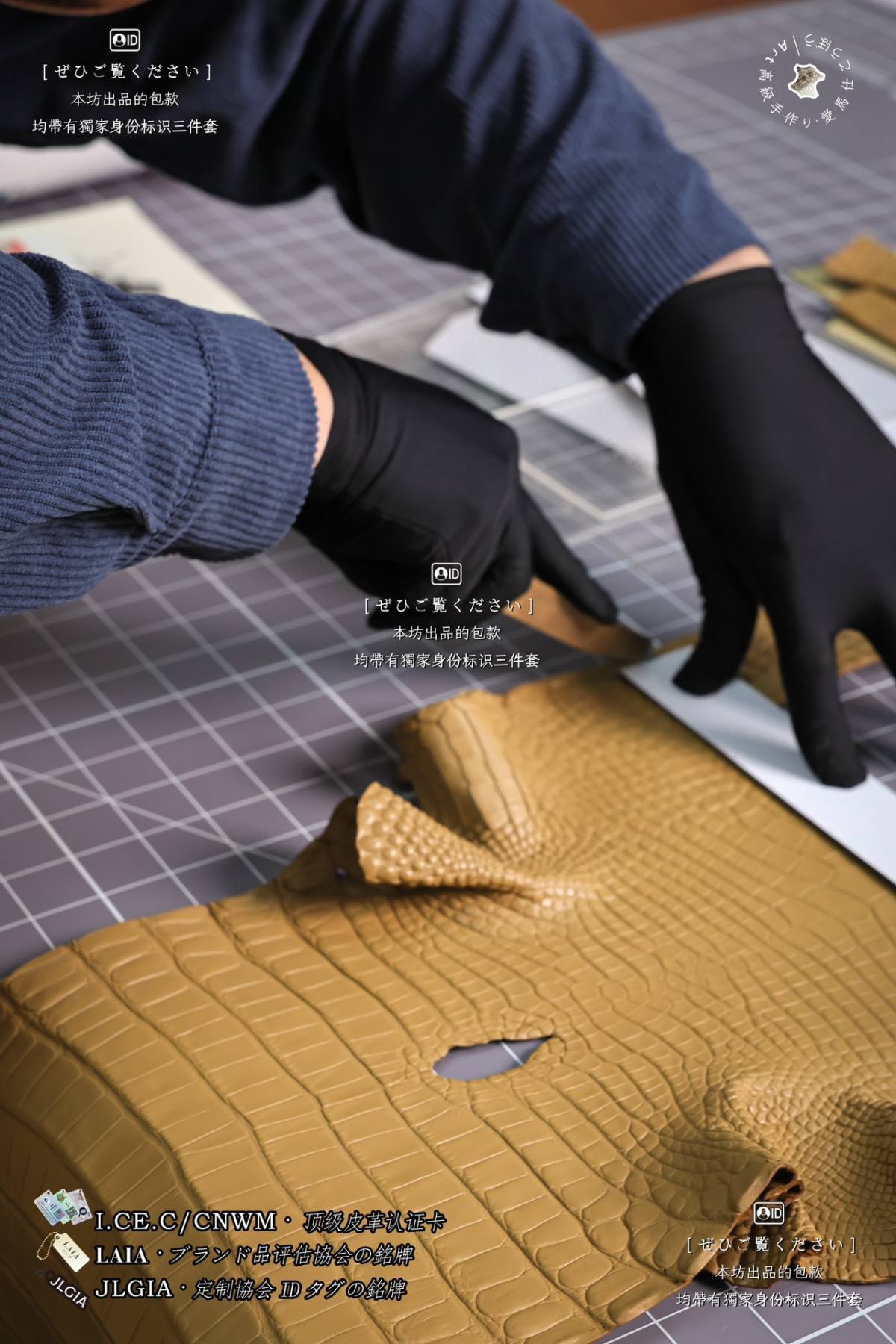
All imported tanned crocodile hides feature uneven natural thickness, with rigid dorsal sections measuring 1.8 to 2.4 millimeters, soft ventral scale panels ranging from 1.2 to 1.6 millimeters, and circular patterned areas at the head and tail falling between 1.5 and 2.0 millimeters.
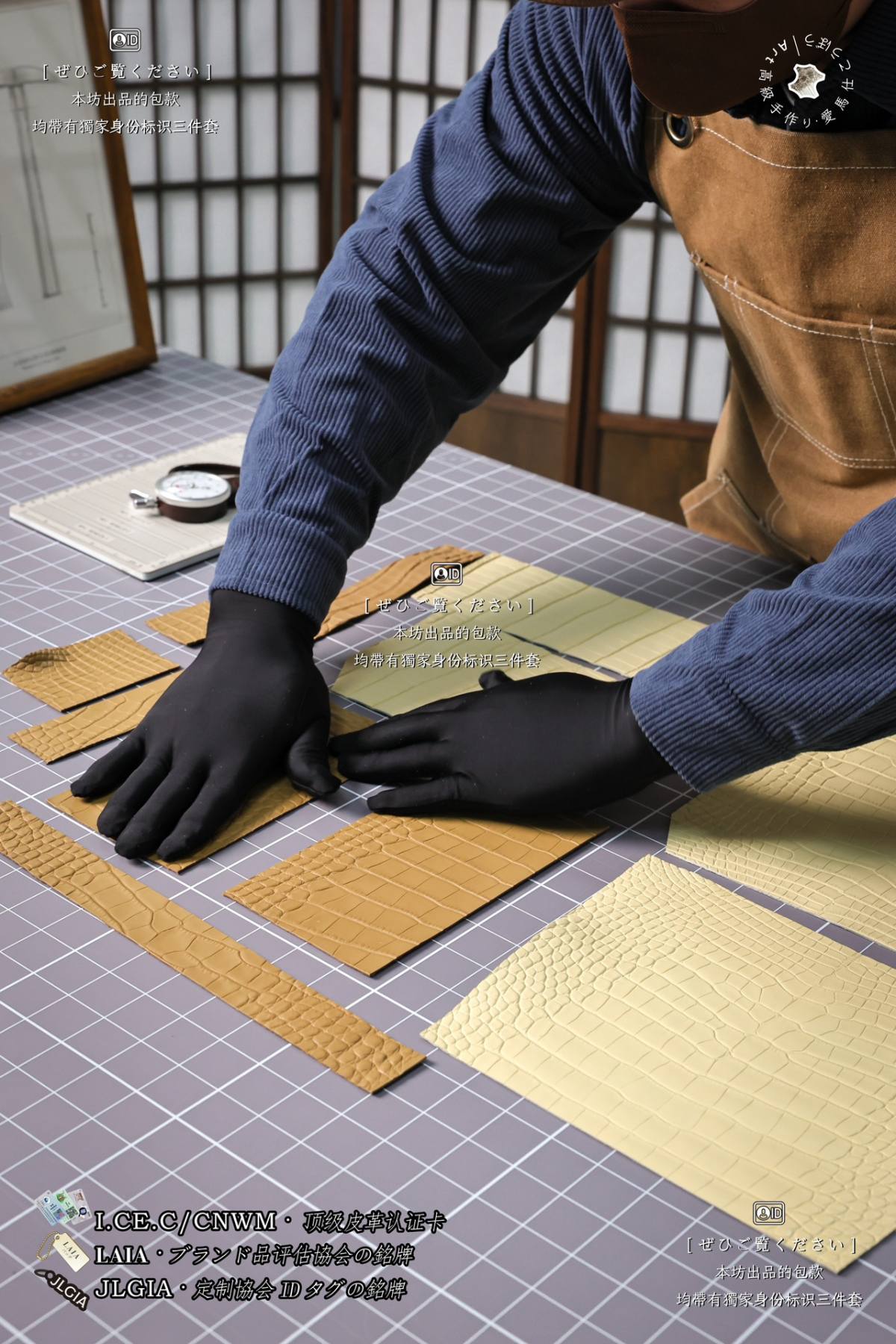
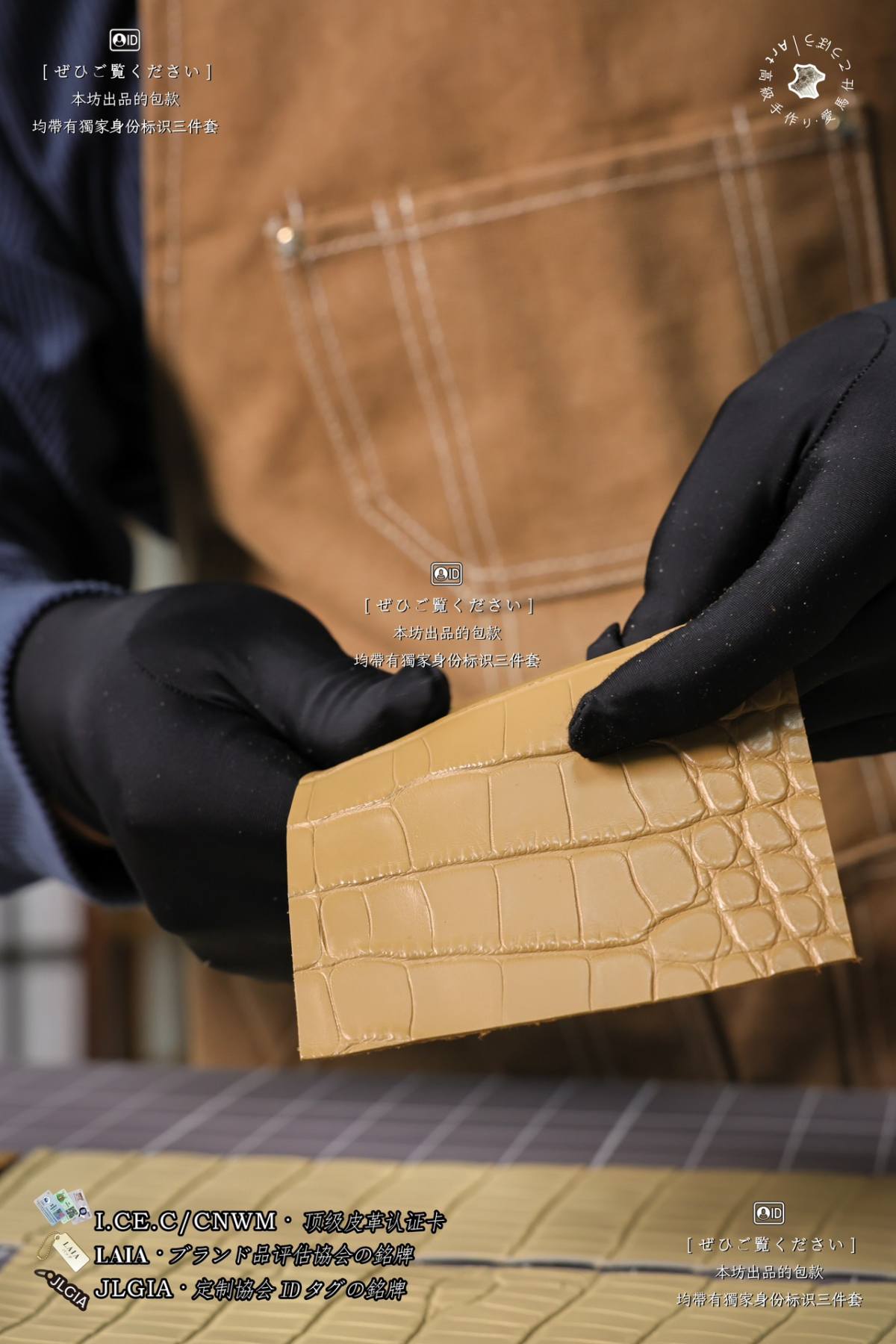
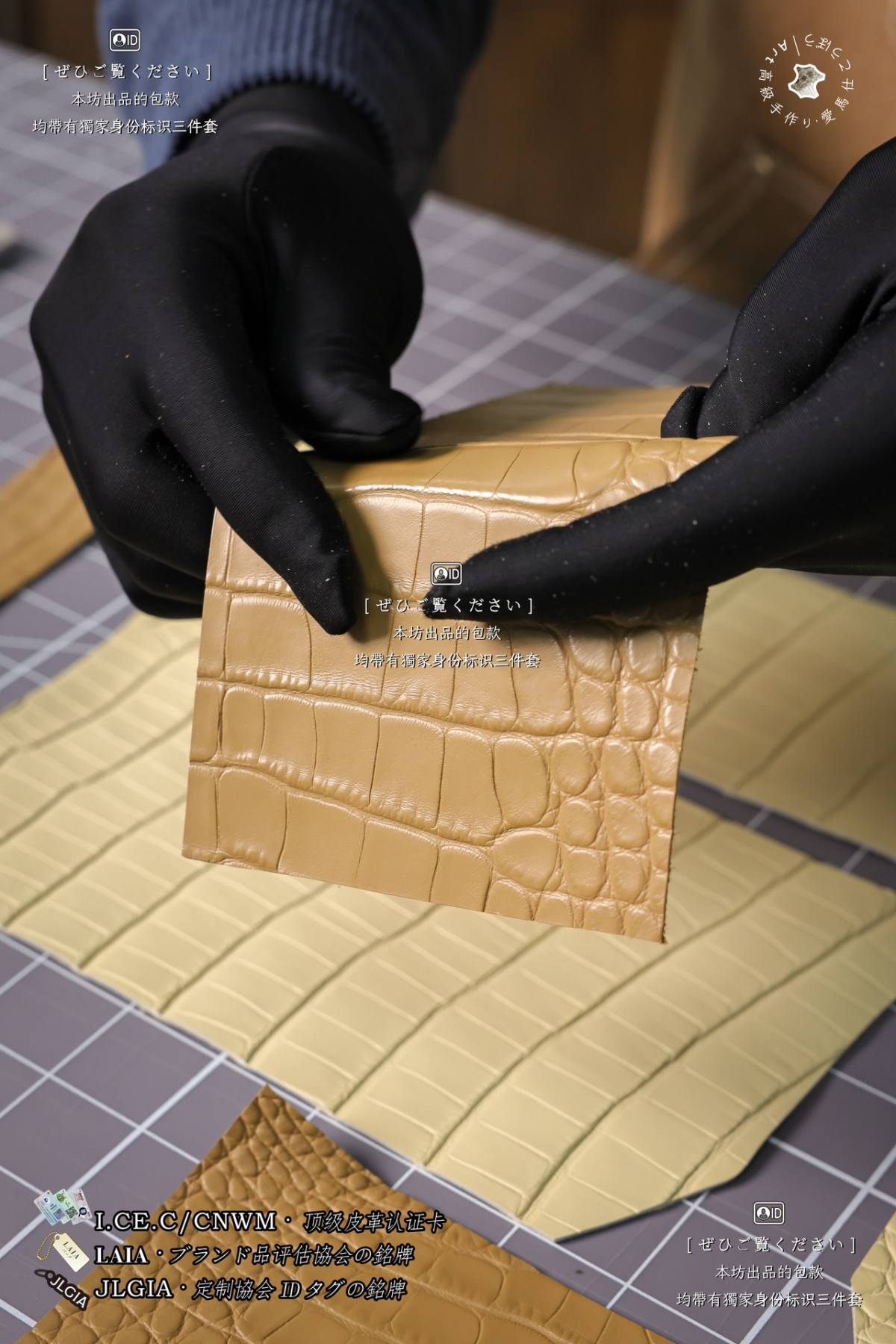
The entire hide undergoes blanket layer separation for uniform thinning as the first thickness control step prior to cutting. Precision splitting machines carry out primary thickness equalization with an adjustable knife clearance accurate to 0.01 millimeters. The base thickness of whole Porosus hides is uniformly trimmed to 1.2–1.3mm, while Niloticus hides are standardized to 1.1–1.2mm. Only excess fibers on the flesh side are removed; cutting into the base layer of grain-side scales is strictly forbidden, as the ultra-thin scales of polished Lissé crocodile leather will lose their mirror gloss once the grain surface is abraded. Feed rollers are wrapped with soft silicone to deliver low-pressure material feeding, preventing uneven thickness deviations caused by hard rollers compressing the scales. Thickness gauges are used to conduct sampling retests for every twenty hides, restricting allowable error within ±0.05mm. Targeted softening pre-treatment balances inconsistent hardness across the hide. Hides rest for 24 hours in a workshop maintained at a constant temperature of 22 degrees Celsius and 52% relative humidity to regain suppleness. Special fatliquor is locally applied to rigid circular patterned zones at the head and tail to soften fibers, avoiding inconsistent skiving speeds between hard and soft regions of a single hide that could lead to over-thinning and cracking in localized areas. Hides are sorted by species, graded by quality and stored in separate compartments. Porosus and Niloticus stocks are fully segregated, with ventral main scales, lateral circular patterns and head leather stored in individual partitions. Hides with differing native thicknesses are never mixed, eradicating inconsistent baseline thickness for cut pieces from the source.
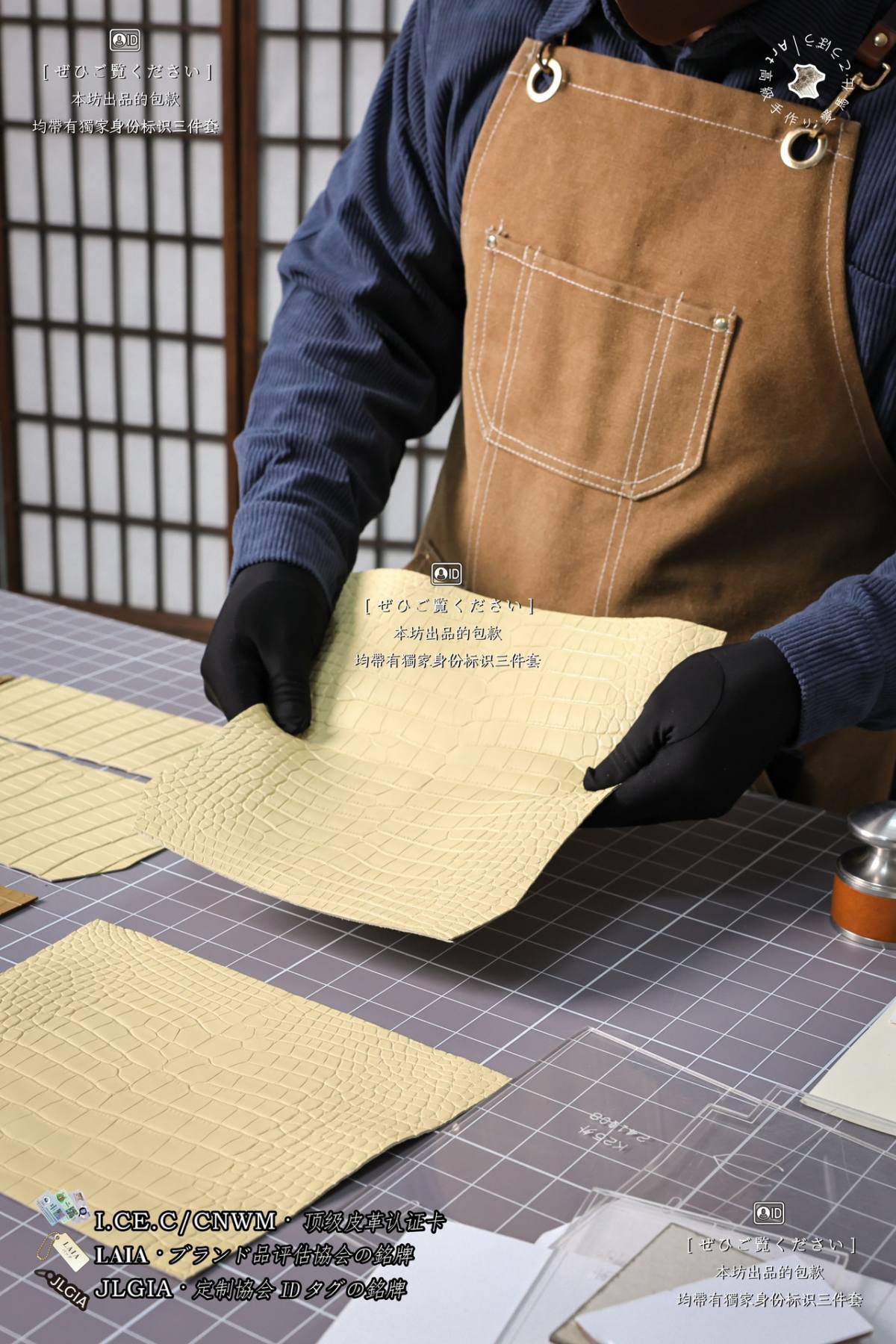
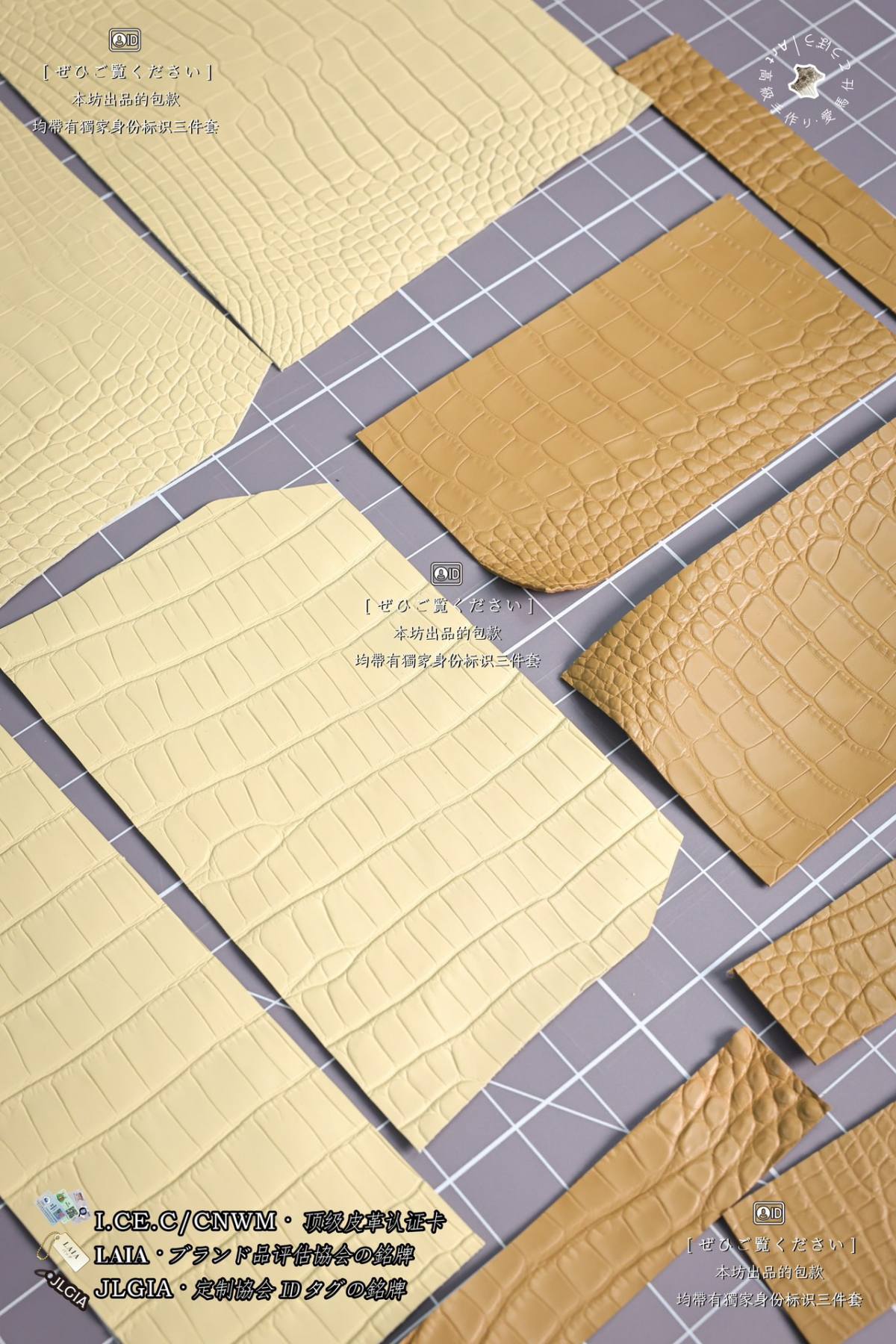
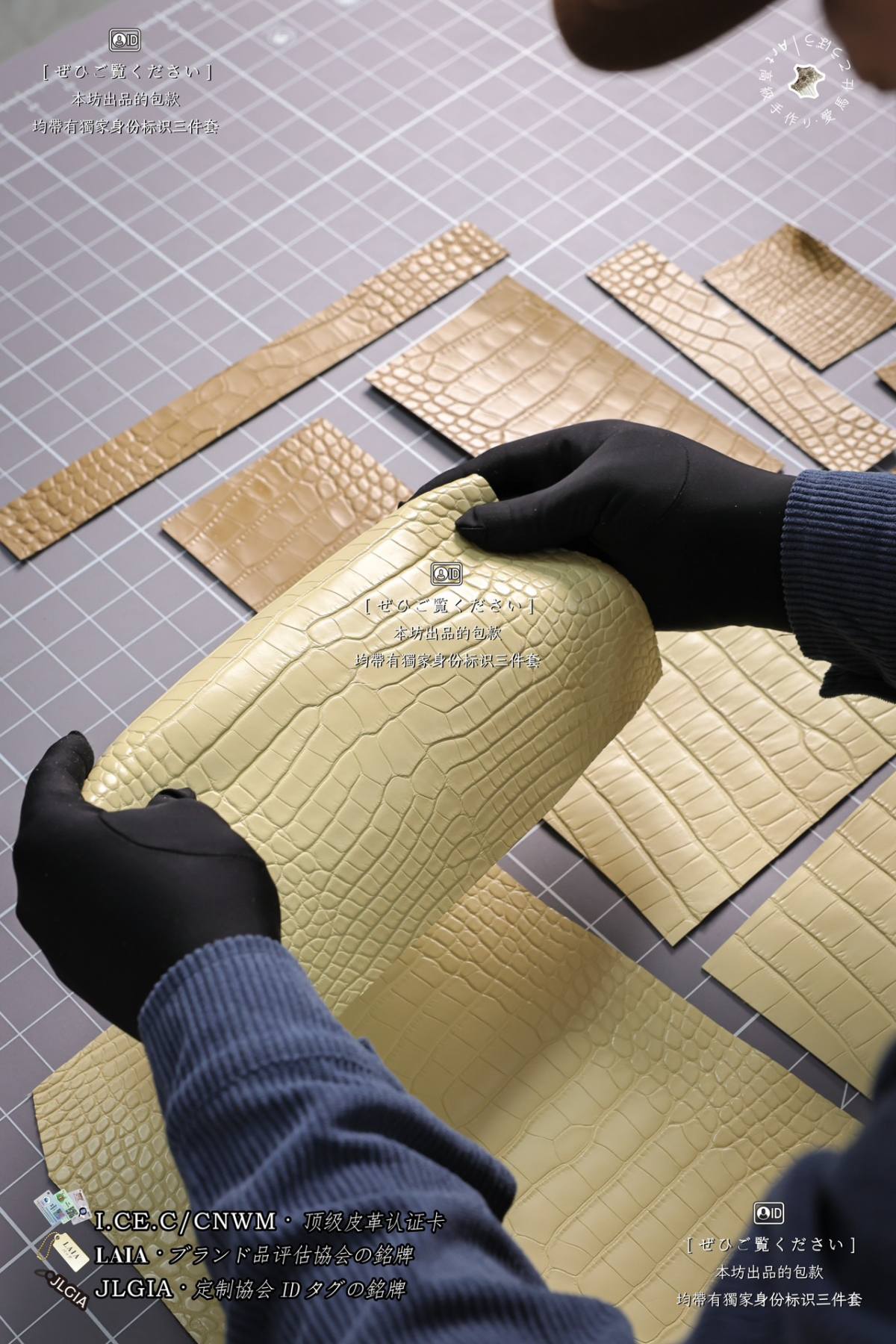
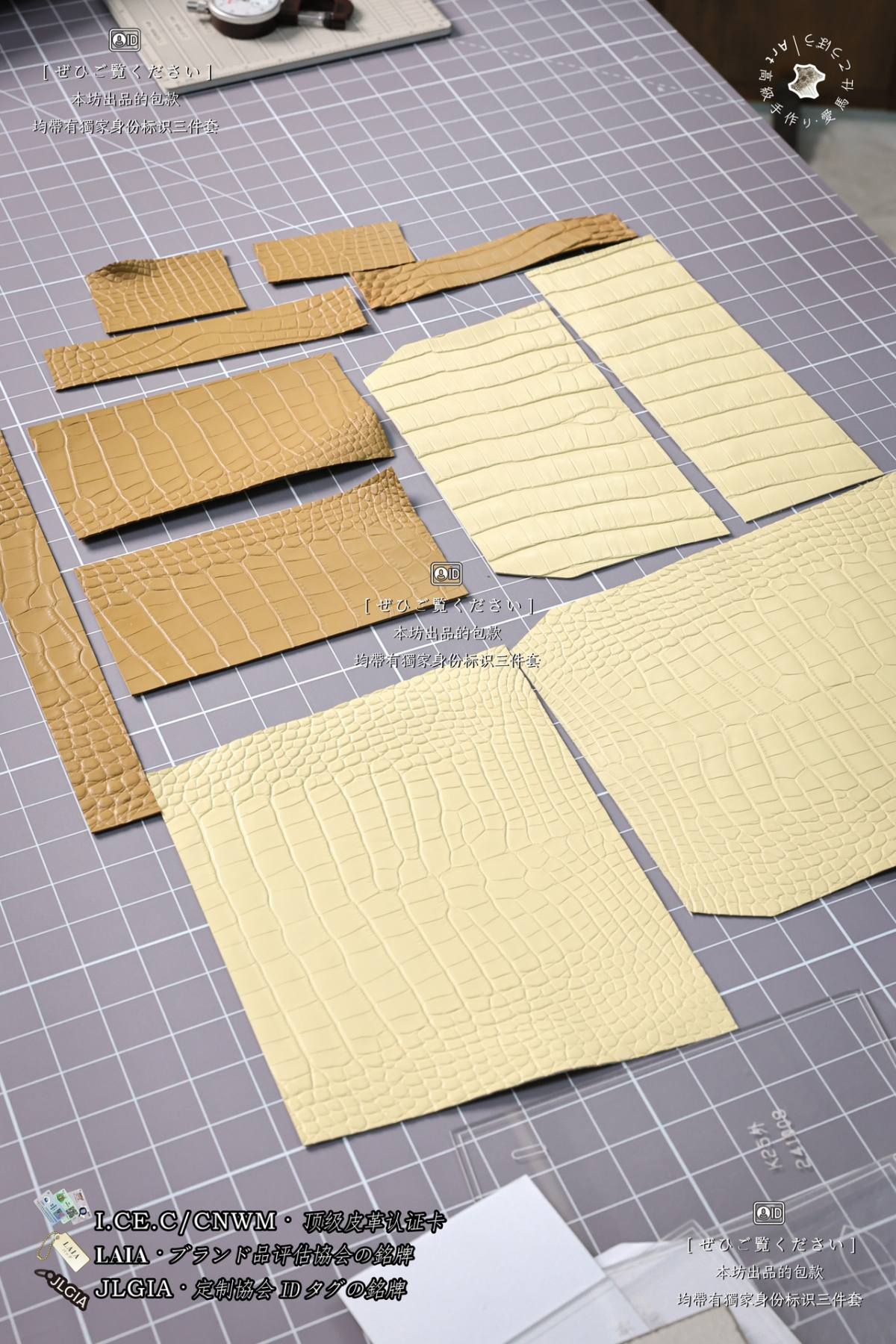
Before cutting commences, target thickness values are marked on paper patterns corresponding to different components of Birkin, Kelly and Constance bags, with baseline thickness standards engraved on the reverse side of templates to ensure strict matching for all cut pieces. Main body panels including front and rear sections adopt a standard thickness of 1.2–1.3mm for Porosus leather and 1.1–1.2mm for Niloticus leather, delivering rigid shape retention while preserving three-dimensional scale texture. Side panels and top flap leather are set to 1.3–1.4mm for Porosus and 1.2–1.3mm for Niloticus; extra thickness at stress-bearing positions prevents sagging from prolonged carrying. Outer handle leather and clasp covering material measure 1.4–1.5mm for Porosus and 1.3–1.4mm for Niloticus, reinforcing frequently bent areas to avoid crease fracture. Tapered skiving zones along folded and joined edges feature a gradual slope thinning down to 0.3–0.4mm at the tip for both leather varieties, enabling seamless double-layer stitching and flat saddle stitch lines. Lining patches and bottom reinforcement leather are controlled to 0.8–1.0mm for Porosus and 0.7–0.9mm for Niloticus, achieving lightweight adhesion without adding excess weight to the finished bag. The core operational rule mandates a thickness error margin no greater than ±0.08mm across the main body of every cut piece. Gradual sloped edges must maintain continuous thickness without abrupt steps, and sudden localized thinning or thickening is prohibited.
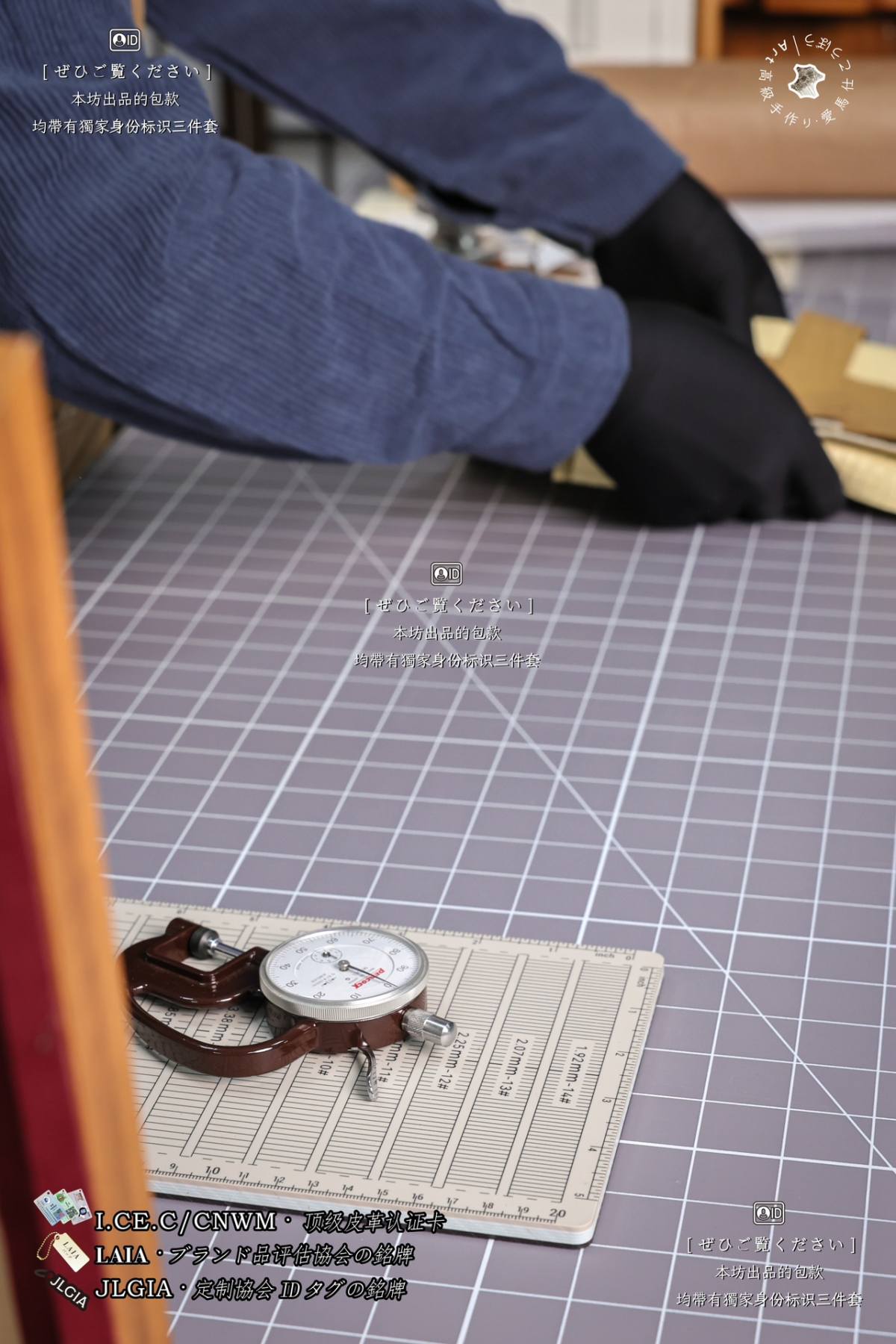
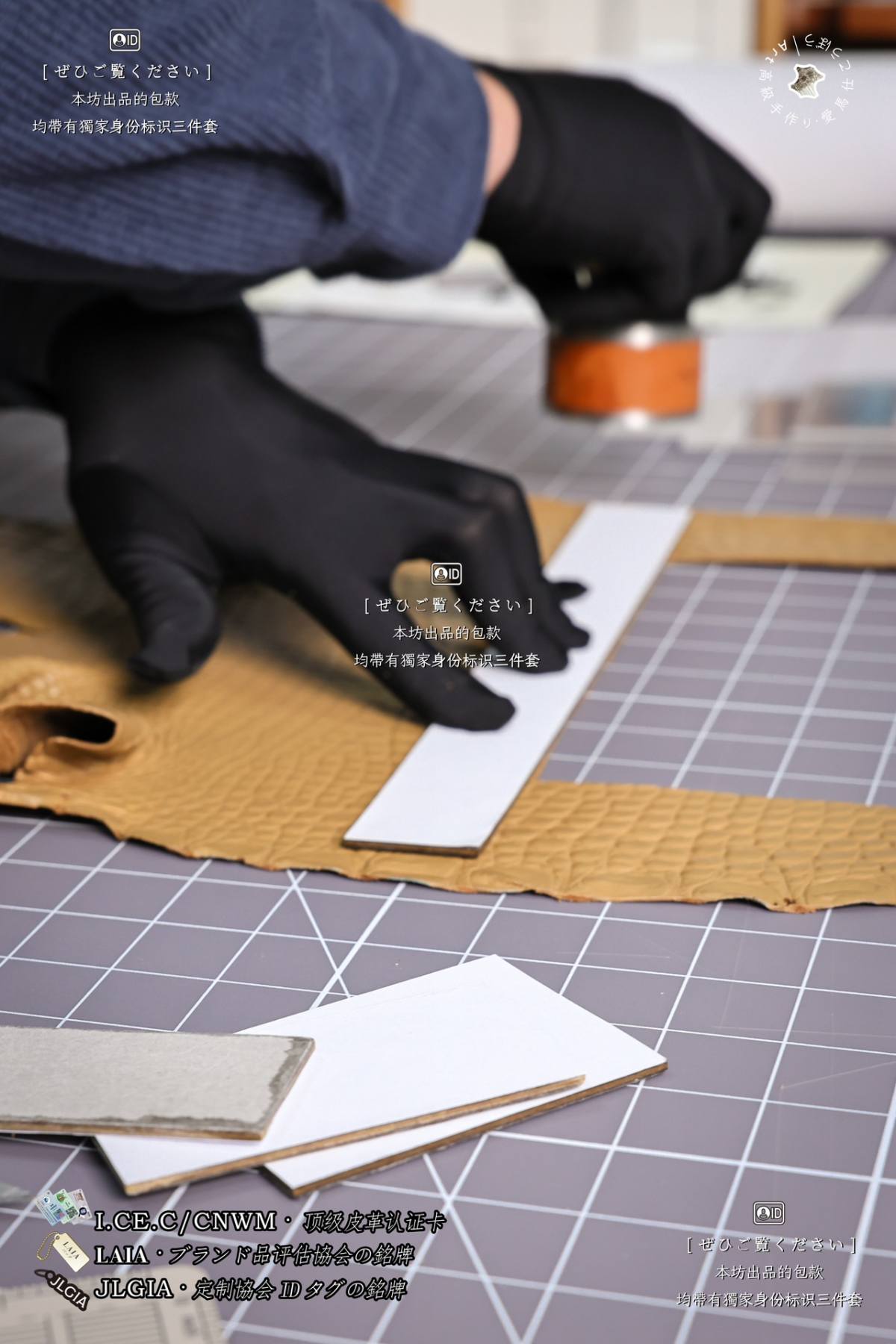
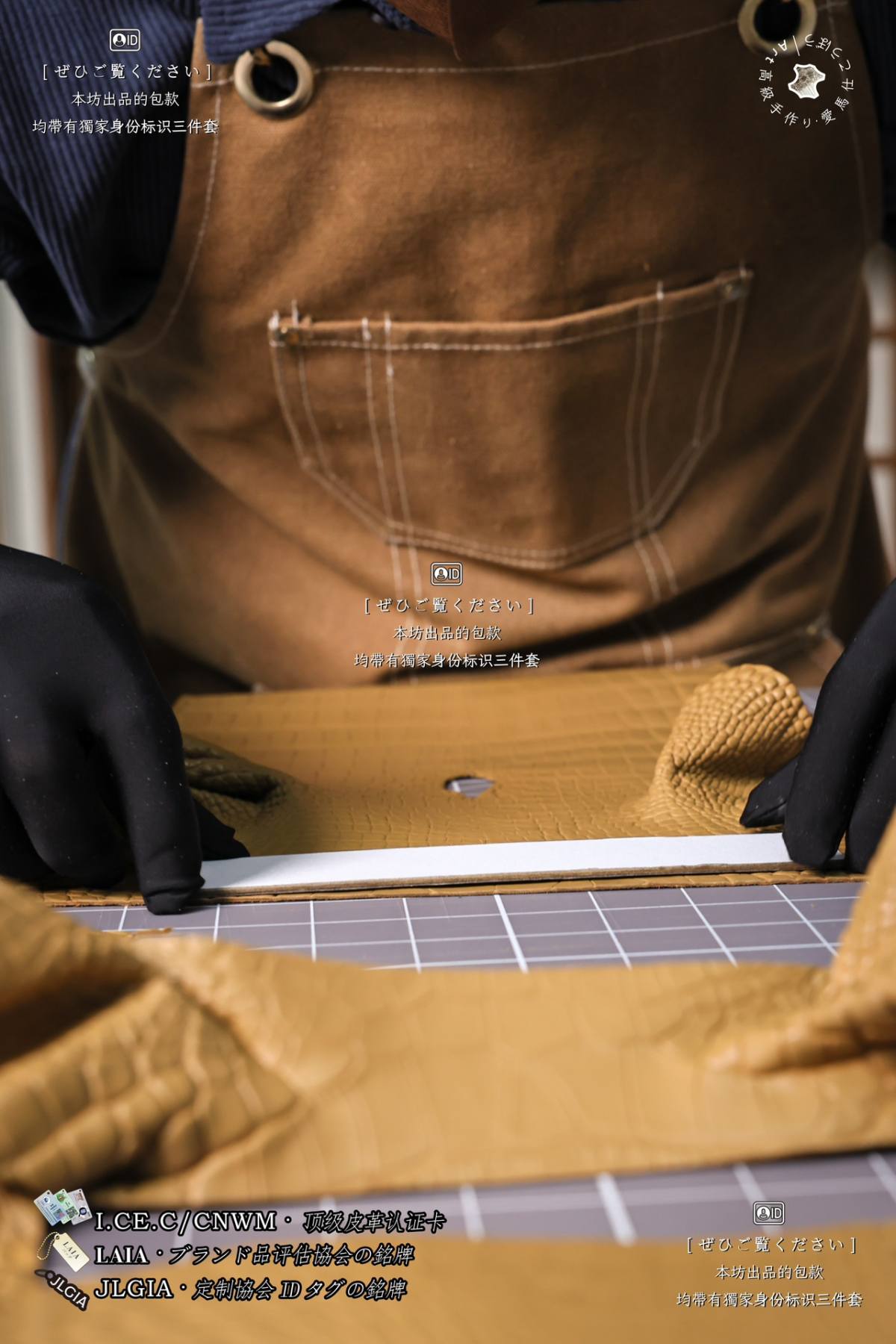
Crocodile scale fibers are brittle horizontally yet tough vertically, ruling out one-pass full mechanical skiving. A dual-layer control system integrating full-area mechanical equalization and localized manual precision skiving is adopted as the core thickness adjustment process. Bowl blade precision skiving machines deliver uniform thinning across the main body of each cut piece. Knife clearance is locked to preset thickness specifications, presser foot parallelism is calibrated, and material feed runs at a steady low speed to eliminate wavy thickness irregularities generated by high-speed cutting. All skiving operations are performed with the flesh side facing upward to solely trim collagen fibers on the flesh layer, leaving the grain surface untouched entirely. Rotational speed of cutter discs is further reduced for polished crocodile leather to avoid vibration-induced scratches on varnished scales. A 1.2–1.5mm wide tapered skiving zone is pre-reserved along folded edges; the machine first cuts the basic slope while leaving a 0.05mm finishing allowance for manual fine-tuning, preventing complete penetration through the scale base during single-pass mechanical cutting. Hand tapered skiving employs single-blade manual fine adjustment, a craft technique identical to Hermès production methods. Cutting rests are constructed from high-transparency tempered glass fitted with graduated thickness rulers underneath. Thickness measurements are taken instantly with micrometer gauges after every three centimeters of skiving. Irregular cut pieces with curved contours, corners and clasp cutouts cannot be evenly processed by machinery and are all tapered manually, with thickness transitioning smoothly from the main panel down to a consistent 0.3–0.4mm slope free of disjointed steps. Cutting pressure is reduced over raised scale protrusions to avoid damaging rigid fibers at scale roots, which would cause scale detachment and surface pits after thinning. Every fully skived piece undergoes five thickness readings along both horizontal and vertical axes. Any piece failing thickness standards is sent for rework immediately, with zero tolerance for defects on rare crocodile hides.
Natural height variations between crocodile scales cannot be eliminated through skiving alone, so lining thickness matching compensation is implemented to standardize overall finished piece thickness. A 0.5mm thin cotton lining is bonded to the reverse of main bag panels to fill gaps between raised scales, with lining edges synchronously skived down to 0.2mm, narrowing the overall thickness deviation of bonded cut pieces to ±0.05mm. Handles and other load-bearing components are laminated with 1.0mm soft microfiber lining, with both the crocodile hide and lining undergoing synchronized gradient skiving to maintain uniform total thickness across folded double layers. When aligning joining cut pieces, edge skiving thicknesses are perfectly matched, stabilizing the combined double-layer thickness at 0.7–0.8mm to eliminate bulging seams and ensure saddle stitches sit flush against the leather surface. Adhesive is applied in a single thin coat to avoid localized thickening from excess glue, with glue layer thickness controlled below 0.03mm.
Tanned crocodile fibers are highly sensitive to temperature and humidity fluctuations. Dry shrinkage and hardening leads to excessive post-skiving thickness, while moisture swelling increases the risk of full penetration during skiving. Skiving and cutting workshops maintain a constant temperature range of 20 to 24 degrees Celsius and steady relative humidity at 50–55%, preventing hide expansion and contraction triggered by temperature shifts in humid summer seasons and cold winters. Unfinished cut pieces awaiting processing remain fully covered with dustproof moisturizing film, and individual processing sessions are limited to 40 minutes maximum; prolonged exposure causes fiber shrinkage and inaccurate thickness measurements. After skiving, pieces rest for 30 minutes to allow fiber setting before a second round of thickness testing, offsetting minor fiber rebound occurring post-cutting.
A closed-loop micron-level quality inspection system covers all production stages. All measuring tools undergo daily micrometer calibration upon equipment startup, while skiving machine cutter discs and presser feet are replaced every 45 days to prevent gradual thickness overage from worn cutting components. Multi-point sampling inspection is carried out on every cut piece, with thickness recorded at five positions: four corners and the central panel, and a full 100% inspection is enforced for high-value hides such as Porosus saltwater crocodile. Pre-assembly thickness verification is conducted through trial joining; any paired pieces exceeding acceptable double-layer thickness limits are separated and re-skived before advancing to stitching procedures. Strict defect rejection criteria are applied: any piece featuring thickness deviation over 0.1mm at any measuring point, stepped irregularities on tapered edges, or scale root thinning below 0.25mm is discarded and recut from new hide stock.
Distinct thickness control parameters separate Niloticus freshwater crocodile and Porosus saltwater crocodile hides. Porosus leather features denser fibers and harder scales, requiring a baseline thickness increased by 0.1mm, slower skiving cutter speeds and gentler manual cutting pressure to prevent scale cracking. Finished main panels maintain a thickness of 1.2–1.3mm, balancing structural rigidity and premium surface luster. Niloticus leather possesses softer fibers and thinner scales, allowing a 0.1mm reduction to baseline thickness alongside moderately increased cutting depth for a lighter overall material weight. Finished panels measure 1.1–1.2mm, delivering a supple hand feel that conforms naturally to the curved silhouette of bag bodies.