- 09
- Jul
Shebag handmade Hermes Saddle stitch birkin bag espom leather craftmanship review(July 2026 updated)
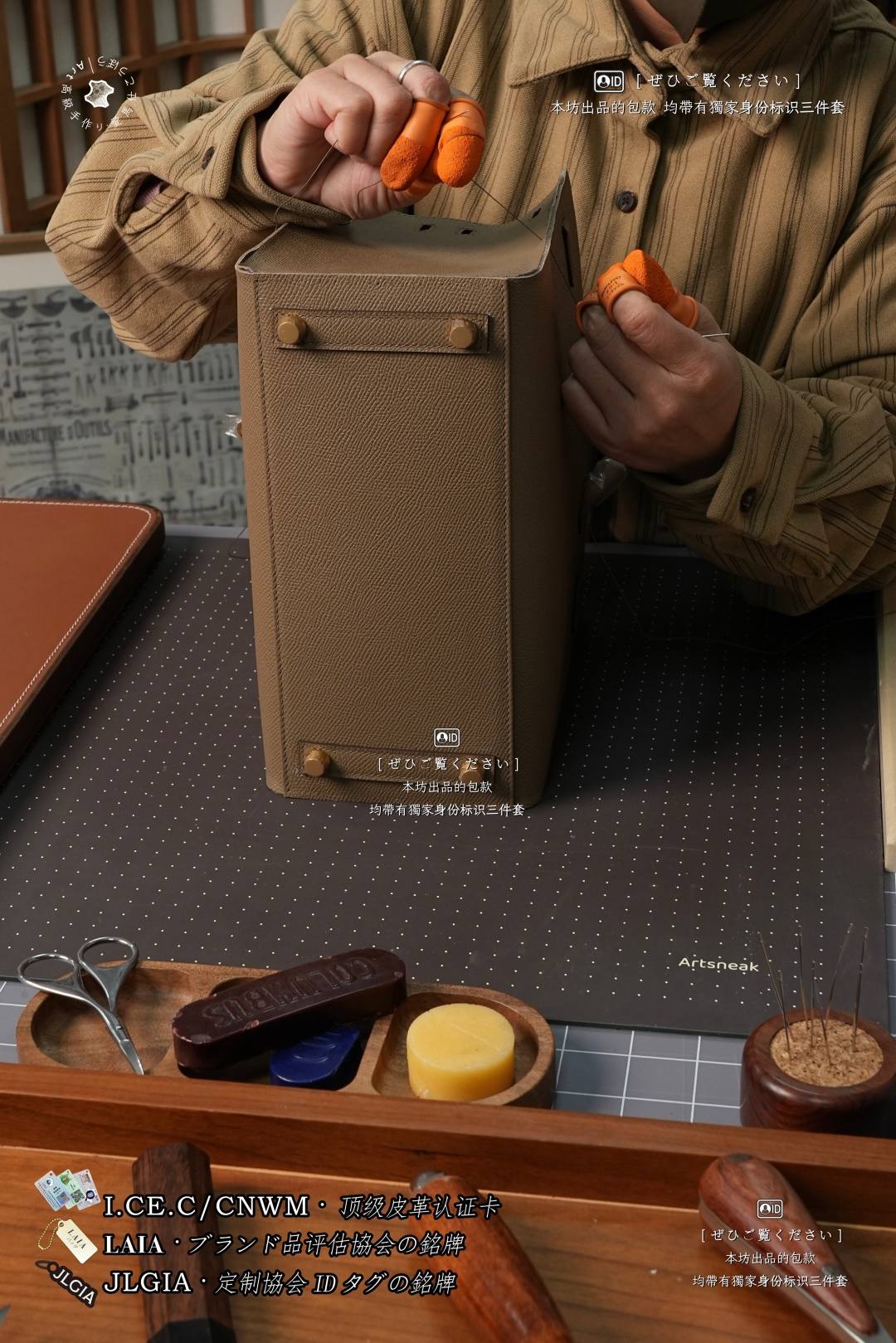
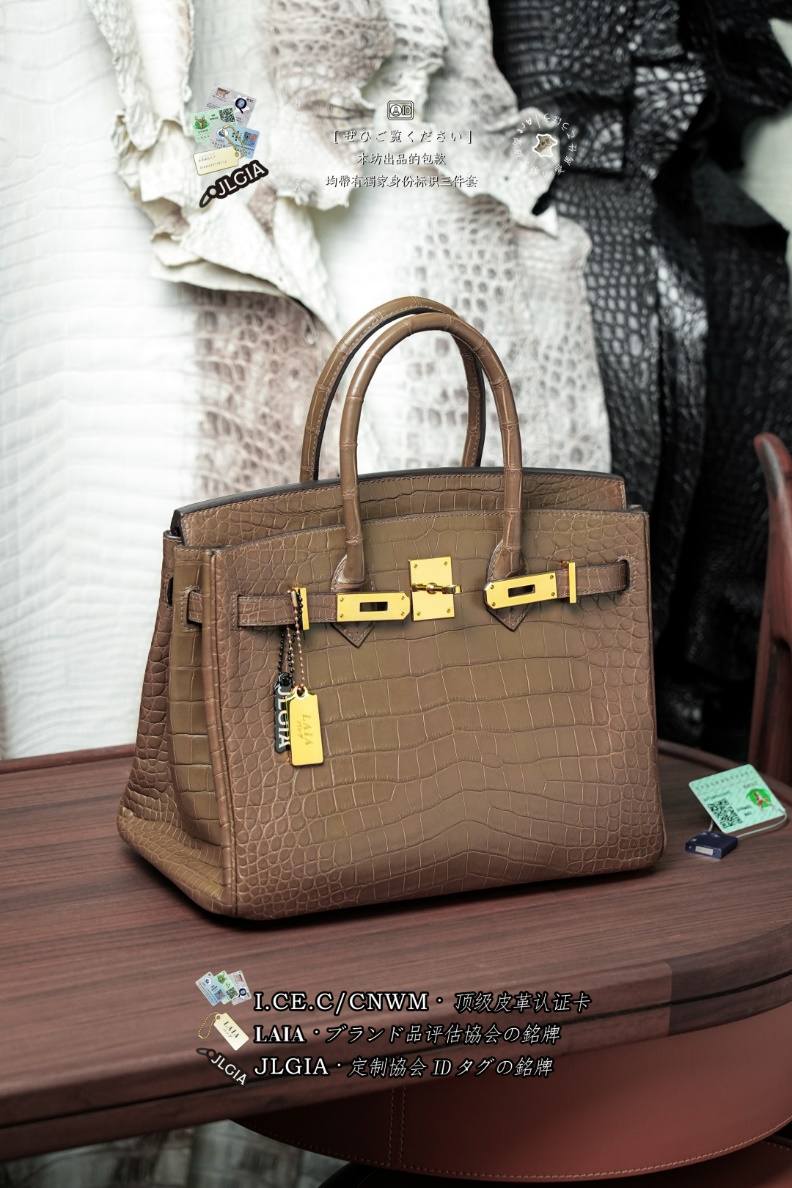
The Sellier Birkin, also known as the outer-stitch version, differs from the Retourné inner-stitch style. It is defined by outward-folded leather panels, fully exposed stitching, and a sharply structured, rigid silhouette. The entire manufacturing process follows six core craftsmanship standards, strictly benchmarked against official Hermès workshop specifications.
We select genuine original German Wanhame Epsom embossed calfskin for this piece. The leather features fine horizontal grain patterns pressed under high temperature, delivering outstanding rigidity, scratch resistance, and anti-collapse performance, which lays a solid foundation for the bag’s iconic sharp angular shape. All leather panels are precisely cut by hand instead of machine stamping. Craftsmen use a crescent cutting knife and steel positioning jig to trim more than 40 individual leather pieces, with a dimensional error controlled within 0.05 millimeters. Only flawless and evenly textured areas of the full-grain calfskin are adopted, and the grain direction of all symmetrical parts is perfectly aligned.
Professional layered skiving technology is applied to all splicing and folding edges. The leather is thinned gradually in a sloped transition, eliminating uneven stacking and bulging at stitching positions. This ensures the exposed stitches fit tightly and smoothly on the leather surface, serving as a key technique to guarantee flawless outer-stitch flatness. Every cut piece undergoes high-temperature heat pressing at 130℃ for pre-shaping, locking in the precise right-angle outline in advance. After stitching is completed, the bag maintains a neat and three-dimensional shape without the support of inner lining and will never deform or sag.
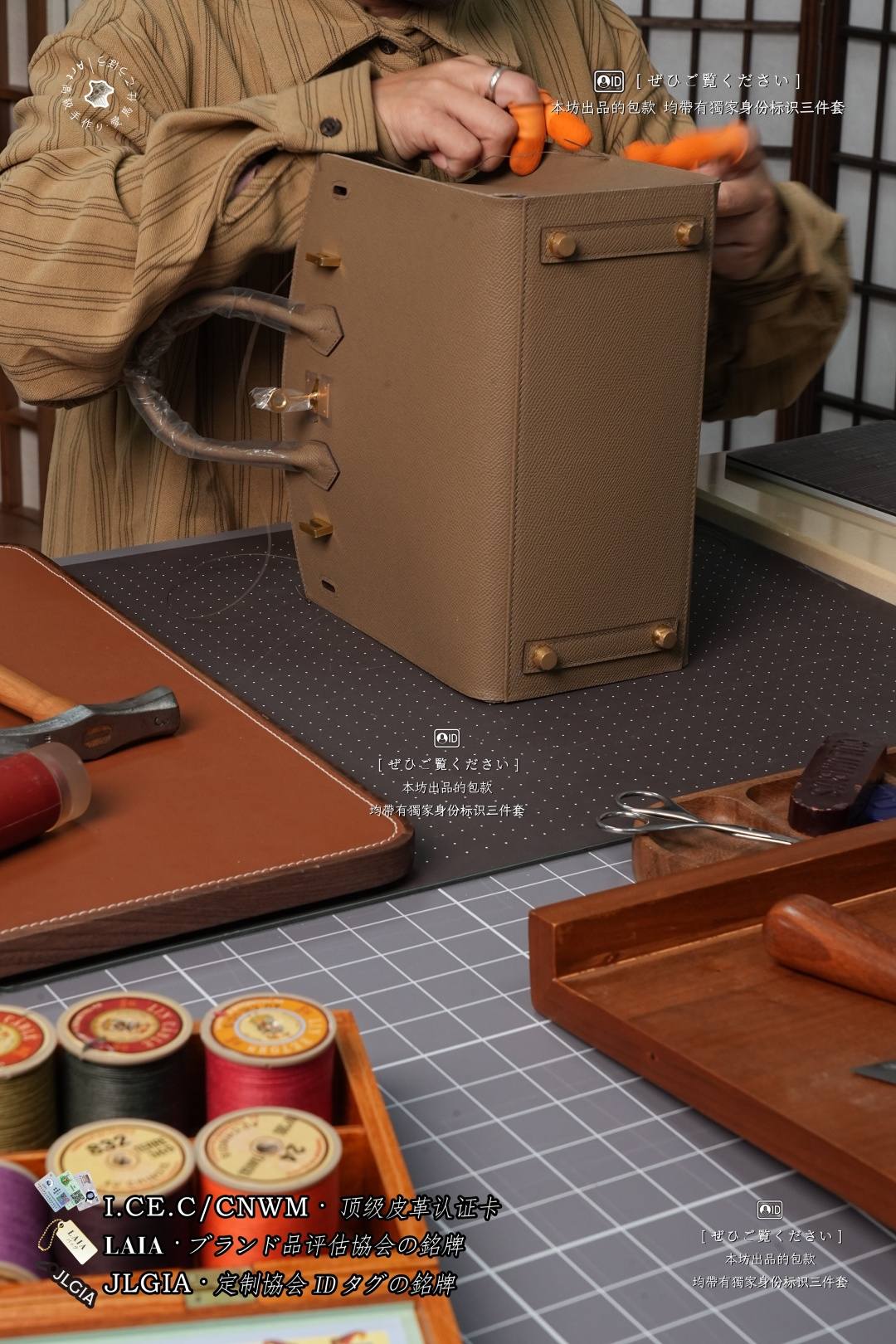
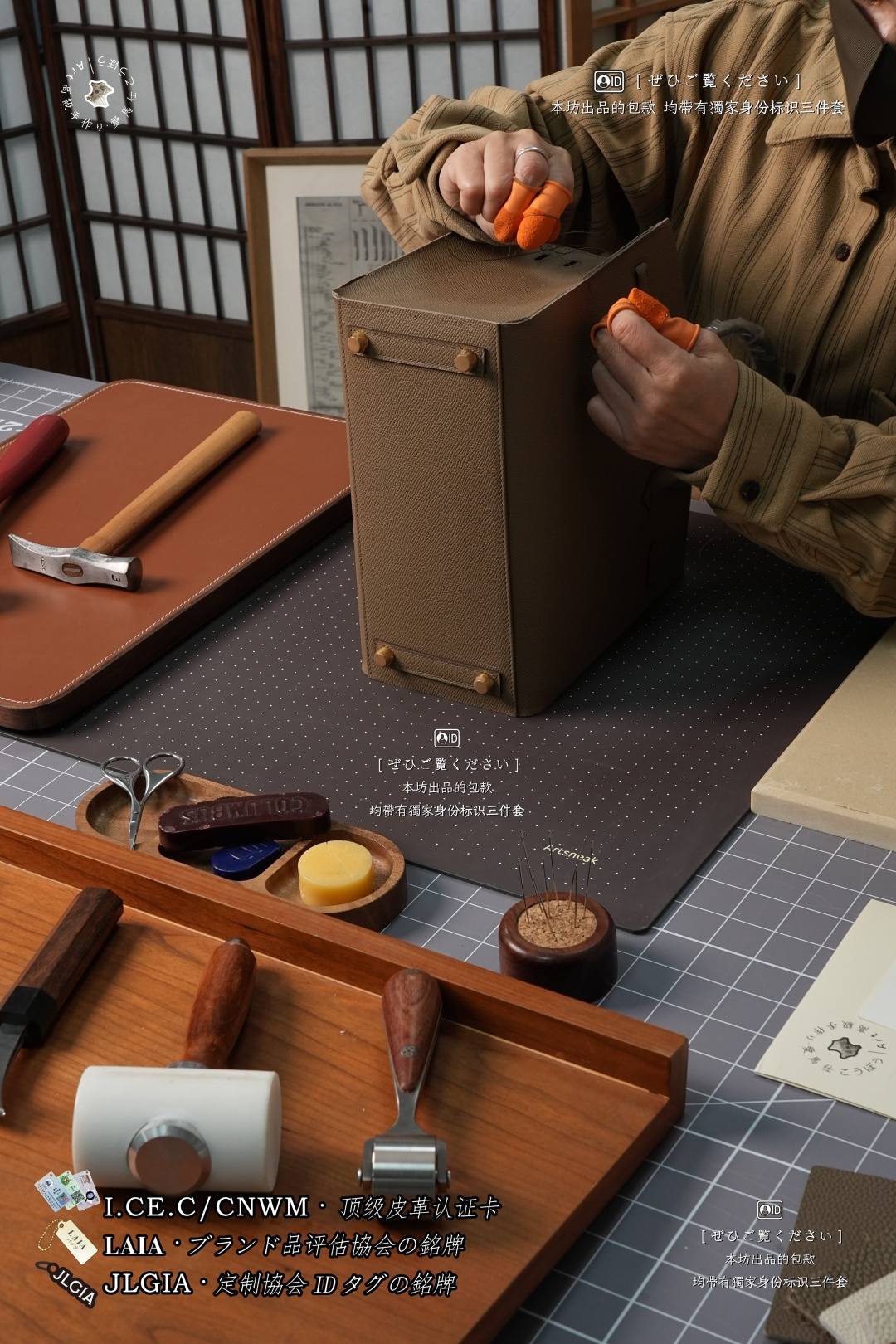
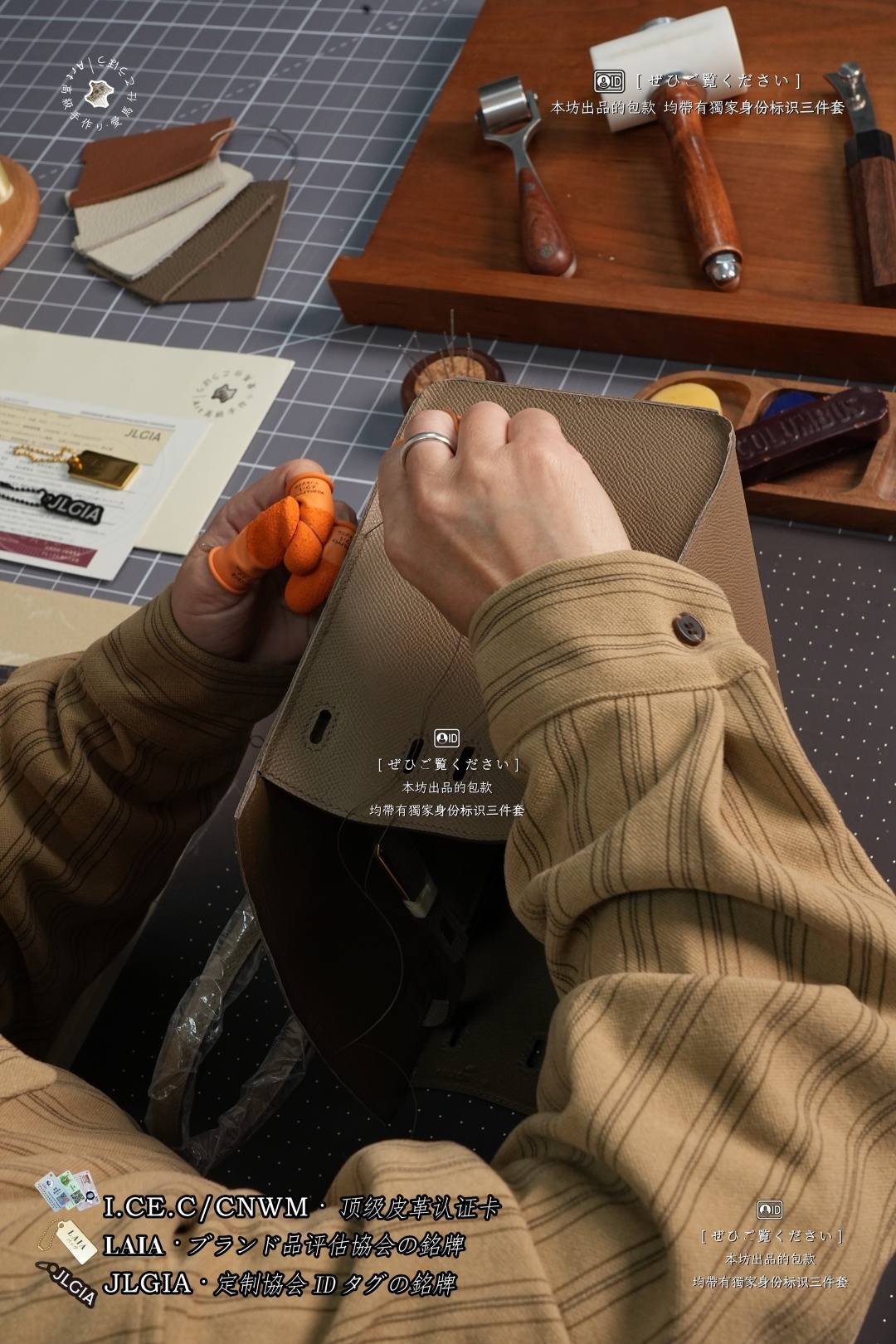
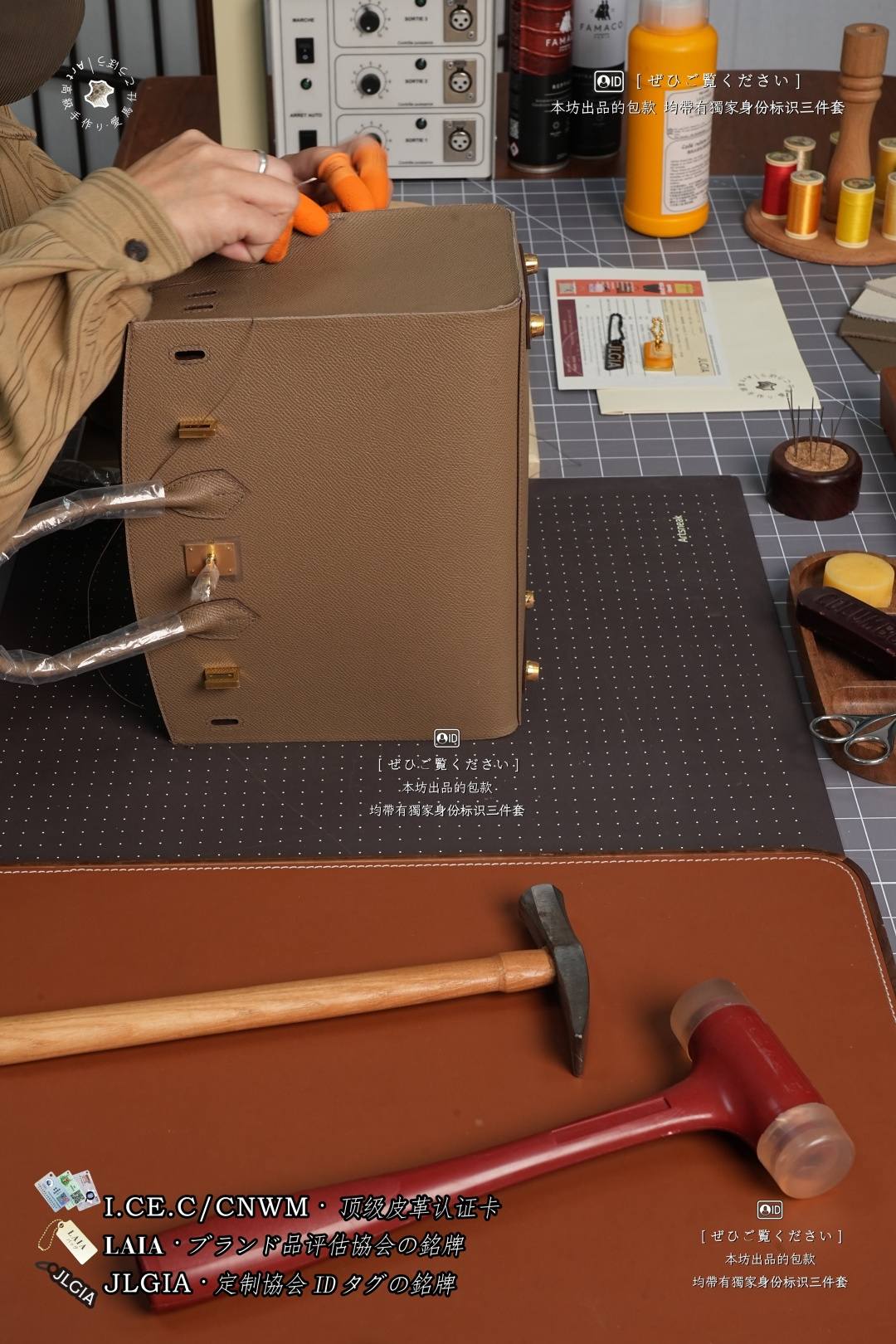
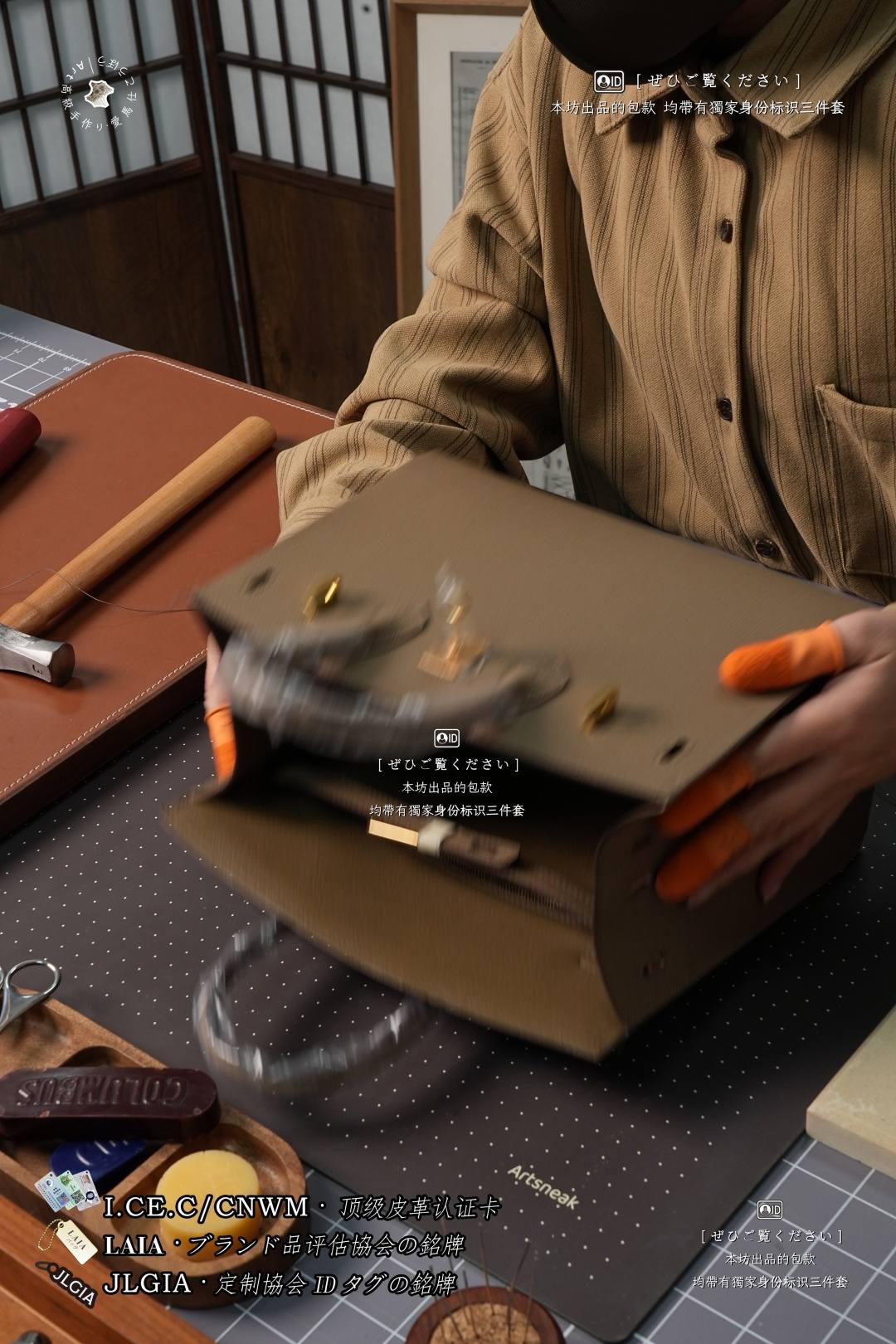
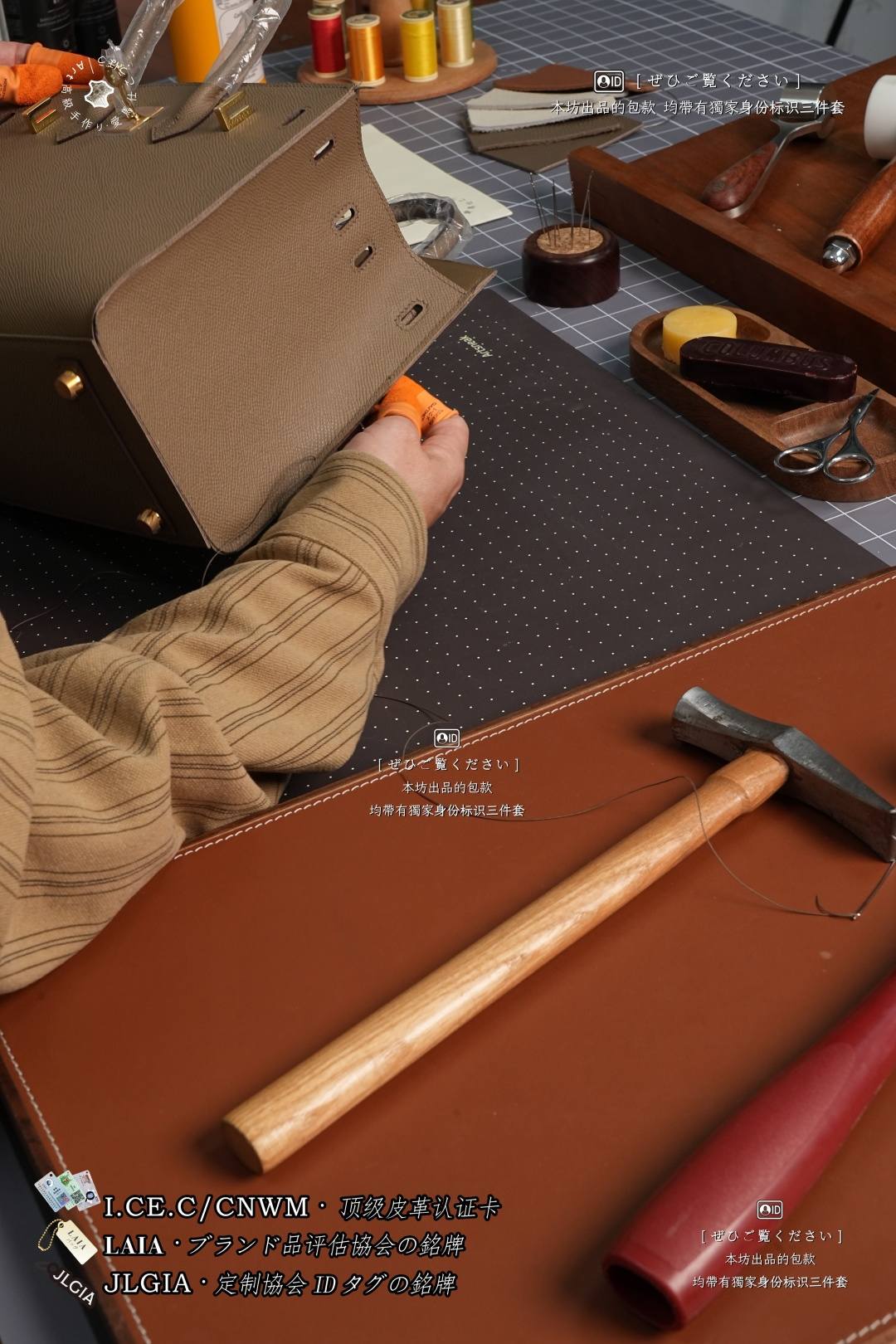
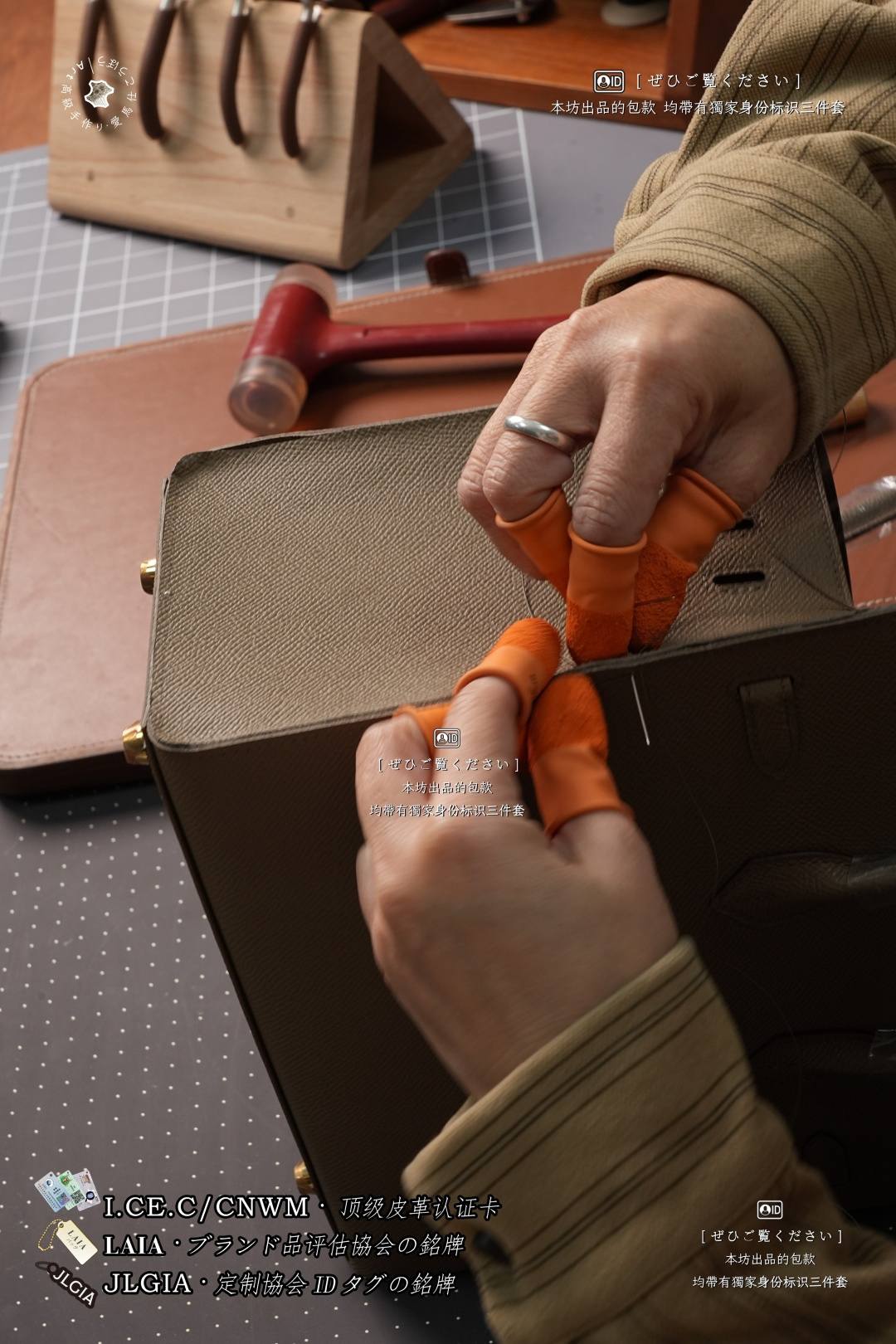
The iconic Sellier saddle stitch is the core soul craftsmanship of this outer-stitch bag. We adopt authentic French Fil Au Chinois waxed linen thread, which is fully saturated with natural beeswax repeatedly to achieve excellent waterproof, wear-resistant, and anti-fray properties. Different from ordinary single-lock machine stitching, both ends of each thread are threaded with a hand-sewing needle for premium durable stitching.
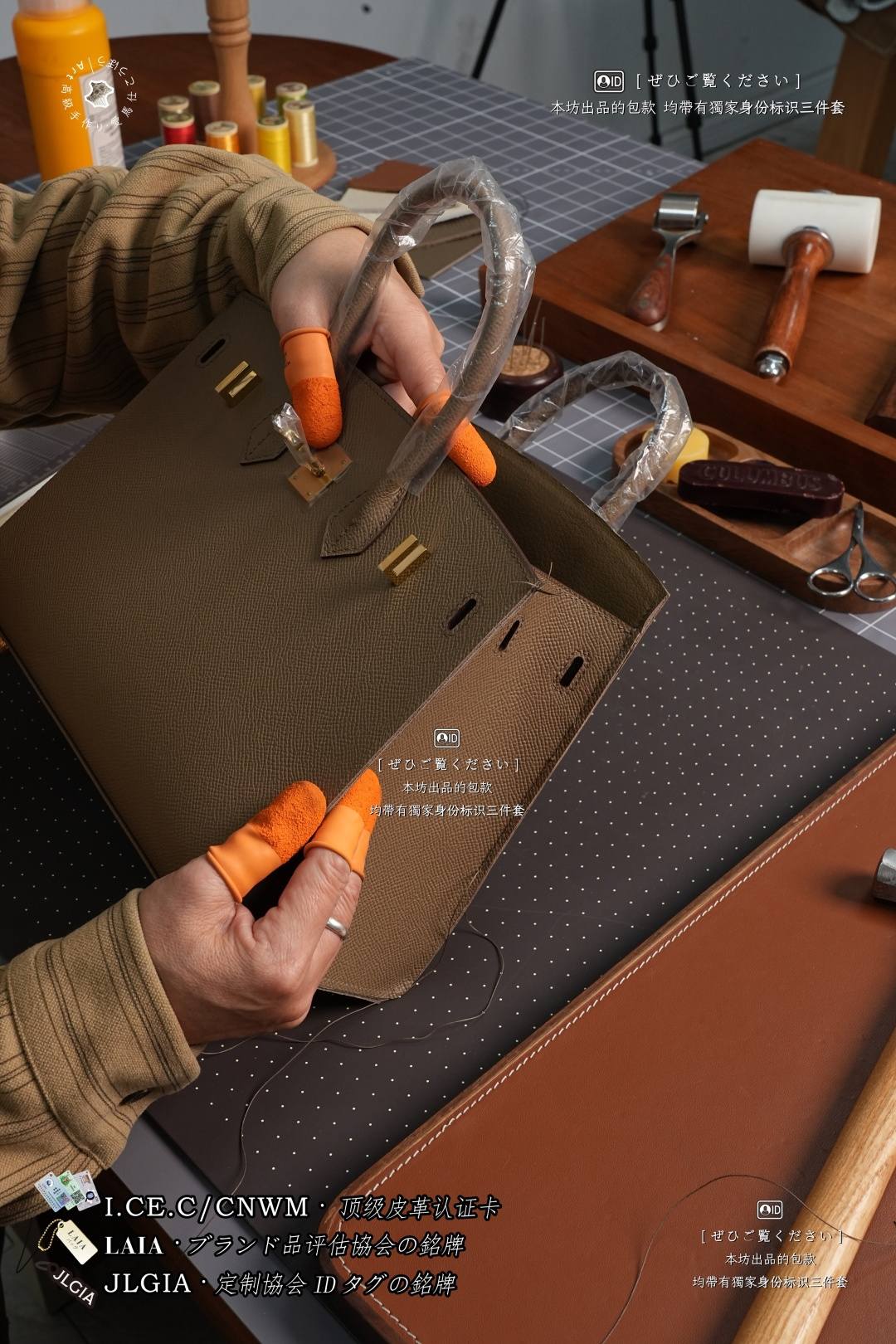
Exclusive 45-degree bevelled chisel punching is adopted for all outer stitches. Craftsmen first draw equidistant reference lines, then punch through double-layer leather at a standard 45-degree oblique angle. All holes maintain a uniform spacing of 2.7 millimeters with consistent tilt angles, creating the neat continuous wavy stitch texture that cannot be replicated by vertical machine punching. Adopting a manually controlled double-needle cross saddle stitch method that is irreplaceable by machines, two needles penetrate the same oblique hole in opposite directions. Each stitch forms an independent locked stress point, ensuring the entire stitching will not unravel even if a single thread breaks. The front stitching presents a standard uniform oblique wavy pattern with a consistent low-left and high-right track. Craftsmen precisely control stitching tension throughout the process to avoid leather bulging or indentation, keeping every stitch even and smooth.
Reinforced three-needle backstitching is applied at all start and end stitching points as well as hardware tab positions. Thread ends are hidden and fixed inside the leather interlayer with no exposed traces on the surface. Double-layer reinforced stitching is implemented on all stress-bearing areas including the bag bottom, belt loops, and top handles. Fundamentally different from the Retourné inner-stitch style that folds leather inward and conceals all stitching inside the bag, the Sellier outer-stitch design folds leather panels outward with all splicing seams fully exposed externally, doubling the precision requirements for hole punching and stitching uniformity.
All exposed leather edges of the outer-stitch bag require extremely high-standard edge finishing with almost zero tolerance for flaws. The edges are processed through three manual polishing procedures: rough grinding, fine grinding, and finishing polishing, resulting in burr-free, smooth and rounded leather edges. We apply imported water-based edge paint in 4 to 6 thin layers, with each layer fully air-dried before the next application to effectively prevent cracking caused by excessive thick coating. Finally, the edges are treated with low-temperature steam ironing at 45℃ and manual brushing. The finished edge paint presents a delicate matte grain texture with superior wear resistance and color fastness, avoiding chipping and cracking at sharp right-angle edges.